




When the Block Model Understates the Grade: What B26's Latest Intercept Signals for Economic Potential


Abitibi Metals’ latest B26 drill hit outperformed the block model, potentially improving PEA economics, resource quality and valuation upside.
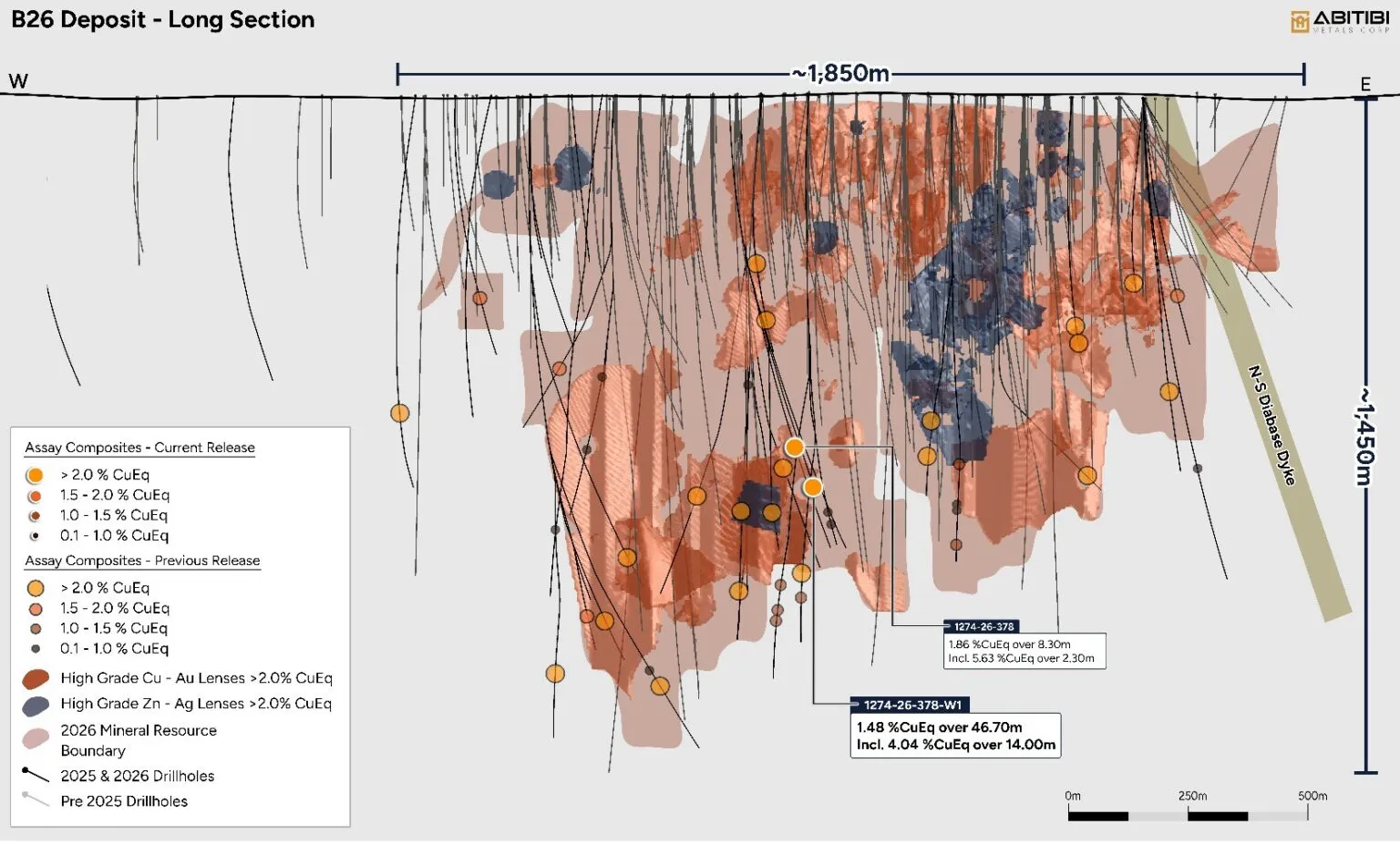
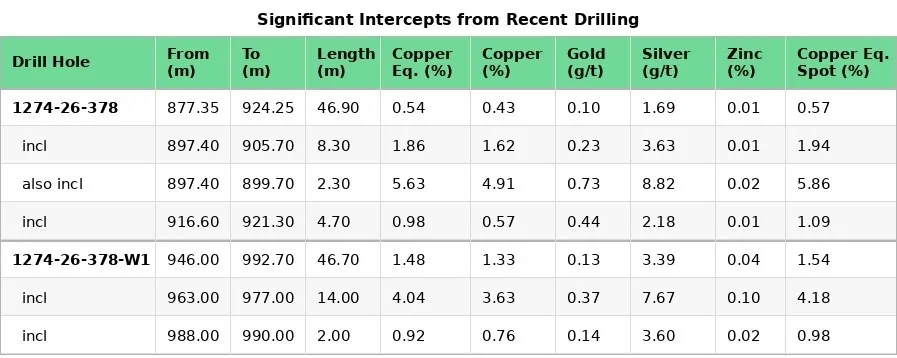
- Phase 4 drilling at B26's Western Down-Plunge Zone returned 1.48% copper equivalent over 46.7 metres at depth, including a higher-grade interval of 4.04% copper equivalent over 14 metres, above the current block model estimate of under 2% copper equivalent for this area.
- Above-model grades in a zone already captured in the resource estimate signal that the block model may be understating grade in the primary copper corridor, with direct implications for the upcoming PEA mine plan.
- The Feeder Copper zone, which dominates B26 by mass, is delivering high-grade continuity at depth without evidence of grade dilution, with the deposit's highest-ever result also coming from the deepest portion of the Western Down-Plunge.
- Abitibi closed a C$30,752,228 strategic private placement with Discovery Silver Corp., granting a 9.9% stake and leaving the company with more than C$45 million in treasury and a fully funded 80,000 metres drill programme underway.
- The updated mineral resource estimate (MRE) and PEA are both near-term targets, and how the block model responds to continued above-model intercepts will determine whether the grade improvement is material at the deposit level.
What Has Happened
Abitibi Metals (CSE: AMQ | OTCQB: AMQFF | FRA: FW0) released Phase 4 drill results from the B26 deposit in Quebec on May 27, 2026, reporting a high-grade copper intercept in the Western Down-Plunge Zone that outperforms the current block model, a result with direct implications for the upcoming preliminary economic assessment (PEA).
The latest intercept returned 1.48% copper equivalent over 46.7 metres at depth, including a higher-grade interval of 4.04% copper equivalent over 14 metres, against a current block model grade of under 2% copper equivalent for this area. When the resource estimate is updated, it is expected to reflect a higher grade profile for this corridor. B26 currently hosts a combined resource of 25.3 million tonnes at 2.1% copper equivalent, held 80% by Abitibi and 20% by SOQUEM Inc., a subsidiary of Investissement Québec.
Above-Model Grades: Why the Block Model Baseline Matters
When drill results come in above the block model in an area already captured as resource, it means the model is understating the grade there. Phase 4 includes a dedicated resource improvement drilling component targeting exactly these areas, where wide drill spacing in the inferred category is believed to be pulling grades down.
A block model upgrade in the Western Down-Plunge, if confirmed through infill drilling, feeds directly into the PEA mine plan. With copper recoveries of 98.3%, gold at 90%, zinc at 96.1%, and silver at 72.1% applied in the January 2026 mineral resource estimate (MRE), even a modest grade improvement in the early production years carries meaningful weight in the net present value (NPV) calculation.
Resource Conversion & Drill Spacing
The company confirmed that the current drill spacing in the Western Down-Plunge sector is expected to support conversion of this area to the indicated resource category. That classification distinction matters for investors because inferred material cannot be included in the PEA mine plan under National Instrument 43-101 standards.
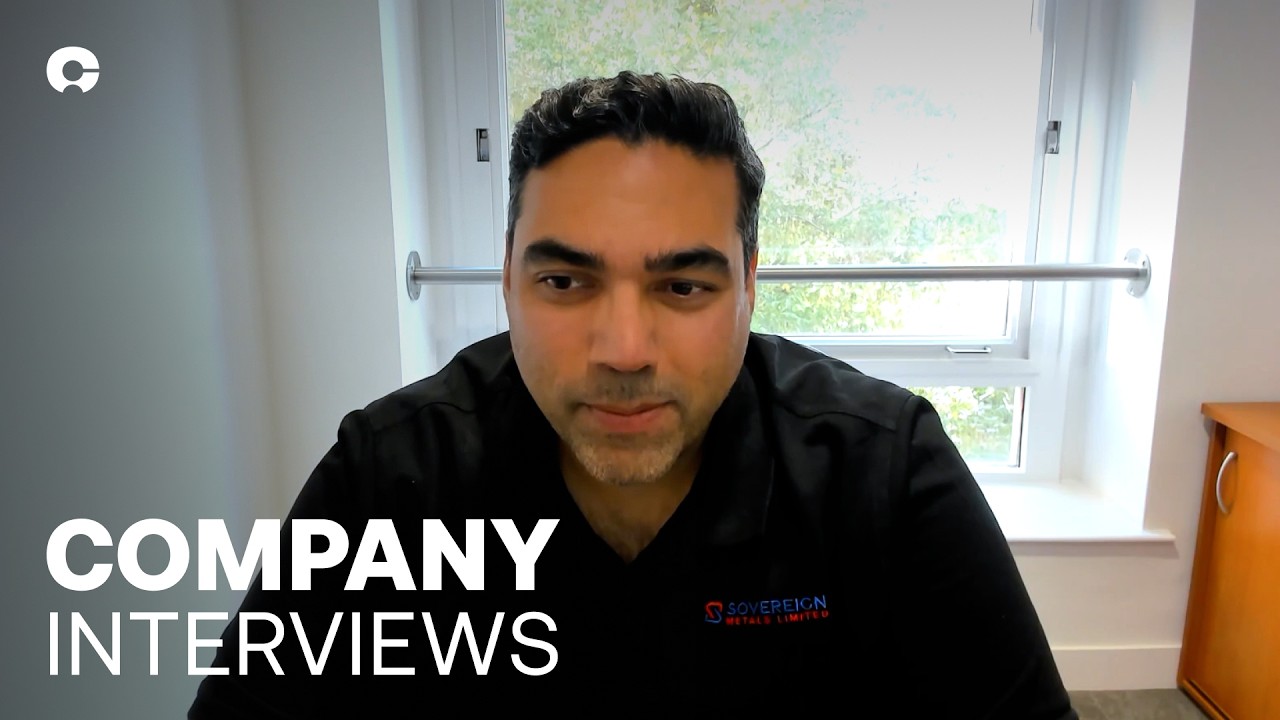
President and Chief Executive Officer of Abitibi Metals, Jonathon Deluce, outlined the infill drilling strategy underpinning the resource conversion effort:
"We're going to have a balanced budget between expansion and infill. And then when we look towards the budget that is now fully funded for 2027 and then the milestones that move towards a feasibility study, our budget would then be more allocated on infill next year to continue to convert inferred to indicated to support our feasibility goals."
That framing positions grade quality in the near-surface and upper reaches of the deposit as the primary variable affecting PEA value, with tonnage growth at depth serving a longer-term mine life narrative. The resource has grown 124% in total tonnage since 2023, but the more consequential near-term variable is the grade of what is mined in the first years of operation, and this latest result suggests that grade may be better than the model currently reflects.
The Feeder Copper System & Grade Architecture
The Feeder Copper zone dominates B26 by mass, carrying 9.29 million tonnes indicated at 1.60% copper and 11.82 million tonnes inferred at 1.67% copper. That makes it the primary driver of any PEA mine plan, and the zone where above-model grades carry the most economic weight.
The latest result extends high-grade continuity by 50 metres at depth without evidence of grade dilution, which is a common constraint on the economic attractiveness of deep volcanogenic massive sulphide (VMS) extensions. Notably, the highest-grade result in the deposit's history at 17.91% copper equivalent over 6.3 metres also came from the deepest portion of the Western Down-Plunge, reinforcing the interpretation that the system strengthens rather than weakens at depth.
Strategic Investment: Discovery Silver's Entry
Abitibi closed a non-brokered strategic private placement on May 15, 2026, for gross proceeds of C$30,752,228, with Discovery Silver Corp. subscribing for a 9.9% stake on a non-diluted basis. In connection with the closing, the 2 companies entered into a participation agreement granting Discovery financing and other participation rights to maintain its shareholding. With more than C$45 million in treasury and a fully funded 80,000 metres drill programme underway, the financing removes the capital risk that typically overhangs junior resource companies ahead of a first economic study.
Valuation & Peer Context
B26 trades at an enterprise value (EV) to in-situ value ratio of 0.8%, against peers Foran Mining at 20.4% and FireFly Metals at 3.5%, both copper-gold VMS deposits at more advanced stages of development. Foran was acquired by Eldorado Gold in February 2026 for approximately C$3.8 billion after progressing through a feasibility study and securing an Agnico Eagle private placement. Above-model grades in B26's primary copper corridor are the mechanism through which that valuation gap begins to close.
Deluce addressed the valuation gap directly, framing the upcoming economic studies as the catalyst for a broader market re-rating:
"We went from a 30 million market cap to now, post closing of the financing, we'll be around 150 million and well funded. We're already at what we would argue is critical mass and a path to economics with the resource that we have today. But again, we see a lot of upside from where we are today with the asset."
What to Watch Next
The updated MRE and PEA are both near-term targets, with the drill programme fully funded for 2027. If the resource improvement drilling programme continues to return grades above the current block model, the updated MRE should reflect a higher copper equivalent grade for the Western Down-Plunge sector. A meaningful rise above the current 2.08% copper equivalent indicated total would signal that the block model understatement extends across the deposit, not just a single drill step-out.
The PEA will be the first opportunity for the market to quantify what above-model grades in the primary copper corridor are worth at a project level. Metallurgical and geotechnical testing is underway in parallel, both prerequisites for institutional capital at this stage. The company's two-year plan, flagged for release by late May or early June 2026, is expected to clarify how Abitibi balances infill drilling against expansion, which will signal how aggressively the company is prioritising economic de-risking ahead of the study.
FAQs (AI-Generated)
Analyst's Notes





Subscribe to Our Channel



Stay Informed






















