




Abitibi Metals Intersects 4.04% Copper Equivalent Over 14 metres at B26, Confirming Western Down-Plunge Grade Continuity


Abitibi Metals drills 4.04% copper equivalent over 14 m within 1.48% copper equivalent over 46.7 m at B26, extending the Western Down-Plunge Zone.
- Hole 378W1 intersected 1.48% copper equivalent over 46.7 metres, 1.33% copper, 0.13 grams per tonne (g/t) gold starting at 946 metres depth, including a higher-grade interval of 4.04% copper equivalent (3.63% copper, 0.37 g/t gold) over 14 metres.
- The result confirms a 50-metre eastern extension of the Western Down-Plunge Zone, supporting resource growth through a potential increase in both tonnage and grade in this area.
- High-grade assay results are expected to positively impact the block model in the drill area, which is currently estimated at under 2% copper equivalent.
- The current drill spacing in the Western Down-Plunge Zone is expected to support conversion of the sector into the indicated resource category.
- Abitibi holds an 80% interest in B26 in a joint venture with SOQUEM Inc.; the current mineral resource stands at 12.96 million tonnes indicated at 2.08% copper equivalent and 12.34 million tonnes inferred at 2.20% copper equivalent.
Company Overview
Abitibi Metals (CSE: AMQ | OTCQB: AMQFF | FSE: FW0) is dedicated to acquiring and exploring mineral properties within Québec, with a particular emphasis on high-quality base and precious metal assets that offer significant potential for growth and expansion. The company's flagship B26 Polymetallic project is held in a joint venture with SOQUEM Inc. (80% Abitibi, 20% SOQUEM), a subsidiary of Investissement Québec. The B26 project hosts a mineral resource of 12.96 million tonnes indicated at 2.08% copper equivalent and 12.34 million tonnes inferred at 2.20% copper equivalent, and is located 7 kilometres southeast of the formerly producing Selbaie Mine. Abitibi's portfolio also includes the Beschefer Gold project in Québec.
Drill Results: Western Down-Plunge Zone
Abitibi Metals has reported a high-grade, wide copper-gold intercept from its ongoing 2026 drill programme at the B26 Polymetallic Deposit in Québec. The company intersected 1.48% copper equivalent over 46.7 metres, 1.33% copper, 0.13 grams per tonne (g/t) gold beginning at 946 metres depth. Within this broader interval, a higher-grade section returned 4.04% copper equivalent (3.63% copper, 0.37 g/t gold) over 14 metres. The company states that its resource improvement drilling campaign is outperforming expectations, confirming excellent grade continuity.
The intercept targeted both the up-dip projection and eastern extensions of the high-grade zone and is positioned approximately 50 metres from the nearest previously reported hole in this corridor.
President and Chief Executive Officer of Abitibi Metals, Jonathon Deluce, described the result as illustrative of the company's capital allocation discipline at B26:
"Our 2026 drill program is progressing well, with results continuing to align with and validate our disciplined, high-impact capital allocation strategy at B26. Hole 378W1 is a strong example of this approach, successfully achieving multiple objectives within a single drill hole. Notably, it confirms a 50-metre eastern extension of the High-Grade Western Down-Plunge, one of the most significant discoveries from last year's program. This hole also contributes to the delineation of the indicated resource drill grid and delivers both greater width and higher grade than the current block model in this area, supporting continued organic resource growth at B26 and reinforcing our confidence in grade continuity across the deposit."
Copper equivalent values in this release were calculated using metal prices of US$4.50 per pound of copper, US$1.50 per pound of zinc, US$28.00 per ounce of silver, and US$3,000 per ounce of gold, with recovery factors applied from metallurgical testing (98.3% for copper, 90.0% for gold, 96.1% for zinc, and 72.1% for silver). The true width of mineralisation generally corresponds to 60% to 80% of the core length.
Geology & Grade Continuity
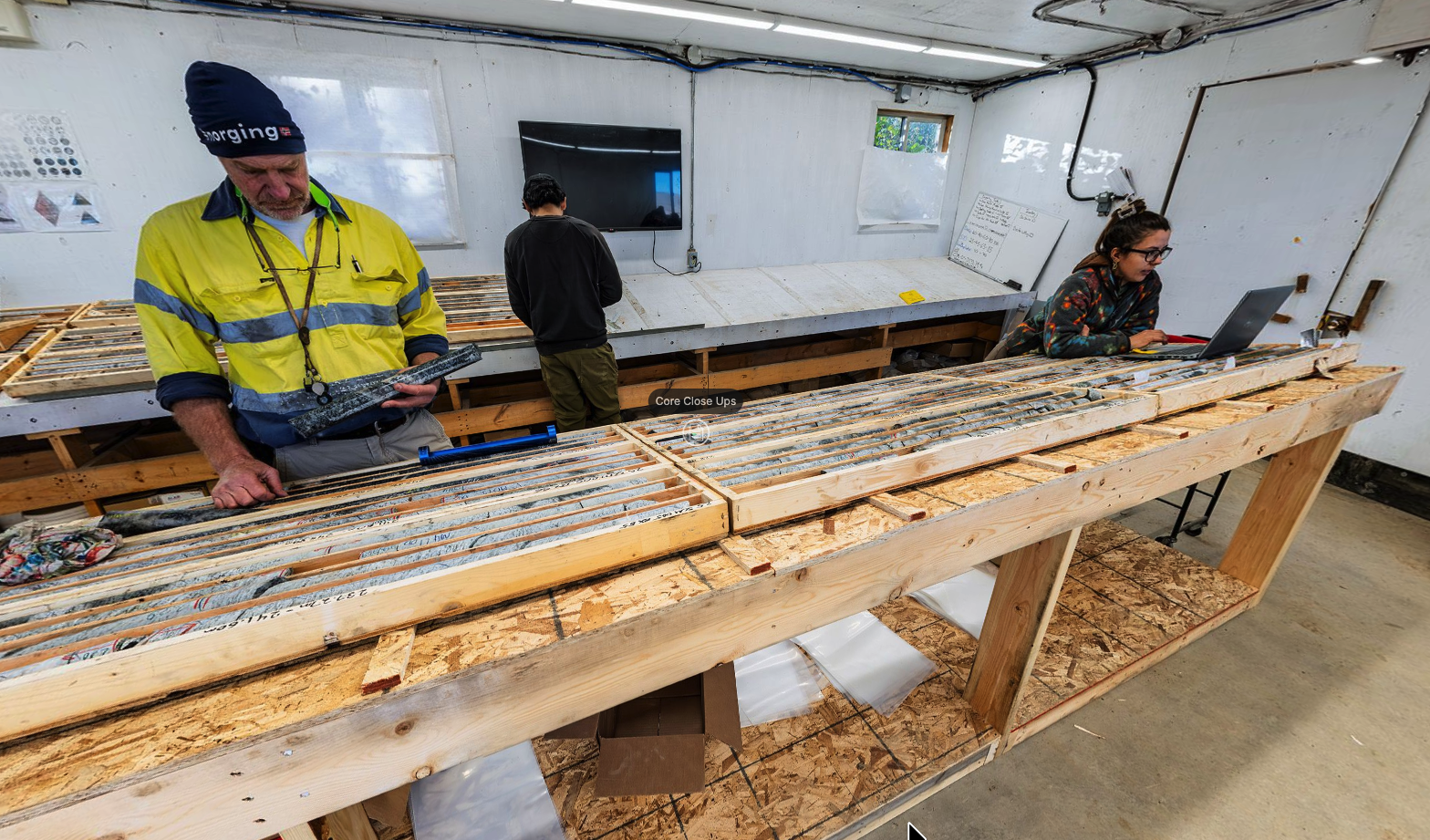
Mineralisation intersected in the Western Down-Plunge Zone is typical of a well-developed copper stringer system, characterised by intense dark chlorite alteration and evidence of remobilisation and deformation, often associated with thicker, more massive sulphide sections. These geological features are consistent with the deposit's established structural characteristics and support the interpretation of a dynamic and evolving high-grade corridor with considerable upside. The two holes reported in this release are collectively expected to have a meaningful positive impact on the high-grade domain within the block model, further enhancing the overall resource profile.
The high-grade assay results are expected to positively impact the block model in this area, which is currently estimated at under 2% copper equivalent. Results from both holes delivered greater width and higher grade than the current block model, supporting continued organic resource growth at B26.
Next Steps
The current drill spacing in the Western Down-Plunge Zone is expected to support conversion of this sector into the indicated resource category, representing a significant step forward in resource confidence. Additional assay results remain pending from the ongoing 2026 drill programme, and the company anticipates continued positive contributions to the mineral resource base as the campaign advances. Abitibi's resource improvement drilling programme is focused on delineating the indicated resource drill grid while also testing expansion targets within the Western Down-Plunge corridor.
FAQs (AI-Generated)
Analyst's Notes





Subscribe to Our Channel


Stay Informed






















