




Florida Canyon's Feasibility Study Recasts Integra as a Self-Funding Gold Producer


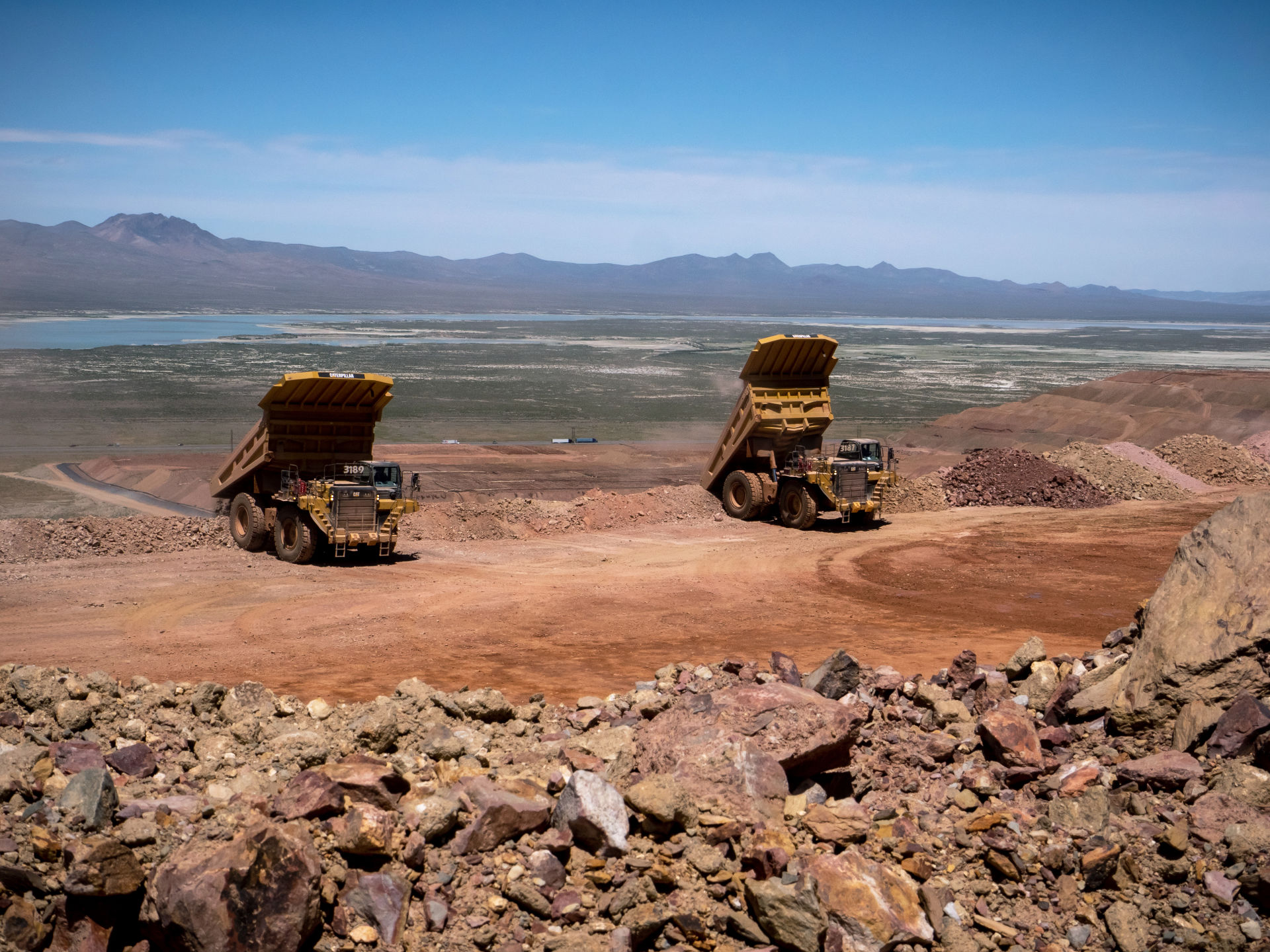
Integra's 2026 Florida Canyon feasibility lifts gold reserves 74% and targets US$0.8B in free cash flow over an 8-year life, funding DeLamar.
- Florida Canyon's updated 2026 Feasibility Study (FS) extends the mine's operating life to 8 years through 2033 and targets approximately US$0.8 billion in after-tax free cash flow.
- Proven and probable reserves rose 74% to 1.19 million ounces of gold, replacing 2 years of mining depletion since acquisition.
- Average annual gold production increases 17% to 82,000 ounces, funded from operating cash flow with no upfront capital.
- Integra raised 2026 site-level all-in sustaining cost (AISC) guidance to US$3,300 to US$3,500 per ounce, against a life-of-mine AISC of US$2,331 per ounce.
- Florida Canyon's free cash flow is the mechanism funding DeLamar toward a second-half 2027 permitting decision and the advancement of Nevada North.
The Feasibility Transformation
Integra Resources (TSXV: ITR | NYSE American: ITRG) released an updated Feasibility Study (FS) and life-of-mine plan for its producing Florida Canyon gold mine in Nevada on June 25, 2026, and the document resets the asset's scale rather than merely refreshing its assumptions. Active mining now extends through 2033, life-of-mine payable production reaches 685,000 ounces of gold, and the operation targets approximately US$0.8 billion in after-tax free cash flow. Less than 2 years after acquiring Florida Canyon for US$68 million, Integra has converted a short-life heap-leach mine into an 8-year producer with a 17% higher annual production profile and a substantially larger reserve base. Global Resource Engineering acted as lead consultant on the National Instrument 43-101 technical report, which carries an effective date of June 25, 2026 and draws on a reserve estimate effective May 31, 2026.
The re-rating rests on a larger reserve, a higher and longer production profile, and a mine plan that reinvests its own cash flow, offset by a single line item that moved against the company in the form of higher near-term cost guidance.
The Reserve & Resource Increase
The reserve increase is the foundation of the transformation. Proven and probable (P&P) reserves rose 74% to 1.19 million ounces of gold, a 506,000-ounce gain booked even after 2 years of mining depletion since the acquisition. The plan carries 1,156,000 ounces of contained gold, of which 656,000 ounces are modelled as recoverable and 685,000 ounces as sold over the mine life.
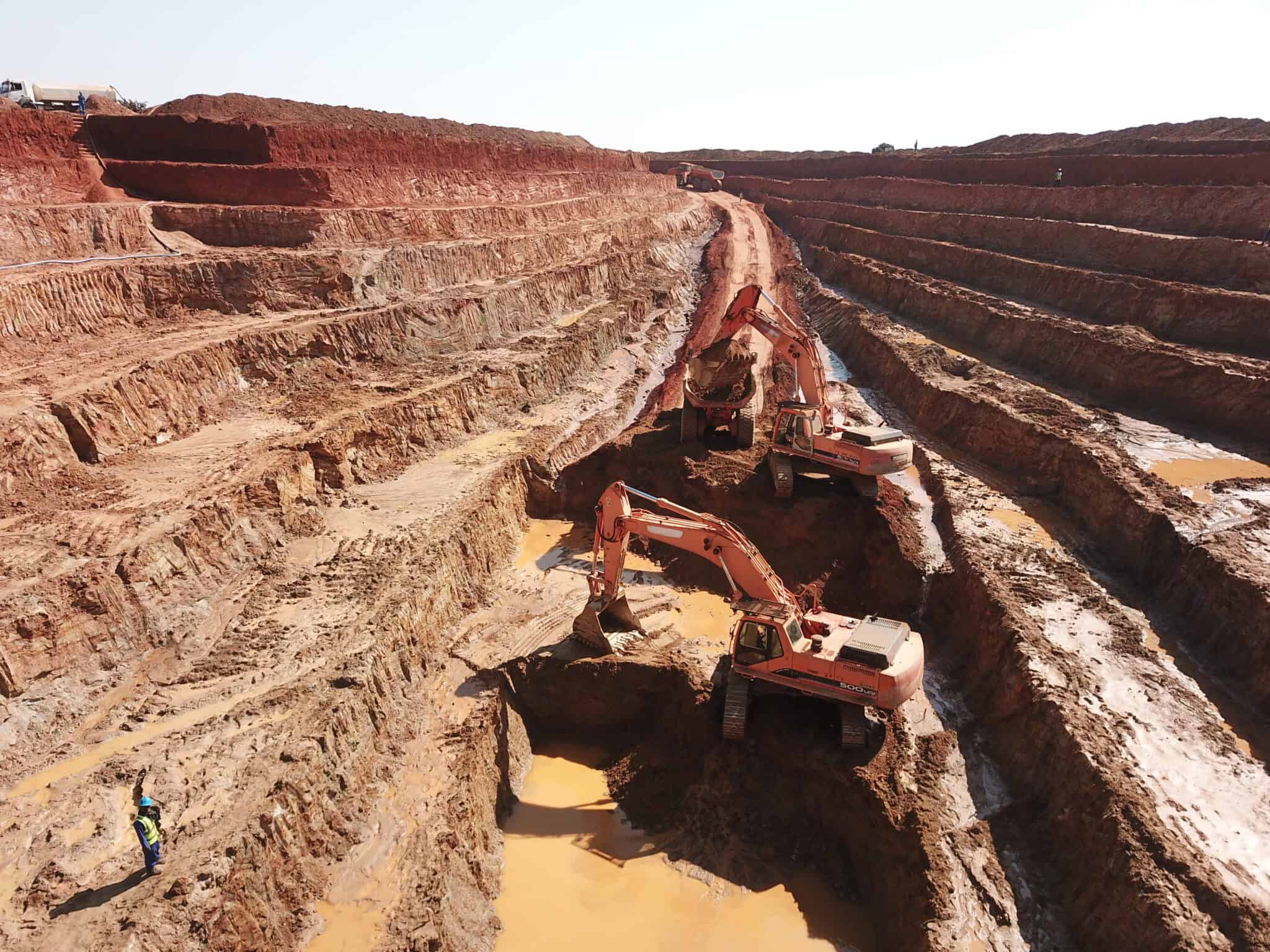
Resource growth ran alongside the reserve. The oxide measured and indicated category rose 128%, and oxide inferred rose 57%, including an estimate on the Standard Mine to the south of the operation. The growth was not a single-lever outcome, because first-year drilling of 16,000 metres inside the mine gate added ounces directly, geotechnical work that steepened pit slopes by 2 to 3 degrees cut the waste that would otherwise be moved at cost, and re-sequencing, together with higher assumed gold prices, raised the tonnage the model classifies as economic.
President and Chief Executive Officer of Integra Resources, George Salamis, is precise on where the reserve growth came from:
"A large measure came from the drilling that we did, 16,000 metres in the first year, all entirely focused within the mine gate. Another big piece was looking at the geotechnical aspects of the ore body, and two or three degrees on pit slopes makes a big difference on future waste."
The reserve now rests on what management describes as a more dependable geological model than the grade-shell interpretation applied over the prior 25 years, one built on structural and lithological controls rather than grade distribution alone.
Production Profile & Extended Mine Life
The larger reserve translates into a materially different production schedule. Average annual gold production rises by 17%, from 70,000 ounces to 82,000 ounces over the 8-year operating life, with mining extended from 2030 to 2033 and a further 2 years of residual leaching thereafter. The plan mines 211,199 kilotonnes of material, of which 116,935 kilotonnes is ore, at a strip ratio of 0.81.
Recovery is where the plan holds visible upside. Life-of-mine gold recovery averages 56.7%, a blended figure spanning crushed ore, which recovers in the low-to-mid 60% range, and run-of-mine (ROM) ore placed directly on the leach pads, which recovers in the high 40% to low 50% range. Routing more tonnes through the crushing circuit lifts recovered ounces without adding to reserves, which is why additional crushing capacity is on the company's list of further opportunities.
The Cash-Flow Engine & Economics
The economics follow from a plan that carries no upfront capital. The FS reports an after-tax net present value at a 5% discount rate (NPV5%) of US$601 million on base-case gold prices, rising to roughly US$723 million at spot prices. Base-case pricing runs from US$4,344 per ounce in 2026, peaks at US$4,414 per ounce in 2027, and declines to US$3,600 per ounce across 2030 to 2035, while the spot case holds US$4,200 per ounce from mid-2026 onward.
Over the mine life, the plan generates US$769.5 million in total net free cash flow, averaging US$90 million per year. Because the operation funds itself through production, the cash generated is available to deploy across the wider portfolio rather than consumed by a build.
Salamis frames the outcome this way:
"The real story here is the cash flow that this generates over the entire 8 years, close to US$800 million of after-tax free cash flow. Florida Canyon becomes the cash flow engine, which funds everything else."
That self-funding structure, more than the headline net present value, gives the study its weight across the rest of Integra's development pipeline.
The 2026 Cost Revision
One figure moved the wrong way. Integra raised its 2026 site-level all-in sustaining cost (AISC) guidance to US$3,300 to US$3,500 per ounce, up from US$2,750 to US$2,950, while reaffirming 2026 production guidance of 70,000 to 75,000 ounces. The increase reflects more tonnes mined, stacked, and processed this year, compounded by inflation in diesel fuel and explosives.
The near-term number sits well above the life-of-mine site-level AISC of US$2,331 per ounce and the life-of-mine cash cost of US$1,940 per ounce. That gap frames 2026 as the costliest year of the plan rather than its steady state, with the elevated spend concentrated in the current waste-stripping phase that opens access to higher-grade ore.
Salamis is direct on the cost trajectory:
"You see our costs coming meaningfully down once we get through the next two quarters of this massive stripping campaign. Our costs then decline over the next 8 years to an average of just over US$2,300 per ounce AISC. This is never going to be a sub-US$2,000 an ounce AISC producer."
The elevated cost is therefore time-bound, while the reserve and production gains extend over the full 8 years.
Growth Capital & Operating Improvements
Reaching the 8-year plan requires reinvestment, funded from cash flow rather than a raise. Integra plans to invest about US$92 million in growth capital, split between US$55 million to expand heap leach capacity and US$37 million to modernise and replace the legacy truck fleet, all within the existing Mine Plan of Operations. The plan also includes US$86.5 million in capitalised stripping and US$42.8 million in sustaining financing leases over the mine life.
Beyond the funded plan, Integra is evaluating additional crushing capacity, haul road optimisation, and improved truck routing, each directed at moving more ore through the higher-recovery crushing circuit and lifting recovered ounces.
Funding the Pipeline
Florida Canyon's cash flow drives Integra's broader development plan. The study frames the mine as the funding source for DeLamar, the company's Idaho gold-silver project, for which the Final Environmental Impact Statement (EIS) and Record of Decision (ROD) are targeted for the second half of 2027, ahead of a construction decision. The same cash flow is earmarked to advance Nevada North, a project 25 miles west of Florida Canyon that management believes will ultimately produce in parallel with the mine.
The intent is to build treasury from production to cover DeLamar's equity contribution, with a debt component to follow, reducing the dilution a development-stage company would otherwise absorb. On that basis, the study positions Integra on a path toward a multi-asset, mid-tier US precious metals producer, with Florida Canyon as the funding base.
Exploration Upside & Mine-Life Extension
The current reserve is not the ceiling. A 42,500-metre programme is underway, with most metres targeting ridges and saddles between existing pits and extensions of the known ore body inside the mine gate. For the first time, drilling will also step outside the mine gate to the historical Standard Mine, which has not seen a drill hole in about 15 years, with that work targeted to begin within weeks.
These targets are explicitly conceptual and excluded from the current Mineral Reserve Estimate and economic analysis. Their value depends on conversion through drilling and technical study before any of it can enter the mine plan, which keeps the near-mine growth case a 2027-and-beyond question rather than a present one.
The Investment Thesis for Integra Resources
- Florida Canyon's updated Feasibility Study extends the mine's operating life to 8 years through 2033 while targeting approximately US$0.8 billion in after-tax free cash flow.
- Proven and probable reserves increased 74% to 1.19 million ounces of gold, replacing 2 years of mining depletion since the acquisition.
- Average annual gold production rises 17% to 82,000 ounces, and the plan carries no upfront capital, funding its own growth from operating cash flow.
- Integra raised 2026 site-level all-in sustaining cost guidance to a range of US$3,300 to US$3,500 per ounce, a near-term increase set against a life-of-mine all-in sustaining cost of US$2,331 per ounce.
- Florida Canyon's free cash flow is structured to fund DeLamar toward a second-half 2027 permitting decision and to advance Nevada North without heavy shareholder dilution.
- A 42,500-metre exploration programme targets near-mine and Standard Mine ounces that remain conceptual and outside the current reserve and economics.
The FS repositions Florida Canyon from a depleting acquisition into the cash-generating base of Integra's United States growth strategy. The question the plan leaves open is execution, specifically whether the elevated 2026 costs prove as bounded as management frames them and whether conceptual near-mine ounces convert into reserves on a timeline that sustains production beyond the current 8-year window.
TL;DR
Florida Canyon is now an 8-year gold operation carrying an after-tax NPV5% of US$601 million at base-case gold prices and approximately US$0.8 billion in life-of-mine free cash flow, following a 74% reserve increase to 1.19 million ounces. The plan requires no upfront capital, positioning the mine as the self-funding engine for Integra's DeLamar and Nevada North projects. Near-term 2026 AISC guidance rose to US$3,300 to US$3,500 per ounce on higher mining rates and input inflation, well above the US$2,331 per ounce life-of-mine figure. The reserve and production gains extend across the full 8 years, while the cost increase is concentrated in the current stripping phase.
FAQs (AI-Generated)
Analyst's Notes





Subscribe to Our Channel




Stay Informed






















