ATHA Energy Reports Widest Intersection to Date at RIB North With 37 metres of Composite Uranium Mineralisation



ATHA Energy reports 37.0 metres of composite uranium mineralisation at RIB North, its widest intersection to date, as the 2026 Angilak program advances.
- The first 8 diamond drillholes completed at the RIB North Discovery, part of the 2026 Angilak Exploration Program, outline continuity of mineralisation along strike from the maiden discovery hole over 300 metres.
- Of the 8 drillholes, 6 intersected uranium mineralisation, headlined by a hole that returned 37.0 metres of total composite uranium mineralisation over 15 zones from 541.7 metres to 652.0 metres, the widest intersection recorded at RIB North to date.
- A secondary, east-west mineralised structure was discovered approximately 1 kilometre from the main RIB North Discovery Area, on the western limb of the Mineralised RIB Corridor (MRC).
- The 2026 Angilak Exploration Program is the largest to date on the project, comprising approximately 20,000 metres of diamond drilling using 3 drill rigs, running from May 1, 2026 through the end of September, alongside an aerial geophysics survey.
- The RIB North Discovery remains open in all directions, and the entire 18-kilometre MRC remains open and unconstrained.
Company Overview
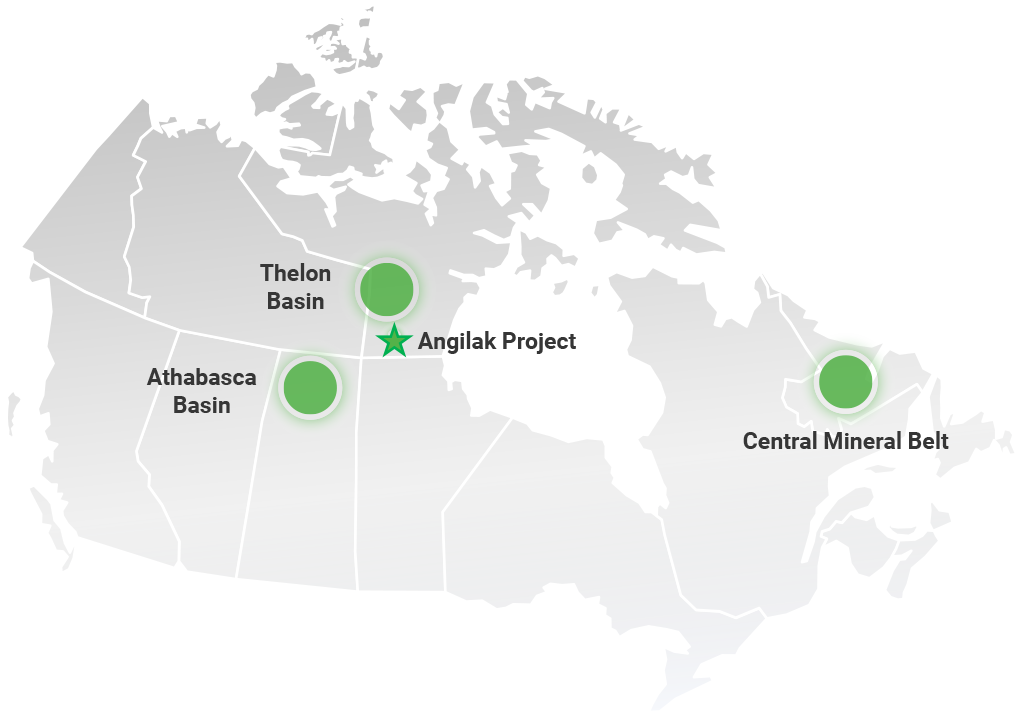
ATHA Energy Corp. (TSX.V: SASK | FRA: X5U | OTCQX: SASKF) is a Canadian mineral company engaged in the acquisition, exploration and development of uranium assets in the pursuit of a clean energy future. The Company holds a strategically balanced portfolio, including 3 100%-owned post-discovery uranium projects: the Angilak Project in Nunavut, CMB Discoveries in Labrador, and the newly discovered basement-hosted GMZ high-grade uranium discovery in the Athabasca Basin. ATHA also holds the largest cumulative prospective exploration land package, in excess of 7 million acres, across 2 of the world's most prominent basins for uranium discoveries. The company also holds a 10% carried interest in key Athabasca Basin exploration projects operated by NexGen Energy Ltd. and IsoEnergy Ltd.
Drilling Confirms Continuity at RIB North
ATHA Energy announced preliminary diamond-drilling results from the 2026 Angilak Exploration Program at its 100%-owned Angilak Uranium Project in Nunavut, Canada. The release details results from the first 8 diamond drillholes completed at the RIB North Discovery, part of the recently commenced 2026 Angilak Exploration Program.
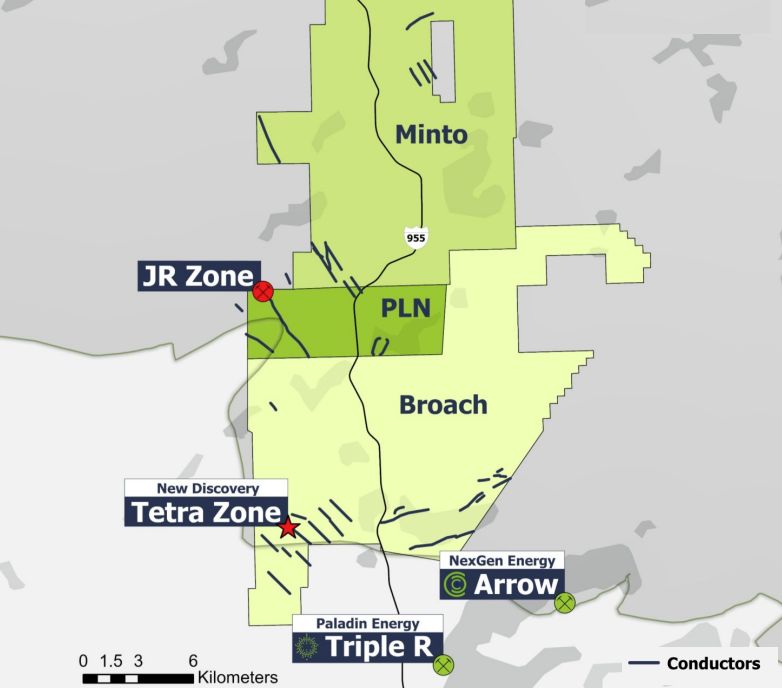
The results outline continuity of mineralisation in the primary RIB North area, located along the eastern limb of the Mineralised RIB Corridor (MRC), over 300 metres along strike from the maiden discovery hole. Additionally, the Company has discovered a secondary, east-west mineralised structure along the western limb of the MRC, approximately 1 kilometre from the main RIB North Discovery Area.
Drilling at RIB North is focused on widely spaced step-outs, designed to outline the continuity of uranium mineralisation, and the discovery remains open in all directions. Of the 8 drillholes, 6 intersected uranium mineralisation.
Chief Executive Officer and Director of ATHA Energy Corp., Troy Boisjoli, commented on the significance of the results to the Company's broader exploration strategy:
“The initial results from the Mineralised RIB and Lac 50 Deposit Corridors continue to reinforce our belief that Angilak represents one of the most compelling uranium exploration opportunities in Canada, if not globally. Successfully outlining continuity of mineralisation over significant step-outs speaks to the scale of the system we are exploring along with our technical team’s exceptional ability to execute. These results represent only the initial results of the Company’s largest exploration to date at the Angilak Uranium Project. Our 2026 Exploration Program is executing the drilling component with multiple drill rigs, all of which are intersecting mineralisation. Considering that the entire 18 km MRC, 21 km Lac 50 Deposit, and the 14 km KU-Nine Iron Corridors completely unconstrained, is something truly unique – ATHA is just starting to unlock Angilak’s potential.”
Widest Intersection to Date
The strongest result came from a hole that successfully targeted uranium mineralisation approximately 120 metres along strike to the northwest from the maiden discovery hole. It intersected 37.0 metres of total composite uranium mineralisation over 15 zones from 541.7 metres to 652.0 metres. The widest mineralised interval was 8.5 metres of composite mineralisation from 541.7 metres to 550.2 metres, with an average reading of 696 counts per second (CPS) and a max of 4,612 CPS. The highest-grade interval returned 4.5 metres of composite mineralisation from 571.7 metres to 576.2 metres, with an average reading of 4,589 CPS and a maximum of 14,773 CPS, including over 1.0 metre of high-grade mineralisation.
Vice President, Exploration of ATHA, Cliff Revering, said the results reinforce the Company's confidence in the RIB trend:
"We are very encouraged by the results to date across the RIB Mineralised Corridor, with the RIB North area continuing to emerge as a key focus within the broader trend. Building on the initial RIB North discovery in 2025, the 2026 drill program has delivered results that support continuity of uranium mineralisation across meaningful step-out distances completed to date. These results are important because they continue to validate our exploration model and strengthen our view that the RIB Mineralised Corridor remains a highly prospective uranium-bearing system."
Secondary Mineralised Structure
A separate hole successfully targeted uranium mineralisation along the newly identified secondary east-west horizon, 1 kilometre from the primary RIB North Discovery Area, intersecting 14.0 metres of total composite uranium mineralisation over 9 zones from 398.0 metres to 646.0 metres. High-grade mineralisation was intersected in 2 zones: the first from 427.0 metres to 429.5 metres with an average reading of 2,529 CPS, including 20 centimetres of high-grade mineralisation with a max reading of 11,798 CPS; the second from 436.0 metres to 438.5 metres with an average reading of 2,711 CPS, including 10 centimetres of high-grade mineralisation with a max reading of 11,725 CPS.
An ongoing hole targeting mineralisation 100 metres up-dip from the widest intersection described above has thus far intersected 17.5 metres of total composite uranium mineralisation across 6 zones, from 298.5 metres to 516.5 metres. The widest zone intersected 14.5 metres of continuous mineralisation with an average reading of 1,507 CPS, including 20 centimetres of high-grade mineralisation with a max reading of 13,807 CPS.
Mineralisation at RIB North has now been identified on 2 separate horizons, corresponding to the eastern and western limbs of the MRC. Mineralisation on both horizons is basement-hosted vein-style uranium mineralisation, associated with strong albite and hematite alteration, graphitic and sulphide-bearing structures, and overprinting silicification, similar in style and width to mineralisation observed in other Athabasca basin basement-hosted deposits.
Program Scope
The 2026 Angilak Exploration Program is the largest to date on the project and comprises 2 components. The first is diamond drilling, which commenced operations on May 1, 2026 and is scheduled to continue through the end of September. The Company will complete approximately 20,000 metres of drilling using 3 diamond drill rigs. The second component is aerial geophysics, comprising a magnetotelluric (MMT) survey by Expert Geophysics, scheduled to start in early July, with resulting 3D inversion modelling to be completed by the Fourth Quarter of 2026.
With diamond drilling, the Company intends to advance testing across 3 target areas. At the Mineralised RIB Corridor, further discovery and expansion drilling builds on the 2025 program, which delivered 4 separate uranium mineralisation discoveries, including RIB North, where the maiden hole returned 34.7 metres of composite uranium mineralisation, including grades as high as 8.16% uranium oxide over a 0.5-metre interval. At the Lac 50 Deposit Corridor, drilling will test newly defined, high-priority targets generated from 3D inversion modelling along strike from the existing Lac 50 Deposit, with the aim of extending its mineralised footprint, which remains open. At the KU-Nine Iron Corridor, drilling will follow up on high-priority 3D inversion targets that align directly with uranium mineralisation encountered in the 2025 KU program and at the historic Nine Iron discovery.
The geophysics portion of the program is designed to provide additional targets to the Company's portfolio and consists of acquiring full MMT coverage across the 100% ATHA-owned Angikuni Basin. The resulting survey data will be used to develop a 3D inversion model of the entire Angikuni Basin, applying the same systematic approach ATHA used during its 2025 campaign, adding to the Company's existing portfolio of regional targets.
Revering added that the program's focus remains on systematic testing of the broader trend:
"As we advance the 2026 program, our focus remains on systematically testing this mineralised trend, while continuing to assess the broader scale potential of RIB North and the surrounding corridor. These results provide a strong foundation for continued exploration and underscore the significance of this area within our overall exploration strategy."
Next Steps
The Company will continue its systematic, widely spaced drilling approach over the remainder of the 2026 Angilak Exploration Program to define the extent of the mineralised footprint at RIB North, which remains open in all directions. Beyond RIB North, ATHA intends to follow up on the additional RIB East, West & South Discoveries identified during its 2025 exploration campaign. The MMT aerial geophysics survey is scheduled to begin in early July, with 3D inversion modelling of the results expected to be completed by the Fourth Quarter of 2026. Diamond drilling under the program is scheduled to continue through the end of September. The 18-kilometre MRC, 21-kilometre Lac 50 Deposit Corridor, and 14-kilometre KU Nine Iron Corridor all remain open and unconstrained.
FAQs (AI-Generated)
Analyst's Notes





Subscribe to Our Channel





Stay Informed