ATHA Links RIB Discoveries Over 3.4 Kilometers, Adds Higher-Grade Sub-Zone



ATHA Energy's 2026 Angilak drilling links RIB North and RIB East over 3.4 km of uranium strike and outlines a higher-grade sub-zone, with assays pending.
- ATHA Energy has completed its 2026 diamond drilling at the RIB North Discovery, with all 7 holes in the final batch intersecting uranium mineralization.
- Drilling has connected the RIB North and RIB East Discoveries, extending mineralized strike length from 1.45 kilometers (km) to 3.4 km.
- A higher-grade, thicker sub-zone measures approximately 300 meters (m) along strike and 300 m down-dip, and remains open.
- One hole in the final batch returned 19.5 m of total composite uranium mineralization, including 2.0 m of high-grade mineralization.
- Assay samples are at the Saskatchewan Research Council, and ATHA plans to release preliminary results from the Lac 50 Deposit Corridor.
Company Overview
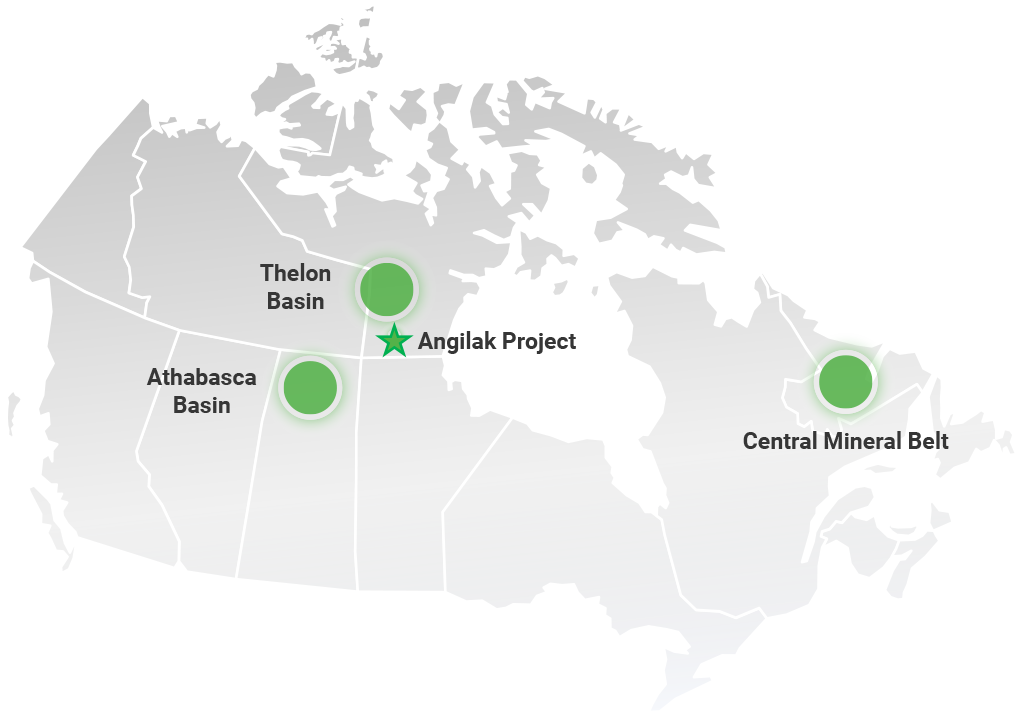
ATHA Energy Corp. (TSXV: SASK | FRA: X5U | OTCQX: SASKF) is a Canadian mineral company engaged in the acquisition, exploration, and development of uranium assets. Its post-discovery uranium projects, all 100%-owned, are the Angilak Project in Nunavut, the CMB Discoveries in Labrador, and the GMZ high-grade uranium discovery in the Athabasca Basin. The company holds more than 6 million acres of prospective exploration ground in 2 of the world's most prominent basins for uranium discoveries. It also has a 10% carried interest in Athabasca Basin exploration projects operated by NexGen Energy Ltd. and IsoEnergy Ltd.
A Season That Closed on 3.4 Kilometers of Continuity
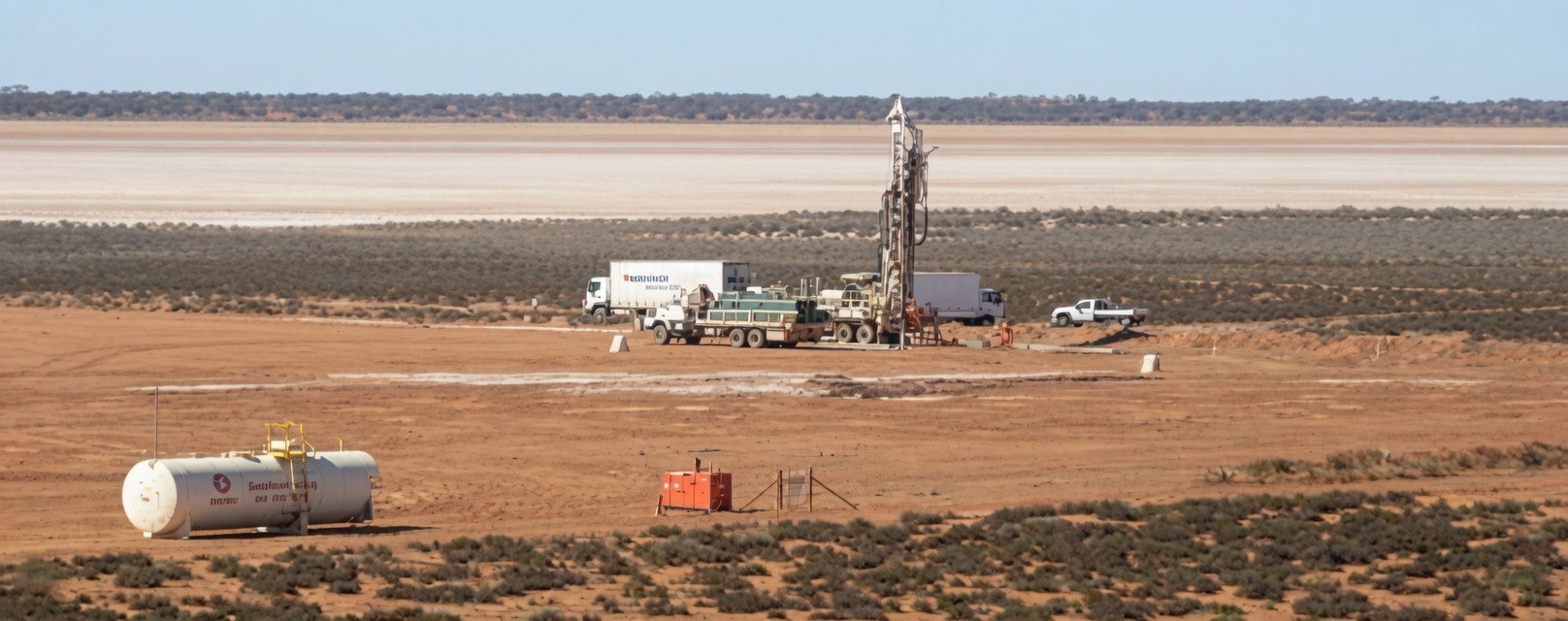
ATHA Energy has completed the 2026 diamond drilling campaign on the Mineralized RIB Corridor at its 100%-owned Angilak Uranium Project in Nunavut. The final 7 holes at the RIB North Discovery all intersected uranium mineralization. Across the season, the company completed 23 diamond holes on the corridor, 21 of which intersected uranium mineralization.
Drilling on the corridor's Eastern Limb has extended the mineralized strike length from 1.45 kilometers (km) to 3.4 km. It connected the RIB North and RIB East Discoveries along the same mineralized shear zone complex, a band of rock deformed by faulting. The program started from a single discovery hole drilled at RIB North in 2025.
Chief Executive Officer of ATHA Energy, Troy Boisjoli, measured the season against his own 2 decades in uranium exploration:
"In two decades as an exploration geologist exploring for uranium in the world's top jurisdictions, I am not aware of another project globally that's advanced from a single discovery hole at the end of one season, to having continuity of uranium mineralization along 3.4 km."
The 2026 program was designed to test, through wide step-outs, an area of mineralization with the potential to host a Tier I deposit, meaning a large, long-life deposit.
A Higher-Grade, Thicker Sub-Zone Near the Discovery Hole
Within the Eastern Limb, drilling has outlined a higher-grade, thicker sub-zone close to the 2025 discovery hole. The sub-zone currently measures approximately 300 meters (m) along strike and 300 m down-dip, meaning down the slope of the mineralized zone, with holes intersecting similar thicknesses, apparent grades, and multiple stacked mineralized structures. The sub-zone and the entire Eastern Limb remain open and unconstrained.
Five holes define the sub-zone so far. The discovery hole returned 34.7 m of total composite mineralization, the combined length of its mineralized intervals, based on assay results. The other 4 holes returned 37.5 m, 17.5 m, 20.0 m, and 19.5 m of total composite uranium mineralization on preliminary radioactivity results.
The newest of those holes is located approximately 250 m along strike to the northeast of the discovery hole. It returned 19.5 m of total composite uranium mineralization over 14 zones from 180.0 m to 777.5 m depth, including 2.0 m of high-grade mineralization. Its highest-grade interval was 2.5 m from 582.0 m depth, averaging 6,865 counts per second with a maximum of 26,327 counts per second over 0.1 m, including 0.7 m of high-grade mineralization.
Step-Outs Carry Mineralization to the Northeast
Two step-outs extended drilling to the northeast, beyond the sub-zone. A hole approximately 850 m along strike from the discovery hole intersected some of the highest-grade mineralization to date at RIB North. It returned 2.5 m of total composite uranium mineralization over 3 zones from 319.5 m to 740.5 m depth, including 0.6 m of high-grade mineralization. Its highest-grade interval was 1.5 m from 739.0 m depth, averaging 17,593 counts per second with a maximum of 78,785 counts per second over 0.1 m.
A second hole, approximately 1.2 km along strike to the northeast, returned 5.5 m of total composite uranium mineralization over 6 zones from 490.5 m to 687.5 m depth. That hole sits at the northeast extent of the Eastern Limb tested so far, and the corridor remains open and unconstrained for potential future northeast step-outs.
Vice President of Exploration of ATHA Energy, Cliff Revering, tied the connection to the company's view of the system:
"Widely spaced step-out drilling has now linked RIB North and RIB East, tracking mineralization over a strike length of 3.4 kilometers, with the system remaining open in all directions. This connection marks an important milestone, supporting our interpretation that the two zones form part of a continuous, laterally extensive mineralized structural system with considerable potential for further expansion."
The Western Limb adds a second horizon. Mineralization there has been traced over approximately 220 m of strike, with early indications that this secondary shear zone may connect with the RIB West Discovery, for a possible strike length of approximately 3.0 km.
Reading the Gamma Probe Results
All 2026 widths come from a downhole gamma probe, which measures radioactivity in the drill hole rather than grade from a laboratory assay. ATHA counts as mineralized any interval averaging more than 300 counts per second over 0.1 m. It lowered that threshold from 500 counts per second after 2024 and 2025 assays showed that readings above 300 counts per second typically return grades above 0.01% uranium oxide. The company treats readings above 10,000 counts per second as high-grade mineralization.
The intercepts are core widths, and the true thickness is yet to be determined.
Next Steps
Core samples from the program have been submitted to the Saskatchewan Research Council laboratories in Saskatoon for analysis. ATHA plans to release preliminary results from holes completed on the Lac 50 Deposit Corridor, including the Lac 50 NW Discovery area.
The company is also working with subject matter experts on an interpretation that the uranium deposits at Angilak follow an orogenic uranium-rich deposit model, in which deposits form during mountain building. It plans to document the foundation for that interpretation.
FAQs (AI-Generated)
Analyst's Notes





Subscribe to Our Channel





Stay Informed