
39-Nation Nuclear Pledge Raises Need for Uranium Mine Investment



Reactor fuel requirements are projected to more than double by 2040, increasing the importance of mine replacement, domestic output, and long-term contracts.
- The 39-nation nuclear pledge now represents countries accounting for approximately two-thirds of global economic output and energy consumption, expanding policy support behind future uranium demand.
- Global uranium requirements are projected to exceed 150,000 tonnes annually by 2040, compared with approximately 68,920 tonnes in 2025.
- Primary uranium production supplied 90% of reactor requirements in 2024, increasing the importance of replacing depleted mine capacity through new investment.
- US uranium production reached 2.1 million pounds in 2025, yet domestic-origin material represented only 7% of deliveries to US nuclear operators.
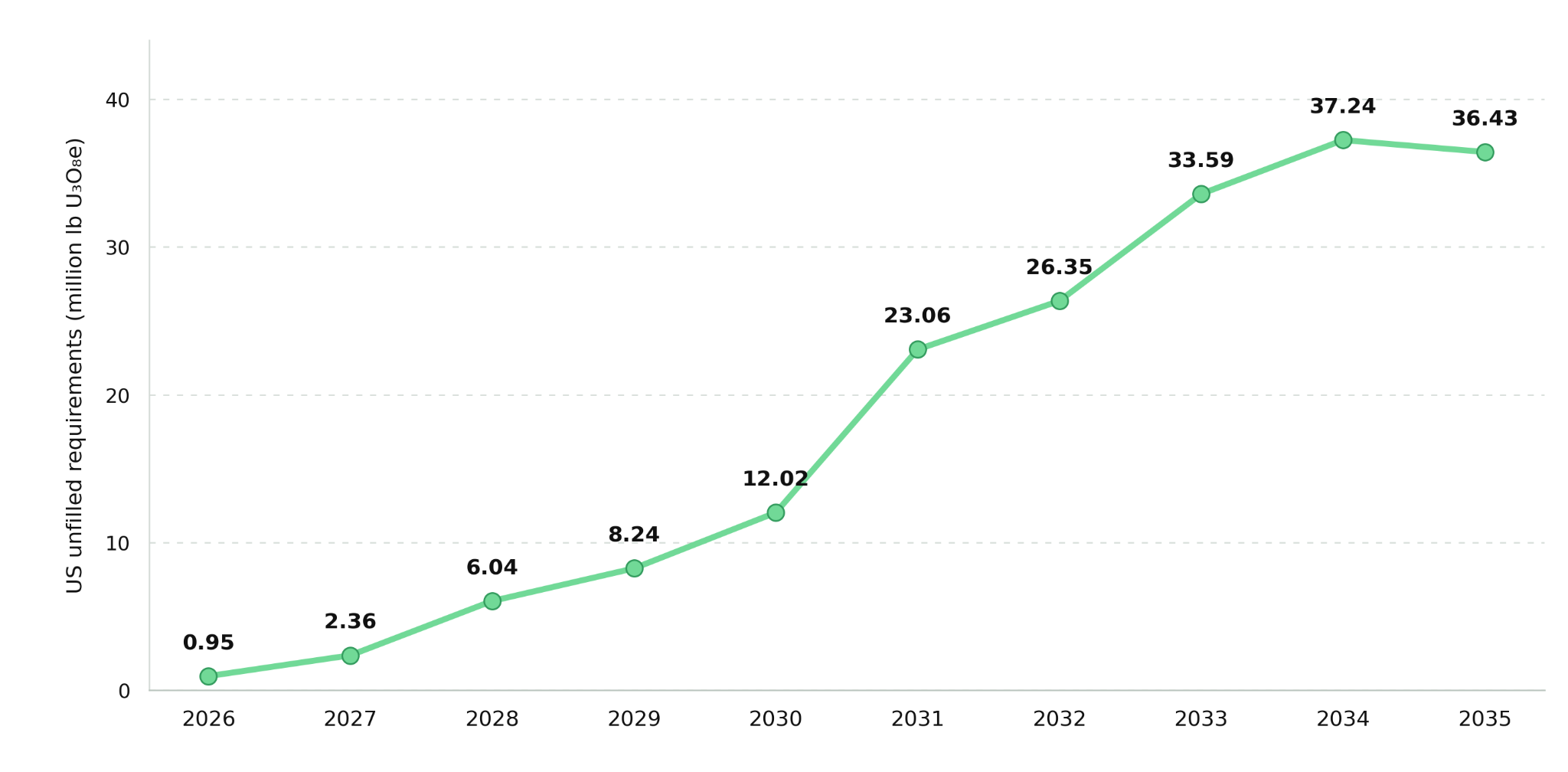
- US reactor operators reported 186 million pounds of unfilled uranium requirements through 2035, creating a substantial long-term market for future mine supply.
39-Nation Pledge Broadens Policy Support for Uranium Fuel Demand
The World Nuclear Association (WNA) reported on November 12, 2026, that six countries, including China and Brazil, had joined the Declaration to Triple Nuclear Energy by 2050 since the previous climate summit, bringing total support to 39 countries. Together, the participating countries account for approximately two-thirds of global economic output and energy consumption. Additional reactors require secure uranium fuel sourcing, strengthening the need to finance new mine production.
The WNA's October 2026 World Nuclear Outlook Report identifies 88 gigawatts of electrical capacity (GWe) under construction, up from 76 GWe in its previous assessment. Planned capacity also increased from 107 GWe to 112 GWe. The increase in projects under construction gives uranium mine developers a more concrete basis for timing future production to meet reactor fuel requirements.
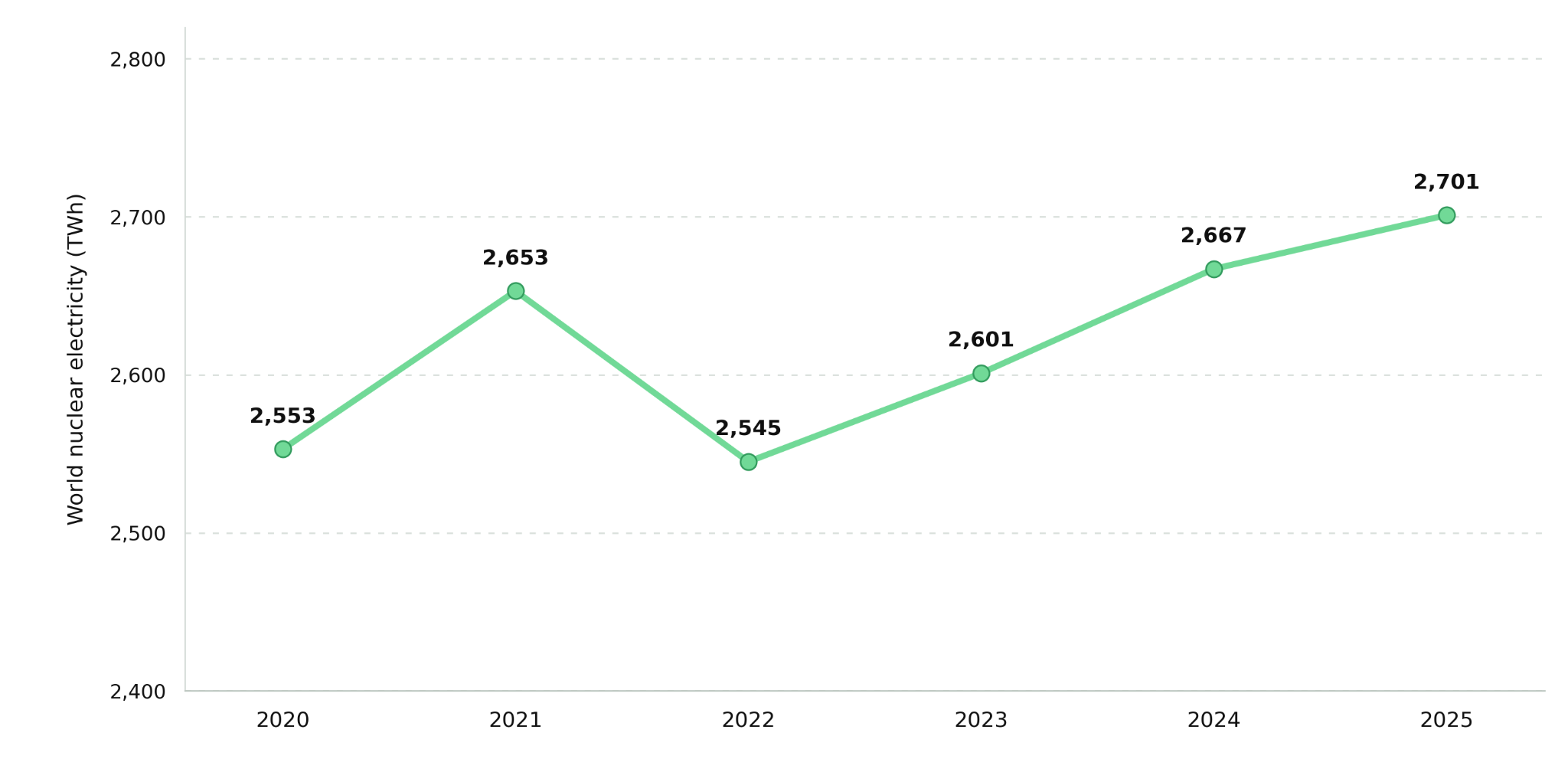
Global nuclear generation reached a record 2,701 terawatt-hours in 2025, up 35 terawatt-hours from 2024. The average reactor capacity factor reached 83.7%, supporting ongoing uranium demand from the operating reactor fleet.
Mine Depletion Raises Need for Additional Uranium Supply
WNA estimates global reactor uranium requirements at approximately 68,920 tonnes in 2025. Annual requirements are projected to exceed 150,000 tonnes by 2040, with a higher-demand scenario exceeding 204,000 tonnes.
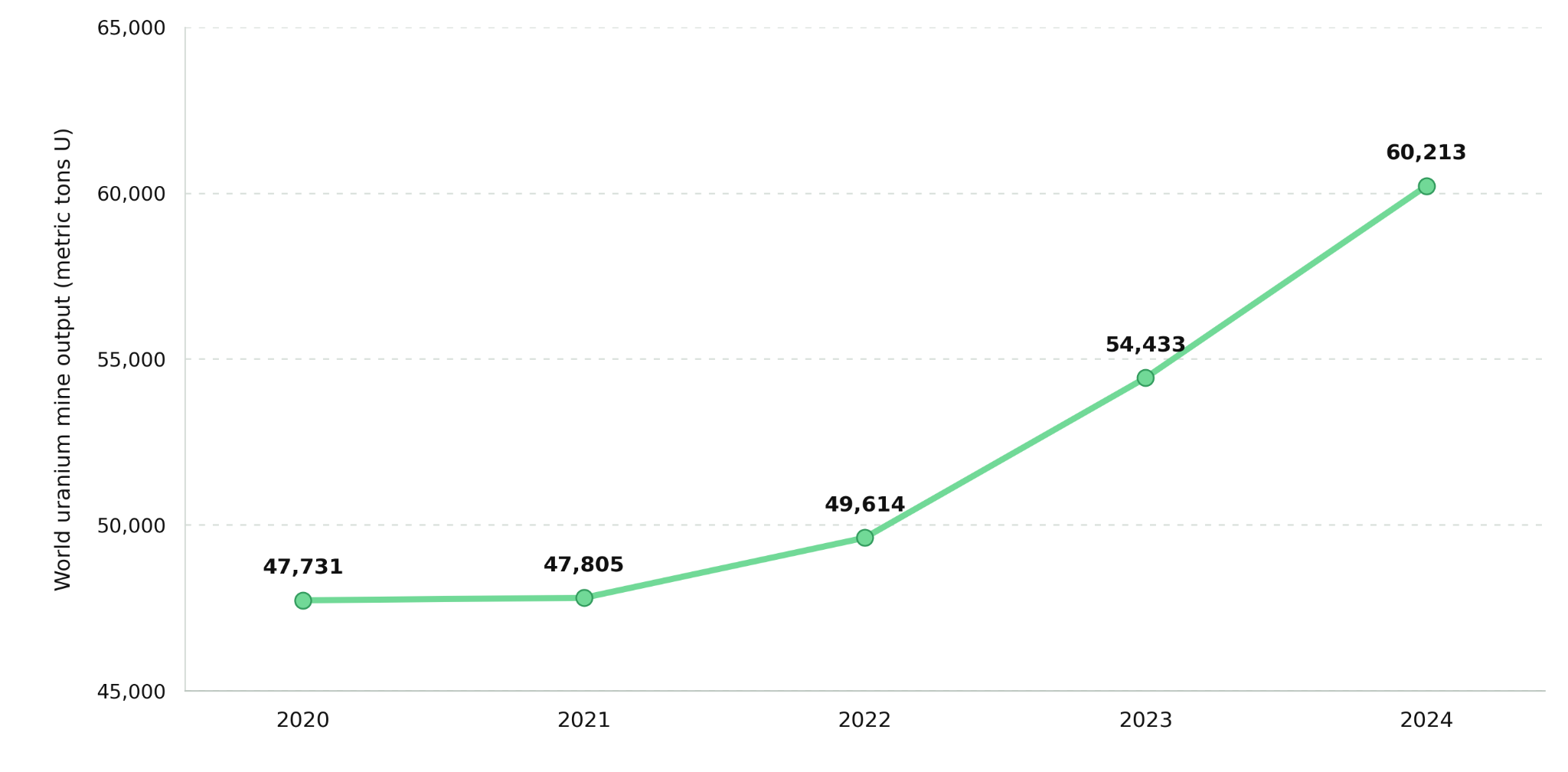
Primary uranium production supplied approximately 90% of annual reactor requirements in 2024, up from 78% in 2022. Resource depletion at existing mines in the mid-2030s creates a need to finance and develop replacement uranium mine capacity ahead of that period.
The International Energy Agency (IEA) reports that the three largest uranium-producing countries account for almost three-quarters of global mine production. Uranium ownership rules can affect mine financing, reinforcing the case for developing projects across more jurisdictions to broaden future sourcing options for nuclear utilities.
Higher Exploration Drilling Advances Search for Larger Deposits
The US Energy Information Administration (EIA) reported 1,824 uranium exploration drillholes totaling approximately 1.02 million feet in 2025, up from 1,324 holes and 613,000 feet in 2024. The additional drilling reflects a greater effort to identify uranium deposits that could support future mine development.
ATHA Energy completed its 2026 drilling program at the Angilak project in Nunavut, connecting the Rib North and Rib East discoveries across 3.4 kilometers of uranium mineralization. Uranium was encountered in 21 of 23 drillholes, while preliminary results identified a higher-grade zone extending approximately 300 meters. The results provide additional targets for future drilling and resource delineation.
Troy Boisjoli, Chief Executive Officer of ATHA Energy, explains why uranium supply needs larger discoveries:
"I think it's clear to me what the market is looking for, and this is what the industry needs. It is large, scalable assets that can become a meaningful component to help solve what is nearly an existential supply deficit going into the 2030 decade."
Projected Uranium Shortfalls Favor Advanced Mine Projects
WNA projects global nuclear generating capacity rising from 372 GWe in 2024 to 746 GWe by 2040. The projected capacity increase makes development agreements and economic studies important for assessing how established uranium resources can advance toward commercial mine production.
Atomic Eagle regained a 60% interest and operational control of the Madaouela uranium project in Niger under a mining agreement finalized in September 2026. The project contains a reported foreign resource estimate of 116.5 million pounds of uranium oxide. An updated resource estimate and scoping study targeted for the first quarter of 2027 will better define Madaouela's production potential and project economics.
Phil Hoskins, Chief Executive Officer of Atomic Eagle, highlights why anticipated uranium shortages favor mine development:
“I think if people understand that what we own is valuable, particularly in a uranium market where the deficit is going to be significant by the time this project is capable of coming online, people will be scrambling for new production assets.”
National Reactor Targets Support High-Grade Deposit Development
WNA identifies another 548 GWe of nuclear generating capacity needed beyond currently identified projects to meet national government targets by 2050. This additional capacity would increase long-term uranium requirements, strengthening the relevance of high-grade deposits with established resources and nearby processing infrastructure.
IsoEnergy reported November 5 assay results confirming high-grade uranium mineralization approximately 500 meters east of its Hurricane deposit in Saskatchewan, extending the known mineralized area around a 48.6 million-pound indicated uranium oxide resource averaging 34.5% grade. The deposit lies about 40 kilometers from the McClean Lake mill, placing it near established processing infrastructure. The company also agreed to increase its stake in a US uranium developer to approximately 22% upon closing, expanding its exposure to additional development and exploration projects.
US Import Reliance Creates Room for Domestic Production Growth
EIA reported that US uranium oxide concentrate production increased to approximately 2.1 million pounds in 2025 from 657,000 pounds in 2024. US-origin uranium accounted for only 7% of deliveries to civilian nuclear operators in 2025, leaving scope for domestic producers to supply a larger share of utility purchases.
enCore Energy completed the first phase of its Upper Spring Creek satellite facility and wellfield, along with the Alta Mesa wellfield 3 extension, with both awaiting final regulatory approval before uranium extraction can begin. The company is targeting operations at both before the end of 2026 and extraction from Alta Mesa wellfield 8 in early 2027. At Dewey Burdock in South Dakota, key federal approvals are in place and state permitting is advancing, extending its US uranium project pipeline.
EIA identified seven planned in-situ recovery uranium plants across South Dakota, Texas, and Wyoming at the end of 2025, representing a combined potential annual capacity of 10.5 million pounds of uranium oxide. These facilities would expand US uranium production capacity beyond existing operations, providing an additional source of domestic supply as they enter service.
Nuclear Buildout Increases Capital Needs Across the Fuel Supply Chain
Eleven reactors began construction in 2025, while meeting the 39-nation pledge to triple nuclear capacity by 2050 would eventually require construction rates approximately six times that pace. The larger reactor fleet would increase annual uranium fuel requirements, raising the amount of mine production needed to sustain nuclear generation.
Uranium conversion capacity is already tight, while the three largest countries account for approximately 70% of global conversion and enrichment capacity. Investment in conversion and enrichment alongside uranium mining would help move additional mine output through the fuel supply chain toward reactor use.
Long-term contracts accounted for 87% of uranium deliveries to US civilian nuclear operators in 2025. At year-end, operators reported unfilled requirements for 186 million pounds of uranium oxide equivalent through 2035. These unfilled requirements give uranium projects with credible production schedules a market to pursue through long-term utility supply contracts.
The Investment Thesis for Uranium
- The expanding nuclear construction pipeline strengthens the long-term investment case for uranium mining across the stages required to deliver additional supply.
- Producers offer exposure to uranium supply growth through established processing infrastructure, operating experience, and the ability to expand extraction as additional wellfields and mining capacity become available.
- Developers provide exposure to future uranium production as resource estimates, metallurgical performance, permitting progress, and financing arrangements support the transition toward mine construction.
- Explorers contribute to the longer-term supply pipeline by identifying and delineating uranium deposits with the scale, grade, and geological continuity needed to support future development.
- Jurisdictional quality strengthens project development through established mining legislation, reliable infrastructure, secure operating agreements, and regulatory frameworks that support investment over long production horizons.
- Long-term utility contracting can improve revenue visibility and support mine financing where production schedules align with nuclear fuel procurement requirements.
International commitments to expand nuclear power reinforce the long-term need for uranium mine investment. Operating reactors require ongoing fuel deliveries, while new reactor construction adds future requirements that the mining sector must be ready to serve. Long-term utility contracting connects these stages of investment to future fuel purchases, making progress toward commercial uranium supply central to the sector's opportunity.
TL;DR
The 39-nation commitment to expand nuclear power supports a uranium demand outlook in which annual reactor requirements rise from approximately 68,920 tonnes in 2025 to more than 150,000 tonnes by 2040. Anticipated depletion at existing mines in the mid-2030s increases the need for replacement supply, while exploration discoveries and development studies support future production capacity. US uranium output is recovering, yet domestic-origin material accounted for only 7% of reactor operator deliveries in 2025. With 87% of US deliveries purchased under long-term contracts and 186 million pounds of unfilled uranium oxide equivalent requirements through 2035, credible development schedules and dependable production remain central to securing future utility demand.
FAQs (AI-Generated)
Analyst's Notes





Subscribe to Our Channel








Stay Informed