




Atlas Salt: Positioning North America's Next Major Salt Mine for Production


Atlas Salt is developing North America's first new salt mine in 30 years in Newfoundland with $920M NPV8, serving import-dependent markets with 4Mtpa production by 2030.
- Atlas Salt is developing the Great Atlantic Salt Project in Newfoundland, Canada, North America's first new salt mine in nearly three decades
- The 2025 Updated Feasibility Study shows compelling economics with after-tax NPV8 of $920 million, IRR of 21.3%, and production targeting 4 million tonnes annually
- Strategic location near import-dependent U.S. East Coast markets provides competitive advantages with 3-day shipping versus 14+ days from overseas suppliers
- The project features a shallow, high-grade deposit (95.0 Mt reserves at 95.9% NaCl) requiring lower capital costs than legacy deep mines
- Completed environmental assessment approval, secured offtake agreements with Scotwood Industries, equipment financing with Sandvik, and experienced management team with over 40% insider ownership substantially de-risk the development pathway
Introduction: A Generational Opportunity in an Overlooked Commodity
While lithium and copper dominate mining investment conversations, salt remains a foundational industrial commodity with surprisingly tight supply dynamics. Atlas Salt Inc. (TSXV: SALT) is developing what will become North America's first new salt mine in approximately 30 years, positioning the company to capitalize on a market characterized by aging infrastructure, supply disruptions, and growing import dependence.
The Great Atlantic Salt Project in Newfoundland represents more than just another mining development. It addresses a structural supply gap in the North American de-icing salt market, which imports between 8 and 10 million tonnes annually to meet demand. Recent events underscore the vulnerability of traditional salt supply chains, from Cyclone Ditwah's impact on Indian coastal salt production affecting 75,000 workers and 20,000 acres of salt pans, to the permanent closure of Cargill's historic Avery Island mine in Louisiana in 2021, which removed 2.5 million tonnes of annual domestic supply.
For investors seeking exposure to essential materials with defensive characteristics and growth potential, Atlas Salt presents a compelling case built on resource quality, strategic location, robust project economics, and tangible de-risking milestones already achieved.
Company Overview: Building North America's Newest Salt Operation
Atlas Salt was founded by Patrick Laracy, a mining professional with over 30 years of resource exploration and development experience. The company's singular focus is advancing the Great Atlantic Salt Project from feasibility through construction to production, with first salt targeted by 2030.
The management team combines deep salt industry expertise with mine construction and financing experience. CEO Nolan Peterson brings 20 years in mine development, operations, and finance, having previously led World Copper and advanced over $1 billion in mining assets. The operational leadership includes Andrew Smith as Project Director and General Manager, who brings a decade of underground mine construction experience and previously headed project management at Dumas, where he led over $500 million in project builds.
Nolan Peterson, CEO of Atlas Salt noted:
"We're not just building a salt mine; we're establishing critical infrastructure that will serve North America's winter safety needs for generations while creating lasting economic value for Newfoundland and our shareholders."
Critically, the board includes Rowland Howe, a salt industry veteran who led Compass Minerals' Goderich mine to record production of 7.5 million tonnes annually. This operational knowledge base provides Atlas Salt with proven expertise in the specific technical and market challenges of salt mining.
The Great Atlantic Salt Project: World-Class Resource Characteristics
The Great Atlantic Salt Project hosts a shallow, high-grade, homogeneous salt deposit with 2P Reserves of 95.0 million tonnes at 95.9% NaCl grade. Additionally, the project contains 383 million tonnes of Indicated resources and 868 million tonnes of Inferred resources at 95.2% NaCl, providing substantial optionality for mine life extensions and production increases beyond the current 24.3-year base case.
The deposit's geometry offers significant advantages over legacy North American salt operations. While the world's largest salt mine at Goderich, Ontario, operates at approximately 600 meters depth under Lake Huron, the Great Atlantic deposit sits at roughly 180 meters from surface. This shallow configuration enables access via decline ramps rather than expensive shaft sinking, reducing upfront capital requirements and construction timeline.
The resource quality extends beyond simple grade metrics. Significant concentrations of ultra-high-purity salt exceeding 98% NaCl exist within the deposit, concentrated around the pillow-shaped central formation. This provides optionality to target premium markets requiring chemical-grade salt while maintaining robust economics serving the de-icing market.
Updated Feasibility Study: Optimized Economics & De-Risked Design
In September 2025, Atlas Salt released its Updated Feasibility Study, which materially improved project economics compared to the 2023 baseline study. The updated plan shortened mine life to 24.3 years from 34 years by pulling forward production and increasing average annual output by over 60% to 4.0 million tonnes from 2.5 million tonnes.
The after-tax NPV8 increased 66% to $920 million with an internal rate of return of 21.3% and payback period of 4.2 years. Over the life of mine, the project is projected to generate $4.6 billion in cumulative post-tax cash flow with average annual post-tax cash flow of $188 million. Initial capital expenditure is estimated at $589 million, with total sustaining capital over the mine life of $609 million.
The feasibility study incorporated learnings from the environmental assessment process and refined the mine design based on proven methodologies. The project plan draws directly from Irish Salt Mining's Kilroot Mine operations, which successfully employ similar underground mining techniques and enclosed conveyor systems.
Strategic Market Position: Serving Import-Dependent North America
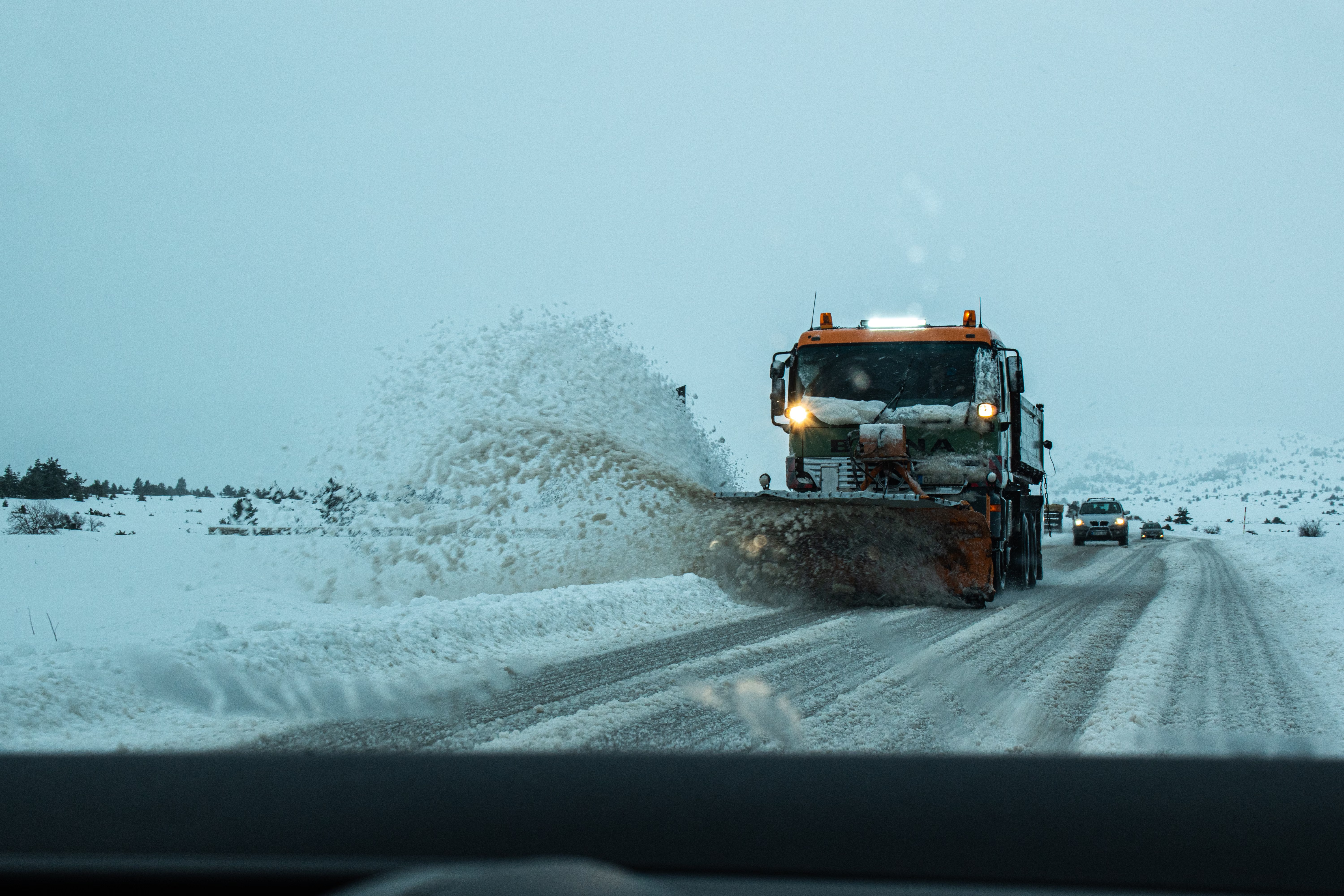
North America's road salt market presents attractive supply-demand fundamentals that position Atlas Salt for commercial success. Annual North American de-icing salt consumption ranges between 28.5 and 36 million tonnes, representing a market size of approximately $2.3 to $2.9 billion. The market has demonstrated consistent 4.2% compound annual growth, driven by infrastructure expansion, climate variability, and rising quality standards for road maintenance.
Despite this domestic demand, North America imports between 8 and 10 million tonnes of salt annually, primarily from Chile, Egypt, Mexico, and Caribbean sources. The United States imported 67.5 million tonnes of salt between 2020 and 2023, with Chile representing 27% of imports, Canada 29%, Mexico 14%, and Egypt 8%.
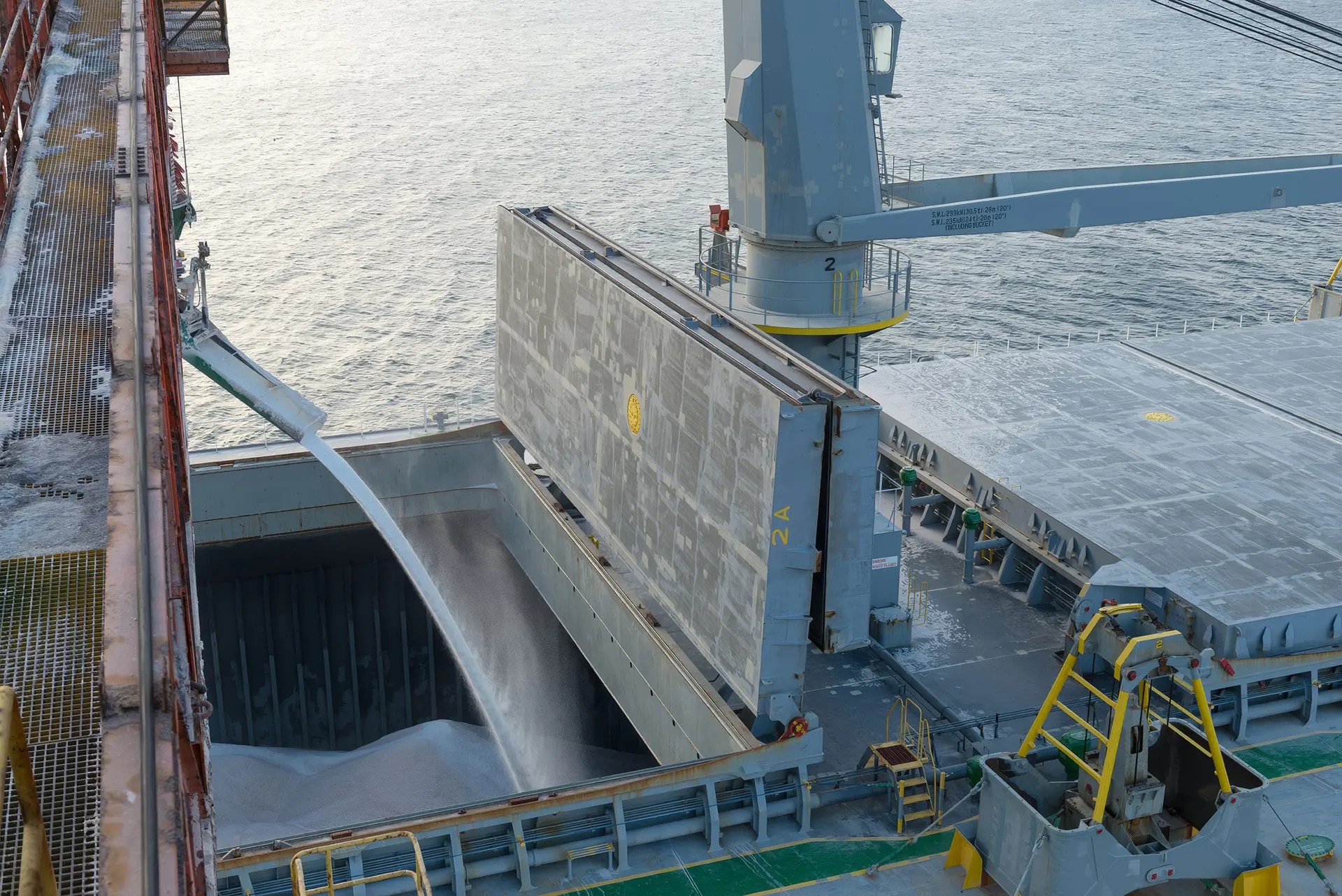
The Great Atlantic Salt Project's location in western Newfoundland provides direct access to Atlantic Canada, Quebec, and the U.S. East Coast markets, which collectively consume between 11 and 16 million tonnes of road salt annually. Shipping time from the project's Turf Point port to Boston is approximately three days compared to over 14 days from Egyptian or Chilean sources.
Competitive Advantages: Infrastructure, Jurisdiction, and ESG Profile
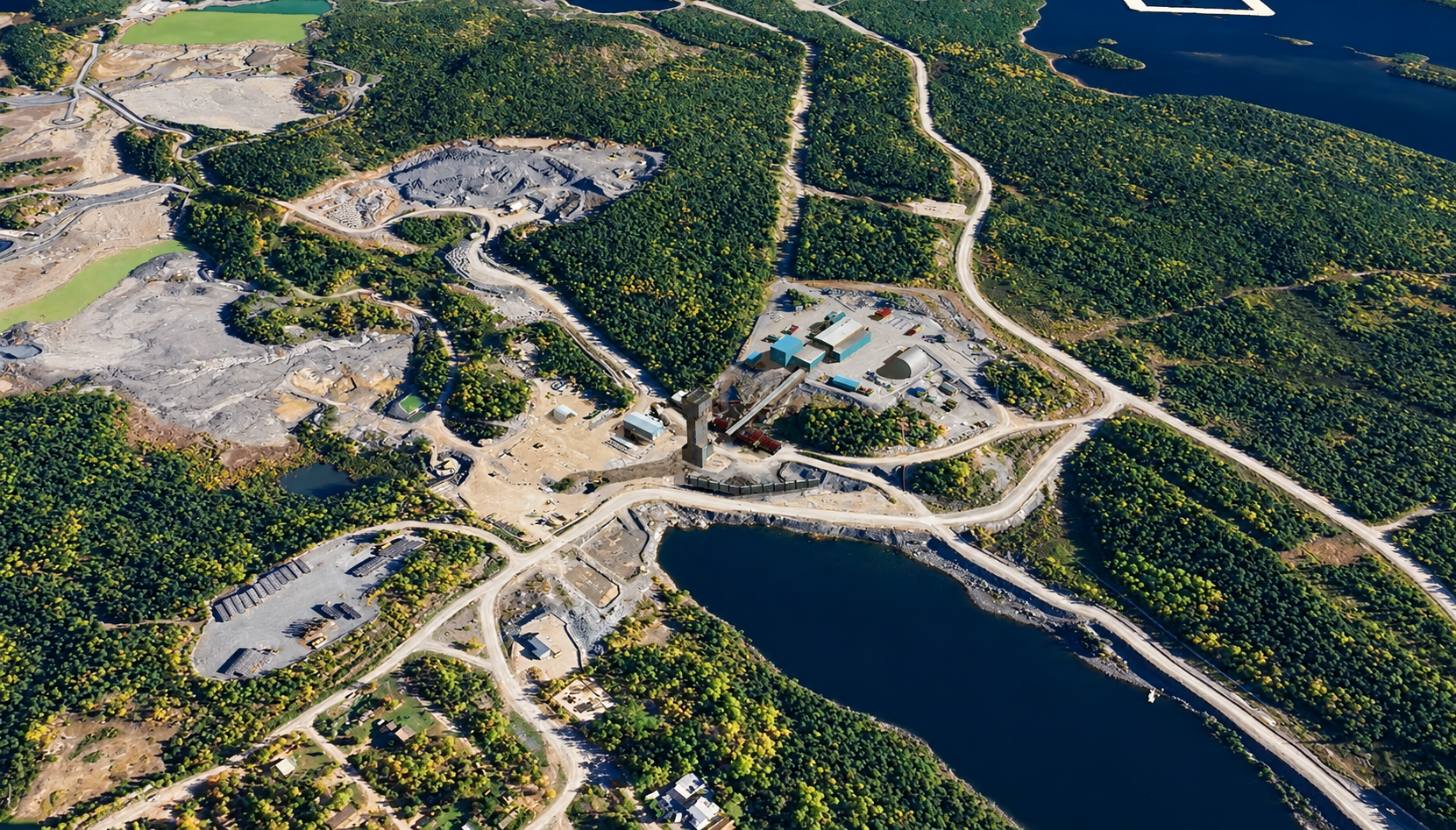
Atlas Salt benefits from established infrastructure that reduces capital requirements and execution risk. The project site sits just 2 kilometers from Turf Point Marine Terminal, a deep-water port with existing loading facilities, and 1.4 kilometers from St. George's electrical substation. The Trans-Canada Highway runs directly past the project, and the region has a long history of mining and shipping operations dating to the 1950s.
Newfoundland and Labrador ranks as the 9th best mining jurisdiction globally according to the Fraser Institute's 2025 investment attractiveness survey. The province has attracted major mining capital recently, including Equinox Gold's acquisition of Calibre Mining and the Valentine Gold Project, FireFly Metals' $100 million financing with BMO, and continued investment by Eric Sprott in New Found Gold.
The project's environmental profile represents a significant competitive advantage. The operation will be fully electric, powered by clean hydroelectricity, with projected Scope 1 greenhouse gas emissions of just 79 tonnes per year, equivalent to approximately four Newfoundland households. The operation produces no tailings, uses no chemicals in processing, and minimizes surface disturbance through underground mining methods.
Permitting and Development Progress: Tangible De-Risking Achieved
Atlas Salt has systematically advanced through critical permitting and approval milestones, substantially de-risking the project's path to construction. In April 2024, the Newfoundland and Labrador Minister of Environment released the project from the provincial environmental assessment process after approximately two months of review.
The company has secured nine key permits and management plans, including the Environmental Protection Plan covering construction-phase mitigations, Waste Management Plan addressing handling, storage, transport, and disposal, and Water Resource Management Plan governing drainage, settling basins, and discharge protocols.
In August 2024, the company announced a memorandum of understanding with Scotwood Industries, the largest distributor of packaged retail de-icing salt in the United States, for targeted offtake volumes of 1.25 to 1.5 million tonnes annually. This represents up to 37.5% of planned production under a long-term supply relationship with an established market participant.
Financial Position & Funding Strategy
As of October 31, 2025, Atlas Salt maintains a clean balance sheet with 108.2 million basic shares outstanding and 116.5 million fully-diluted shares including 5.2 million options and 3.1 million equity-linked units. The company reported net cash of approximately $11.4 million following an October 2025 financing that raised $8.7 million.
The company has engaged Endeavour Financial as project finance advisor to structure the construction funding package. Initial capital requirements of $589 million will be met through a combination of project finance debt, strategic partnerships, and potential additional equity. The Sandvik equipment financing arrangement for $73 million represents approximately 12% of initial capital requirements.
Atlas Salt's enterprise value of approximately $69 million represents substantial valuation upside relative to the project's after-tax NPV8 of $920 million, implying approximately 0.075x price-to-NAV multiple. This significant discount to net asset value reflects the project's pre-construction stage and provides meaningful re-rating potential as Atlas Salt progresses through construction financing, offtake expansion, and construction initiation milestones.
Market Context: Climate Disruptions Highlight Supply Vulnerabilities
Recent events underscore the vulnerability of traditional salt supply chains and the strategic value of developing new, geographically diversified production capacity. Cyclone Ditwah's impact on southern India's salt-producing region in November 2025 disrupted operations across approximately 20,000 acres of coastal salt pans. The cyclone's heavy rainfall and flooding caused approximately 75,000 workers to face severe income disruption, while the affected region dropped in national salt output rankings to third position.
The cyclone's impact illustrates structural vulnerabilities facing solar evaporation salt production in low-lying coastal areas increasingly exposed to extreme weather events. Such climate-driven disruptions create supply tightness and price volatility that benefit diversified, weather-resistant underground operations like Atlas Salt's planned mine.
North America has experienced its own supply disruptions. Cargill's 2021 closure of the Avery Island, Louisiana salt mine removed 2.5 million tonnes of annual domestic supply from U.S. East Coast de-icing markets. The company's remaining salt assets in New York and Cleveland have remained unsold since a 2023 divestiture process began, reportedly due to environmental risk concerns.
Community & Economic Impact: Multi-Generational Value Creation
The Great Atlantic Salt Project represents transformative economic opportunity for western Newfoundland. The company's ESG report projects approximately $4.8 billion in GDP impact over the mine life, creation of over 170 long-term jobs, and $2.5 billion in local wages circulating through Newfoundland's economy.
Tax revenues are projected at $2.7 billion over the project life, with significant portions accruing to provincial and municipal governments. Municipalities will receive an estimated $90 million in direct revenues, providing sustained funding for community services and infrastructure.
Atlas Salt has developed comprehensive benefits agreements addressing gender diversity, equity, and inclusion in workforce participation, local hiring and procurement priorities, and community engagement protocols. These commitments reflect both regulatory requirements and practical recognition that project success depends on maintaining social license throughout the multi-decade operational period.
The Investment Thesis for Atlas Salt
- Atlas Salt is developing the Great Atlantic Salt Project in Newfoundland, Canada, North America's first new salt mine in nearly three decades
- Atlas Salt addresses structural North American salt supply tightness driven by import dependence, legacy mine closures, and limited new production.
- After-tax NPV8 of $920 million and 21.3% IRR with 4.2-year payback support attractive risk-adjusted returns with conservative base case assumptions.
- Completed feasibility study, approved environmental assessment, secured strategic agreements, and proven mine design substantially reduce development risk.
- Current enterprise value of $69 million represents approximately 13x discount to NPV8, with potential re-rating as project advances through key milestones.
- Fully electric operation with industry-leading low carbon intensity, no tailings, and minimal environmental footprint positions Atlas Salt favorably for institutional investment.
- Experienced team with specific salt industry knowledge, proven mine construction track record, and over 40% insider ownership ensures aligned interests.
Atlas Salt represents a rare opportunity to invest in a fully-permitted, feasibility-stage salt project addressing structural North American supply tightness. The company's strategic positioning to serve import-dependent East Coast markets, combined with competitive advantages from resource quality, existing infrastructure, and jurisdictional support, creates a compelling investment thesis for patient capital seeking exposure to essential minerals with defensive characteristics.
The project's robust economics support the investment case, while conservative engineering assumptions and proven operational precedents reduce execution risk. Near-term catalysts including construction financing completion, additional offtake agreements, engineering firm selection, and potential strategic partnerships provide multiple opportunities for valuation re-rating.
As North America's legacy salt infrastructure ages and climate disruptions highlight supply chain vulnerabilities, the strategic value of new, domestic salt production capacity continues to increase. Atlas Salt stands positioned to capitalize on these structural trends while delivering both commercial returns and essential infrastructure serving critical winter road safety needs across the continent.
TL;DR
Atlas Salt offers exposure to a rare greenfield salt development with compelling economics (NPV8 $920M, IRR 21.3%), strategic market positioning to serve import-reliant North American markets, completed feasibility and environmental approvals, secured offtake agreements, and potential re-rating catalysts as the project advances toward 2030 production.
FAQs (AI-Generated)
The company targets first salt production by 2030, subject to securing construction financing and completing mine development.
Annual North American de-icing salt consumption ranges between 28.5 and 36 million tonnes, representing a $2.3 to $2.9 billion market.
The deposit is uniquely shallow at approximately 180 meters depth versus 600+ meters for competitors, reducing capital costs and enabling decline access.
Yes, the company has a memorandum of understanding with Scotwood Industries for targeted offtake volumes of 1.25 to 1.5 million tonnes annually.]
Initial capital expenditure is $589 million with after-tax NPV8 of $920 million, IRR of 21.3%, and projected life-of-mine cash flow of $4.6 billion.
Analyst's Notes





Subscribe to Our Channel

.jpg)
Stay Informed


