




Aging Mines & Rising Imports Create a Structural Salt Deficit Across North America


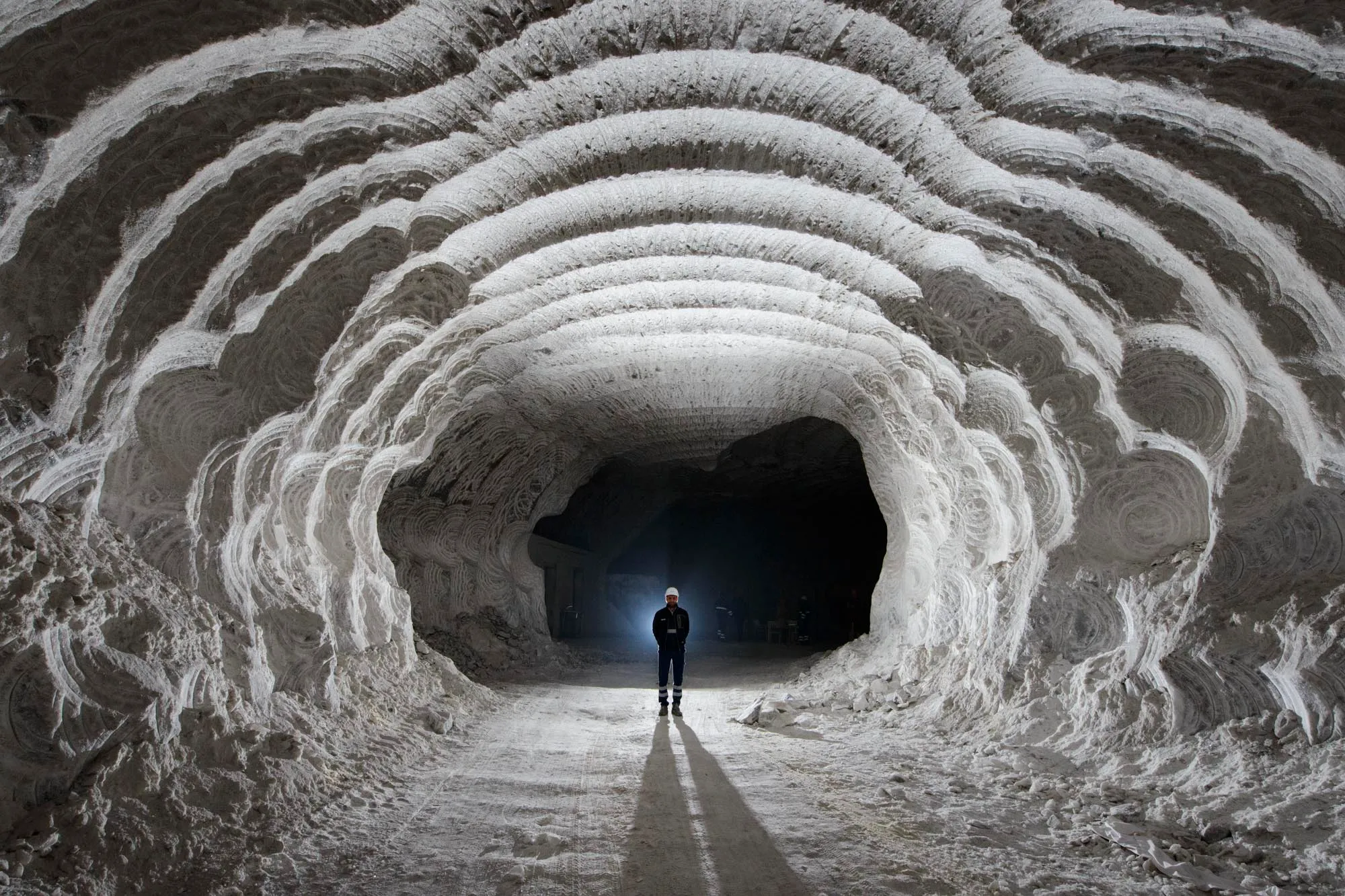
North America faces an 8-10M tonne salt deficit as aging mines and imports meet steady demand, creating opportunities for new domestic supply.
- North America imports 8-10 million tonnes of de-icing salt annually, reflecting a structural supply deficit driven by aging mines, limited new development, and sustained infrastructure demand.
- The de-icing salt market exhibits infrastructure-like demand characteristics, as municipal procurement is tied to public safety mandates rather than economic cycles.
- Distribution channel economics are reshaping project profitability, with retail packaged salt commanding pricing premiums up to ten times higher than bulk municipal contracts.
- New domestic supply projects with shallow deposits, port access, and low-carbon operations can capture structural cost advantages over legacy deep mines and long-distance imports.
- Development-stage projects such as Atlas Salt Inc.'s Great Atlantic Salt Project illustrate how new domestic supply can address structural shortages while offering investors exposure to long-duration, infrastructure-linked cash flows.
The Structural Supply Gap in North America's Salt Market
The North American salt industry rarely receives the same investor attention as metals such as copper or lithium. Yet sodium chloride remains one of the continent’s most strategically important industrial minerals, underpinning winter road safety, chlor-alkali chemical production, water treatment, and food processing. Unlike many mined commodities, salt demand is largely non-discretionary, with municipal and state governments across Canada and the United States legally required to maintain road safety during winter conditions.
This infrastructure-like demand profile contrasts with a supply base that has seen limited reinvestment for decades. Most major underground salt mines in North America were developed between the early 1900s and late 20th century, often operating at depths of 500-600 meters that require complex shaft infrastructure, ventilation systems, and long underground haulage networks. As these operations age, maintenance costs and operational risks increase, while permitting hurdles and historically compressed margins have discouraged new mine development.
North America now imports roughly 8-10 million tonnes of salt annually, primarily from Chile, Egypt, and Mexico, exposing municipalities to logistical risks during severe winter demand spikes. This imbalance raises a central question: where will the next generation of domestic supply come from, and which projects are positioned to capture the structural opportunity?
Infrastructure Demand Makes Salt a Defensive Commodity
Unlike base metals tied to construction cycles or industrial production schedules, de-icing salt exhibits unusually stable consumption patterns. The United States alone consumes roughly 20 million tonnes of de-icing salt annually. Canadian provinces such as Ontario and Quebec represent major seasonal demand centers, with procurement activity driven by statutory road maintenance obligations rather than discretionary budget decisions.
Local governments typically purchase road salt through annual tenders issued months before winter begins, often including supply flexibility provisions that allow deliveries to vary between 80% and 120% of contracted volumes depending on weather severity. This procurement structure creates characteristics that investors typically associate with infrastructure assets: long-term contracts, predictable baseline demand, low substitution risk, and government counterparties.
Weather volatility can amplify pricing dynamics beyond the baseline. In early 2026, spot prices in parts of Ontario reportedly surged from $65-75 per tonne to more than $190 per tonne during acute supply shortages. These episodic price spikes demonstrate that while salt demand is structurally stable, supply constraints can drive significant short-term price volatility. This dynamic implies exposure to stable base demand with meaningful upside during periods of supply disruption.
From Commodity Pricing to Channel Economics
Traditional commodity analysis typically evaluates producers through cost curves and production volumes. In the salt market, however, pricing increasingly reflects distribution access as much as production cost. Three primary channels shape the economics of de-icing salt, each with different margin profiles.
Municipal bulk contracts account for the largest volumes, with government tenders often exceeding 100,000 tonnes annually. Margins are compressed because procurement prioritizes the lowest delivered cost. Commercial mid-market sales to private contractors, typically around 10,000 tonnes, offer slightly higher margins. The most profitable segment lies in retail packaged salt, where consumer products sold through hardware stores and retail chains can command prices up to ten times higher than bulk municipal contracts.
Accessing this premium channel requires distribution partnerships, packaging infrastructure, and retail networks, capabilities most mining companies lack. Building them independently would require significant capital investment, making strategic distribution partnerships a key driver of profitability rather than a secondary operational factor.
Distribution Access as a Strategic Bottleneck
Retail distribution represents one of the most significant barriers to entry in the salt market. Large retail chains allocate shelf space based on supply reliability, established distributor relationships, and brand presence rather than purely on production cost. This dynamic shifts the competitive advantage away from geology and toward downstream channel economics.
Nolan Peterson, Chief Executive Officer of Atlas Salt Inc., emphasized the pricing leverage available to projects positioned to serve domestic markets:
“Our margins are much higher. We have pricing power over many domestic operations and, of course, over the foreign imports that we are trying to displace for the most part.”
Atlas Salt Inc., which is advancing the Great Atlantic Salt Project in western Newfoundland, has signed a memorandum of understanding with Scotwood Industries, one of North America's largest distributors of packaged de-icing salt. The arrangement targets potential distribution volumes of 1.25-1.5 million tonnes annually, providing a pathway to premium retail pricing without requiring Atlas Salt to build downstream infrastructure independently. This structure allows the company to concentrate capital deployment on extraction while participating in higher-margin markets.
The significance of such arrangements extends beyond immediate margin capture. Retail channel access creates demand visibility and pricing stability that bulk municipal contracts cannot offer, materially improving the bankability of long-duration supply agreements for project financing purposes.
Environmental Performance & Procurement Competitiveness
Environmental considerations are increasingly influencing procurement decisions across the salt industry. Several municipalities and government agencies have begun integrating carbon intensity metrics into supplier evaluations, particularly in jurisdictions with active sustainability mandates. Programs such as Denver's Environmentally Preferred Procurement framework, for example, incorporate greenhouse gas emissions into supplier scoring systems alongside traditional pricing criteria.
This regulatory shift creates a durable competitive advantage for projects designed with low-carbon operations from the outset. Battery-electric underground fleets, renewable energy inputs, and enclosed material handling systems can significantly reduce operational emissions compared with conventional diesel-powered underground mines. Projects positioned to meet or exceed these criteria may access a broader procurement universe as environmental scoring becomes more prevalent in government tender evaluation.
For development-stage projects, early integration of electrified fleets and renewable power sources is not simply an environmental positioning decision. It also reduces long-term exposure to carbon pricing mechanisms and future regulatory compliance costs, improving project economics over a multi-decade mine life.
Project Economics & Cost Curve Positioning
For a new salt mine to succeed economically, it must demonstrate clear cost advantages over both aging domestic operations and imported supply. Key determinants include deposit depth, logistics access, reserve scale, and operational simplicity. Salt mining differs from most other mining operations because metallurgical complexity is minimal. High-purity deposits typically require little more than mechanical crushing and sizing, which translates into lower capital intensity and faster permitting timelines relative to hard-rock mining projects that require complex processing facilities.
The Great Atlantic Salt Project, developed by Atlas Salt Inc., illustrates how these factors can combine into a competitive cost structure. The project's updated feasibility study outlines a post-tax net present value (NPV) at an 8% discount rate of approximately C$920 million, an internal rate of return (IRR) of 21.3%, estimated operating costs of approximately C$28 per tonne free-on-board (FOB) at port, average annual production of roughly 4 million tonnes, and a 24-year mine life based on current reserves. These metrics position the project toward the lower end of the North American cost curve, where it would compete directly against both legacy domestic supply and landed import costs.
The project's capital requirements are substantial, with total capital expenditure estimated at C$600 million. Atlas Salt is targeting approximately 60% of this from debt, sourced from major infrastructure lenders, sovereign wealth funds, and export credit agencies. This financing structure, if achieved, would meaningfully reduce the equity burden and cost of capital while aligning the project's risk profile with the infrastructure-linked demand characteristics of the salt market.
Logistics & Geographic Advantages in the North American Market
Salt's relatively low value-to-weight ratio means that transportation costs frequently dominate project economics. Even a deposit with favorable geology can struggle to compete if it lacks efficient logistics infrastructure. This makes proximity to deepwater ports, rail networks, or major highway corridors a primary determinant of delivered cost competitiveness.
Projects located near deepwater ports can ship bulk salt directly to coastal markets, eliminating expensive inland trucking and reducing supply chain complexity. For the northeastern North American market, which imports significant volumes from South America and North Africa, geography provides a measurable logistical edge to Atlantic Canadian supply. Salt shipped from western Newfoundland to Boston, for example, can reach the market in approximately three days, compared with two weeks or more for shipments from South American or North African producers.
This logistical proximity reduces delivered costs and, critically, improves supply reliability during peak demand periods when severe weather events create sudden replenishment pressure. Supply chain compression translates directly into competitive positioning in municipal tender evaluations, where delivery certainty carries material weight alongside price.
The Investment Thesis for Salt
- North America's structural import reliance of 8-10 million tonnes annually reflects a supply deficit that new domestic projects can address over a multi-decade horizon.
- Municipal procurement tied to road safety mandates creates baseline demand visibility and government counterparty credit quality, consistent with infrastructure asset characteristics.
- Retail distribution channel access, as demonstrated by Atlas Salt's arrangement with Scotwood Industries, can unlock pricing premiums far above bulk municipal contract rates, materially improving project-level economics.
- Coastal project locations with deepwater port access reduce delivered costs and improve supply reliability relative to both legacy inland mines and long-distance international imports.
- Low-carbon operational design, including 100% battery-electric underground fleets and renewable power integration, positions qualifying projects favorably within evolving government procurement scoring frameworks.
- Favorable jurisdictional permitting environments, such as Newfoundland and Labrador's two-month environmental assessment timeline for the Great Atlantic Salt Project, reduce execution risk and development timeline uncertainty.
- Long reserve life profiles, with Atlas Salt reporting a 24-year mine life in reserve and potential for up to 50 additional years in resource, support long-duration cash flow modeling consistent with infrastructure-style asset valuation.
- Development-stage valuations for projects at this stage of advancement may not yet reflect derisked project economics, offering asymmetric exposure as permitting, financing, and construction milestones are achieved.
Salt rarely features in mainstream mining investment discussions, yet the industry sits at the intersection of infrastructure resilience, logistics economics, and environmental policy. North America's growing reliance on imports reflects the consequence of decades without meaningful new domestic mine development, and the structural imbalance shows no sign of self-correction through incremental capacity additions at existing operations.
As aging mines approach operational limits and governments place increasing emphasis on supply chain security, carbon emissions performance, and domestic sourcing, the market may increasingly reward projects capable of delivering reliable, low-carbon, domestically produced supply at competitive delivered costs. The economics of new mine development in favorable jurisdictions, particularly those combining shallow deposits, port access, and electrified operations, are becoming progressively more attractive relative to the alternatives.
The salt sector offers a combination that is difficult to replicate elsewhere: essential commodity demand, infrastructure-linked revenue stability, a measurable supply gap, and a small number of development-stage projects positioned to fill it. The investment case does not rest on speculative demand growth or commodity price assumptions, but on the structural reality that North America requires more domestic supply than it currently produces.
TL;DR
North America faces a structural supply deficit in de-icing salt, importing roughly 8–10 million tonnes annually due to aging mines and limited new development. Because salt demand is tied to public safety mandates and infrastructure needs, consumption remains stable even during economic downturns. New projects with advantages such as shallow deposits, port access, and low-carbon operations can compete effectively with both legacy mines and imported supply. The Great Atlantic Salt Project by Atlas Salt illustrates how new domestic supply could address shortages while benefiting from distribution partnerships that unlock higher-margin retail markets. For investors, the sector offers infrastructure-like demand stability combined with supply-driven upside as new projects advance.
FAQs (AI generated)
North America imports roughly 8-10 million tonnes of salt annually because domestic supply has not expanded meaningfully for decades while demand remains stable. Many existing underground salt mines were built in the early to mid-20th century and now operate at significant depths, which increases operating costs and maintenance requirements. At the same time, permitting hurdles and historically thin margins discouraged new mine development. As older mines age and production growth stagnates, imports from countries such as Chile, Egypt, and Mexico fill the gap.
Salt, particularly for road de-icing, exhibits infrastructure-like demand characteristics because consumption is tied to government obligations rather than economic cycles. Municipalities and state agencies must maintain road safety during winter, which means they purchase salt through annual tenders regardless of broader economic conditions. This results in predictable baseline demand, government counterparties, and relatively low substitution risk, making salt consumption patterns more stable than many other mined commodities.
The salt market is shaped by three main distribution channels, each with different margin profiles. Large municipal bulk contracts offer the highest volumes but typically the lowest margins because procurement focuses on the lowest delivered price. Mid-market commercial sales provide somewhat better pricing. The most profitable segment is retail packaged salt, where products sold through hardware stores and retail chains can command prices up to ten times higher than bulk municipal supply. Access to this channel often requires partnerships with established distributors.
For a new salt mine to compete successfully, it must demonstrate clear cost and logistical advantages over older mines and imported supply. Important factors include shallow deposits that reduce mining complexity, proximity to deepwater ports or transport networks, and large reserve bases that support long mine lives. Operational design also matters: projects incorporating battery-electric equipment, renewable power, and efficient material handling can lower operating costs and reduce carbon emissions, which may improve competitiveness in government procurement processes.
The Great Atlantic Salt Project in western Newfoundland represents a potential new source of domestic supply for the North American market. The project combines a large, high-quality deposit with deepwater port access, allowing salt to be shipped efficiently to northeastern U.S. and Canadian markets that currently rely heavily on imports. Feasibility studies suggest competitive operating costs and long mine life, while partnerships with distributors such as Scotwood Industries could provide access to higher-margin retail markets. Together, these factors position the project as a potential contributor to closing the region’s structural salt supply gap.
Analyst's Notes





Subscribe to Our Channel







Stay Informed


