




Hormuz Disruption Sends Freight Costs Surging Across Salt and Bulk Commodities


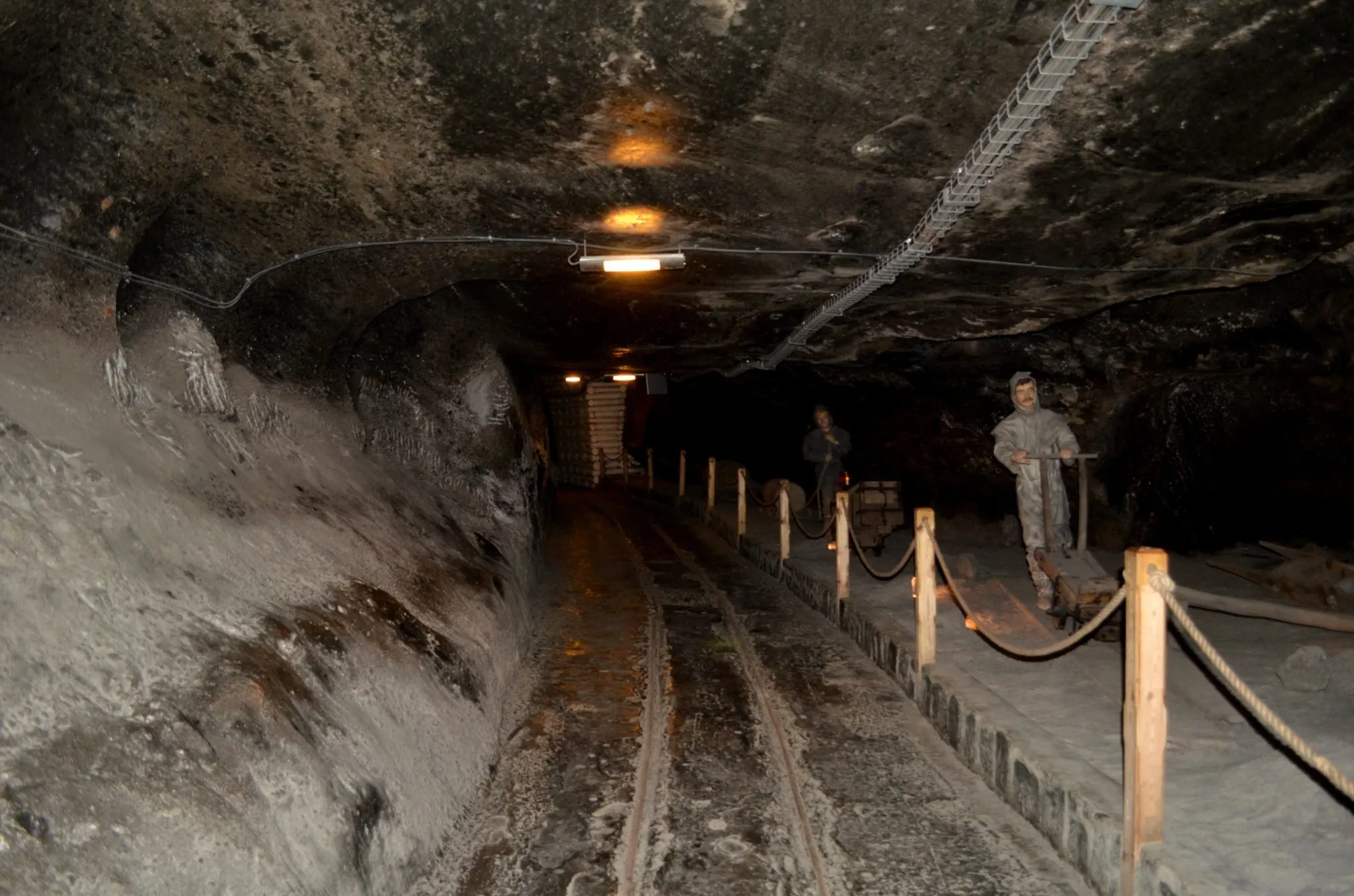
Hormuz disruption raises freight costs, exposing salt supply chain risks and boosting the value of domestic road salt projects in North America.
- Energy security shocks are spilling into bulk commodity logistics. The closure of the Strait of Hormuz and the International Energy Agency's unprecedented 400-million-barrel strategic petroleum reserve release highlight how energy geopolitics can rapidly disrupt global shipping and freight costs.
- Salt markets are more exposed to logistics inflation than most commodities. As a low-margin, high-volume industrial mineral, delivered salt pricing is highly sensitive to fuel costs, tanker rates, and maritime insurance premiums.
- Supply chain resilience is becoming a strategic priority. North America's reliance on imported road salt, roughly 8 to 10 million tonnes annually, has already exposed infrastructure vulnerabilities during winter shortages.
- Domestic supply projects gain strategic value in volatile trade environments. Development-stage projects such as the Great Atlantic Salt Project in Newfoundland illustrate how local production can mitigate shipping disruptions and reduce exposure to international logistics risks.
- Industrial minerals like salt increasingly resemble infrastructure assets. Stable demand from road safety, water treatment, and chlor-alkali industries means pricing is often driven more by logistics and energy markets than by geological scarcity.
Energy Security Shocks Are Spreading Beyond Oil Markets
Geopolitics and logistics have again collided in global energy markets. Disruption around the Strait of Hormuz, through which roughly 20-21 million barrels per day, about one-fifth of global oil trade, flows, has triggered the largest coordinated strategic petroleum reserve release in history, with 400 million barrels from 32 countries.
The move responds to supply losses tied to Iranian exports, but analysts say it may only slow the disruption. The market has already seen an estimated 220-million-barrel deficit after just 11 days, highlighting how quickly supply chains can fall out of balance.
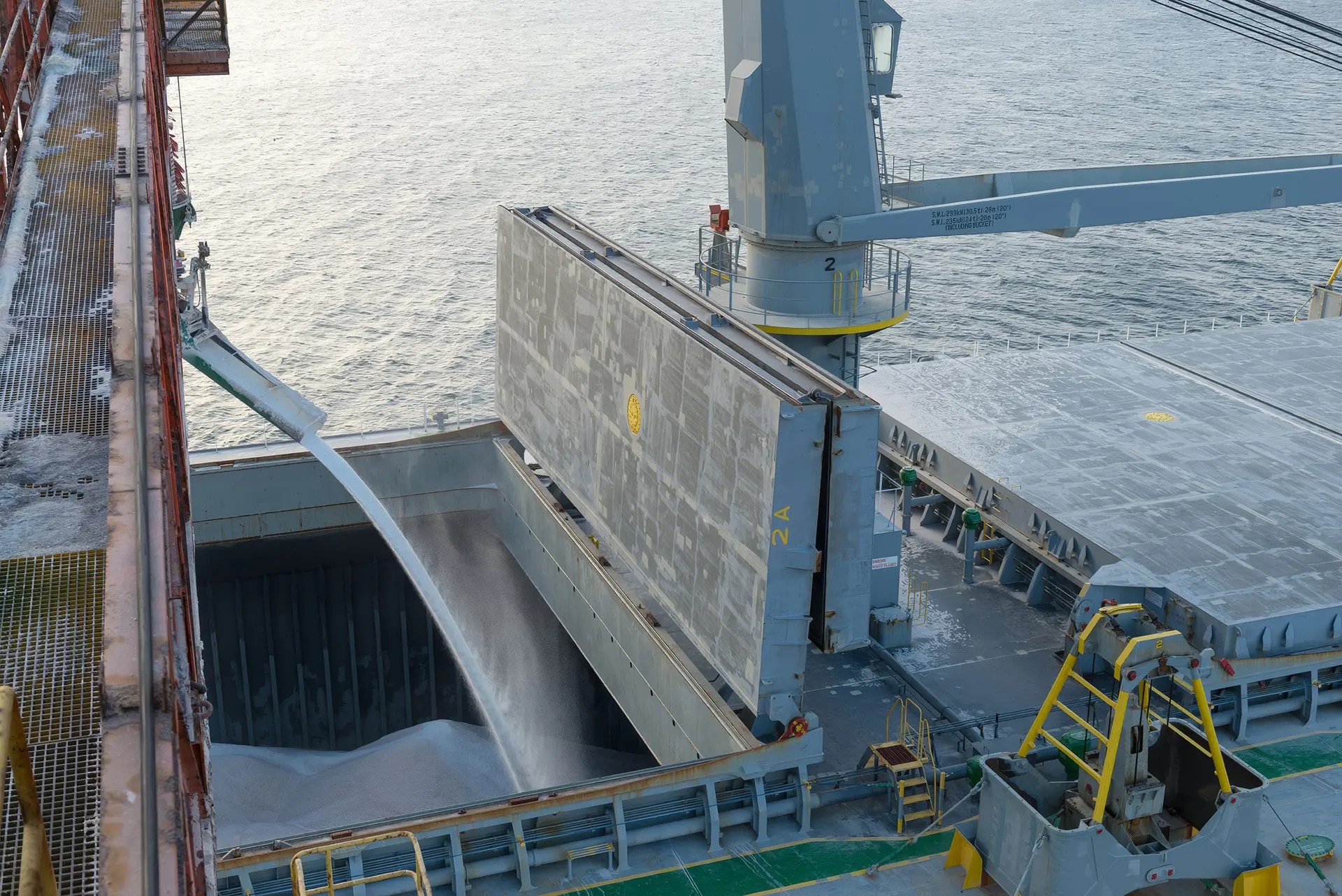
For commodity markets, the impact extends beyond oil. Energy costs influence mining, refining, and shipping across metals and minerals. Salt, in particular, is highly exposed because its economics are driven less by scarcity and more by logistics. As a bulky, low-value commodity transported mainly by ship or rail, rising fuel costs and maritime insurance premiums can significantly shift its delivered cost curve.
Bulk Commodity Logistics & the Salt Market Cost Structure
Salt occupies a unique position in the mining sector, both ubiquitous and strategically essential. Sodium chloride underpins key industrial systems, including chlor-alkali production for chlorine and caustic soda used in PVC, paper, and aluminum processing; water treatment through brine-based purification; livestock nutrition in agriculture; and winter road de-icing.
Yet salt economics differ sharply from precious or battery metals. Bulk salt typically sells for tens of dollars per tonne, meaning transportation, from mine to port and onward to end markets, often accounts for a large share of the delivered cost.
The Strait of Hormuz disruption has already pushed tanker freight rates sharply higher. Reuters estimates shipping crude from the US Gulf Coast to Asia now costs $10-12 per barrel more, about 15% of cargo value versus 2-3% before the conflict. While these figures relate to oil, they highlight a broader point: when trade corridors are disrupted, maritime logistics costs can spike quickly, creating volatility for bulk commodities such as salt that depend heavily on long-distance shipping.
Regional Supply Security as a Commodity Theme
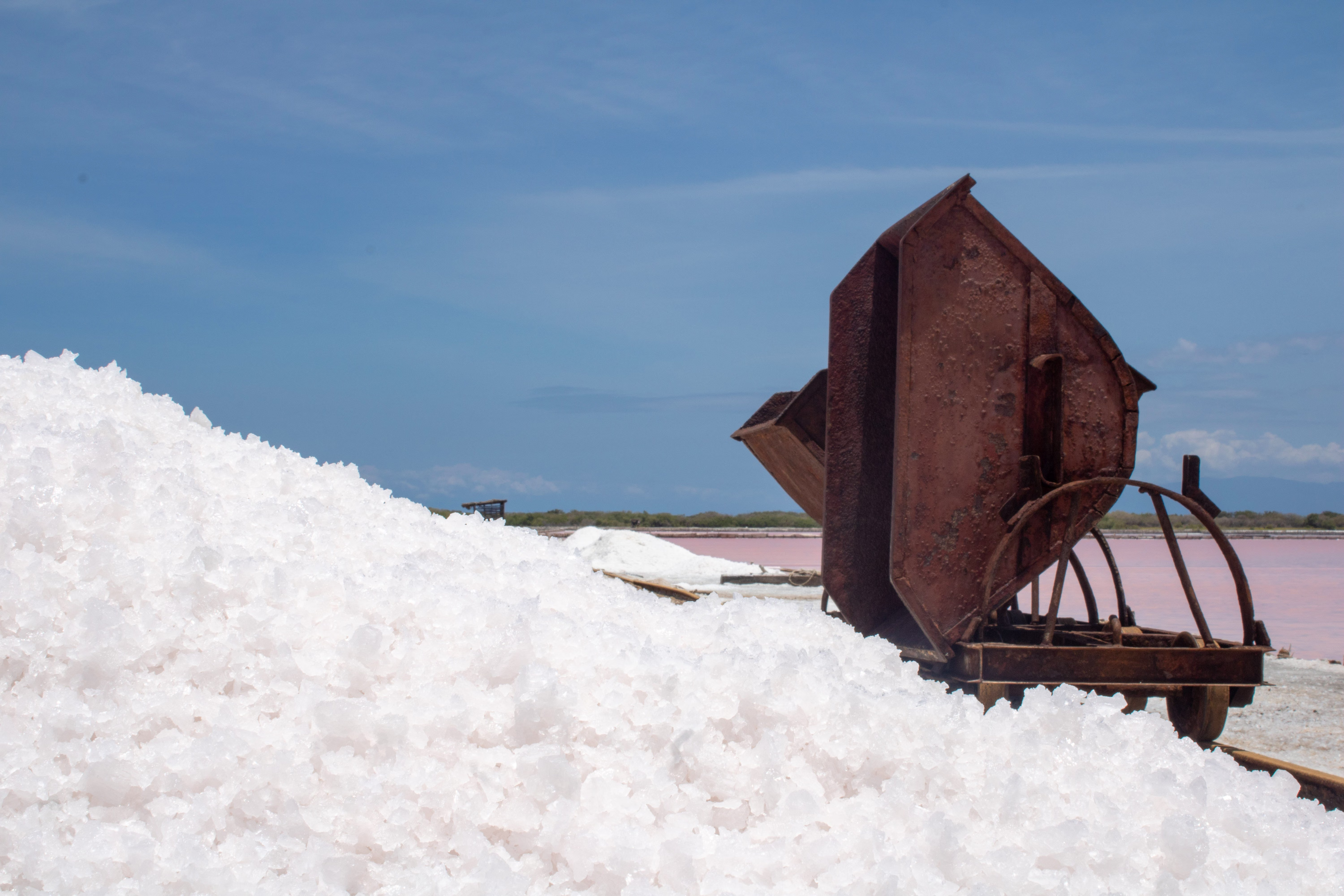
Salt supply chains have historically developed around geographic advantage rather than resilience. Countries with favorable climates, such as Australia, Mexico, and Chile, operate large solar evaporation facilities producing millions of tonnes annually at low cost. Australia is a major exporter, with Western Australian saltfields supplying North Asia, particularly Japan, which accounts for about 58% of export value.
However, the market has a dual structure: many countries export bulk salt cheaply while importing refined grades at far higher prices. Australia exports salt at roughly $58 per tonne, yet imports refined salt at around $603 per tonne, reflecting the premium for purity and processing. This highlights that salt markets remain partly regional, with reliability and proximity increasingly important.
North America’s de-icing market illustrates this dynamic. The region consumes 25-36 million tonnes annually, much of it imported. Weather volatility and aging mines have strained supply in recent years, prompting contractors to stockpile months ahead of winter, some accumulating 400+ tonnes per facility during the 2024-2025 season. The shift signals a procurement change where reliability is becoming as important as price.
Aging Infrastructure & the North American Supply Deficit
Many of North America’s major salt mines are decades old, creating structural supply constraints. Operations such as the Goderich Mine beneath Lake Huron require complex, maintenance-intensive infrastructure at depths of nearly 600 meters, while closures like Cargill’s Avery Island mine in Louisiana removed 2.5 million tonnes per year of East Coast supply. Unlike metals such as copper or gold, salt rarely attracts significant exploration investment due to its low price, meaning few new projects are developed. The result is a growing gap between stable demand and a constrained, aging supply base.
Nolan Peterson, Chief Executive Officer of Atlas Salt, has spoken directly to the nature of this market imbalance:
"Salt mines exist. There are players in the salt space, but as you know, there's not enough supply. There's quite a bit of demand. There hasn't been a new mine built in 25 years at this point."
This observation reflects a market where demand remains durable and geologically unconstrained deposits exist, but where the friction of project development, capital intensity, and logistics economics has suppressed new entrants for an extended period.
Project Configuration & Operational Parameters: The Great Atlantic Salt Project
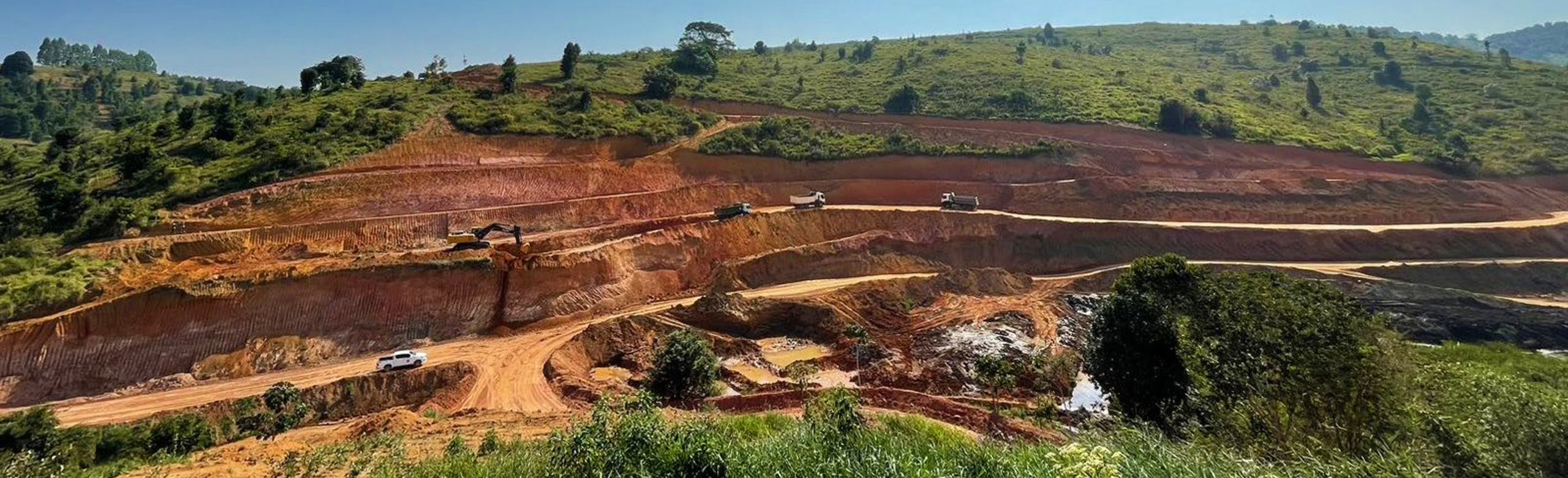
The Great Atlantic Salt Project in Newfoundland, being developed by Atlas Salt, highlights how rare new supply has become in the sector. Once operational, it could become North America’s first new salt mine in nearly three decades. The project hosts 95 million tonnes of probable reserves grading about 95.9% sodium chloride, with the deposit located at a relatively shallow depth of roughly 180 meters, far shallower than many legacy mines.
This geometry allows decline access instead of vertical shaft sinking, lowering both capital and operating costs. The updated feasibility study outlines steady-state production of 4 million tonnes per year, with projected operating costs of about $28 per tonne and an estimated post-tax NPV of $920 million with a 21.3% IRR.
The underground operation is planned to run entirely on hydroelectric power from Newfoundland’s grid, using battery-electric equipment from Sandvik to eliminate diesel underground. The design results in very low greenhouse gas intensity, estimated at about 950 tonnes of CO₂ equivalent per million tonnes of ore, far below many base metal mines, an advantage as municipalities increasingly factor emissions into road salt procurement.
Long-Life Cash Flow Profile & Investor Positioning
The investment case for industrial mineral assets with essential-use demand profiles differs materially from that of commodity producers exposed to cyclical pricing. Salt consumption tied to road safety, municipal water treatment, and chemical manufacturing does not contract during recessions. This non-cyclical demand pattern, combined with a long mine life, creates a cash flow duration that more closely resembles infrastructure than conventional mining.
Peterson has addressed the duration and stability of the project's cash flow profile directly:.
“We have a 25-year mine life based on current reserves, with the potential for up to 50 additional years from existing resources. That means steady, stable cash flow each year, which is very appealing for investors focused on cash flow.”
A 25-year reserve base with meaningful upside to 50 years provides a duration profile that is exceptionally long relative to most mining development projects. For institutional allocators seeking yield-oriented exposure to hard assets, this type of long-life, stable cash flow structure offers differentiated positioning within a commodity portfolio.
Logistics Configuration & Supply Chain Proximity
In bulk commodity markets, geographic positioning relative to end-user infrastructure often determines long-run competitive advantage. For de-icing salt, proximity to major East Coast population centers directly affects delivered cost and supply reliability.
The Great Atlantic Salt Project is located near Newfoundland's Turf Point deep-water port, enabling shipments to reach major East Coast markets, including Boston and New York, in under three days. Salt shipments from Chile or Egypt can take more than two weeks, exposing buyers to weather delays, logistical disruptions, and sustained freight cost inflation during periods of geopolitical volatility.
This dynamic is increasingly relevant in the context of the current Strait of Hormuz disruption. Global freight markets are experiencing acute volatility, and institutional procurement managers responsible for winter road maintenance contracts are reassessing the risk premium embedded in long-haul import dependencies. Supply chain resilience has moved from a secondary consideration to a primary procurement criterion.
The Investment Thesis for Salt
- Energy geopolitics is reshaping bulk commodity logistics, with disruptions to shipping routes and rising freight costs creating outsized impacts on low-margin industrial minerals where logistics represent a dominant share of delivered cost.
- Domestic production is gaining strategic importance as North America's reliance on imported de-icing salt exposes public infrastructure systems to compounding geopolitical and logistical risk during periods of heightened maritime disruption.
- Industrial minerals offer infrastructure-like demand stability, with road safety, water treatment, and chemical production creating non-cyclical consumption patterns that support consistent cash flow generation across economic cycles.
- Low-cost, logistics-advantaged projects may capture structural market share as regional proximity to key consumption centers reduces delivered cost and supply chain risk regardless of global salt supply volumes.
- Development-stage projects with strong feasibility economics may offer asymmetric upside, as assets demonstrating robust net present value, internal rates of return, and operating cost positions have the potential to re-rate materially as financing and construction milestones are achieved.
- Long mine life and steady annual cash flows distinguish salt infrastructure projects from conventional commodity equities, aligning the return profile more closely with debt-yielding infrastructure assets than with price-cyclical mining.
- Environmental performance, particularly low greenhouse gas intensity enabled by hydroelectric power and battery-electric equipment, is increasingly relevant to institutional procurement frameworks, providing structural advantage to low-carbon supply chains as emissions reporting requirements expand.
The Strait of Hormuz crisis has again demonstrated how quickly geopolitical events can cascade through global commodity markets. While media coverage has concentrated on crude oil supply and strategic reserve releases, the transmission mechanism extends far beyond energy. Freight costs, maritime insurance premiums, and supply chain reliability have become primary variables in procurement decisions across the physical economy.
North America's dependence on long-haul salt imports is a known vulnerability that has periodically strained road safety operations. The absence of new domestic mine development over a 25-year period has compressed the supply base precisely when regional procurement resilience has become a strategic priority for governments and infrastructure operators.
The lesson that emerges from the current geopolitical environment is consistent with a broader shift in how bulk commodity assets are being evaluated. In markets where logistics determine competitive advantage and domestic supply security commands a structural premium, the most consequential asset characteristic may not be what lies underground, but how reliably and efficiently it can reach the market.
TL;DR
Geopolitical disruption around the Strait of Hormuz is exposing how vulnerable bulk commodity supply chains are to energy-driven logistics shocks. Because salt is a low-margin, high-volume industrial mineral, transportation costs, fuel, freight rates, and maritime insurance, often determine its delivered price. North America already relies on 8-10 million tonnes of imported road salt annually, while many domestic mines are aging and new development has been limited for decades. This dynamic is increasing the strategic value of regional supply projects such as the Great Atlantic Salt Project in Newfoundland, which could become North America’s first new salt mine in nearly 30 years. In a market where demand from road safety, water treatment, and chemicals remains stable, logistics advantage and proximity to end markets are becoming the key determinants of long-term competitiveness.
FAQs (AI generated)
The Strait of Hormuz carries roughly 20-21 million barrels of oil per day, making it one of the world’s most important maritime chokepoints. When geopolitical conflict disrupts shipping through this corridor, the effects ripple across global freight markets, raising fuel costs, tanker rates, and insurance premiums. These logistics shocks affect not only oil but also bulk commodities that rely on maritime transport. For materials such as salt, iron ore, fertilizers, and industrial minerals, shipping costs can represent a large portion of the final delivered price, meaning geopolitical disruptions can quickly translate into commodity price volatility.
Salt is a high-volume, low-value commodity, typically selling for only tens of dollars per tonne. Because of this, transportation, from mine to port and from port to end markets, can represent a significant share of the delivered cost. Unlike precious metals or battery materials, where scarcity drives pricing, salt markets are largely shaped by logistics efficiency. When freight rates or fuel prices rise sharply, even modest changes in shipping costs can materially affect delivered salt pricing, especially for markets that depend on imports.
North America consumes 25-36 million tonnes of de-icing salt annually, with a substantial portion sourced from imports. Many domestic mines are decades old and operate with complex infrastructure, while some historical operations have closed entirely. At the same time, the low market price of salt discourages exploration and new mine development. As a result, regional supply growth has lagged demand, forcing municipalities and contractors to rely on imported material, particularly during harsh winter seasons when shortages can disrupt road maintenance operations.
The Great Atlantic Salt Project in Newfoundland, being developed by Atlas Salt, could become North America’s first new salt mine in nearly 30 years. The project hosts about 95 million tonnes of probable reserves and is designed to produce 4 million tonnes annually at relatively low operating costs. Its shallow deposit allows decline access rather than deep vertical shafts, reducing capital and operational complexity. Located near a deep-water port, the project could supply major East Coast markets within a few days, offering a logistics advantage compared with long-haul imports from countries such as Chile or Egypt.
Salt demand is tied to essential services such as winter road safety, municipal water treatment, and chemical production through chlor-alkali processing. These uses tend to remain stable regardless of economic cycles, creating relatively predictable long-term consumption patterns. When a project also has a long mine life, such as 25 years of reserves with additional resource upside, it can generate consistent cash flow over decades. This combination of stable demand, long asset life, and predictable revenue profiles leads some investors to view certain industrial mineral projects more like infrastructure assets than traditional commodity producers.
Analyst's Notes





Subscribe to Our Channel


.jpg)


Stay Informed


