




Atlas Salt: The Case for a Different Valuation Framework


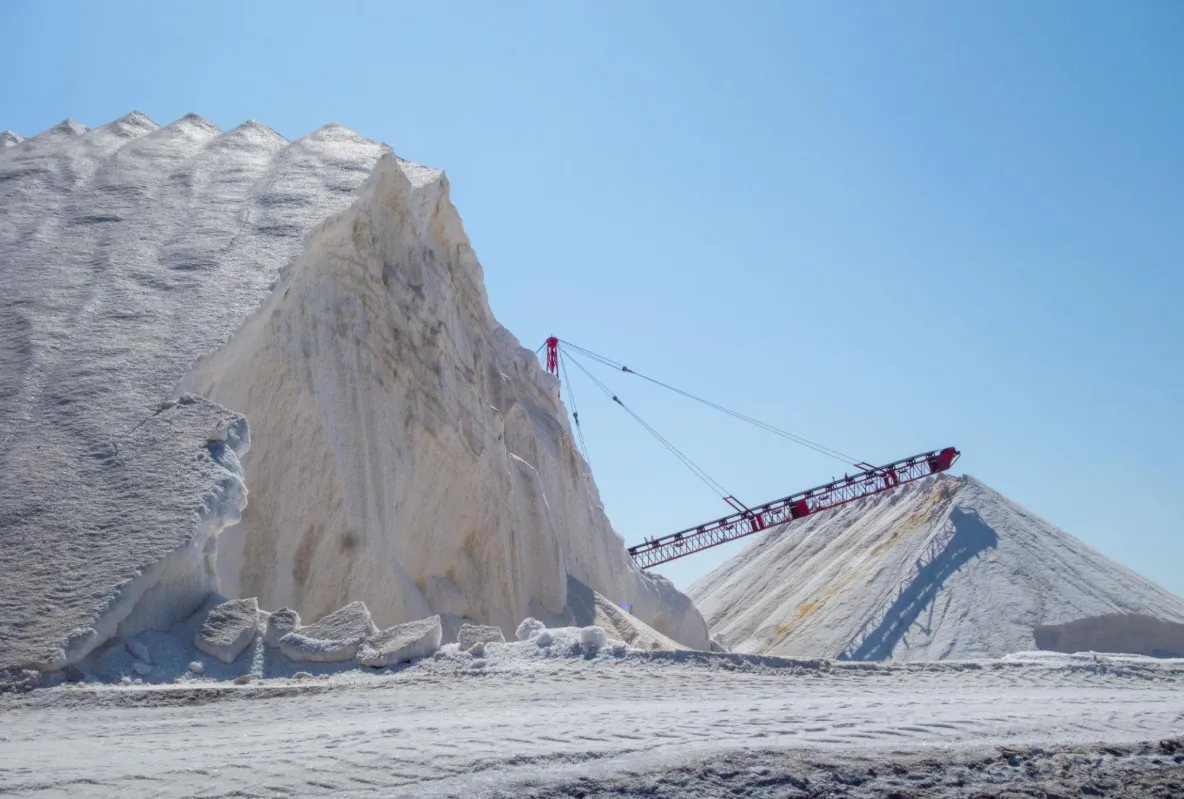
Atlas Salt trades at 0.1x its C$920M NAV. Nolan Peterson argues that the discount may reflect a mismatch in valuation frameworks rather than genuine risk.
- Atlas Salt trades at approximately .1x its Net Asset Value (NAV) of C$920 million versus an Enterprise Value (EV) of C$138.5 million, with management attributing the discount to the application of a standard mining risk framework despite metallurgical, geological, and permitting risks largely being resolved, leaving financing and execution as the primary remaining risks.
- Based on the 2025 Updated Feasibility Study (UFS), alternative valuation frameworks include a 10% Free Cash Flow (FCF) yield applied to C$188 million Life-of-Mine (LOM) average annual FCF, implying approximately C$1.9 billion, an Earnings Before Interest, Taxes, Depreciation and Amortization (EBITDA) multiple applied to C$325 million LOM average annual EBITDA implying approximately C$3 billion, and precedent transaction evidence in the salt sector suggesting comparable or higher valuation ranges.
- The North American deicing salt market exhibits approximately 4% annual price compounding between 2000 and 2024, alongside structurally supported demand driven by municipal obligations for road safety and winter maintenance requirements.
- The Great Atlantic Project contains an additional 868 million tonnes of inferred mineral resource outside the current mine plan, representing more than 50 years of additional potential mine life at planned production rates.
- The 2025 UFS outlines C$589 million in pre-production capital expenditure (capex), with Atlas Salt engaging Endeavour Financial as financial advisor and targeting a debt-weighted structure; management identifies infrastructure-style debt as independent validation of the project's lower-risk profile and the primary catalyst for re-rating toward potential valuations of approximately C$300 million, C$400 million, and C$500 million at successive construction milestones.
A C$920 Million Asset Trading at a Fraction of Its Value
Atlas Salt (TSXV: SALT) trades at approximately .1x its net asset value (NAV) of C$920 million against a current enterprise value (EV) of C$138.5 million. The disconnect may reflect more than development-stage risk alone. Great Atlantic increasingly resembles a long-life industrial asset with contracted-style demand characteristics, yet the market continues to value it under conventional mining development frameworks. The distinction matters because the valuation methodologies applied to infrastructure-style cash flow assets differ materially from the net present value (NPV)-centric frameworks typically used for mining developers, and that methodological gap may be driving the price gap.
The Case for a Different Benchmark
The project has already cleared several of the highest-risk development stages - metallurgy, geology, and environmental permitting - leaving financing and execution as the principal remaining variables. Applying a standard 5-risk development discount to a project carrying 2 of those risks produces a price-to-NAV ratio that overstates remaining uncertainty, a dynamic that helps explain why the conventional Lassonde Curve understates the case for Great Atlantic. The resulting C$138.5 million EV relative to the 2025 UFS NAV suggests the market may still be pricing Great Atlantic as a conventional high-risk mining development project despite several major technical risks already being removed.
Why Atlas Salt Presents Alternative Valuation Frameworks
The NPV framework is calibrated for assets with volatile commodity prices and uncertain demand - conditions that do not characterise the North American deicing salt market. Three alternative frameworks drawn from how operating salt businesses are actually valued by the market suggest materially different reference points. A 10% free cash flow (FCF) yield applied to the 2025 UFS's life-of-mine (LOM) average annual FCF of C$188 million at a base salt price of C$81.67 per tonne implies a potential valuation of approximately C$1.9 billion - roughly 14x the current EV. The one publicly traded salt producer comparable trades on trailing earnings before interest, taxes, depreciation, and amortisation (EBITDA) rather than forward NAV. Applied to LOM's average annual EBITDA of C$325 million, that framework implies a valuation of approximately C$3 billion.
Precedent transactions in the salt sector have similarly tracked EBITDA rather than NPV, suggesting a comparable or higher range. Atlas Salt is explicit that no transaction is under consideration and that the figures are illustrative. Investors anchoring to NPV alone may be applying a tool designed for a different category of asset entirely.
What Makes Salt Behave Differently
A key differentiator for deicing salt is the nature of end-market demand. Municipal and government agencies purchase salt as part of legally mandated winter road safety programs, creating a structurally recurring demand base that differs materially from discretionary industrial commodity consumption. Salt prices have compounded at approximately 4% annually between 2000 and 2024, per the United States Geological Survey Salt Statistics.
Chief Executive Officer of Atlas Salt, Nolan Peterson, put it directly:
"So this is kind of the best customer anybody could ever ask for. That they're forced to buy your product."
The mine life dynamic reinforces the infrastructure parallel. Great Atlantic's 2025 UFS models a 24.3-year mine life on current probable reserves, supported by 868 million tonnes of inferred resource representing more than 50 additional years of potential mine life - a resource base large enough that one year of production removes a negligible fraction of total optionality rather than a proportional share of a depleting reserve.
The Portfolio Construction Case
Unlike many pre-production resource projects, Atlas Salt has already completed a feasibility study (FS), secured environmental approval, and operates within a commodity market characterised by relatively stable long-term pricing and non-discretionary demand. If those characteristics ultimately reduce earnings volatility relative to conventional mining projects, the current valuation may imply a disconnect between Great Atlantic's underlying cash flow profile and the risk assumptions embedded in typical development-stage mining multiples. A project that has removed metallurgical, geological, and permitting risk while retaining exposure to a re-rating catalyst presents a different risk-return proposition than a conventional developer at an equivalent stage.
The Remaining Variables
Project financing and execution remain the two outstanding variables. The 2025 UFS puts pre-production capital expenditure (capex) at C$589 million, with Atlas Salt targeting a debt-weighted structure and Endeavour Financial engaged as advisor. Infrastructure-style debt - not typically available to projects with volatile commodity prices or uncertain demand - would serve as independent, third-party validation of the lower-risk profile the company is asserting. At the construction stage, construction-stage P/NAV multiples across comparable resource developers show general gold projects trading at .3x to 1x NAV, with Artemis Gold reaching close to .5x NAV upon securing project financing and almost .6x NAV at 50% construction completion - ranges that management says would imply potential valuations for Atlas Salt of approximately C$300 million, C$400 million, and C$500 million at successive milestones.
The central question is not whether Atlas Salt trades at a discount to NPV - the current valuation already makes that evident. The more important issue is whether the market ultimately values Great Atlantic as a conventional mining development project or as a long-duration industrial cash flow asset, and whether the close of a project financing package is the moment that transition begins.
FAQs (AI-Generated)
Analyst's Notes





Subscribe to Our Channel


.jpg)





Stay Informed


