



Road Salt Bids Rise Over 60%: Why the Market Still Needs New Mines


Low stocks, a flooded mine, costlier imports, and aging mines lift North American road salt prices, as winter weather and financing decide new supply.
- US road salt tenders for winter 2026-27 came in more than 60% above prior-year prices wherever published comparisons exist, and some public buyers received no offers at all.
- North American salt inventories are at historically low levels after mild winters cut carryover stocks and early storms in late 2025 drew down the remainder.
- Water flooded a mine beneath Lake Erie in October 2026, removing about 1 to 1.5 million tonnes of supply per year for an unknown period.
- US net import reliance for salt rose to an estimated 31% in 2025, while dry bulk freight rates reached a 2-year high in September 2026.
- North America has opened no new salt mine since 2001, and producer results reported so far show higher costs offsetting price gains.
Road Salt Prices Break From Decades of Steady Gains
Road salt has long been treated as a utility input. Public buyers sign annual contracts, and the US price has compounded at about 4% a year since 2000. The 2026-27 bid season broke the pattern, with some low bids in the US Midwest and Mid-Atlantic close to double the prior year’s level, others up by more than half, and some public buyers receiving no offers at all.
The price move traces to 3 conditions that developed over several years: inventories drawn down by recent winters, an aging mine base with few replacements, and greater reliance on imports exposed to rising freight costs. The open investment question is whether those conditions last long enough to support new capacity, and which assets could supply it profitably if prices return to prior levels.
Municipal Tender Prices Jump by More Than Half in One Season
Municipal procurement offers the clearest public record of the price change because bids and resolutions are published locally. Outcomes for 2026-27 show large increases across several states, although results differ widely by buyer and region.
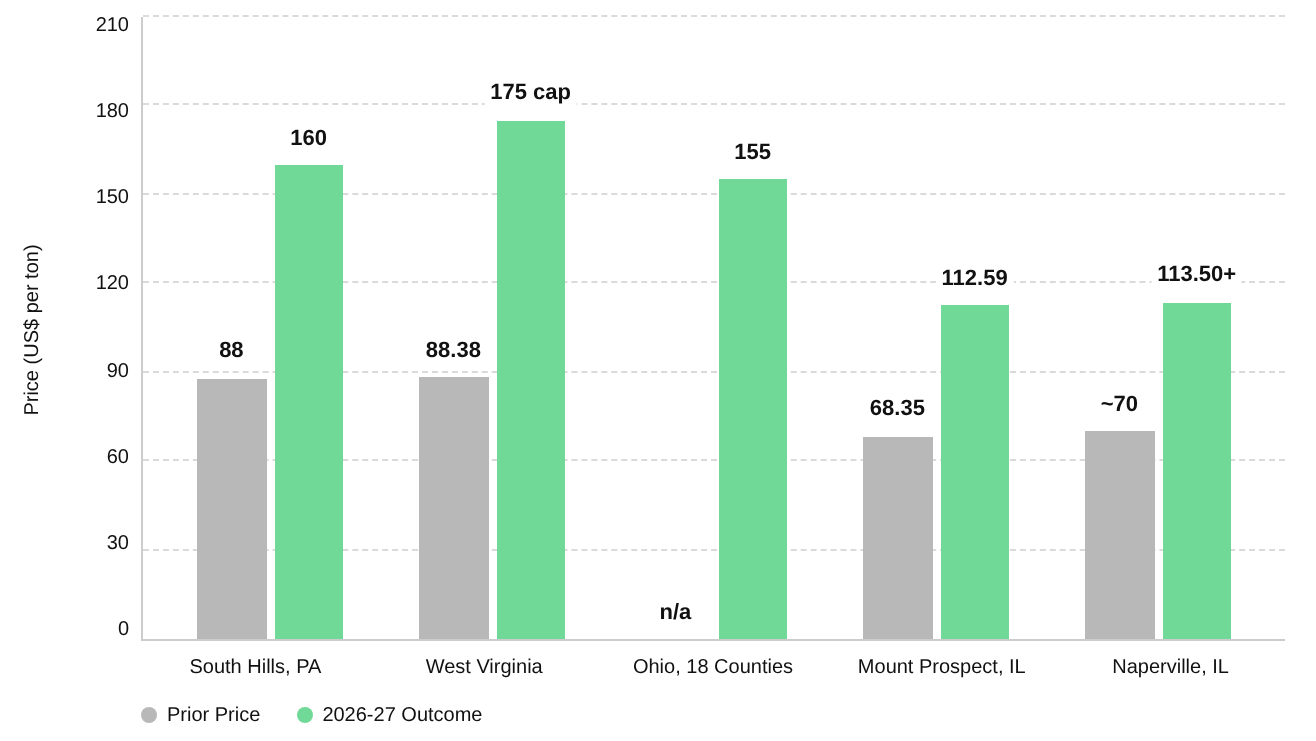
Illinois shows how quickly supply can tighten when one participant withdraws. More than 250 communities received no bids through the state's joint procurement program after a large supplier that typically wins statewide business chose not to participate, according to the Illinois Department of Central Management Services. The department also said most locations received bids as expected. Aurora, one of the communities left without a state bid, secured salt at US$74.30 per ton through a county process and US$85.20 per ton independently, according to CBS News Chicago.
That spread is a useful caution against treating any single tender as a market price. Road salt clears through thousands of local contracts, each priced for a specific delivery point. The US Geological Survey (USGS) estimates the average value of rock salt at US$54 per metric ton, or about US$49 per short ton, at the mine or plant in 2025. The figure excludes the freight and distribution costs included in delivered municipal bids.
Depleted Inventories Leave Little Room to Absorb a Hard Winter
Low inventories turned a tight market into a repricing. Compass Minerals said in August 2026 that a strong winter and production shortfalls at its Goderich mine had left the company and the industry with historically low inventories.
The Snow & Ice Management Association reports that distributors and ports reduced carryover inventory after several mild winters, only to face early storms in November and December 2025. Mines shipped record tonnages in January and could not rebuild reserves. Wholesale road salt in Ontario climbed from $65 or $70 a ton to almost $190 during the shortage reported in January 2026, while USGS recorded a regional rock salt shortage in New York in early 2025.
Chief Executive Officer of Atlas Salt, Nolan Peterson, connects the current shortage directly to the end of that mild-winter stockpile:
"Inventory levels are basically non-existent at the moment. They did have a little bit of capacity over the past few years, following a few years I've heard called "green winters," when it wasn't as snowy… That inventory has been exhausted."
Fairport Closure Tests Claims of Spare Capacity
The Fairport Harbor outage arrived with stockpiles already low. Morton Salt discovered a significant inflow of water on October 22, 2026, evacuated all miners without injury and ceased underground operations. The mine has produced since 1959 from about 550 meters below Lake Erie, with output of about 1 to 1.5 million tonnes (Mt) per year, and Morton laid off 77 employees within days.
The duration of the closure is unknown, and independent experts and regulators are still assessing the intrusion. The Ohio Department of Transportation said it is confident in its winter resources, so the event does not, by itself, establish a regional shortfall or a permanent loss of capacity.
Peterson argues that bid behavior tests spare capacity better than producer statements, since some cities that drew 2 or 3 mine bids last year saw many of those mines stay out this year. The Illinois supplier withdrawal is consistent with that observation, although a producer may also decline to bid for commercial reasons unrelated to available tonnage.
Aging Mines & Thin Project Pipelines Constrain New Supply
Supply additions are limited by geology, geography and the economics of exploration. American Rock Salt's New York mine, opened in 2001, was the last new salt mine in North America. Cargill's Avery Island mine in Louisiana ended production in 2021, removing 2.5 Mt per year of supply to the US East Coast, and the Snow & Ice Management Association also cites capacity reductions at Stone Canyon Industries and Compass Minerals.
Capital has been available to established assets, with Stone Canyon Industries paying US$3.2 billion for K+S's Americas salt business in 2020 at 12.5x 2019 earnings before interest, taxes, depreciation and amortization.
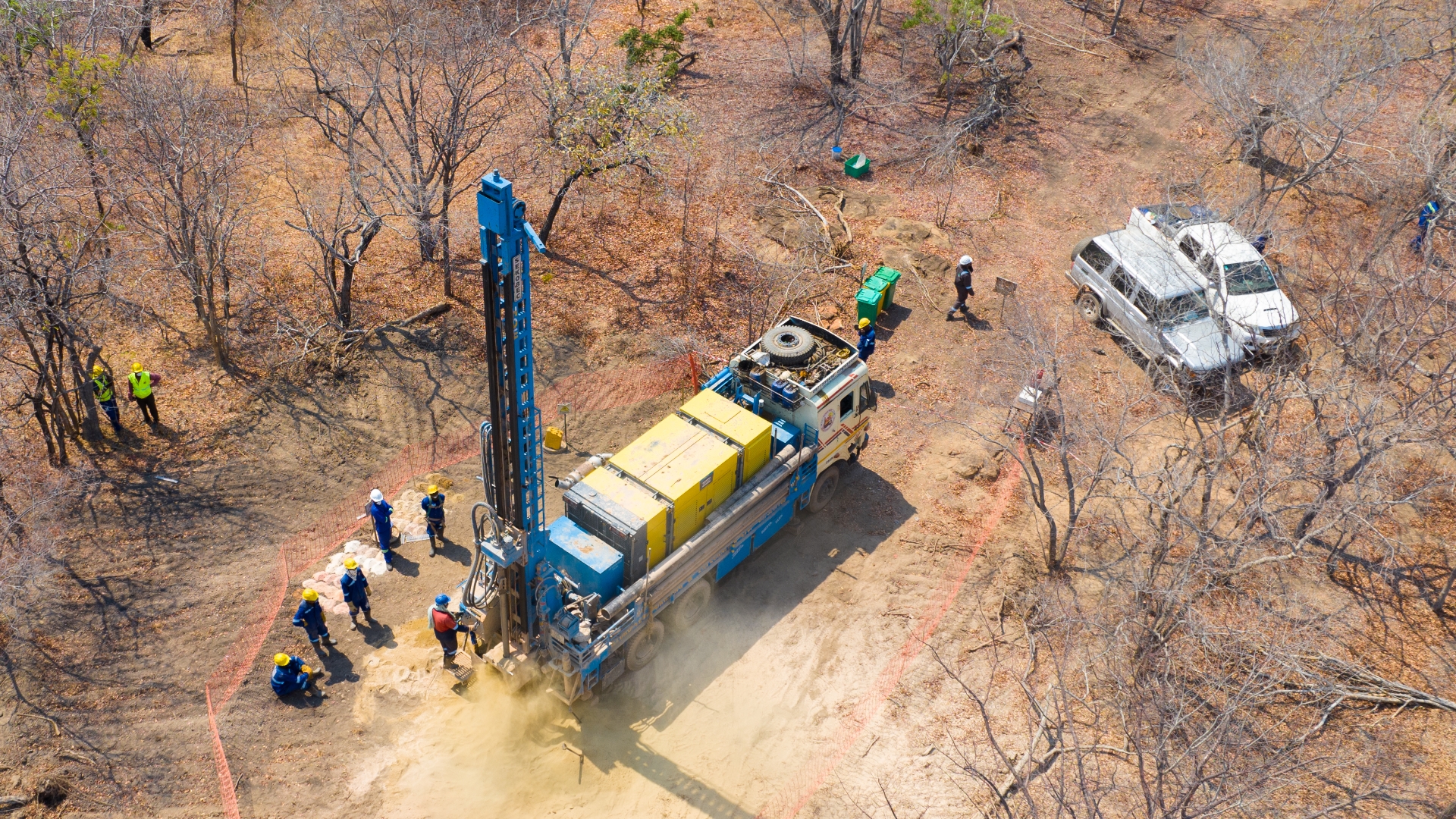
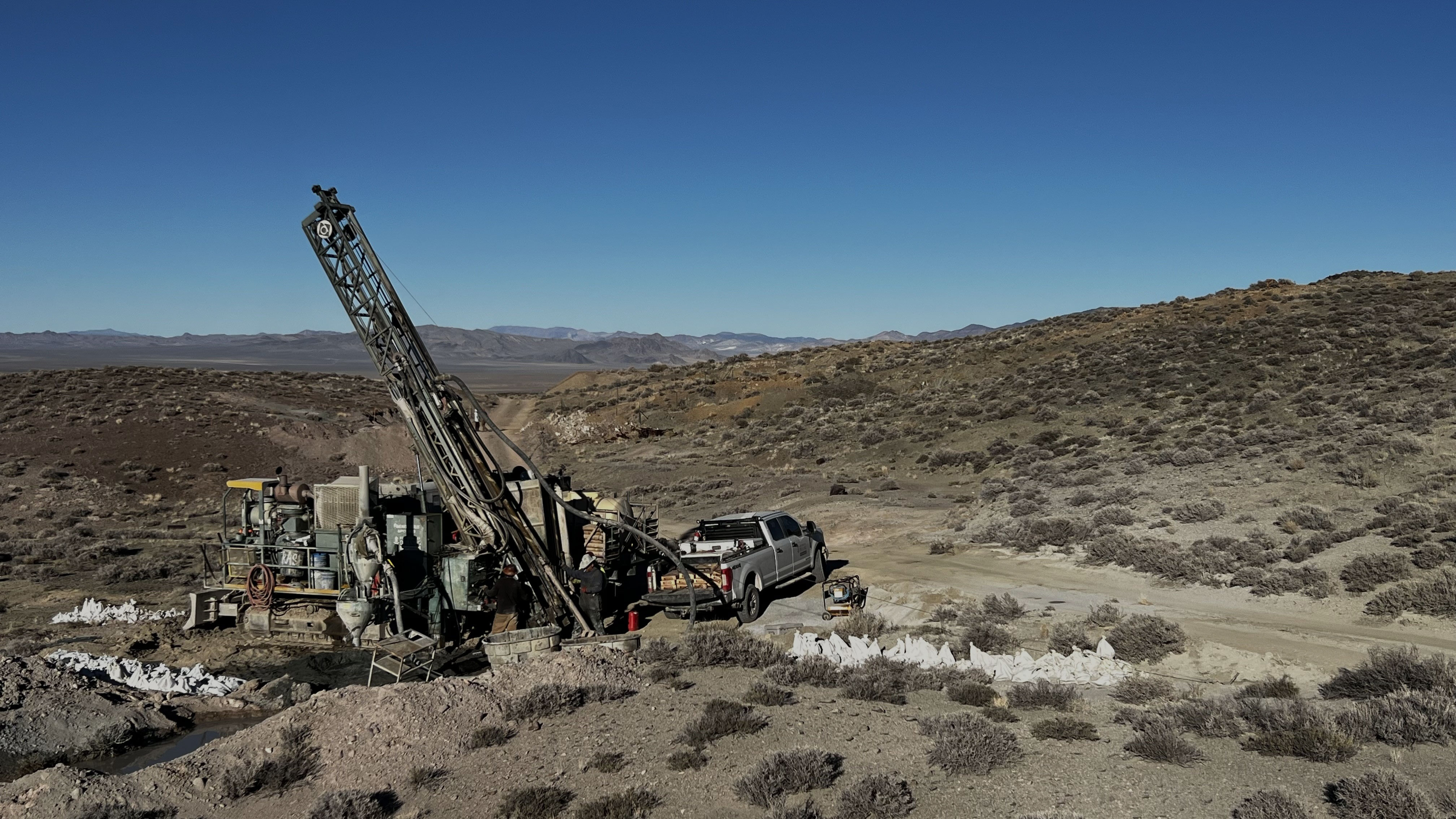
Atlas Salt is developing the Great Atlantic Salt Project in Newfoundland, targeting 4 Mt of annual nameplate production over a 24.3-year mine life. Its updated 2025 feasibility study estimates C$589 million in initial capital, a C$920 million after-tax net present value at an 8% discount rate, and a 21.3% after-tax internal rate of return, with production estimated by 2030.
Import Reliance & Freight Costs Set the Marginal Ton
Imports fill the gap between North American mine output and winter demand, and their delivered cost is rising. USGS data across all salt types show US production of about 40 Mt in 2025 and imports of an estimated 19 Mt, up from 13.9 Mt in 2024. Net import reliance rose to an estimated 31%, although it remains below the 37% recorded in 2021. Atlas Salt estimates that North American de-icing imports total 8 to 10 Mt per year.
Mexico supplied 26% of US salt imports between 2021 and 2024, Chile 23%, Canada 21%, and Egypt 6%; the longer routes are the most exposed to freight costs. Dry bulk shipping rates reached a 2-year high in September 2026, and the Panama Canal Authority adopted new transit restrictions the same month. Salt from Egypt or Chile takes more than 14 days to reach Boston, against under 3 days from western Newfoundland, a difference that favors suppliers near east coast ports when ocean freight rises.
Trade policy has also shifted in favor of Canadian supply. The US exempted road salt from tariffs on Canadian goods in September 2026 as part of a wider tariff revision. Compass Minerals had identified salt shipped from Goderich to the US as the large majority of its gross tariff exposure, so the exemption removes a cost that would otherwise be reflected in delivered prices from Canadian mines.
Inelastic Demand & Costly Substitutes Support Pricing
Highway de-icing accounted for about 37% of US salt consumption in 2025, and buyers have limited ability to defer it. USGS adds that the number of winter weather events, including freezing rain, sleet, and snow, predicts rock salt demand better than total snowfall does.
Alternatives are available but expensive. USGS lists calcium chloride and calcium magnesium acetate as de-icing substitutes at higher cost, and Peterson places calcium and magnesium chloride at 5 to 10 times the cost of road salt. Salt also represents a small line in a municipal budget, whereas a failure to clear roads creates a public safety problem and a political one. Peterson describes how that asymmetry shapes purchasing:
"The risk of the downside of not having the salt far exceeds the cost of just buying as much as you can and stocking up for it."
Rolling Meadows, Illinois, uses about 1,200 tons in a standard year and anticipates needing perhaps 800 tons in a lighter year. Municipal stockpiles left by a mild winter have also shielded some buyers, including Arlington Heights, from immediate pressure.
Weather, Margins & Returning Capacity Define the Risks
Current prices should not be read as a new floor without testing what could reverse them. The executive director of the Northwest Municipal Conference in Illinois does not regard the state's no-bid outcome as the start of a trend, and a mild winter would allow buyers and distributors to rebuild stocks. Capacity that producers reduced by choice can also return more readily than capacity lost to closure or flooding if prices justify the additional output.
Higher prices also do not pass directly to producer margins. Compass Minerals reported an 8% rise in highway prices for its fiscal third quarter of 2026, yet salt segment operating income fell 25% to US$21.2 million on lower volumes and higher per-unit product and distribution costs. Its management described 2026-27 price gains of around double digits, and in some cases well into double digits. The increase is smaller than the largest public tenders indicate, since Compass reports an average across its contract book, whereas each municipal tender prices a single delivery point.
The Investment Thesis for North American Road Salt
- Single municipal tenders can overstate the market-wide move, so the stronger signal is whether producer-reported average prices rise by a similar amount once 2026-27 contracts reach quarterly results.
- The 2026-27 contract prices first reach producer earnings over the winter quarters. Margin gains depend on per-unit costs and volumes as well as price, so higher tenders alone do not mean higher earnings.
- With inventories depleted, the number of winter weather events, more than total snowfall, decides whether stockpiles rebuild or tighten into the 2027-28 bid season.
- An unplanned outage removes supply for an unknown period. Bid participation in the next tender round shows whether remaining producers hold the spare capacity they claim.
- Suppliers near East Coast markets are cushioned against rising ocean freight costs. Long-haul imports carry the most exposure, and the tariff exemption removes a cost from Canadian supply.
- Capacity cut by choice can return faster than a new mine can be built and would cap prices. Greenfield projects need prices that hold over multiple bid seasons, not a single round, to secure financing.
Road salt enters winter 2026-27 without the inventory cushion that comes with years of predictable annual contracts. The number of winter weather events will decide whether stockpiles recover or tighten further, and the outcome of the Lake Erie mine closure will show how much spare capacity the remaining producers hold. Producer earnings over the coming quarters will reveal how much of the tender increase translates into margin once per-unit costs and lower volumes are accounted for.
A harder season would leave supply growth dependent on new projects that can secure financing and complete years of construction, with no new mine opening since 2001 and imports exposed to higher freight costs. Prices that hold across multiple bid seasons, rather than a single round, would justify new mines.
TL;DR
US road salt tenders for winter 2026-27 came in more than 60% above prior-year prices wherever published comparisons exist, and more than 250 Illinois communities received no state bids. Historically low inventories, left by mild winters and then drawn down by early storms in late 2025, triggered a market repricing. A flooded mine beneath Lake Erie removed about 1 to 1.5 million tonnes per year of supply, while reliance on imports rose to an estimated 31% as freight costs climbed. North America has opened no new salt mine since 2001. Winter weather, returning idled capacity and producer costs will decide whether prices hold long enough to finance new supply.
FAQs (AI-Generated)
Analyst's Notes





Subscribe to Our Channel






Stay Informed


