Blossom Gold Targets 150-Million-Ton Rosebud Resource Update, Fast-Tracking to 2030 Production


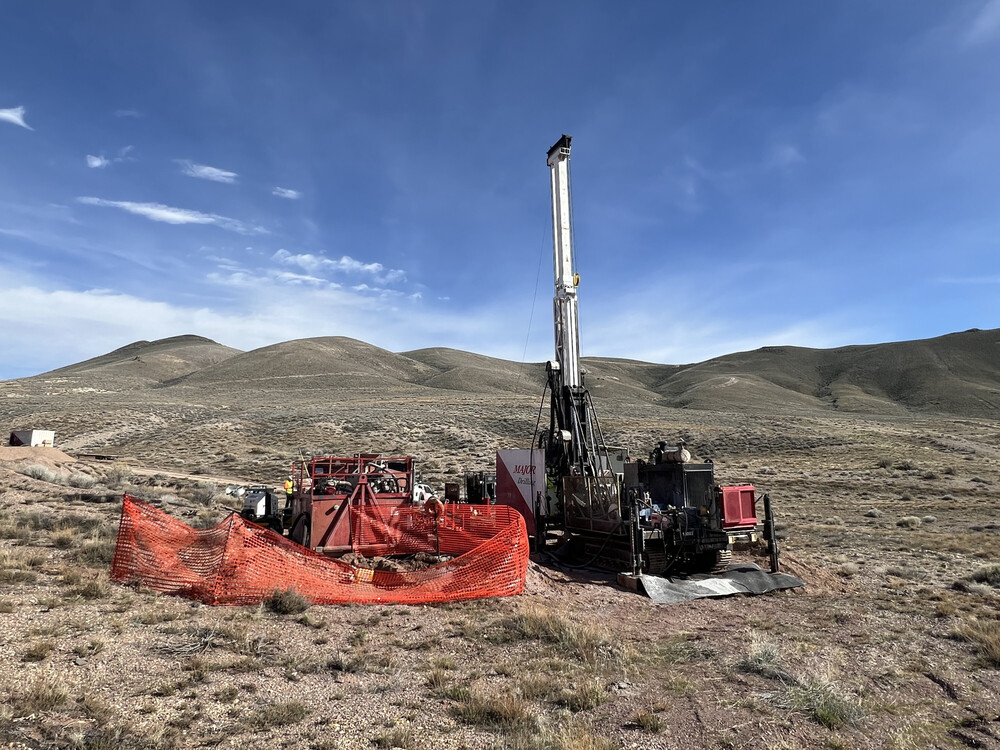
Blossom Gold weighs a heap leach and mill split at Rosebud, with silver upside, water rights and a 2027 resource update shaping its path to 2030 production.
- Blossom Gold’s first Rosebud metallurgy shows oxide gold recoveries near 73% and fresh-rock recoveries near 36%, and the company is testing a mill for higher-grade material that leaches poorly.
- Management says a heap leach of about 15 million tons a year and a 7 million tons a year carbon-in-leach plant would each cost roughly $500 million and produce about 200,000 ounces of gold a year at current grades.
- Preliminary silver recoveries above 60% compare with a 25% internal assumption, and the credit is not yet in the company’s economics.
- Drilling of 46,000 meters feeds a resource update in the first quarter of 2027, which targets at least 70% measured and indicated and a gross resource on the order of 150 million tons.
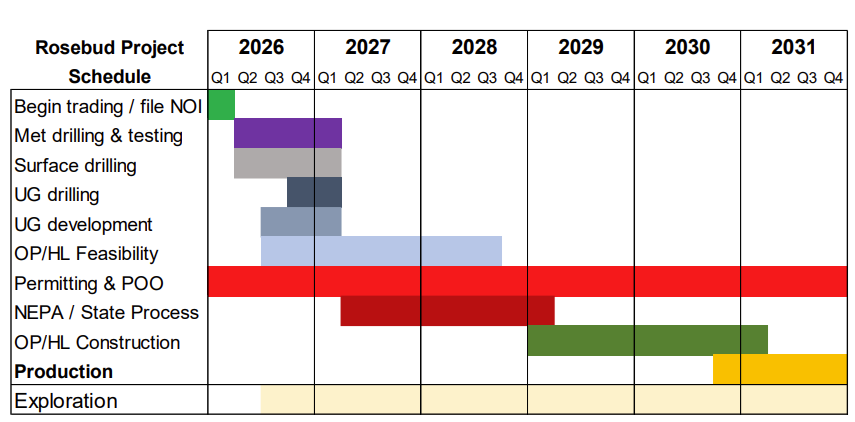
Nevada heap leach developers stand or fall on one metallurgical answer: whether the ore gives up enough gold under a crush-and-stack flowsheet to justify the low capital cost. Nine months into work at its Rosebud Project in Pershing County, Nevada, Blossom Gold (TSX:BGAU) has around 30,000 meters (m) of drilling, an underground decline under rehabilitation, and its first metallurgical results in hand. The company is targeting an updated resource estimate in the first quarter of 2027, a Plan of Operations filing in June 2027, and production in 2030.
The early results point to two processing routes. Low-grade oxide material leaches well enough for a large heap leach. Some higher-grade fresh rock does not, and management is now testing whether that material earns a mill. With the company using a $3,300 per ounce (oz) planning price, the decision is not whether Rosebud makes money at low recoveries, but how much gold a single heap leach would leave behind.
Metallurgy Points to a Heap Leach & Mill Split
Preliminary bottle-roll tests on oxide samples averaged about 73% gold recovery at a 25-millimeter crush, in line with the planned crushing and agglomeration circuit. Fresh-rock samples came in around 36%. Further work suggests the weaker-leaching zones reflect liberation, possibly silica encapsulation, and the company has not identified refractory ore. Historic data show these zones are discrete within the deposit, so they can be mapped and planned around.
Rick Winters, Chief Executive Officer of Blossom Gold, said the company is now weighing recovery against processing cost on the higher-grade material:
“Why get 40 or 50% recovery if you can get 90% recovery on the same material? That’s really what we’re looking about now. We’re in the optimization stage now, putting enough information together to be able to make sure what we do is what makes us the most money.”
Winters said that at current gold prices, even 28% recovery in fresh rock would still return a margin of roughly 100% on earnings before interest, taxes, depreciation and amortization per ton mined. Kappes, Cassiday & Associates (KCA) of Reno, already named lead for the feasibility study, runs the heap leach programme. McClelland Laboratories, also in the Reno area, has been added for capacity on milling and flotation tests. Higher-grade material from near the historic ore bodies will go through both, as a high-grade leach test at KCA and as standard milling and flotation work at McClelland.
Silver Recoveries Add an Unpriced Credit
Silver has moved the other way. Blossom has used a 25% silver recovery internally, and Winters said preliminary tests on oxide and fresh samples are averaging better than 60%. The samples that returned poor gold recoveries produced better-than-expected silver recoveries, a result the company is still working to explain.
In situ, Rosebud carries about 10 oz of silver for every oz of gold. Winters said that, in round numbers, a silver credit at these recoveries would cover about one-third of the heap leach operating cost. The company does not yet include silver in its economics and says more test work is needed first.
Cutoff Grades Define Two Viable Flowsheets
Blossom sets cutoff grade on full cost: mining, processing, general and administrative costs, and sustaining capital. For a heap leach, that gives a cutoff of 0.005 oz per ton, about 0.17 grams per ton (g/t), or around $20 per ton. Winters said that is about twice the cutoff used by most Nevada heap leaches. At that cutoff, the current inferred resource stands at 70.8 million tons (Mtons) grading 0.62 g/t gold and 6.49 g/t silver, for 1.28 million ounces (Moz) of gold and 13.4 Moz of silver.
On the same cost basis, a carbon-in-leach (CIL) plant roughly doubles the cutoff to about 0.4 g/t, which leaves about 45 Mtons at 1.1 g/t in the current resource. Winters described Rosebud as a project of roughly $500 million in capital under either route. A heap leach would run on the order of 15 Mtons per year, while a 7 Mtons per year CIL plant would carry similar capital. Both would produce about 200,000 oz of gold a year at current resource grades.
The likely result is a large heap leach paired with a smaller mill for higher-grade material that leaches poorly. Winters said hauling 1 g/t material to a third-party plant at scale is difficult, so a mill on the order of 15,000 tons a day would probably be built on site.
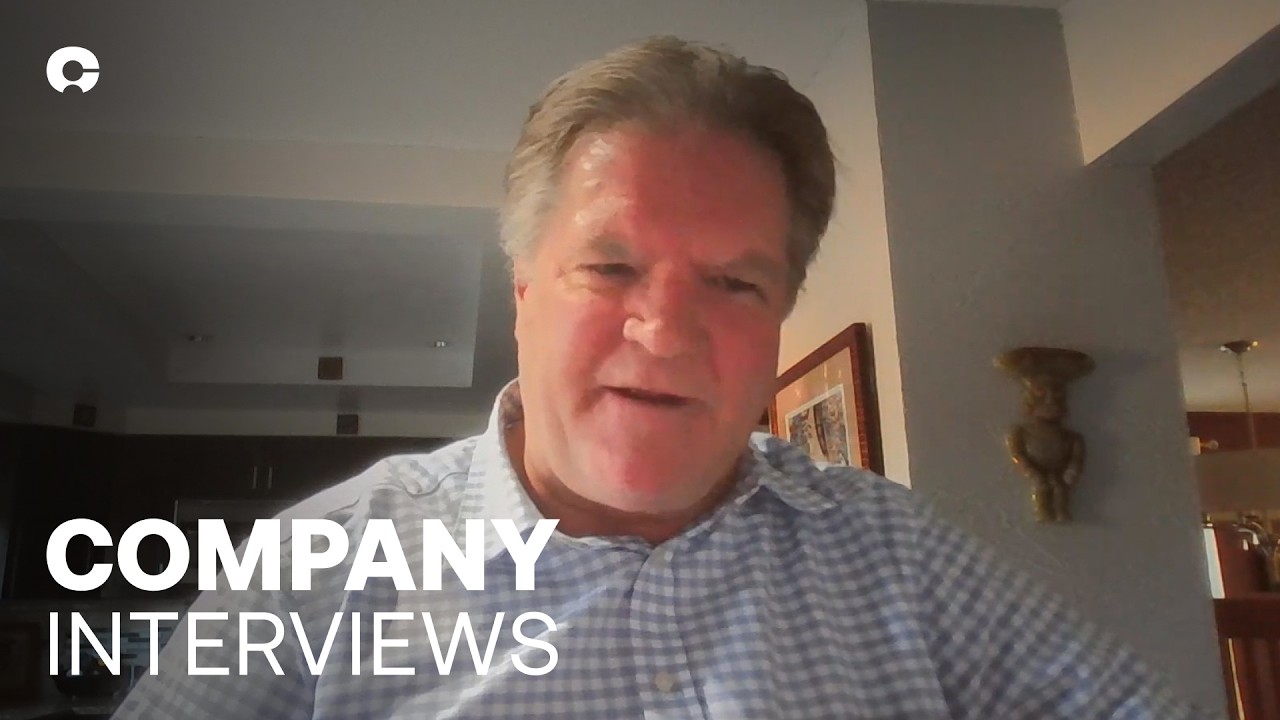
Interview with Rick Winters, CEO of Blossom Gold
Drilling Toward a Larger, Higher-Confidence Resource
The resource programme has grown from an original plan of 28,000 m to 46,000 m of drilling for the update. About three months ago, Blossom and its resource estimator ran a pit optimization at the $3,300 planning price and reviewed the confidence of past estimates. The team then tightened the search radius from 220 feet (ft) to 160 ft for a more conservative estimate.
The remaining programme of about 12,000 m from surface and 8,000 m from underground infills that pit shell to the density needed for at least 70% measured and indicated resources. Winters said the gross resource after the update could be on the order of 150 Mtons, with grade possibly coming down slightly. Recent surface results support that work, with the company reporting 128.0 m at 1.19 g/t gold, including 37.1 m at 2.82 g/t in a previously unmined gap between the North and East mined zones on October 28, 2026.
Underground Access & Early Cash Flow Options
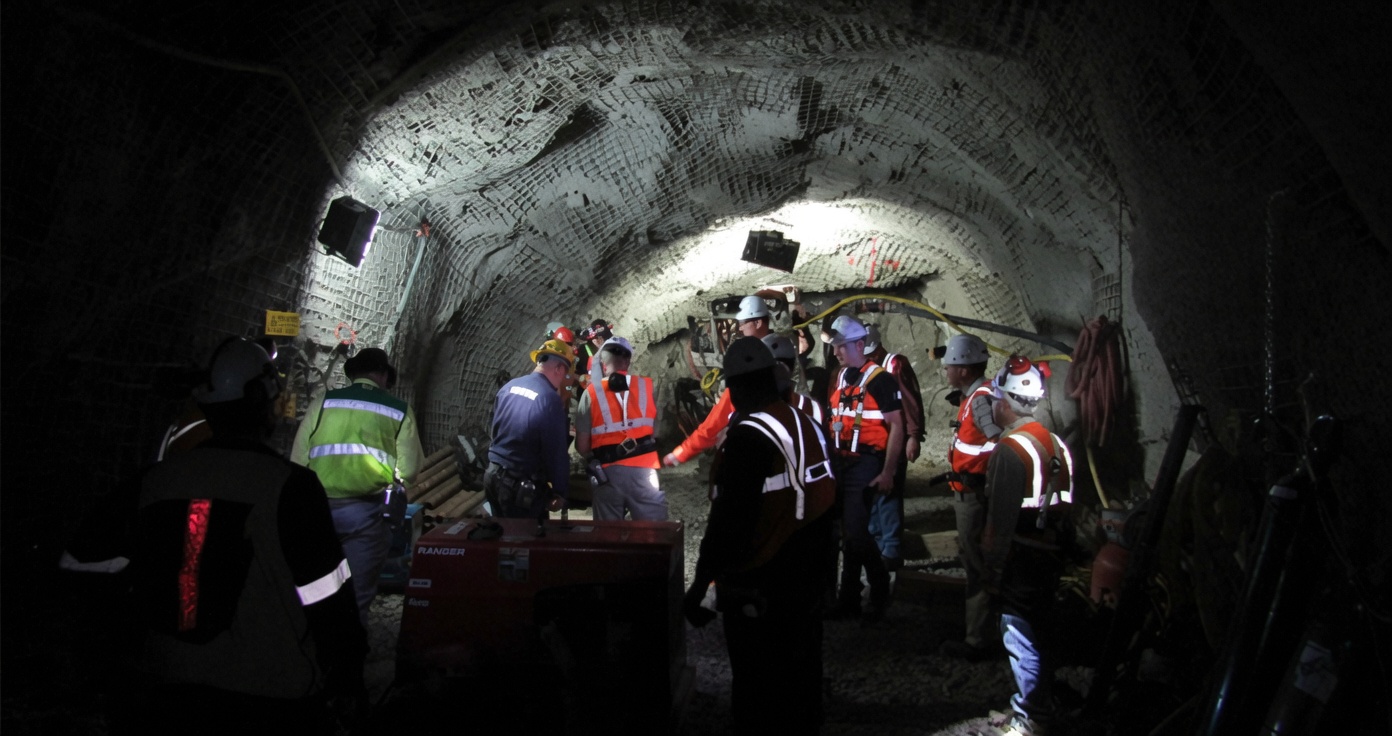
Rehabilitation of the underground decline is about one-third complete, roughly 300 m down, and has reached the first ore zone. Underground contractor Timberline Drilling is mobilising early, and infill drilling is now targeted for the first half of December.
Blossom’s current permit allows a bulk sample of up to 23,000 tons. The company is preparing a mine design to develop the underground and mine some higher-grade material during the three to three-and-a-half years of permitting, feasibility, and construction, with that work required to pay for itself. For plus-3 g/t material, toll milling is under review. Hecla’s Midas mill, about 100 miles from Rosebud, is open to talks if Blossom can deliver ore regularly. Initial discussions have also been held with Florida Canyon, and Blue Moon holds private land with permitted tailings capacity where a small mill could be built.
Water Rights & the Permitting Path
Water is the longest-lead item on the schedule. Rosebud needs about 5,000 acre-feet (AF) a year. Pershing County’s basin has about 32,000 AF appropriated annually against roughly 31,000 AF of annual recharge, but only about 11,000 AF is pumped. Mining and milling hold about two-thirds of the appropriations, and Winters said nearly all of that is controlled by Hycroft, which has rights to more than 20,000 AF a year and last reported pumping about 1,200 AF.
Blossom’s strategy has four parts: securing waivers to use water from its partly flooded mine, buying 275 AF from a third party for exploration pumping and future pit-lake needs, applying to the state engineer for the full 5,000 AF, and holding talks on leasing water from Hycroft. Winters said a two-year process with likely protests is the realistic planning case. The Bureau of Land Management has approved a Notice of Intent covering the Rosebud West well field, where the company expects to source project water.
The June 2027 Plan of Operations must include every planned facility. Any heap leach and mill split has to be settled by mid-2027 to hold the 2029 construction and 2030 production schedule.
The Investment Thesis for Blossom Gold
- Blossom Gold holds an inferred open-pit resource of 70.8 million tons grading 0.62 grams per ton gold for 1.28 million ounces of gold, and management is targeting a gross resource on the order of 150 million tons after the update.
- Oxide material has returned gold recoveries near 73%, and the company is testing whether higher-grade fresh rock that leaches poorly justifies a carbon-in-leach mill alongside the heap leach.
- Silver is excluded from the company's economics, yet early recoveries are running well ahead of the 25% it has assumed internally.
- Water is the main permitting risk, and the company is pursuing purchased rights, applications to the state engineer, and a possible lease from Hycroft to meet a requirement of about 5,000 acre-feet a year.
- Monitor the first column leach results and the underground infill drilling starting in December as inputs to the resource update in the first quarter of 2027.
- Monitor the Plan of Operations filing targeted for June 2027, which must fix the split between heap leach and mill processing.
Rosebud’s investment case now turns on metallurgy and water. The resource update in early 2027 will show how much tonnage the drilling adds, and the Plan of Operations will show which flowsheet the company commits to.
Macro Thematic Analysis
Nevada draws gold developers on permitting familiarity and infrastructure, but water allocation is the constraint that most often decides which projects advance. Most basins in the state are over-allocated on paper and over-pumped in practice, which leaves little water for new entrants. Rosebud’s basin differs on the second count.
Winters described the basin conditions:
“Fortunately for us, which generally isn’t the case in Nevada, is we are in a basin which is overallocated but very underpumped. Most basins in Nevada are not only overallocated, they’re overpumped.”
Blossom’s water plan targets the gap between paper rights and actual use. Winters said the three projects now on the drawing board in the county, Blossom’s included, together need about 60% of the water already appropriated to Hycroft. The state engineer will have to rule on allocation, and Winters expects a contest. A lease from Hycroft would put its unused rights to beneficial use while preserving them for the holder.
Gold has eased from its highs, but at current levels a heap leach running full-cost cutoffs can absorb low recoveries and still earn margin. Equity valuations have not followed. Winters said the average price-to-net asset value (NAV) multiple for comparable development projects has fallen by about half since Crux visited Rosebud earlier this year, and Blossom now trades at about 0.08 times NAV, roughly one-third of its peer average.
TL;DR
Blossom Gold’s first Rosebud metallurgy shows oxide gold recoveries near 73%, with weaker fresh-rock results. So the company is testing a smaller carbon-in-leach mill for higher-grade material alongside a large heap leach. Management says both routes need roughly $500 million and produce about 200,000 ounces of gold a year at current grades. Silver recoveries above 60% beat a 25% internal assumption. Drilling of 46,000 meters feeds a resource update in the first quarter of 2027, targeting at least 70% measured and indicated.
FAQs (AI-Generated)
Analyst's Notes





Subscribe to Our Channel








Stay Informed