




Early Road Salt Commitments Improve Demand Visibility for New Mines



Early road-salt contracts establish minimum winter purchase volumes, giving future mines a clearer basis for assessing sales and financing needs.
- The Snow & Ice Management Association (SIMA) reports that many commercial contractors are buying salt before winter, adding storage, and making larger preseason purchases instead of ordering storm by storm, giving suppliers more time to schedule deliveries.
- The United States Geological Survey (USGS) estimates apparent salt consumption in the US at 57.0 million metric tons in 2025, with highway deicing accounting for approximately 37% of total demand.
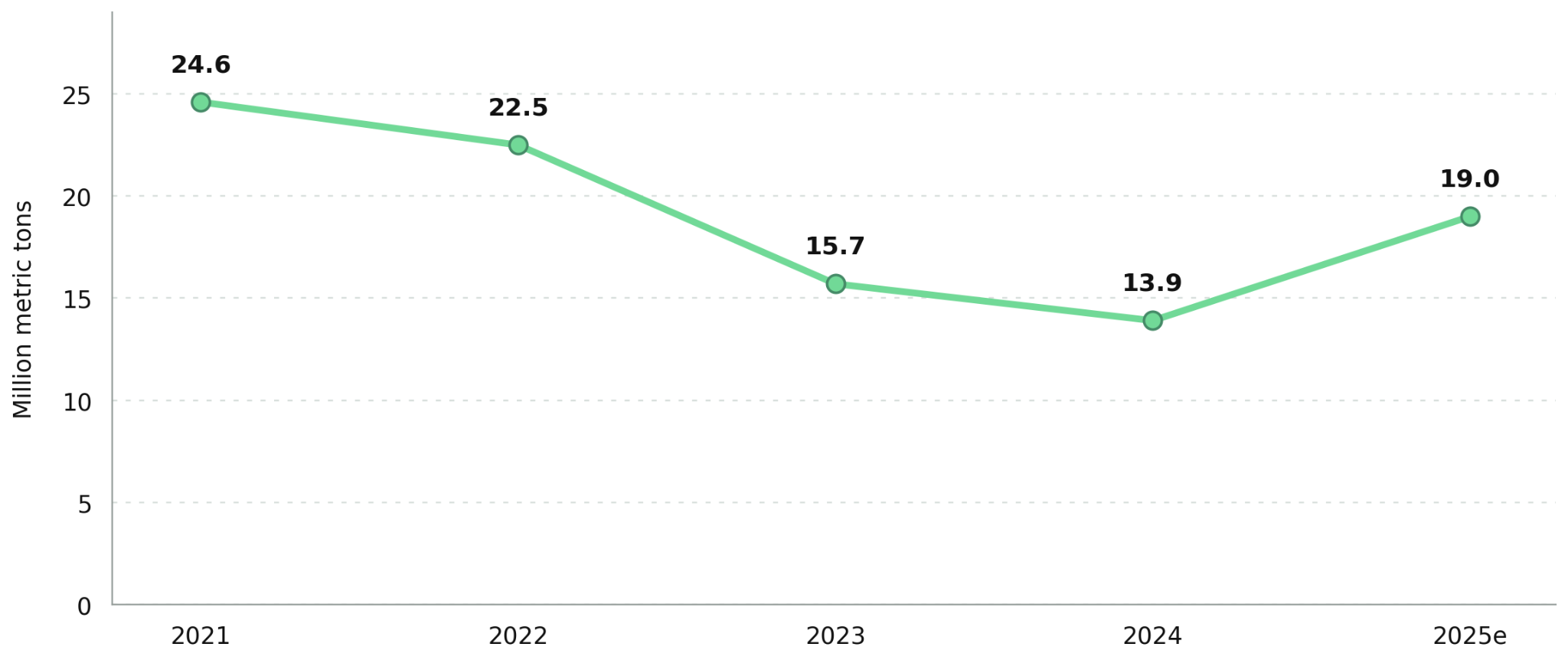
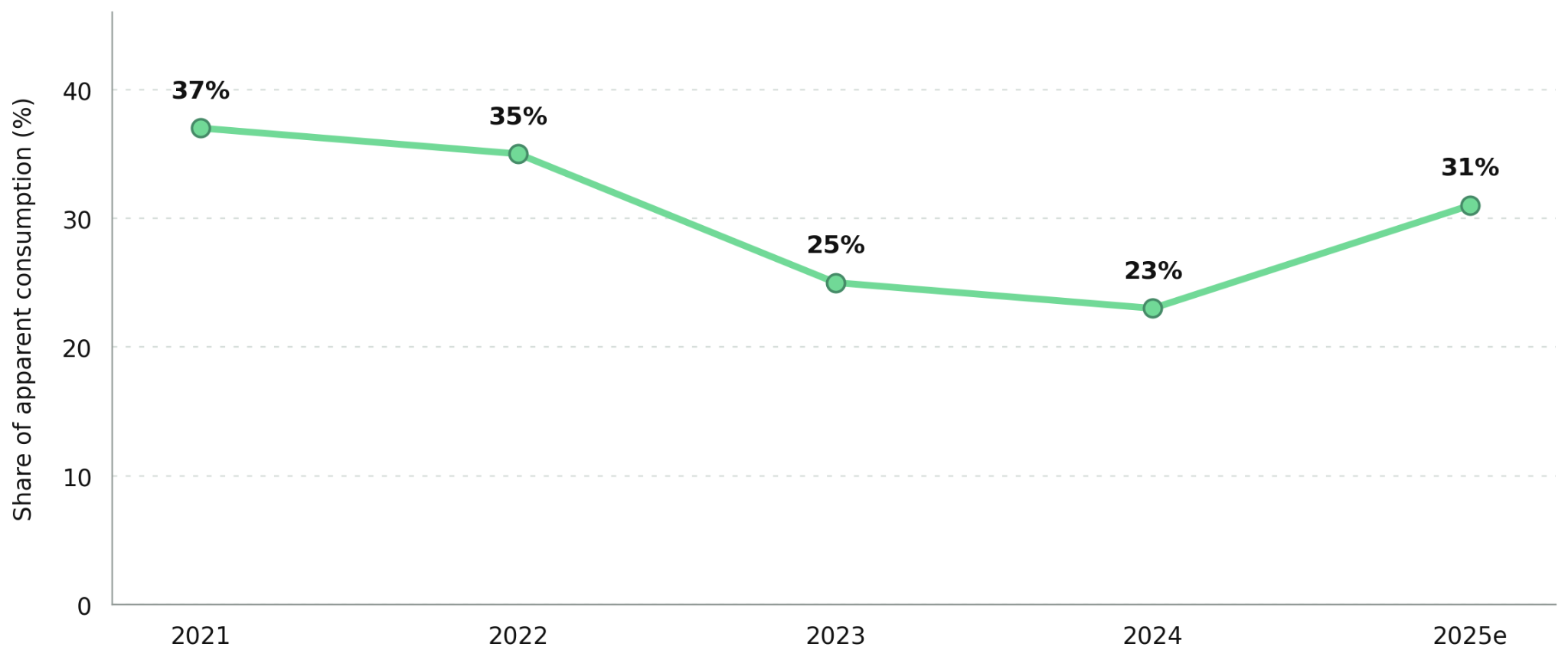
- US salt imports rose from 13.9 million metric tons in 2024 to an estimated 19.0 million in 2025, while net import reliance increased from 23% to 31% of apparent consumption.
- Three government road-salt programs for winter 2026-27 set standard minimum purchase commitments of 60%, 75%, and 80% for participating buyers, giving suppliers contracted tonnage for inventory planning ahead of winter.
- Multiyear salt purchase agreements can commit future mine output to buyers, enabling lenders to assess contracted sales against mining and delivery costs before financing construction.
Early Snow-Service Renewals Advance Salt Purchases Before Winter
SIMA reports that many commercial snow contractors are purchasing salt before winter, expanding storage, and securing a larger share of seasonal requirements upfront rather than ordering storm by storm. These earlier orders give distributors more time to allocate inventory and schedule deliveries before winter demand peaks.
Early property-service renewals allow contractors to reserve deicer for specific properties, linking signed maintenance agreements to identifiable material requirements. With a September 1 target for finalizing service contracts and salt agreements recommended during summer, contractors can translate those requirements into specific purchase orders before winter begins.
11% US Salt Consumption Growth Lifts Import Reliance to 31%
The USGS estimates US apparent salt consumption at 57.0 million metric tons in 2025, up 11% from 51.3 million in 2024. Domestic production was estimated at 40.0 million metric tons, compared with 40.4 million a year earlier. Apparent salt consumption exceeded domestic production by 17.0 million metric tons in 2025.
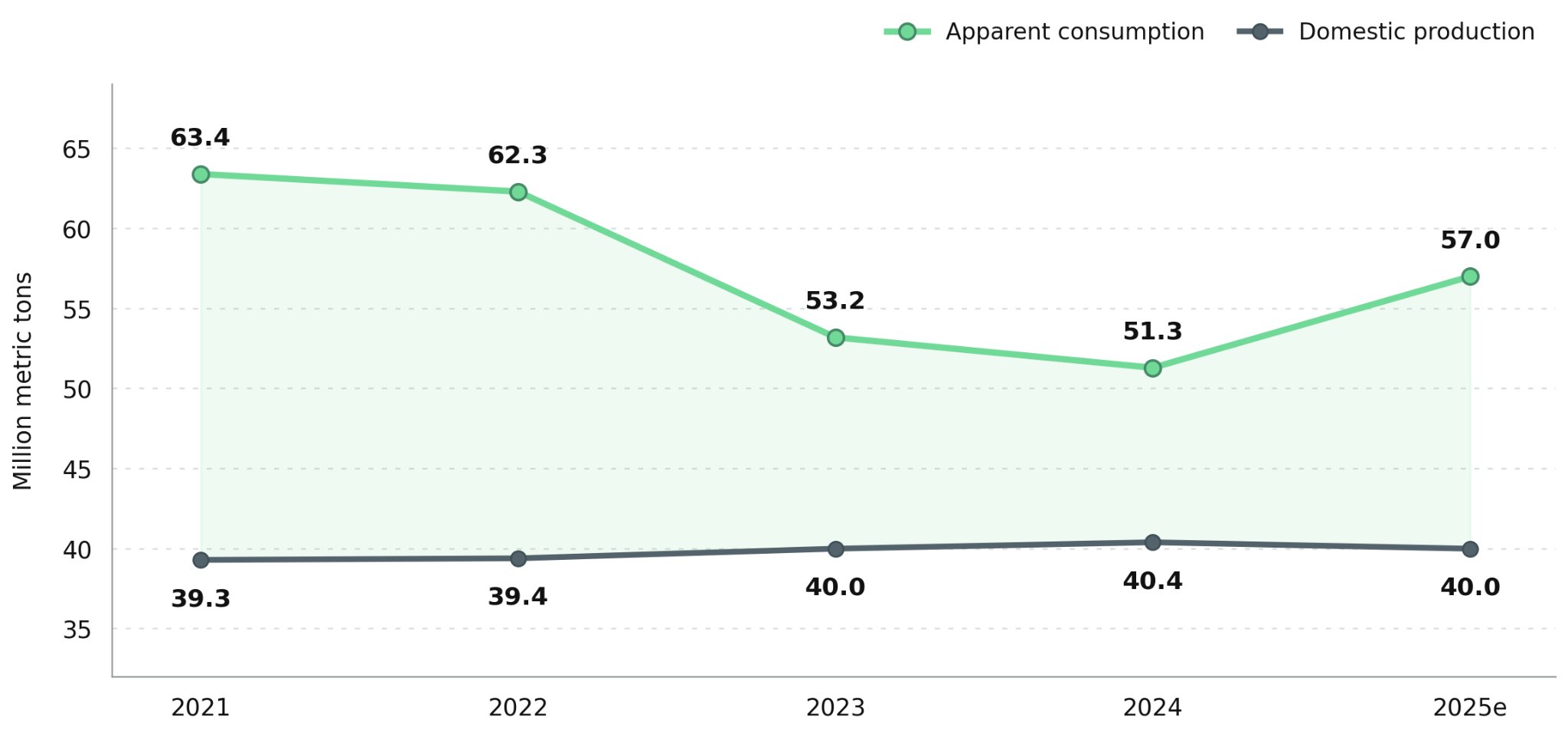
Highway deicing accounted for approximately 37% of US salt consumption in 2025, while the chemical industry represented about 42% of total salt sales. Salt in brine accounted for 44% of domestic salt sold or used by type, compared with 38% for rock salt, with brine supplying approximately 90% of chemical feedstock requirements. These distinct applications make advanced road-salt orders a more specific measure of seasonal deicing demand than aggregate salt consumption.
US salt imports increased approximately 37%, from 13.9 million metric tons in 2024 to 19.0 million in 2025, while net import reliance rose from 23% to 31% of apparent consumption. With imported salt accounting for a larger share of domestic demand, confirmed road-salt orders give distributors specific volumes and delivery requirements for comparing domestic and international supply options.
Government Purchase Minimums Convert Forecasts Into Contracted Demand
The New York Office of General Services' April 1, 2026 notice required buyers seeking to participate in its 2026-27 road-salt contract to file their requirements by May 1. Participants must purchase at least 60% of their filed tonnage for each salt type, with a 50% minimum for deliveries to nine designated counties. The contract also guarantees delivery of up to 130% of filed quantities, giving suppliers a binding minimum purchase base while accommodating additional seasonal requirements.
Pennsylvania's 2026-27 bulk road-salt contract requires participating buyers to purchase at least 75% of their stated tonnage from awarded suppliers, which must provide up to 140% of those requirements. Buyers who fall below the purchase minimum may incur storage fees, giving advance volume commitments a direct financial consequence. The contract also scheduled initial-fill orders from August through October, ahead of the winter-usage ordering period beginning November 1.
Washington's 2026-27 statewide snow and ice contract encouraged agencies purchasing more than 100 tons annually to submit volume commitments by August 31, 2026. Agencies signing the commitment must purchase at least 80% of their stated tonnage, while suppliers must provide up to 120% and reserve product for those buyers. When supplies are limited, the contract prioritizes committed agencies over buyers without purchase commitments, including for emergency deliveries.
Prewinter Procurement Builds Stockpiles Ahead of Peak Demand
The Massachusetts Department of Transportation's October 21, 2026 highway report recorded road-salt inventories at 80% of storage capacity, with the department targeting 95% by December. Its fiscal-year 2027 salt contract was also in place. Higher preseason inventories give maintenance crews more salt on hand during winter storms, reducing their immediate dependence on replenishment deliveries.
Michigan's 2026-27 road-salt program sets September and October for early-fill delivery arrangements, while seasonal backup purchases begin after November 1. Vendors must maintain an additional 30% salt supply for participating members, while buyers must accept at least 80% of their seasonal backup commitments.
Pennsylvania's 2026-27 road-salt contract requires initial-fill deliveries within 30 calendar days of an order and advises allowing 5 to 7 business days for winter replenishment, depending on stockpile capacity. Washington's statewide contract provides 3-, 7-, and 30-day delivery options, helping agencies arrange deliveries before their salt inventories run low.
Seasonal Salt Contracts Create a Financing Role for Multiyear Offtakes
The UK House of Commons' November 5, 2026 report on critical minerals identifies multiyear offtake agreements as a financing tool because they provide predictable revenue from future production. The volume, duration, and delivery terms of these agreements determine how purchasing commitments can extend beyond the next winter season.
Atlas Salt is advancing its Great Atlantic Salt project in Newfoundland, with 95 million tonnes of proved and probable reserves supporting plans for 4 million tonnes of annual production. A memorandum of understanding with US distributor Scotwood Industries targets annual purchases of 1.25 million to 1.5 million tonnes, outlining a potential sales channel for a substantial share of the proposed output. The company has also received letters of interest for up to C$225 million in senior-debt financing and signed a rail-distribution memorandum aimed at lowering delivery costs and expanding its customer reach.
Nolan Peterson, Chief Executive Officer of Atlas Salt, contrasts annual salt contracts with longer-term offtakes:
“Most of these contracts are yearly. They're not necessarily looking to sign long-term agreements, but we are in discussions with offtake partners to purchase portions of our salt or potentially all of our salt and move it through their networks.”
Advance Salt Commitments Make Future Mine Sales Easier to Assess
US apparent salt consumption reached 57.0 million metric tons in 2025, with highway deicing accounting for approximately 37% of total use and net import reliance reaching 31%. For winter 2026-27, New York, Pennsylvania, and Washington established minimum purchase commitments of 60%, 75%, and 80% of filed requirements, respectively, with New York allowing a 50% minimum in nine designated counties. These contractual obligations establish identifiable volumes before winter consumption begins, giving suppliers a measurable demand base for production and delivery planning.
Massachusetts reported road-salt inventories at 80% of storage capacity in October 2026 and was targeting 95% by December, while Michigan required vendors to maintain an additional 30% of salt supply for participating buyers. These arrangements connect advance purchasing with physical inventory requirements, demonstrating how confirmed demand translates into material that must be stored and delivered. Extending that visibility through multiyear offtake agreements creates a clearer basis for assessing future mine production against contracted sales, delivery costs, and financing requirements.
The Investment Thesis for Road Salt
- Salt's recurring industrial and winter-maintenance uses provide an established demand base in which supply reliability and customer access remain central commercial considerations.
- Earlier buyer commitments improve the visibility of seasonal requirements, helping suppliers organize inventories, transport capacity and production around identified customers.
- Contract quality matters because enforceable minimum volumes and dependable delivery provisions give greater commercial certainty than uncommitted demand forecasts.
- Developers with suitable reserves, competitive operating costs and access to major distribution routes can seek long-term customer agreements that align proposed output with financing requirements.
- Capital discipline remains important because delivered margins, credible counterparties and an executable mine plan determine whether contracted demand can translate into sustainable cash flow.
Earlier road-salt commitments are turning recurring winter requirements into identifiable orders before consumption begins, improving demand visibility across the salt supply chain. Extending those commitments through multiyear offtake agreements connects customer demand with future production, distribution capacity, and the revenue needed to assess mine financing. The long-term opportunity lies in competitively delivered salt supply built around durable customer relationships, with advance purchasing providing a commercial foundation for new production capacity.
TL;DR
Commercial snow contractors are purchasing salt earlier, expanding storage, and renewing service agreements ahead of winter, giving distributors more time to plan deliveries. US apparent salt consumption reached 57.0 million metric tons in 2025, with highway deicing accounting for about 37% and net import reliance at 31%. Government contracts in New York, Pennsylvania, and Washington set standard minimum purchase commitments of 60%, 75%, and 80%, respectively. State inventory programs also establish preseason stockpiles and backup supply. Multiyear offtake agreements can extend this seasonal demand visibility into future mine sales, helping lenders assess potential revenue alongside production and delivery costs.
FAQs (AI-Generated)
Analyst's Notes





Subscribe to Our Channel







Stay Informed


