




Indonesia’s Quota Cuts and State-Share Plans Make Nickel Supply Less Certain


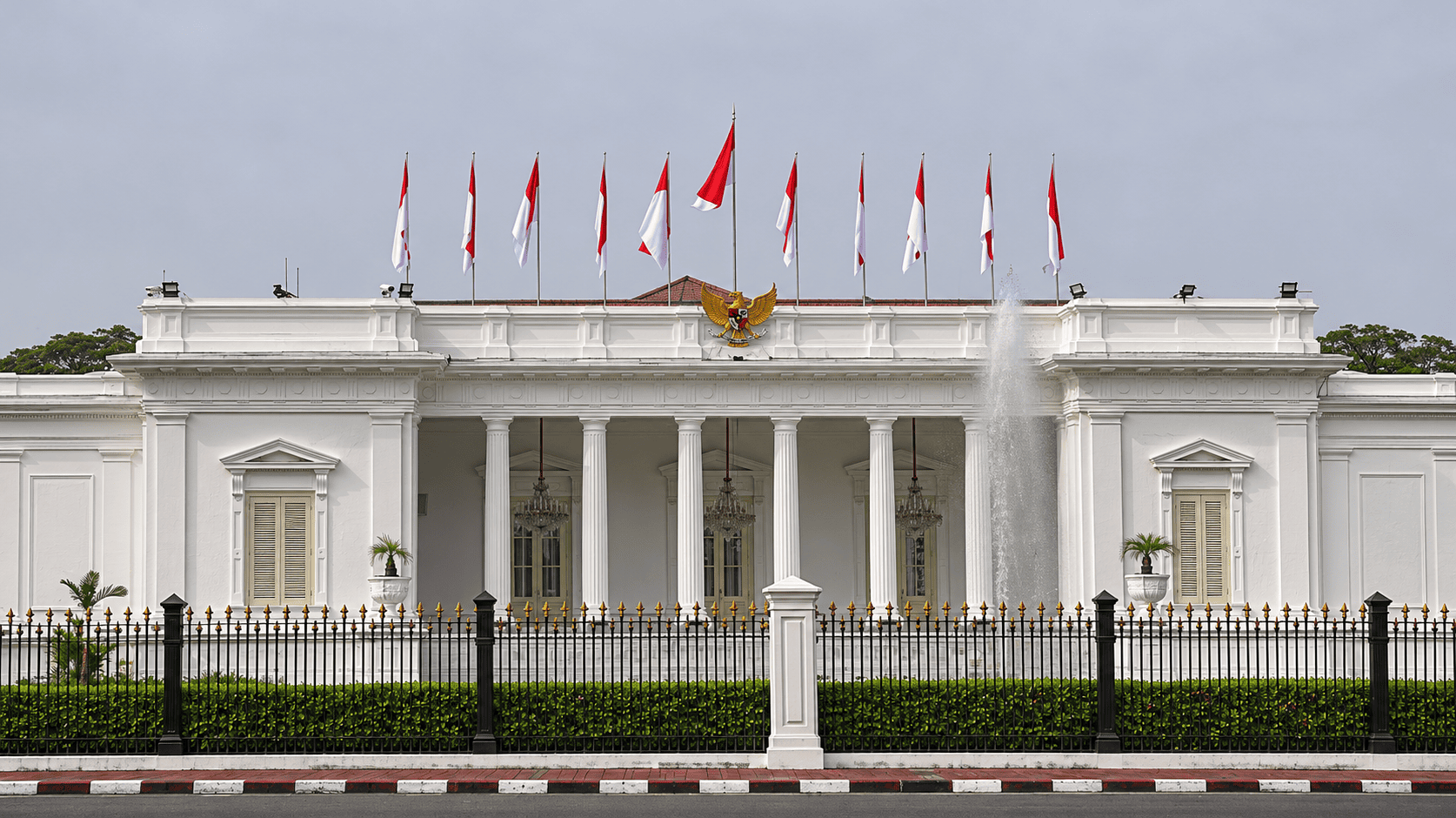
Jakarta signals lower ore output and seeks 70% of mining benefits while LME nickel rises despite a surplus. Permitted projects outside Indonesia stand to gain.
- Three-month LME nickel rose 3.8% to US$16,462 per tonne on Nov 17, the only notable base-metal gain of the session, according to Shanghai Metals Market.
- LME and Shanghai Futures Exchange inventories hold an estimated 750,000-tonne surplus against global demand of about 3.5 million tonnes a year, Indonesian officials said in late October and early November.
- The rally rests on two pending decisions: Indonesia's 2027 ore quota, which officials signalled will fall, and the EU ruling on Anglo American's Brazilian nickel sale, due by Dec 21.
- President Prabowo Subianto called for the state to take at least 70% of mining benefits without defining them, and by Nov 18 Indonesia's basic materials stock index had fallen 6.2%.
Indonesian Supply Signals Lift Nickel Despite Full Exchange Warehouses
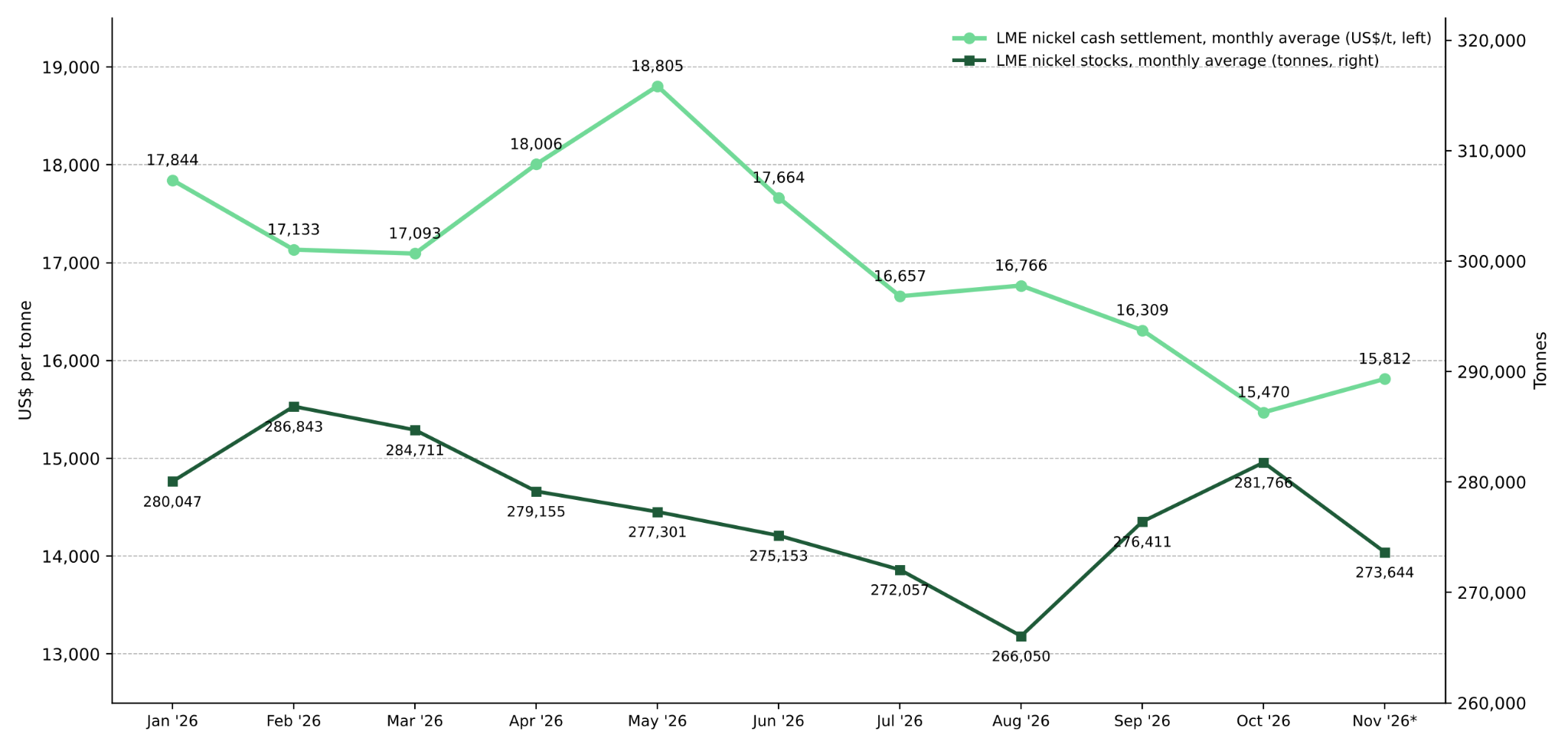
Three-month nickel on the London Metal Exchange (LME) rose 3.8% on Nov 17 to US$16,462 per tonne, the only notable base-metal gain of the session, according to Shanghai Metals Market (SMM). SMM tied the move to expected Indonesian output cuts and a warning from Anglo American about its Brazilian ferronickel plants. In China, the Jinchuan refined nickel premium fell 250 yuan to 2,250 yuan per tonne on Nov 18, a sign spot buying stayed weak.
The metal on hand points the other way. Indonesia's Director General of Mineral and Coal, Tri Winarno, put the global surplus at about 750,000 tonnes, held in LME and Shanghai Futures Exchange inventories, S&P Global reported on Nov 2. Against annual demand of about 3.5 million tonnes, the stockpile covers roughly 11 weeks of world consumption.
Brazil Plant Closure Risk and Indonesian Quota Cuts Push Nickel Higher
The physical risk sits in Brazil. Anglo American told European stainless steel customers it would idle the Barro Alto and Codemin ferronickel plants, and eventually close them, if the European Commission rejects the roughly US$500 million sale of its Brazilian nickel business to MMG. The plants produced 39,700 tonnes of nickel content in 2025. The Commission is due to rule by Dec 21, and no supply has been lost yet.
The Indonesian risk is a policy one. Bahlil Lahadalia, Coordinating Minister for Downstreaming and Energy Transition, said on Nov 2 the 2027 ore quota, set under the annual work plan known as the RKAB, faces further cuts. The revised 2026 quota stands at 290 million to 300 million tonnes. On Nov 14, President Prabowo Subianto told ministers to secure at least "70% of the benefits from all mining permits," Reuters reported. By Nov 18, Indonesia's basic materials stock index had lost 6.2%.
Policy Delays Leave the Nickel Surplus in Place Until 2027 Quotas Land
Neither decision moves metal out of warehouses quickly. The 2027 quota has no published number and the 70% rule has no definition. Indonesia's royalty benchmark, the HMA, rose only 0.76% to US$15,596.88 per tonne for Nov 15 to 30, because it averages LME prices from Oct 19 to Nov 9, before the rally, the energy ministry said.
If the Commission blocks the sale and Jakarta cuts the 2027 quota below the 2026 range, 39,700 tonnes of Brazilian output leave the market alongside Indonesian ore, and exchange stocks start to draw. If the sale clears and the quota holds, no supply is lost, and the surplus pulls price back toward the US$15,800 level Bahlil cited on Nov 2.
Indonesian State-Share Push Cuts What Private Miners Keep From Higher Nickel
Miners holding Indonesian nickel permits carry the most exposure. A higher price lifts revenue per tonne, but a lower quota cuts the tonnes sold and the state-share directive claims part of the margin. Fauzan Luthfi Djamal, mining analyst at Mirae Asset Sekuritas Indonesia, estimated their net profits could fall by as much as half, depending on how the 70% is calculated. Producers outside Indonesia keep the price gain without either exposure.
The operational test is whether an asset holds output when its quota shrinks. Eramet could not: the French miner halted operations for several months after a lower quota and plans to sell part of its Indonesian nickel stake, Reuters reported.
Neither the 70% definition nor the Commission ruling is knowable in advance, and Fauzan said uncertainty over definitions alone is enough to delay new investment. Position size is the variable a retail holder of Indonesian nickel miners controls. Holders of producers elsewhere face losses on positions bought into the Nov 17 rally if the sale clears and the quota holds.
Indonesian Curbs Favor Permitted Nickel Projects Abroad
Nickel now trades on decisions taken in Jakarta and Brussels rather than on the metal sitting in exchange warehouses. Indonesia will use quotas, royalties and state ownership to manage its own supply, and the 750,000-tonne surplus is the only counterweight.
For privately owned Indonesian permit holders, a higher nickel price no longer delivers a matching share of the gain, because the quota caps volume and the state claims more of the margin. The undefined state share belongs in the discount rate applied to Indonesian nickel assets, not in a risk footnote.
Low prices, tighter quotas and delayed investment thin the pool of new supply over the coming decade, and permitted orebodies outside Indonesia gain the most from a supply base Jakarta has chosen to restrict.
Analyst's Notes





Subscribe to Our Channel







Stay Informed


