




Leviathan Metals’ First Copper Assays Point to Deeper Drilling in Botswana


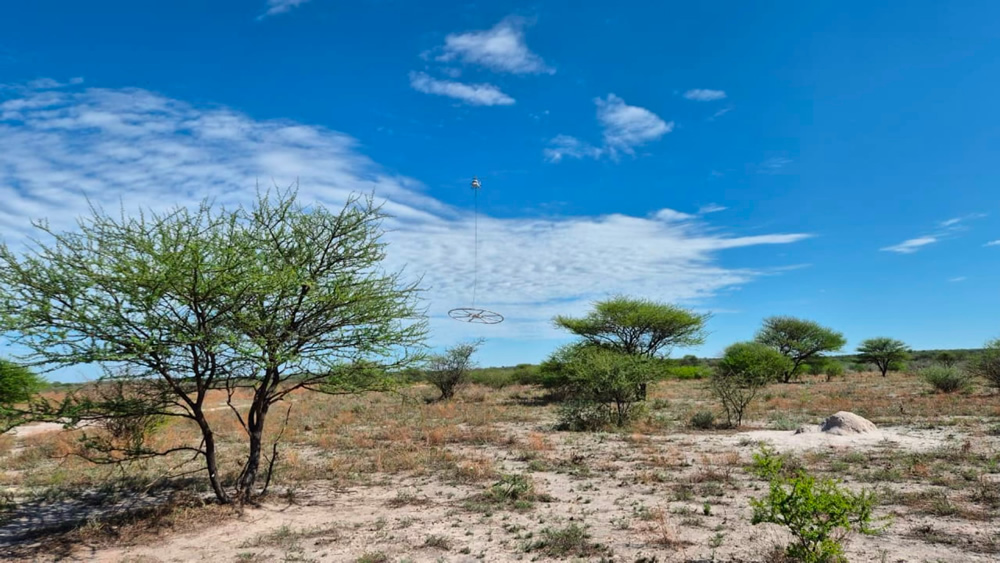
Leviathan Metals’ first Central assays return up to 1.29 m at 0.47% copper beside Khoemacau, and vectors point the next holes to 200-250 m.
- Leviathan Metals received first assays from 6 holes at Central led by 1.29 m at 0.47% copper and 11.9 g/t silver.
- The company interprets the narrow, low-grade intervals as the margins of a broader mineralizing system on the Hyena Hills dome.
- A thickening host package, increasing structural preparation and a lead and zinc halo point the next pierce points to about 200 to 250 m, below the current 115 to 170 m.
- Slightly over 7,000 m across 26 holes has been completed in a 10,000 m programme with the current stage scheduled to finish at the end of January 2027.
- Most assays remain outstanding, Central has no resource, and Khoemacau’s mineralization is not necessarily indicative of Central.
Leviathan Metals Corp. (TSXV:LVX) has received the first laboratory assays from its diamond drilling at Central, a 100%-owned copper project on Botswana’s Kalahari Copper Belt (KCB) that directly adjoins MMG’s Khoemacau group of deposits and discoveries. Results released on November 10, 2026 covered targeted horizons in 6 holes with strongest interval returning 1.29 m at 0.47% copper and 11.9 grams per tonne (g/t) silver from 142.9 m downhole.
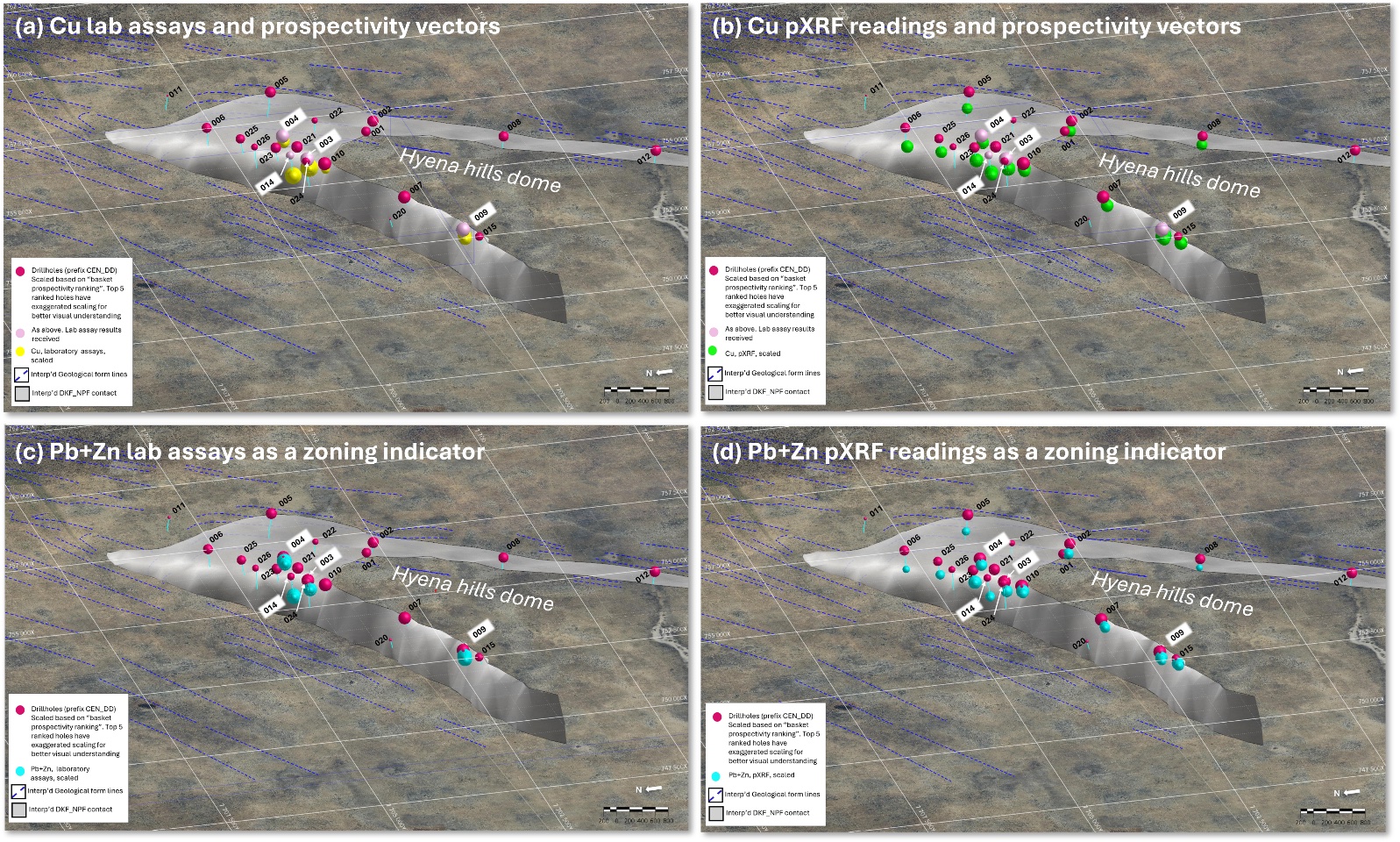
Leviathan interprets the intervals as the margins of a broader mineralizing system, and its case draws on more than copper grade. Drilling has confirmed the target stratigraphy and the domal structure first inferred from geophysics. Shearing, brecciation and faulting intensify toward the copper, and lead and zinc form a halo around the mineralization.
Chief Operations Officer of Leviathan Metals, Jeremy Crozier, acknowledged that the release may have left some readers unconvinced, and argued that the geology points the next holes slightly below current drilling depths.
What the First Assays Show
The release reports intervals at two copper cut-off grades: at a 0.1% copper cut-off, Leviathan reported four intervals between 1.0 m and 2.3 m wide, grading 0.10% to 0.47% copper. Besides the 0.47% interval, these include 2.3 m at 0.15% copper from 228 m, 1.06 m at 0.2% copper and 10.91 g/t silver from 116.8 m, and 1.0 m at 0.1% copper and 5 g/t silver from 162 m. At a 0.05% cut-off, the best interval widens to 2.2 m at 0.31% copper.
The company states that at known KCB deposits, peak intersections above 0.1% copper per drill hole each occur within the mineralized envelope of the respective deposit. At Central, the reported results fall within a geological envelope more than 4 kilometers (km) long, in interbedded siltstones and sandstones close to the contact between the D’Kar and Ngwako Pan Formations. Every known copper deposit on the belt occurs at or close to this contact.
The wider dataset is consistent with that picture. All but two holes show visual copper sulfide mineralization, mostly chalcopyrite, and every hole has returned copper readings from portable X-ray fluorescence (XRF) analysis. Almost every hole has intersected the target contact, and drilling has confirmed the dome inferred from geophysics. The company notes that visual observations are indicative only.
Structural Preparation Points Below Current Drilling
Leviathan drilled its first pass shallow on purpose, meeting the dipping contact at roughly 115 to 170 m from surface to test the dome and stratigraphy across a large area.
Crozier said the combined evidence places the programme above the target, not far from it:
“What I would like to make really clear here is our view, based on multiple lines of information, is that we’re very much above something. We’re proximal to something not particularly far away.”
Crozier described a KCB copper deposit as the product of several factors acting together. A thick package of siltstones and sandstones must accumulate at the base of the D’Kar Formation near the contact, the rocks must be broken up in a particular structural style, and the system needs copper plus the sulfur that moves it and forms copper minerals. Leviathan reports seeing all of these at Central. The 2.3 m interval at 0.15% copper came from an early hole where the team logged veining consistent with structural preparation, the fracturing that makes rock receptive to copper.
Follow-up holes stepping away from that intercept showed the sedimentary package and the degree of fracturing increasing along strike, with indications that both thicken at depth. Across the northwestern limb, Crozier said, these vectors point to the next round of pierce points at about 200 to 250 m from surface. For comparison, he noted that MMG’s Zone 5 extends many hundreds of meters below surface, in places down to 1 km.
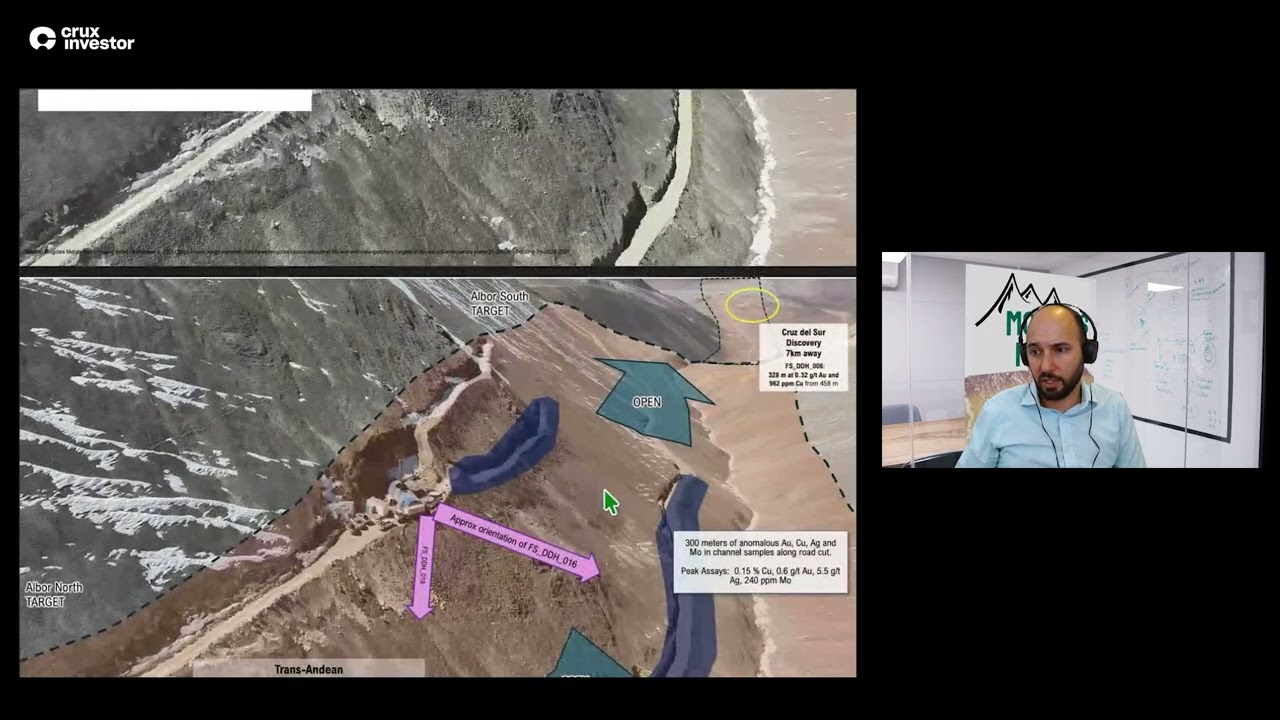
Interview with Jeremy Crozier, COO of Leviathan Metals
Lead & Zinc Halo Around the Copper
Base metal zoning gives Leviathan a second vector that does not depend on copper grade. Lead and zinc are known to associate with KCB-style mineralization in a proximal position, and the company treats their anomalous values as a favourable zoning indicator. The clearest example is the 1.0 m interval at 0.1% copper, which also returned 0.76% lead and 0.15% zinc.
Crozier said one of the reported holes came close to 1% lead and zinc combined, and stressed that the company views the lead and zinc as a halo, not payable metal. Galena and sphalerite, the sulfides of lead and zinc, are visible in core, with galena forming haloes peripheral to copper mineralization. Crozier added that handheld XRF data from holes still awaiting laboratory assays show the same pattern.
Drill Spacing, Costs & Programme Execution
Central had never been drilled before Leviathan’s programme, and the first holes tested blind geophysical targets beneath Kalahari sediment cover. To stretch the 10,000 m programme, the company drilled at a broad spacing, in places up to 2 km between holes.
Slightly over 7,000 m had been completed across 26 holes at the time of the release, and Crozier said the 27th hole was underway. Delays in the analytical performance of certified reference materials inserted for quality control slowed reporting, and Leviathan is targeting further results shortly. Meanwhile, the team picks new collars using on-site XRF and core logging of stratigraphy, structure and sulfides such as pyrite.
Drilling costs about $270 per meter from the contractor, which also provides the camp at the remote site. Crozier said assay costs are moderate because the target is a tabular body a few tens of meters thick. The current stage of the programme is scheduled to finish at the end of January 2027, and Leviathan is planning to add drilling capacity in 2027.
Room Beyond the Northwestern Limb
The northwestern limb remains the drilling priority, though Crozier said the rest of the property is still a significant exploration target. Similar host material appeared in a hole further southwest on the same limb that he said deserves follow-up, while the southeastern limb has been drilled only at a 2 km spacing.
Central covers more than 20 km of the target contact, mostly around the Hyena Hills dome. Hyena Hills is the next dome south of those hosting the Khoemacau deposits and discoveries, including Zone 5 and Zone 9, and each of those domes hosts at least two copper deposits or discoveries.
Leviathan also holds a uranium portfolio acquired in the same Botswana land package as Central. Crozier said a programme of 22 to 23 holes is well advanced, targeting a westward continuation of uranium mineralization from Lotus Resources’ Letlhakane project immediately to the east.
The Investment Thesis for Leviathan Metals
- Leviathan Metals holds 100% of Central, which directly adjoins the Khoemacau group of deposits on the Kalahari Copper Belt that MMG acquired with nearby deposits for US$1.9 billion in 2023.
- Drilling has intersected the contact between the D’Kar and Ngwako Pan Formations in almost every hole and has confirmed the dome previously inferred from geophysics.
- The first assays are narrow and low grade, led by 1.29 meters at 0.47% copper and 11.9 grams per tonne silver, and the company interprets them as the margins of a broader mineralizing system.
- A thickening host package, increasing structural preparation and a lead and zinc halo point to the next pierce points at about 200 to 250 meters from surface.
- Large parts of the contact remain thinly tested, including a southeastern limb drilled at a spacing of 2 kilometers.
- Outstanding assays and the first deeper holes on the northwestern limb are the next catalysts to monitor before the current programme stage finishes at the end of January 2027.
The thesis now depends on whether deeper drilling converts a confirmed geological setting into copper grades and widths of the kind found on neighbouring domes.
Macro Thematic Analysis
The KCB is regarded by the US Geological Survey as one of the world’s most prospective areas for sediment-hosted copper deposits. Its known deposits share a consistent geological address. They occur at or near the D’Kar and Ngwako Pan contact on the flanks or hinges of kilometer-scale domes, typically within secondary folds, shears or other structural traps that focused mineralizing fluids. That consistency gives an explorer with an untested dome a defined target, even under Kalahari sand cover.
Corporate interest in the belt carries a recorded price. MMG acquired the Khoemacau group of deposits and discoveries, together with the nearby Banana Zone, Zone 6 and Ophion, in 2023 for US$1.9 billion. According to the figures Leviathan cites, the Khoemacau group holds Measured and Indicated Mineral Resources of 94 million tonnes (Mt) at 1.8% copper and 22 g/t silver, plus Inferred Mineral Resources of 188 Mt at 1.6% copper and 20 g/t silver.
Leviathan identified the Hyena Hills dome before drilling began, and Crozier said the logic of the belt drives the company’s exploration thesis:
“We identified another dome immediately to the south of Khoemacau. And the premise was, why wouldn’t there be another Tier 1 copper deposit on our property? That is the win here.”
Botswana supports the case on jurisdiction. The Fraser Institute ranked the country second in Africa in 2024, and Leviathan points to investor-friendly legislation, a well-educated workforce and infrastructure set up to support mining, a major driver of the national economy. For Central, the neighbouring deposits define the scale of the opportunity that a discovery on the Hyena Hills dome would be measured against.
TL;DR
Leviathan Metals has reported first assays from its Central copper project in Botswana, which adjoins MMG’s Khoemacau group of deposits. The best interval was 1.29 meters at 0.47% copper and 11.9 grams per tonne silver. The intervals are narrow and low grade, and the company interprets them as the margins of a broader mineralizing system. Thickening host rocks, increasing structural preparation and a lead and zinc halo point the next pierce points to about 200 to 250 m, below the current 115 to 170 m. Slightly over 7,000 m has been drilled across 26 holes, most assays are outstanding, and the current programme stage is scheduled to finish at the end of January 2027.
FAQs (AI-Generated)
Analyst's Notes





Subscribe to Our Channel







Stay Informed


