




Made in America Article Series 2/5: Nevada's Infrastructure & Permitting Certainty Keep Capital Flowing


Nevada's permitting certainty, infrastructure, and century of mining data reduce risk, which is why institutional capital keeps choosing Nevada mining projects.
- Jurisdiction reduces execution risk in ways that grade and resource size cannot capture, and Nevada's permitting confidence and regulatory framework are now quantifiable inputs to investment underwriting.
- Existing highways, power lines, rail access, water rights, and equipment dealers, as described by company executives during site visits, shorten development timelines and lower the capital intensity of bringing a project into production.
- More than a century of continuous mining activity has left behind historic drilling data, geological models, and disturbed ground that today's companies can build on, though the specific figures cited come from company accounts rather than independently filed technical reports.
- Clustering around established mining districts gives companies access to skilled labor, contractors, and suppliers that would take years and significant capital to replicate in a new jurisdiction.
- Nevada's infrastructure, permitting record, and workforce depth exist because of its geology, and Part 3 examines the Great Basin's tectonic history that created this mineral endowment in the first place.
Investors Are Pricing Jurisdiction Risk, Not Just Deposit Quality
Traditional project evaluation centers on grade, contained ounces, net present value (NPV), and internal rate of return (IRR). Institutional investors now underwrite a second layer of risk alongside those metrics: permitting timelines, construction risk, workforce availability, infrastructure access, and social license to operate. These factors determine financing costs, schedule certainty, and ultimately the multiple the market assigns to a project's discounted cash flows.
Nevada ranks number one globally on the Investment Attractiveness Index and holds a perfect score of 100 on the Policy Perception Index, also ranking first worldwide on that measure, based on Fraser Institute's Annual Survey of Mining Companies, 2025. Fifty-seven percent of survey respondents operating in Nevada reported receiving exploration permits within two months, and 71% received them within 3-14 months. Perhaps most significant for institutional underwriting, 100% of respondents said they were confident or highly confident that necessary permits would ultimately be granted.

Permitting certainty compresses the range of outcomes a financier has to model. Lower dispersion in expected outcomes typically supports lower discount rates, and lower discount rates support higher present-value multiples on the same underlying cash flow stream.
Ken McNaughton, Chief Exploration Officer of P2 Gold, frames Nevada's permitting environment in terms of predictability rather than ease:
"In the government there's a strict set of rules that we have to adhere to, but rather than waiting to be told, everybody knows what has to be done. The process is pretty well defined."
Predictability does not mean permitting is simple. It means the risks involved are knowable and can be underwritten with a reasonable degree of confidence.
Nevada Has Built a Complete Mining Ecosystem
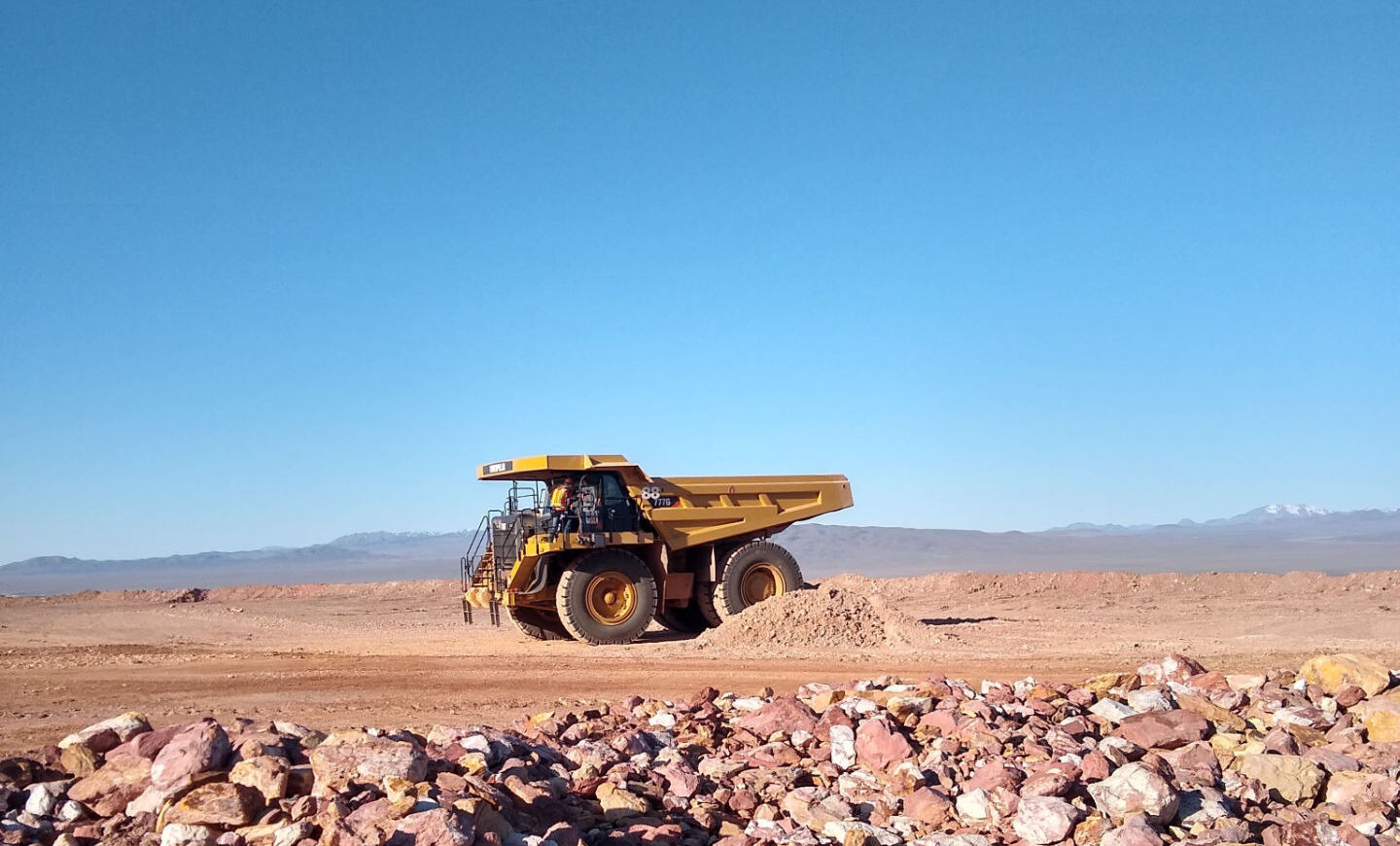
Beyond regulatory policy, Nevada's physical infrastructure removes cost and schedule risk that would otherwise need to be built from scratch. P2 Gold's Gabbs project benefits from paved highway access, purchased water rights, and a power substation located directly on the property. Hycroft Mining's site has a rail line within 200 meters of the property, while Blossom Gold's Rosebud project benefits from historic road access that requires no new ground disturbance.
Equipment and labor access compound these advantages. Integra Resources' George Salamis has noted that Winnemucca, Battle Mountain, and Elko sit within a two-hour drive of one another, providing access to Caterpillar and Hitachi dealerships, contractors, and skilled labor across the region.
For investors, each piece of infrastructure a company reports having on site is a capital line item it would not need to raise or permit separately. This infrastructure did not appear on its own. It exists because mining has operated continuously across the state for well over a century.
A Century of Mining Continues to Leave Behind Valuable Assets
Over the past decade, Nevada has consistently accounted for roughly 65% to 75% of total US gold production, with the top mining operations nationwide, yielding the large majority of all gold mined in the United States. Because Nevada represents this consistent, dominant share of domestic output, the same national reserve data that determines how long US gold production can continue is, in practice, largely a statement about Nevada's own resource base.

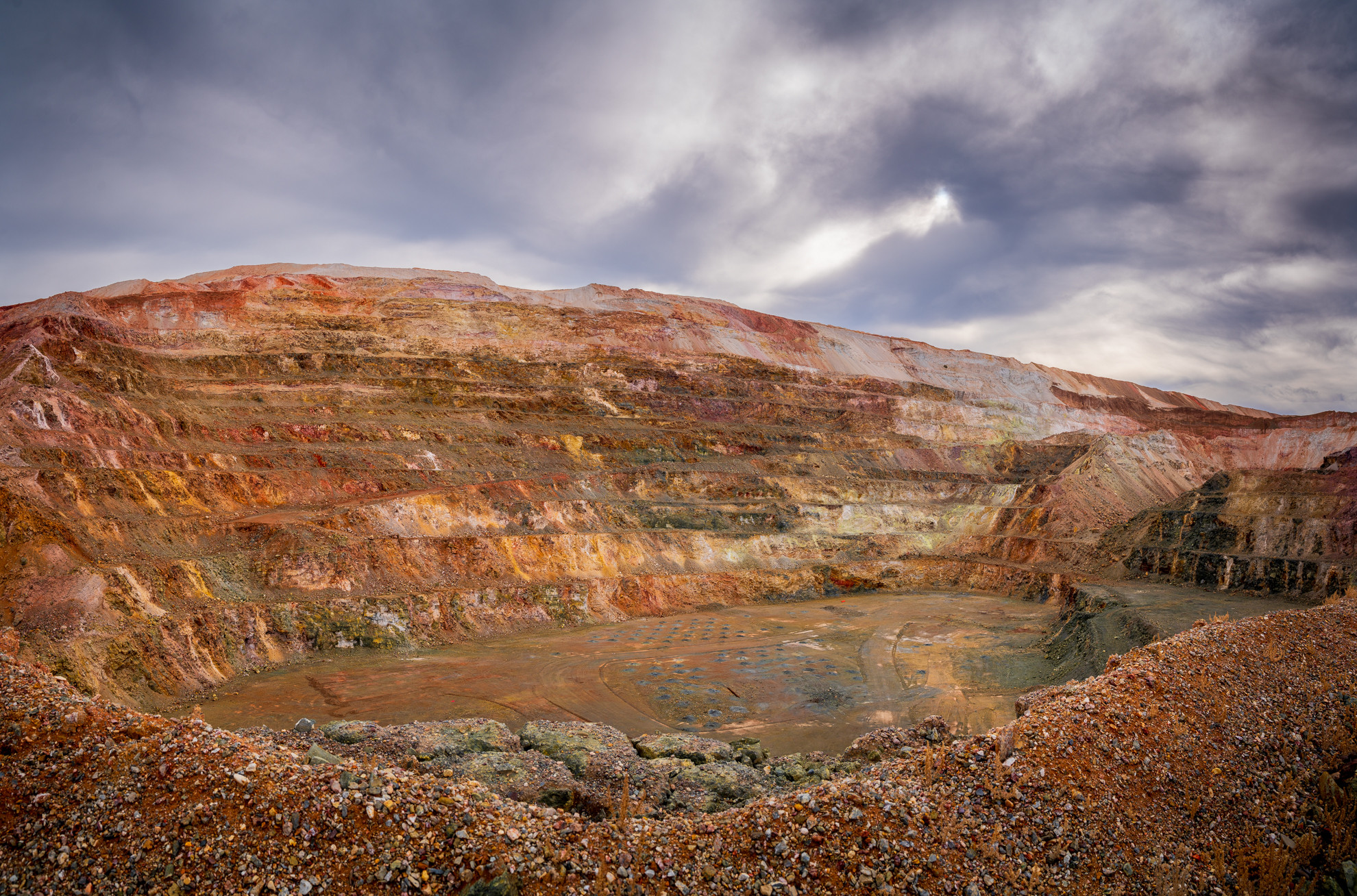
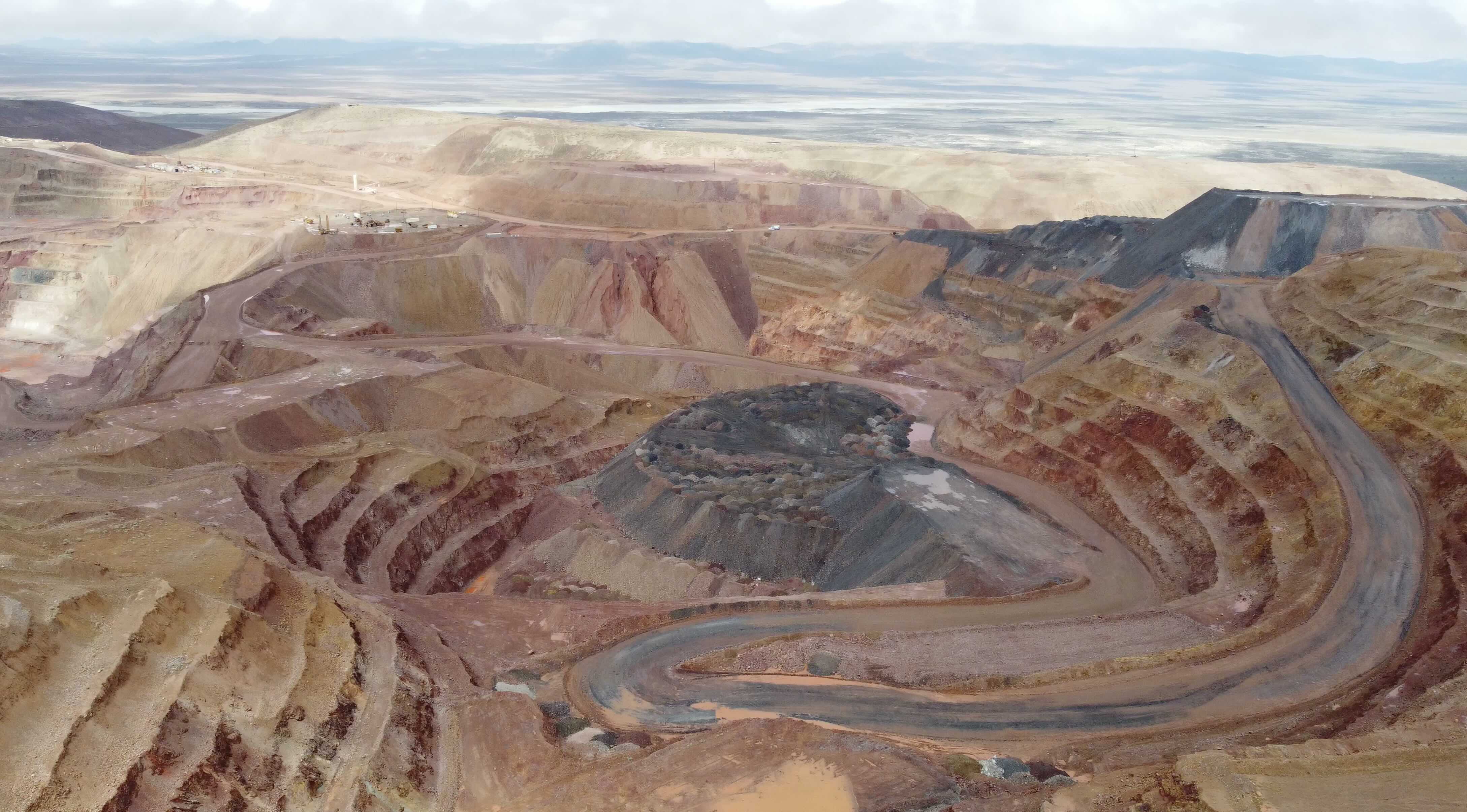
Every prior generation of mining activity leaves behind roads, drill data, geological models, permits, and processing knowledge that current operators can inherit rather than recreate. Silver One Resources' Candelaria project began production in 1864 and produced 68 million ounces of silver under Kinross and its predecessors. Integra Resources' Florida Canyon has operated for 35 years and recently produced its three-millionth ounce. Blossom Gold's Rosebud historically produced from a joint venture involving Hecla and Newmont, while P2 Gold's Gabbs district sits adjacent to the historic Paradise Peak mine, which produced 40 million ounces of silver and one million ounces of gold in the 1990s under FMC.
Silver One Resources is applying modern processing technology to Candelaria’s historic leach pads. Vice President of Exploration Raul Diaz describes the project’s metallurgical upside:
"We are recovering 51% silver, and now we are testing new technology which is non-toxic, non-cyanide, and friendly to the environment, and we are looking at recoveries that are 66%"
A 15-percentage-point recovery improvement, from a historic 51% to a targeted 66%, applied against silver already sitting on existing leach pads rather than new ore, would lower all-in sustaining costs (AISC) without requiring additional mining capex.
Historic Data Is Reducing Discovery Risk for Brownfield Projects
Greenfield exploration requires a company to fund the full cost of proving a deposit exists before any resource can be estimated. Brownfield exploration starts from drilling, metallurgical testing, and geological modeling a prior operator already generated. That distinction is what investors are underwriting when they assess the early-stage technical risk of a portfolio company, provided the underlying historic data can be confirmed.
Blossom Gold's Rosebud project inherited ten years of technical work from major companies including Kinross, Newmont, and Hecla, encompassing 192 kilometers of historic drilling, and a preliminary economic assessment (PEA) on a large open pit outlining 97 million tons at 0.6 g/t gold. Chief Executive Officer Rick Winters describes the company's current work as validation rather than discovery:
"We acquired the project, and what we're in the process of doing right now is confirming what was already done and what we know… What you have here is you have ten years of information from all those major companies. Every bit of information is actually public."
Scorpio Gold's consolidated data from numerous small-scale historic operators alongside work from Kinross and Newmont, digitizing decades of hard-copy records into a three-dimensional Leapfrog model that allows the district to be evaluated as a single system rather than a patchwork of disconnected claims.
P2 Gold's Ken McNaughton makes the discovery-risk argument directly, noting that thirty-year-old data allowed the company to skip the highest-risk phase of exploration entirely:
"The discovery risk was off the table, and that was done thirty years ago. For us, we've been able to take that data, recognize the potential, and then expand upon that."
As modern exploration shifts toward reinterpreting datasets a prior operator already generated, rather than funding discovery drilling from zero, the question an analyst needs to underwrite changes from whether a deposit exists to how large it is and at what grade, provided the underlying dataset can be verified.
Mining Clusters Create Compounding Cost Advantages
Nevada's mining districts function as industrial ecosystems rather than isolated project sites. George Salamis states that roughly 50 operating mines sit within 100 kilometers of Integra Resources' Florida Canyon operation. Teddy Berg of Scorpio Gold describes Manhattan as sitting roughly 15 kilometers from the Round Mountain mine, sharing similar aged volcanic rocks:
"Just about 15 kilometers to the north of here is Round Mountain, a world-class deposit... The Manhattan caldera hosts the volcanics here, and similar volcanics exist all the way up to the north to Round Mountain."
Clustering allows companies to share access to contractors, drilling crews, and equipment dealers. Hycroft Mining, for example, draws its workforce largely from nearby Winnemucca. For investors, this shortens mobilization delay, the gap between a construction decision and having a trained workforce on site, which in a jurisdiction without an existing labor pool can add months to a schedule.
Why Institutional Capital Is Returning to Nevada
S&P Global's Q1 2026 Mining Exploration Hotspots: Mapping Global Shifts with the Exploration Jurisdiction Power Score, ranks Nevada fifth globally on the Exploration Jurisdiction Power Score, with 300 of its points attributed to milestone achievements, meaning feasibility studies, permitting decisions, and production approvals.
Nevada's fifth-place ranking follows a long period of comparative underinvestment. Per S&P Global's Mine development times: The US in perspective (June 2024), over the past 15 years exploration capital committed to Canada has exceeded that committed to the United States by 81%, while Australia has received 57% more; copper exploration spending in the US runs at $0.98 per metric ton of resource, compared with $1.92 in Australia.
That gap has persisted into the most recent data: S&P Global's World Exploration Trends 2026 report, shows global exploration budgets fell for a third consecutive year in 2025, with spending declining in both Canada and the US even as gold-focused budgets rose 11% on record prices, and with grassroots exploration falling to a record-low 21% share of the global total. Capital, in other words, is not just underweight the US relative to peers, it is also increasingly concentrated near existing operations rather than new discovery, which reinforces the value of Nevada's brownfield advantage rather than working against it.
The Investment Thesis for Nevada-Focused Mining Companies
- Nevada ranks first globally on both the Investment Attractiveness Index and the Policy Perception Index in the Fraser Institute's 2025 Annual Survey of Mining Companies, a jurisdictional position that reduces execution risk across permitting, construction, and workforce access.
- Existing roads, power, water, and rail access, documented across six site visits from P2 Gold's on-site power substation to Hycroft Mining's rail line 200 meters from its plant, remove capital line items a greenfield project in an undeveloped jurisdiction would otherwise need to finance separately.
- Historic datasets, including Blossom Gold's 192 kilometers of inherited drilling and Scorpio Gold's digitized district model, let companies skip the discovery-risk phase of exploration that a jurisdiction without this data would require them to fund directly.
- Investors who weigh jurisdiction alongside grade, AISC, NPV, and IRR, and who distinguish company-stated claims from independently verified disclosures, get a more accurate read on whether a project's modeled NPV is likely to convert into realized value on the timeline its discount rate assumes.
Nevada's Advantage Started Long Before Mining
Infrastructure, permitting experience, workforce depth, historic data, and a century of production history are all real, measurable advantages that institutional investors can and should underwrite when assessing Nevada-focused mining companies. But these advantages exist because Nevada first possessed something considerably older: its geology.
Long before highways, power lines, and permitting frameworks existed, tectonic forces stretched the Earth's crust, created extensive fault systems, and established the mineral-rich structures that would eventually attract generations of miners. Understanding why the Great Basin became one of the world's richest precious metal provinces is the subject of Part 3, "The Great Basin."
TL;DR
Nevada ranks first globally on both the Investment Attractiveness Index and Policy Perception Index, and institutional investors increasingly underwrite jurisdiction risk alongside traditional metrics like grade, NPV, and IRR. Existing highways, power lines, water rights, and rail access lower the capital intensity of development. More than a century of continuous mining has left behind drilling data, geological models, and infrastructure that brownfield projects can inherit rather than recreate, reducing discovery risk. Mining clusters around districts like Winnemucca, Battle Mountain, and Elko provide shared access to labor, contractors, and equipment.
FAQs (AI-Generated)
Analyst's Notes





Subscribe to Our Channel












Stay Informed






















