




Cabral Gold Tightens Drill Spacing at MG to Reduce Geological Risk Ahead of Starter Pit Mining


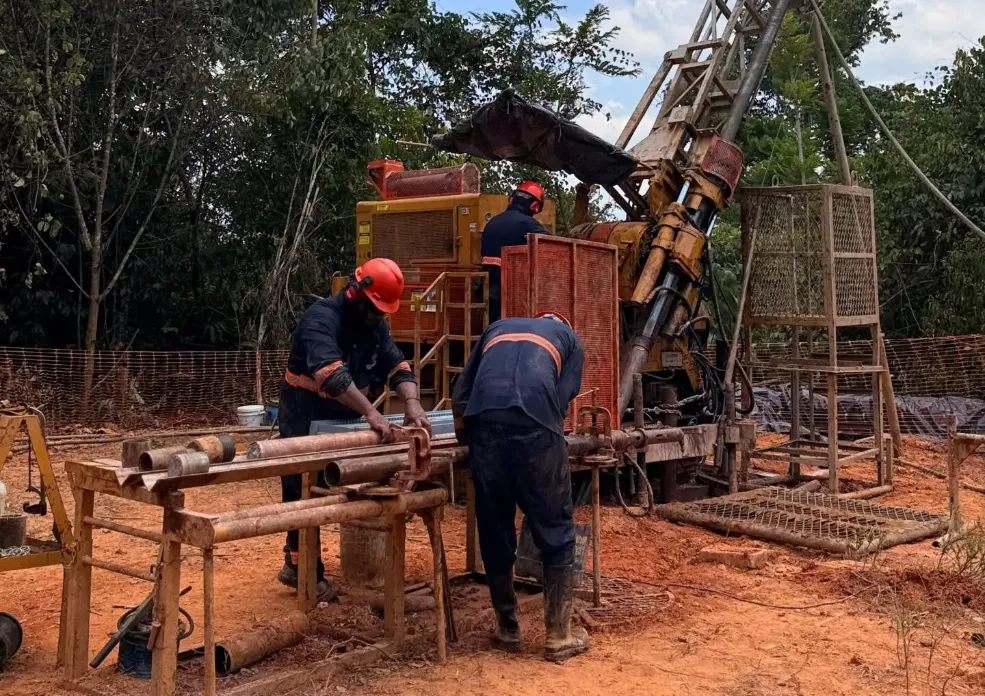
Cabral Gold tightens drill spacing at MG to reduce reserve risk ahead of 2026 production while expanding district-scale exploration in Brazil.
- Cabral Gold completed 133 infill reverse circulation holes across 4,800 metres at its MG gold deposit in Brazil, drilling on spacing as tight as 12.5 metres by 12.5 metres in higher grade zones to reduce geological uncertainty ahead of fourth quarter 2026 commercial production.
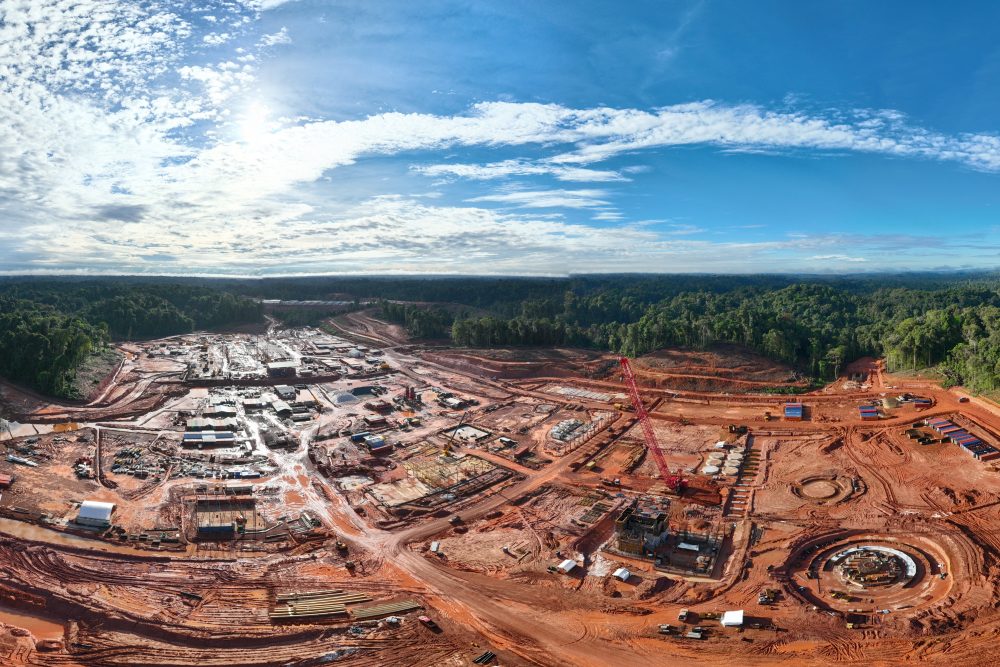
- The infill program refines the mine plan for the starter pit and updates the reserve base, providing greater confidence during initial mining operations as the company's phase 1 heap leach facility reaches 70% construction completion.
- Cabral operates under a US$45 million gold loan repayment schedule beginning in the fourth quarter of 2026, creating a fixed production timeline that requires reserve certainty rather than allowing resource conversion deferrals typical of equity-financed explorers.
- The company doubled its rig count from 3 to 6 following a C$20 million bought deal financing announced on March 25, 2026, expanding exploration on phase 2 hard rock targets, including the Jerimum Cima discovery, where drilling returned 9.5 metres at 87.4 grams per tonne gold.
- MG sits within the Cuiú Cuiú Gold District immediately northwest of G Mining's Tocantinzinho mine, Brazil's third-largest gold operation. Artisanal miners historically recovered an estimated 2 million ounces of placer gold from Cuiú Cuiú between 1978 and 1995, compared to 200,000 ounces from Tocantinzinho over the same period.
Cabral Gold Inc. (TSXV: CBR | OTCQX: CBGZF | FRA: C3J) has shifted from resource expansion to reserve refinement at its MG gold deposit in northern Brazil, completing 133 infill reverse circulation (RC) holes across the starter pit footprint to reduce geological uncertainty ahead of fourth quarter 2026 commercial production. The decision to drill on spacing as tight as 12.5 metres by 12.5 metres in higher grade zones reflects the development discipline of a company weeks away from its first gold pour, where mine plan confidence determines cash flow visibility in year one operations.
The infill program added 4,800 metres of drilling across 155 planned holes, targeting weathered saprolite and overlying sedimentary blanket material within the year one pit outline. Results reported May 7, 2026, included 46 metres at 1.25 grams per tonne (g/t) gold from surface, 30 metres at 1.45 g/t gold from surface, and 19 metres at 1.80 g/t gold from surface. The intercepts confirm grade continuity within free digging material that extends to 60 metres depth and requires no drill and blast extraction.
Reserve Confidence Replaces Resource Speculation
The MG infill program represents a strategic inflexion point where the focus has shifted from demonstrating ounces exist to proving they can be mined economically on a quarter-to-quarter basis. President and Chief Executive Officer Alan Carter positioned the drilling as a mine planning tool:
“As we advance with the construction of our phase 1 gold in oxide heap leach operation, which is now 70% complete, these data will allow us to further refine our mine plan for the starter pit and update the reserve base for the MG gold in oxide deposit. This, in turn, will provide us with greater confidence during the initial year of mining at MG.”
Tighter drill spacing reduces the risk of encountering unmineralized zones during mining that would dilute mill feed grades or require pit redesign mid-year. The phase 1 operation targets approximately 3,000 tonnes per day, aiming for 25,000 ounces in the first 12 months at all-in sustaining costs (AISC) between US$1,200 and US$1,300 per ounce. The facility is being constructed against a US$45 million gold loan from Cabral's largest institutional shareholder.
The obligation to repay US$45 million in physical gold beginning in the fourth quarter of 2026 creates a forcing function on reserve certainty. Unlike equity-financed explorers that can defer resource conversion timelines, Cabral operates under a production schedule that begins converting reserves to ounces on a fixed date. The infill drilling removes variance from that conversion equation.
Rig Count Doubles to 6 Following C$20 Million Financing
Cabral doubled its exploration effort from 3 to 6 rigs following the close of a C$20 million bought deal financing announced on March 25, 2026. The expansion adds 1 RC rig and two diamond drill rigs, signalling a bifurcation in capital allocation where near-term cash flow protection from phase 1 supports higher risk exploration on phase 2 hard rock targets. Carter explained the strategy:
“With $20 million, we anticipate bringing several additional rigs in here. So, the news flow will increase. We will grow this resource much faster. The big prize that we're aiming for here at Cabral is this much larger second stage, which is growing the global hard rock resource here and then demonstrating the economic viability of mining the hard rock deposits that we've got here because there's a lot more gold in the underlying hard rock material.”
Cabral now has 5 of the 6 rigs on site. The expanded program targets completing reserve refinement at MG by mid-May 2026, step-out drilling at the Jerimum Cima discovery, where a March 12, 2026, intercept returned 9.5 metres at 87.4 g/t gold outside the existing 1.2 million ounce resource base, and expansion work at the Mutum, Central, Machichie Main and Machichie NE deposits.
District Scale Within the Producing Gold Camp
MG sits within the Cuiú Cuiú Gold District in the Tapajós region of Pará state, immediately northwest of G Mining's Tocantinzinho mine, which produced just under 180,000 ounces in 2025 and ranks as Brazil's third-largest gold operation. Cabral's claims are contiguous with Tocantinzinho along the same geological structure. Artisanal miners recovered an estimated 2 million ounces of placer gold from Cuiú Cuiú between 1978 and 1995, compared to 200,000 ounces from Tocantinzinho over the same period.
Carter, who participated in the Tocantinzinho discovery 20 years prior, noted:
“So, we have multiple deposits here as well. That's the other big difference. And as I said, 50-plus peripheral targets.”
Cabral secured the full mining license prévia (LP) for MG in April 2026, removing the upper production ceiling imposed by trial mining licenses that restricted throughput to 1,500 tonnes per day. The LP approval enables expansion to the 3,000 tonne per day design capacity and eliminates permitting risk on the phase 1 operation.
Cabral tightened drill spacing to 12.5 metres by 12.5 metres in higher grade zones within the broader 25 metre by 25 metre grid, converting geological interpretation into measured data points, eliminating the gap between modelled reserves and actual ore control. That gap closes in the fourth quarter of 2026 when the first gold bar emerges, and Cabral begins converting ounces into cash flow against a US$45 million gold loan repayment schedule.
FAQs (AI-Generated)
Analyst's Notes





Subscribe to Our Channel



.jpg)


Stay Informed






















