




Canada Nickel's Next Major Catalyst: 6 Signals Crawford Is Approaching a Construction Decision


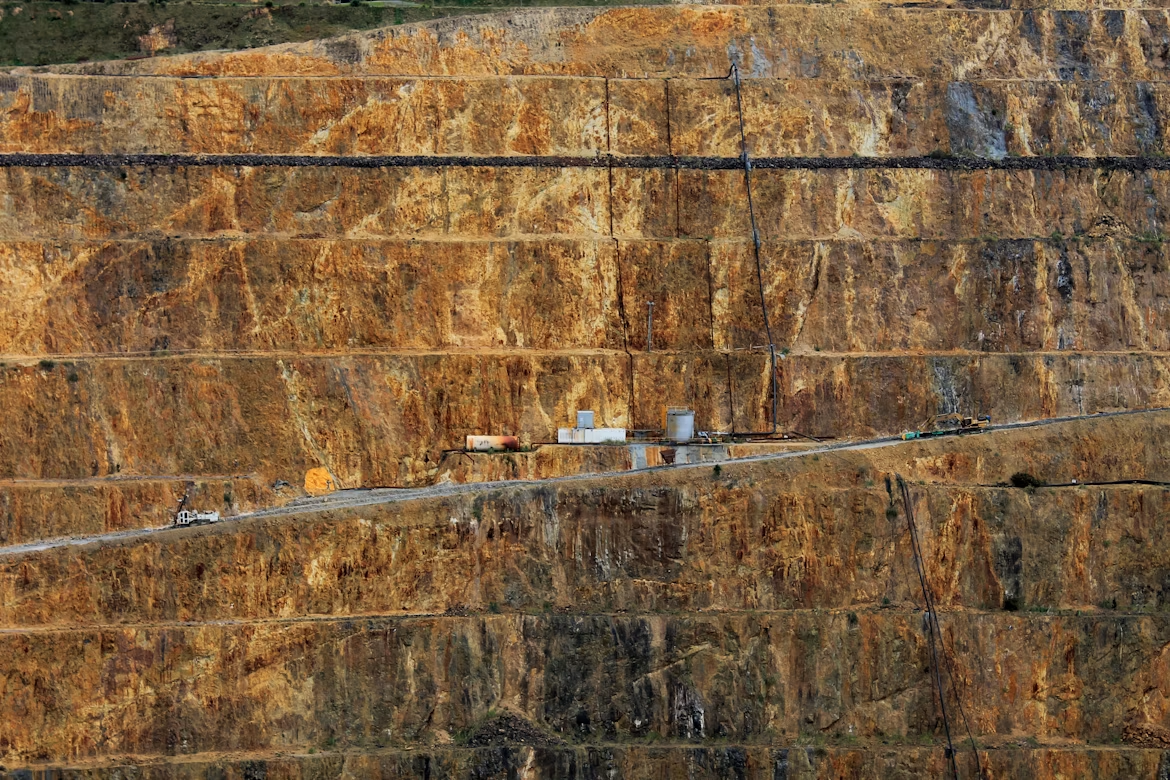
Canada Nickel nears a decision on Crawford construction as permitting, financing, engineering, investor backing, and nickel market conditions align.
Project Overview
Canada Nickel Company (TSX-V: CNC | OTCQX: CNIKF) is closing in on the final pre-construction milestones at its Crawford Nickel-Cobalt Sulphide Project in Timmins, Ontario. Federal impact assessment permitting is targeting completion in summer 2026. Front-end engineering and design (FEED) has increased the project's net present value at an 8% discount rate (NPV8%) to US$2.8 billion, with an internal rate of return (IRR) of 17.6%. A structured US$2.5 billion funding plan is being assembled with minimal equity dilution. The nickel market has added more than US$5,000 per tonne, driven by Indonesian supply discipline, and Crawford stands as one of only a handful of large-scale nickel sulphide projects globally that can reach production before 2030. Below are 6 signals that a Final Investment Decision (FID) is approaching.
1. Federal Permitting Is 1 Step From Completion
Crawford has cleared every substantive technical and social threshold required for federal environmental approval, leaving only ministerial sign-off between the project and a permit.
The Impact Assessment Agency of Canada published draft permit conditions as part of the impact assessment report, triggering a 30-day public consultation period before the agency finalises conditions and issues the permit, with the company targeting receipt in early summer 2026. The process required submission of more than 20,000 pages of documentation covering technical, social, and First Nations engagement requirements under the 2019 Impact Assessment Act. Crawford's inclusion in Canada's Major Projects Office and Ontario's One Project, One Process (1P1P) framework enabled coordinated federal and provincial review. The imminent issuance of the permit eliminates the largest single binary risk facing Crawford and signals that all major environmental agencies have assessed and accepted the project's impacts.
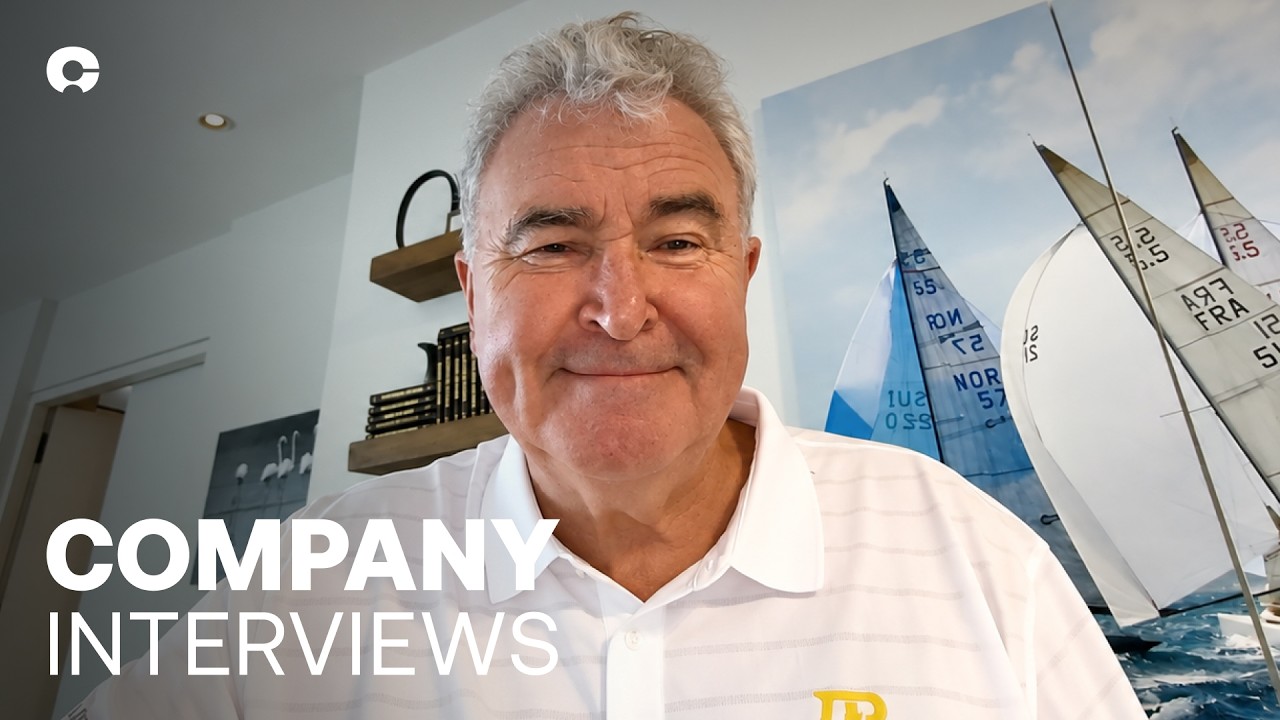
Chief Executive Officer and Director of Canada Nickel, Mark Selby, described the significance of the milestone in a June 2026 interview:
"We're down to only 1 step to go. We got the impact assessment report. There's a consultation period for 30 days, and the government goes away, finalises the permit conditions and then issues us the permit sometime in early summer. Very proud of our team. We're the first mining project in Canada under the 2019 legislation to reach this stage."
2. FEED Economics Confirm the Business Case Holds at Scale
The FEED study, completed in 2025, delivered a US$300 million NPV8% uplift over the bankable feasibility study (BFS) while holding the capital cost increase to 5%, simultaneously improving value and demonstrating cost discipline.
FEED results lift the after-tax NPV8% from US$2.5 billion to US$2.8 billion and the after-tax IRR from 17.1% to 17.6%, per the May 2026 investor presentation. Initial capital increased to approximately US$2.0 billion, offset by mine plan re-sequencing that accelerates the extraction of higher-value ore from the East Zone and reduces pre-stripping by 30%. The inclusion of carbon capture, utilisation, and storage (CCUS) tax credits lifts the NPV8% to approximately US$2.9 billion and the IRR to approximately 18.9%. The life-of-mine net C1 cash cost of US$0.39 per pound places Crawford in the first quartile of global nickel producers on the Wood Mackenzie cost curve, and the all-in sustaining cost (AISC) of US$1.54 per pound supports positive free cash flow across commodity price scenarios materially below current spot levels.
3. A Structured US$2.5 Billion Funding Plan Is in Assembly
Canada Nickel has defined a clear US$2.5 billion funding framework that is heavily weighted toward non-dilutive government capital and project-level debt, limiting open-market equity issuance.
The plan targets a 40/60 equity-to-debt split. On the equity side, approximately C$600 million is targeted from federal Investment Tax Credits spanning the Clean Technology Manufacturing credit and the CCUS credit, with C$100 million to C$300 million from programs including the Canadian Minerals Infrastructure Fund, the Canada Growth Fund, and international sources including JOGMEC (Japan) and the German Resource Fund. Samsung SDI's US$100 million offtake option payment contributes a further equity component. On the debt side, Export Development Canada (EDC) has issued a letter of intent (LOI) for a US$500 million mandate as lead arranger, supplemented by a C$500 million support letter from a leading Canadian financial institution. The company has completed the independent engineer review required to advance EDC negotiations.
Selby confirmed the financing progress in the June 2026 interview:
"We're now back in with Export Development Canada to start that next phase of the negotiations around the debt. We've now completed the independent engineer review. That went very well. We met with 2 separate export finance groups who are very keen to participate."
4. An Upsized Flow-Through Placement Signals Investor Conviction
Canada Nickel's June 2026 flow-through share (FTS) offering was upsized due to strong investor demand, validating appetite for Crawford at a premium to the prevailing market price.
Per the June 10, 2026, news release, the company completed a non-brokered private placement of 3,000,000 flow-through shares at C$2.07 per share for gross proceeds of C$6,210,000, upsized from its original size following oversubscription. The issue price represents a premium to the 20-day volume-weighted average price (VWAP) of C$1.73. At least 90.34% of gross proceeds qualify as flow-through critical mineral mining expenditures under the federal critical mineral tax credit framework. Qualifying expenditures are to be incurred by December 31, 2027, with renunciation effective no later than December 31, 2026. The oversubscription at a premium indicates that investors are pricing in near-term permitting and financing catalysts rather than waiting for FID confirmation.
5. A Strategic Shareholder Base Validates Crawford's Technical & Commercial Credentials
Crawford's shareholder register, which includes the world's largest gold producer, a global diversified major, a Tier-1 battery manufacturer, and a First Nations equity partner, provides institutional endorsement that directly supports lender confidence and offtake security.
Per the May 2026 investor presentation, Agnico Eagle holds 9.1% following full technical due diligence on Crawford's geology, metallurgy, and jurisdiction. Anglo American holds 5.7%, and Samsung SDI holds 6.5% alongside an offtake agreement covering 10% of life-of-mine nickel production plus an additional 20% for 15 years, exercisable on acquiring a 10% direct interest in Crawford at an implied project valuation of US$1 billion. The Taykwa Tagamou Nation holds 6.5% on conversion of its equity participation agreement, aligning long-term community interests through ownership rather than social licence alone. Samsung SDI's anchor offtake reduces commodity price risk for project lenders, directly improving debt capacity. These 4 strategic investors collectively validate Crawford's technical, commercial, and social credentials through independent due diligence rather than promotional positioning.
6. The Nickel Market Has Shifted Structurally in Crawford's Favour
Indonesia's coordinated supply interventions and years of underinvestment in Western nickel sulphide supply have repositioned Crawford as a scarcity-value asset in a tightening market.
Indonesia controls 67% of global nickel supply, 13 points above OPEC's all-time peak share of oil, per the May 2026 investor presentation. A sequence of policy actions from April 2025 through April 2026, including tiered export royalties, a ban on new nickel pig iron and high-pressure acid leach (HPAL) operations, and quota restrictions on PT Vale and Eramet confirmed in the First Quarter of 2026, has moved nickel prices up more than US$5,000 per tonne. Global nickel demand is on track to double by 2030, with approximately 7% annual growth since 2019. Crawford holds 3.8 million tonnes of contained nickel in proven and probable reserves, second globally only to Norilsk, and is the largest nickel sulphide development project in the Western world.
Key Takeaways for Investors
- Crawford is 1 ministerial sign-off away from receiving its federal environmental permit, the final binary risk before a construction decision.
- Front-end engineering and design confirmed a net present value at an 8% discount rate of US$2.8 billion and an internal rate of return of 17.6%, with a life-of-mine all-in sustaining cost of US$1.54 per pound, placing Crawford in the first quartile globally.
- A US$2.5 billion funding plan weighted toward government investment tax credits and project debt, not equity raises, limits shareholder dilution through to a Final Investment Decision.
- Strategic investors, including Agnico Eagle, Anglo American, Samsung SDI, and the Taykwa Tagamou Nation, each took positions following independent due diligence, providing commercial and technical validation that reduces lender risk.
- With Indonesia controlling 67% of global nickel supply and actively managing output, Crawford is one of only a few large-scale Western sulphide projects positioned to deliver supply before 2030.
Bottom Line
Canada Nickel has systematically de-risked Crawford through 4 years of federal permitting, FEED engineering confirmation, and financing structure development, arriving at June 2026 with 1 step remaining to a federal environmental permit, a US$2.8 billion NPV8% reaffirmed at US$2.0 billion in initial capital, and a non-dilutive US$2.5 billion funding plan in active assembly anchored by Export Development Canada, federal investment tax credits, and Samsung SDI's offtake-linked equity option. The nickel market has moved decisively in the project's favour, with Indonesian supply discipline driving a more than US$5,000-per-tonne price recovery and narrowing the field of credible pre-2030 Western sulphide projects to a handful globally. The construction decision is targeting mid-2027. Execution risks remain, primarily converting EDC and government funding discussions into binding commitments and securing long-lead electrical equipment ahead of site mobilisation, but the direction of travel across permitting, economics, financing, and market fundamentals is consistently toward FID.
Analyst's Notes





Subscribe to Our Channel


Stay Informed


