Higher Treasury Yields Drive Gold Lower as Central Bank Buying Accelerates


Higher Treasury yields pressured gold, but strong central bank buying, resilient Asian demand, and bullish long-term forecasts continue to support the outlook.
- Spot gold fell 0.5% to $4,045.59/oz as the Fed held rates in a 9-3 vote and 30-year Treasury yields reached an almost two-decade high, increasing the opportunity cost of holding non-yielding assets.
- Higher long-term Treasury yields, rather than rising rate hike expectations, drove the decline as September hold odds rose to 34.9% from 24% while hike odds fell to 67% from 81%.
- The pullback contrasts with continued official-sector demand, with central banks adding 289 tonnes of gold in Q2, up 62% year over year, and 45% planning further purchases within 12 months.
- India's Q2 gold demand fell 6% to 131.4 tonnes after a 15% import tariff shifted more than 100 tonnes into unofficial trading channels, indicating policy distortion rather than weaker underlying demand.
- Near-term risks remain if Brent stays above $100, with TD Securities targeting $3,900/oz, but J.P. Morgan's $6,000/oz Q4 2026 target suggests higher yields may create an opportunity to build exposure while long-term demand remains intact.
Higher Treasury Yields Pressure Gold Despite Lower September Hike Expectations
Spot gold fell 0.5% to $4,045.59/oz after rising as much as 2% in the previous session. Gold futures edged up 0.2% to $4,043.70, while silver and platinum weakened and palladium gained, showing that selling pressure was concentrated rather than broad-based across precious metals.
The decline followed a rise in the 30-year Treasury yield to its highest level in almost two decades, increasing the opportunity cost of holding non-yielding assets. Long-term yields, rather than expectations for an immediate Fed rate increase, remained the main driver as September hike odds fell to 67% from 81%. That disconnect suggests the current weakness reflects interest rate pressure more than deteriorating demand, leaving the longer-term gold outlook supported if official-sector buying remains strong.
Higher Oil Prices Lift Inflation Risks, Supporting Gold if Price Pressures Return
Rising oil prices remain the main inflation risk for gold. Brent crude reached $100 per barrel after the US struck Iran and Houthi attacks targeted two Saudi oil tankers, raising concerns over oil supply disruptions. The renewed US strikes on Iran and attacks extending to an Egyptian port increased the risk of further energy supply disruptions.
Higher oil prices lifted September Fed hike expectations to 81.4% from 52.4% before the Fed meeting, but pricing fell to 67% after policymakers left rates unchanged. The Fed avoided signaling another rate increase, leaving markets uncertain about the next policy move. Chair Kevin Warsh's decision not to signal an imminent rate hike, despite three dissenting votes, kept interest rate expectations flexible and limited additional pressure on gold.
289 Tonnes of Central Bank Buying Supports Gold as Official Data Misses Full Demand
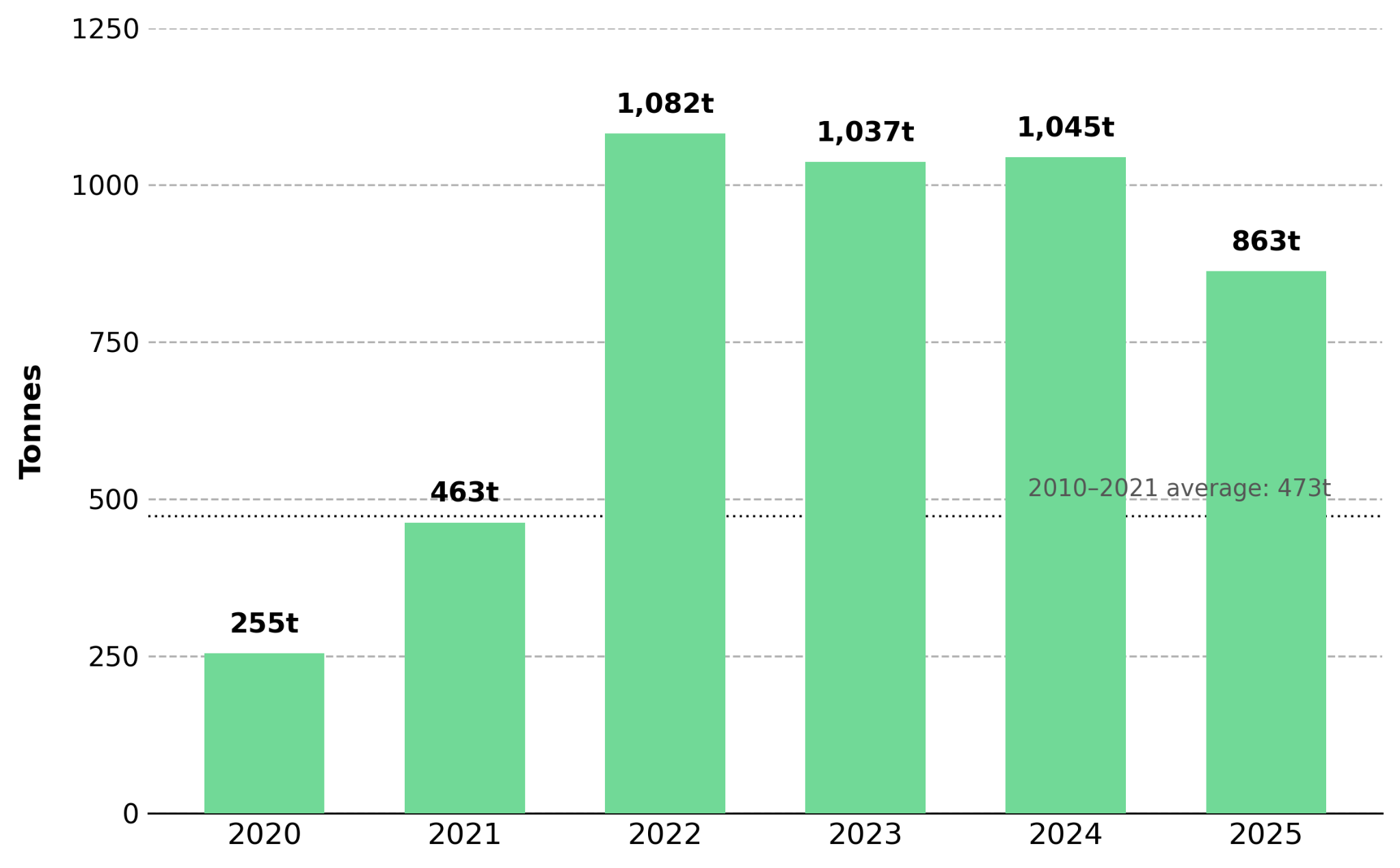
Official data understated central bank gold demand in Q1. J.P. Morgan estimated reported net purchases at 16 tonnes, but OTC and refinery flows suggest actual buying reached 244 tonnes, up from 208 tonnes in Q4 2025. WGC then reported 289 tonnes of central bank purchases in Q2, up 62% year over year, while 45% of reserve managers expect to increase gold holdings. China also drove unreported demand, with net gold imports reaching 317 tonnes in Q1, nearly triple the previous quarter. The gap between reported and actual buying suggests official demand remains stronger than headline figures imply, supporting gold despite recent price weakness.
India's 15% Gold Duty Shifts Demand Offshore as Asian Buying Stays Strong
India's 15% import duty and 3% GST created an 18% price gap that shifted demand into unofficial channels, with gold seizures nearly doubling to 160.91 kg from 86.16 kg. ETF outflows reached 45 tonnes in Q2 but remained well below central bank purchases.
WGC expects OTC markets and Asian demand to remain the main drivers of gold buying, while Chinese insurers can now allocate up to 1% of assets under management to physical gold, representing roughly 200 tonnes of potential demand. Despite the Fed's 9-3 vote, sustained central bank buying and growing Asian demand remain stronger long-term signals than short-term shifts in rate expectations.
Levels to Watch Before Calling Gold's Bull or Bear Case
Gold is trading between key technical levels as higher Treasury yields offset continued central bank demand. Although 30-year Treasury yields remain near a two-decade high, September Fed hike expectations have fallen to 67% from 81%. TD Securities sees downside to $3,900/oz if Brent crude remains above $100 per barrel, while J.P. Morgan targets $5,300/oz by Q3 and $6,000/oz by Q4 2026 on continued official-sector buying.
A move above $4,730 would favor the bullish case, while a break below $3,900 would signal that higher yields remain in control. The next catalysts are the US PCE inflation report and the WGC's quarterly reserve data, which will show whether central bank buying remains strong.
Analyst's Notes





Subscribe to Our Channel



Stay Informed