




Beyond the Feasibility Study: How Integrated Project Development Is Reshaping Critical Minerals Mining


Lifezone's Kabanga project shows how integrated project development is reshaping critical minerals mining by advancing procurement, financing, and permitting before FID.
- Lifezone Metals moved its Kabanga Nickel Project in Tanzania into execution readiness after its July 2025 feasibility study (FS), releasing approximately $854 million in contracts to market during the first half of 2026, ahead of final investment decision (FID).
- Kabanga's FS reported an after-tax net present value (NPV) at an 8% discount rate (NPV8%) of $1.58 billion, an after-tax internal rate of return (IRR) of 23.3%, and an all-in sustaining cost (AISC) of $3.36 per pound of payable nickel.
- Financing is advancing on two concurrent tracks, a Standard Chartered-led strategic equity process and a Societe Generale-led project financing process, both contingent on the outcome of ongoing Framework Agreement negotiations with the Government of Tanzania.
- Delays in the Framework Agreement negotiations have pushed Kabanga's expected FID to the first quarter of 2027.
- The same concurrent execution model is being applied to Lifezone's Musongati Nickel Project in Burundi and its US-based PGM Recycling Project with Glencore, each at a different regulatory and financing stage.
Lifezone Metals (NYSE: LZM) completed the feasibility study (FS) for its Kabanga Nickel Project in July 2025. A year later, roughly $854 million of contracts are already in the market, yet Kabanga's final investment decision (FID) has slipped to the first quarter of 2027, held up by an unfinished Framework Agreement with the Government of Tanzania. Contracts are moving forward; the financing decision meant to justify them is not.
That gap points to a broader shift in critical minerals development. Developers are increasingly running technical studies, procurement, permitting, and financing negotiations concurrently rather than in sequence, an approach described as integrated project development. It matters to investors because it changes what a pre-FID company can point to as evidence of delivery capability, rather than asking the market to take execution risk on faith once financing closes.
Why Sequencing Has Become a Cost, Not Just a Schedule
The economic case for concurrent execution rests on cost curve position. A project's place on the global cost curve is fixed by ore grade, metallurgy, and by-product credits. Converting that position into cash flow, though, depends on how quickly a project can move from a completed study into construction once financing is secured. Financing itself has become a multi-party exercise, typically a lead bank running a syndication process among development finance institutions (DFIs) and export credit agencies (ECAs), often layered with political risk insurance, alongside a separate strategic equity process run by another bank entirely.
Nickel economics have sharpened that pressure. UBS Global Research calculated in a May 11, 2026 note that producing pure nickel metal at the new benchmark pricing mechanism (HPM) prices would require a nickel price floor of US$20,800 per tonne via the hydrometallurgy route and US$18,400 per tonne via pyrometallurgy, a floor that shapes how non-Indonesian nickel sulfide projects are judged on cost competitiveness.
A project in the first quartile of the cost curve, ahead of that price floor, has more room to absorb financing delays than one closer to the margin. That positioning is what an FS is meant to demonstrate. But positioning alone does not build a mine; the execution capability behind the study, procurement systems, an owner's team, and permits in hand determine whether the cost advantage on paper survives the multi-year path to production.
Running Procurement, Permitting & Financing in Parallel
Developers are now building procurement and owner's team capacity well ahead of FID rather than after it, a departure from the traditional sequence in which contracting waited for financing to close. Kabanga illustrates the pattern: following its FS in July 2025, the project moved into what Lifezone describes as an execution readiness phase, with engineering, procurement and construction management (EPCM), mining, and bulk earthworks contracts already released to market.
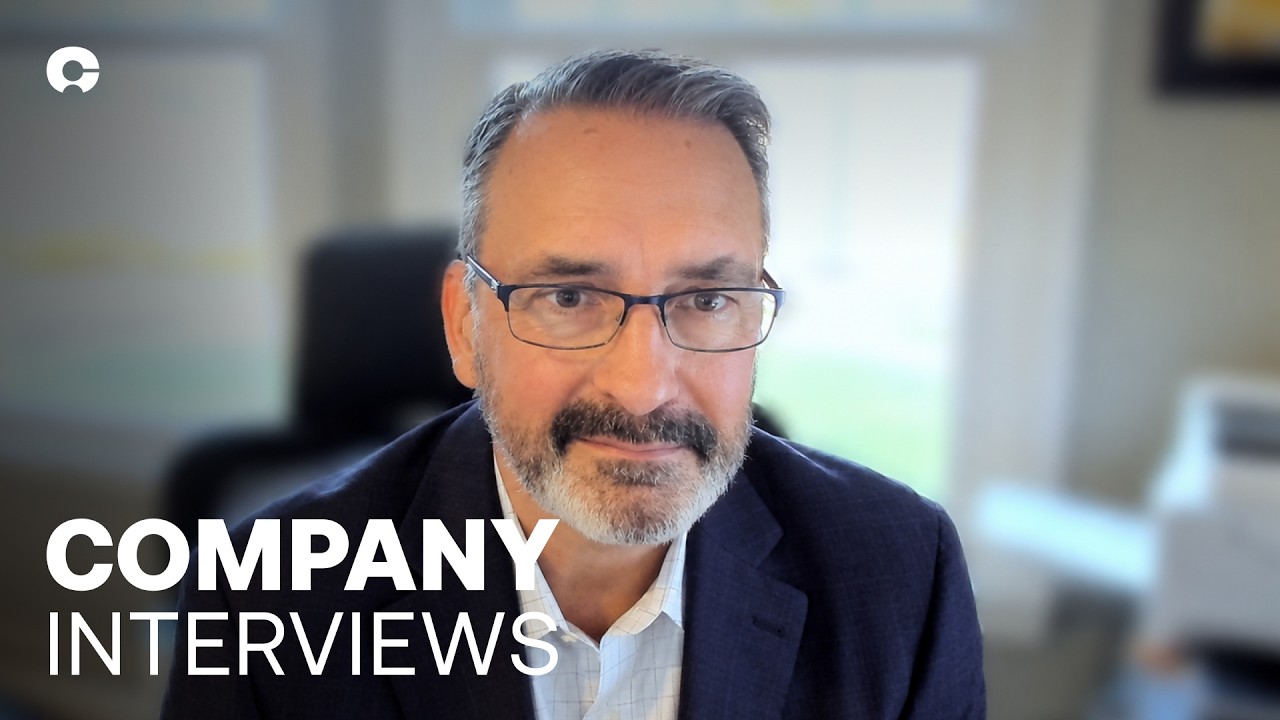
Chief Executive Officer and Director of Lifezone Metals, Chris Showalter, set out how the company is sequencing that work alongside its government negotiations:
"Our relationship with the Government of Tanzania remains central to the Kabanga Nickel Project, and we continued working through the Framework Agreement amendment, including direct engagement with H.E. President Samia Suluhu Hassan. At the same time, we moved Kabanga into procurement at scale, releasing roughly $854 million in contracts to market, with pre-FID activities funded by the $21.7 million drawn under the Taurus facility and $25 million equity raise."
That funding split, drawn debt and fresh equity funding a procurement program that runs ahead of a financing decision, illustrates a broader pattern: pre-FID capital is increasingly used to build execution capacity rather than held in reserve until financing closes. Owner's team scale-up and permitting have moved in step with this procurement push, rather than waiting for financing to close first. Financing itself is running on two tracks rather than one. A potential strategic equity investment led by Standard Chartered Bank is at an advanced stage with multiple offers received, while a separate project financing process led by Societe Generale has progressed with development finance institutions and export credit agencies selected as pathfinders. Running these two processes in parallel, rather than waiting for one to conclude before starting the other, avoids making a single lender or investor the critical path for the entire project.
Where the Framework Agreement Still Holds the Critical Path
Concurrent execution does not eliminate sequencing risk; it relocates it. Kabanga's own disclosures show the constraint clearly: negotiations to amend the Framework Agreement with the Government of Tanzania have progressed more slowly than expected, and FID has slipped to the first quarter of 2027. The cost of that slippage is specific, not abstract. It delays further tranches of the $854 million procurement program already released to market, extends how long the company depends on its bridge loan facility rather than permanent project financing, and widens the gap between first Kabanga concentrate and the late 2027 completion target for the Tanzanian Standard Gauge Railway, the rail line the project needs to reach port.
Financing also remains conditional on more than one counterparty reaching agreement at once. Lender due diligence for the final structuring phase of the funding process is described as well advanced, but that phase cannot launch until the Framework Agreement discussions conclude. In the meantime, liquidity sits in bridge capital rather than permanent financing: as of June 30, 2026, Lifezone had drawn $41.7 million of its senior secured bridge loan facility, with $18.3 million still available until November 29, 2026, against a cash balance of $37.3 million. That runway has to outlast whatever remains of the Framework Agreement negotiation; a single government agreement, not the financing process or the procurement program, is now the gating item for the entire schedule.
Kabanga, Musongati & the PGM Recycling Project
The same concurrent-execution principle extends across Lifezone's portfolio, applied under different regulatory clocks rather than confined to Kabanga alone. In Burundi, the company signed a 14-month exclusivity agreement over the Musongati Nickel Project in March 2026 and has since reviewed historical drilling data and begun planning an infill program, work that runs independently of Kabanga's own execution schedule. In the United States, Lifezone's PGM Recycling Project with Glencore completed a pilot-scale test campaign in the first half of 2026. Showalter linked that milestone to the same portfolio-wide execution logic:
"We also opened a new frontier with the Musongati exclusivity agreement in Burundi, and reached a pilot-scale milestone in our PGM Recycling Project, recovering >99% platinum and palladium and targeting >95% rhodium from spent Autocat material."
Each project sits on its own regulatory clock; Musongati is still re-establishing a compliant resource base, the PGM Recycling Project is still awaiting a Department of Energy funding decision, but the underlying logic is the one applied at Kabanga: once a project clears its baseline data or compliance threshold, technical, commercial, and governmental work streams run in parallel rather than in sequence. For a developer whose flagship asset carries a single government-dependent FID timeline, running earlier-stage projects on separate clocks diversifies the timing of value creation rather than concentrating it in one negotiation.
Three Jurisdictions, Three Different Clocks
How much of that timeline sits inside a company's own control still varies sharply by jurisdiction. In Tanzania, Kabanga's schedule depends on infrastructure outside Lifezone's control, chiefly the Standard Gauge Railway link to the Port of Dar es Salaam discussed above, which is being financed and built separately from the mine itself.
In Burundi, Musongati sits at an earlier regulatory stage altogether: its historical resource estimate, last calculated in 2011 under 2004-vintage JORC guidelines, does not comply with current Securities and Exchange Commission Modernised Property Disclosure Requirements under Subpart 229.1300 of Regulation S-K (S-K 1300), so the immediate task is re-establishing a compliant data foundation before any development sequencing can begin.
In the United States, the PGM Recycling Project depends on a different lever again: two non-duplicate Department of Energy funding requests totalling $41.5 million, submitted in the first quarter of 2026, remained under review as of the first half of 2026, a reminder that even the most advanced project in a diversified portfolio can still be waiting on one government decision.
What Concurrent Development Means for the Sector
The Kabanga case suggests that an FS, however strong its underlying economics, is now treated as an input to execution rather than a deliverable in itself. Procurement, owner's team scale-up, permitting, and multi-party financing are being run simultaneously because sequencing them in series would extend an already long development timeline further, and because a single unresolved item, whether a government agreement, a permit, or a lender sign-off, can hold up an otherwise well-advanced project regardless of how much other work has been completed in parallel. As more critical minerals developers adopt the same approach, evaluating a pre-FID project increasingly means looking past the headline economics of its FS to the execution capacity built around it: how much of the procurement program is already in the market, how many financing counterparties are moving at once, and how far the company's liquidity runway extends relative to whatever single item still stands between it and FID.
FAQs (AI-Generated)
Analyst's Notes





Subscribe to Our Channel












Stay Informed


