Cauldron Energy's 100% Drilling Success Rate, Extending Uranium Resource Polygons as Western Australia’s Ban Wavers


.jpg)
Cauldron Energy (ASX:CXU) holds 55Mlb of JORC uranium at Yanrey, WA, plus a 269Mlb exploration target, as pressure builds to lift the state mining ban.
- Cauldron Energy holds 55 million pounds of JORC-compliant uranium resource at its Yanrey Project in Western Australia, alongside a JORC exploration target of up to a further 269 million pounds.
- The company has maintained a drilling hit rate close to 100% across its three defined deposits: Bennett Well, Manyingee South and Manyingee North.
- Western Australia's uranium mining ban remains the central constraint on the investment case, as Cauldron cannot generate production revenue until it is lifted.
- Management points to WA government exploration grants, a parliamentary inquiry with majority pro-uranium submissions, and a swing state by-election as early signals that policy may be shifting.
- Cauldron has signed a technology-transfer agreement with Uzbekistan's Navoi Mining and Metallurgical Company to reduce technical risk in its in-situ recovery process design.
Uranium's structural supply gap keeps widening. The US alone burns around 50 million pounds of U3O8 a year in its civilian reactor fleet, produces roughly 1 million pounds domestically, and wants to lift consumption toward 150 million pounds even as its own mining base struggles to scale. Against that backdrop, Cauldron Energy (ASX:CXU) is sitting on 55 million pounds of JORC-compliant resource across its Yanrey Project in Western Australia, with a JORC exploration target suggesting up to a further 269 million pounds could be added. The catch is a state-level uranium mining ban that has sat over the project for years. CEO Jonathan Fisher argues that ban is now closer to unwinding than at any point since he joined the company, and that Cauldron's job in the meantime is simple: keep adding pounds to the balance sheet.
Yanrey Resource Footprint
The Yanrey Project comprises three defined deposits: Bennett Well, Manyingee South and Manyingee North, together hosting the 55-million-pound JORC resource. Manyingee sits adjacent to Paladin Energy's larger Manyingee project, a proximity Fisher frames as a positive, both companies operating in a region he describes as prolific for in-situ recovery (ISR) uranium. Beyond the defined resource, Cauldron has released a JORC exploration target of up to an additional 269 million pounds at Yanrey, a figure that, combined with Paladin's adjacent tenure, would place the broader district among the largest uranium systems globally.
The company has spent 2026 extending its existing resource polygons rather than opening new ground. At Manyingee South, Cauldron recently reported a 2.5-kilometre resource extension beyond the prior boundary. At Manyingee North, extension work is continuing in both directions. A formal resource update is expected later this year, once the current drilling campaign wraps up.
Subsurface Exploration Milestones
Cauldron's exploration model relies on passive seismic surveying, a comparatively low-cost geophysical tool that Fisher says has proven unusually effective at Yanrey, delineating buried palaeochannels with high contrast against surrounding bedrock. Ancient river systems washed uranium off granites to the east and deposited it along the palaeochannels, concentrating in zones such as former coastal deltas (Bennett Well) and bends in the channel course. Three palaeochannels drilled to date have produced three deposits, with an estimated 20 to 30 further palaeochannels still to be tested.
The drilling hit rate has been striking. The first 24 holes into Manyingee North defined a maiden resource of 10 million pounds, with every hole intersecting mineralisation - Fisher put it directly:
"The first 24 holes was 10 million pounds of the maiden resource, all hits, not one dud, a hit rate of 100% is staggering."
Since that maiden resource, Cauldron has drilled roughly 40 to 50 further holes at Manyingee North with what Fisher estimates is close to a 100% hit rate, missing perhaps once. Manyingee North hosts four stacked roll fronts (labelled A through D), while Manyingee South carries three. At Manyingee South, the company is targeting the upstream tail of the deposit, where mineralisation narrows but grades trend higher, with lower-grade material along the channel margins. Reported high-grade intercepts at Manyingee South run around 4.5 metres at 350 parts per million (ppm), with average grade closer to 300 ppm and typical thickness of 5 to 7 metres.
A separate data point supporting project economics: independent groundwater testing conducted by ANSTO (the Australian Nuclear Science and Technology Organisation) found low dissolved-salt concentrations across Bennett Well, Manyingee South and Manyingee North, in contrast to the hypersaline groundwater typical of South Australian ISR deposits. Lower salinity generally supports better uranium recovery rates in ISR processing, a factor Cauldron sees as partly offsetting its comparatively lower grades.
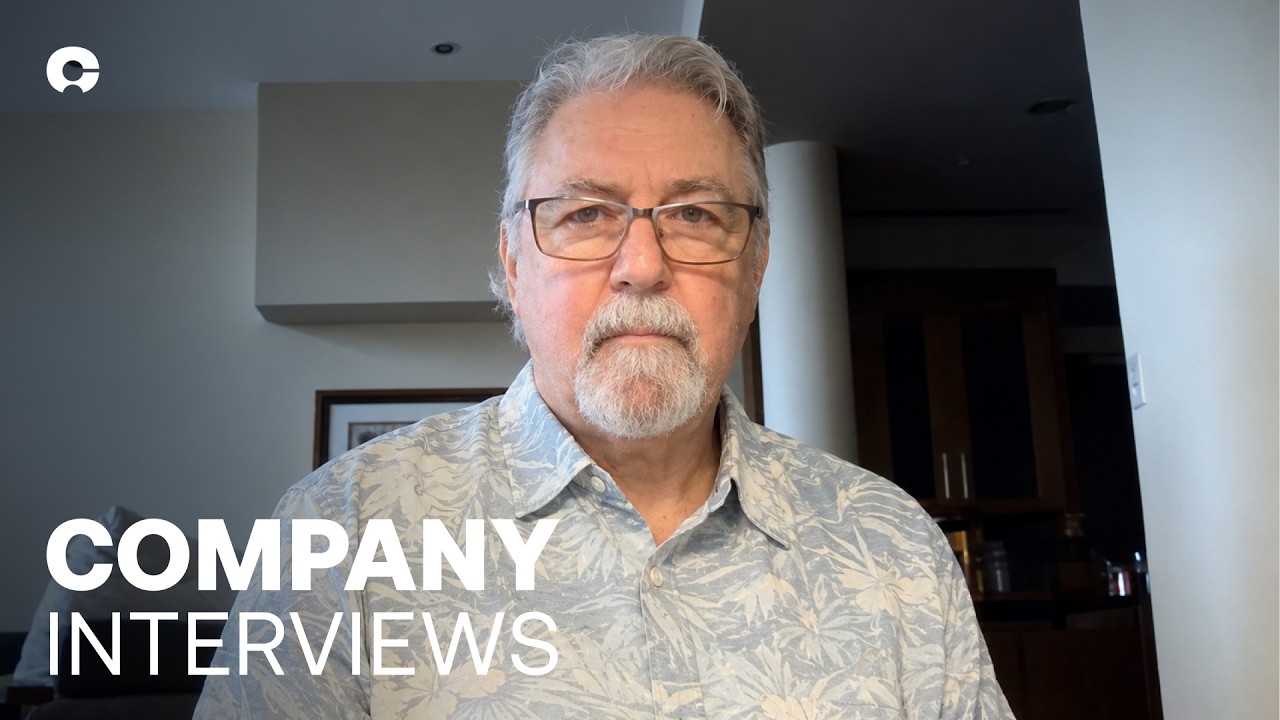
Interview with Jonathan Fisher, CEO of Cauldron Energy
Corporate Capitalisation Strategy
With the mining ban still in place, Cauldron cannot yet extract uranium, so its stated strategy is to build the resource base ahead of any policy change. Fisher summarised the logic:
"We maximise pounds on the balance sheet. That will ensure that once policy change happens, and I assure you it will, we are in the best position to move forward or we become an outrageously attractive takeover target."
Alongside resource growth, the company has hired a new environmental manager, previously responsible for approving Western Australia's radioactive waste repository, and signed a technology-transfer agreement with Uzbekistan's Navoi Mining and Metallurgical Company, one of the world's most experienced ISR operators. Fisher has also visited ISR operations in Kazakhstan to inform Cauldron's process design.
On funding, Cauldron says its current drilling campaign is fully funded, with no near-term capital raise required. Fisher described the company's cost discipline in detail, including flying economy and staying with family when travelling to Perth. Shareholder concentration is notable: a single family office holds approximately 30% of the register, industry-focused exchange-traded funds (ETFs) collectively hold around 15 to 16%, and the combined effect, according to Fisher, puts locked-in support at roughly 65 to 70% of the share base. The company recently upgraded its US quotation from the Pink market to OTCQB under the ticker CALF, a move aimed at improving accessibility for the US investor base already accumulating stock through ETF ownership.
Policy Pathway: Overturning the WA Uranium Ban
The uranium mining ban is a state, not federal, matter, meaning Western Australia's government retains full authority to lift it. Federal approvals still apply on top of any state approval: a federal environmental approval is required given uranium's classification as a controlled nuclear action, alongside an export permit from the Australian Safeguards and Non-Proliferation Office (ASNO), which restricts sales to a small list of countries.
Fisher pointed to several signals he sees as evidence policy is shifting. In April 2026, the WA government awarded Cauldron two grants under its Exploration Incentive Scheme, covering drilling and passive seismic work, despite maintaining the mining ban:
"The very government that has the ban on mining gave us money to go and find uranium. So they've given us two government grants, one for drilling and one for passive seismic geophysics for a exploration incentive scheme."
A parliamentary inquiry into Western Australia's role in export decarbonisation is also underway, and while its formal scope does not mention uranium specifically, Fisher said over 60% of public submissions addressed uranium, overwhelmingly in favour of lifting the ban. Separately, a recent WA state by-election produced a 20% swing against the incumbent Labor government in a mortgage-belt seat, won by the pro-uranium One Nation party. Fisher characterised this less as a uranium-specific result and more as a broader warning sign the government cannot ignore.
At the federal level, Fisher noted that Labor supports new uranium mining in South Australia and has signed an agreement to expand uranium exports to India, a commitment he argued is difficult to meet without either reducing supply to existing customers (the US, UK, France, Japan and Korea) or bringing new WA production online.
Competitive Positioning
Fisher positioned Cauldron against Boss Energy's technical setbacks at its Honeymoon ISR operation in South Australia, arguing that below-ground ISR performance is inherently difficult to predict and that Cauldron's Navoi partnership, drawing on experience across 42 ISR fields in Uzbekistan, is intended to de-risk process design before Cauldron reaches a production decision. He also noted Cauldron's market capitalisation, cited in the interview as over $200 million, reflecting what he described as a partial unwind of the discount previously applied to Yanrey on the assumption the mining ban would never lift.
The Investment Thesis for Cauldron Energy
- Cauldron holds 55 million pounds of JORC-compliant uranium resource at Yanrey, with a JORC exploration target of up to a further 269 million pounds yet to be tested.
- The company's near-100% drilling hit rate across three deposits supports confidence in further resource conversion from the 20 to 30 untested palaeochannels identified on the property.
- The core investment case rests on WA policy change; Cauldron cannot mine or generate revenue under the current ban, making the timeline for policy reform the single largest variable in the story.
- Government-funded grants awarded under an active mining ban, a WA parliamentary inquiry with majority pro-uranium submissions, and a swing state by-election result are cited by management as evidence of shifting political sentiment, though none constitute a confirmed policy change.
- ISR recovery economics remain unproven at Yanrey; Cauldron's clean groundwater data is favourable, but process performance has not been demonstrated at scale, and peer Boss Energy's Honeymoon setbacks illustrate the technical risk.
- Ownership is concentrated, with a single family office near 30% and ETFs near 15 to 16%, which supports share price stability but also means free float and liquidity should be checked independently.
- Fuel to eye on include pending 2026 resource update following the current drilling campaign, further WA parliamentary inquiry developments, and the outcome of Victoria's November state election as a potential signal for other Labor governments' responsiveness on resource policy.
Macro Thematic Analysis
Western Australia's uranium mining ban sits increasingly at odds with federal Labor's own trade commitments. Canberra has backed new uranium mining in South Australia and signed an agreement to expand exports to India, a deal that generated significant attention in both countries. Meeting that commitment without eroding supply to existing partners such as the US, UK, France, Japan and Korea effectively requires new domestic production, and Western Australia holds a large share of the undeveloped resource that could fill it.
Precedent exists for a policy reversal: Fisher drew a direct comparison to the WA government's 2025 decision to overturn its fracking ban, a reversal preceded by a scientific inquiry that concluded fracking was safe under specified controls. Cauldron's stated hope is that a similar scientific inquiry process is applied to uranium mining safety, potentially without requiring a change of government. Whether that plays out on Cauldron's expected timeline, within the current WA parliamentary term, remains the key uncertainty for investors weighing the story.
TL;DR
Cauldron Energy has defined 55 million pounds of JORC-compliant uranium at its Yanrey Project in Western Australia, with a JORC exploration target of up to a further 269 million pounds still untested. CEO Jonathan Fisher says the company has a near-100% drilling hit rate across three deposits and is extending resource polygons at Manyingee North and Manyingee South ahead of a resource update expected later this year. The core constraint remains Western Australia's uranium mining ban. Fisher points to government exploration grants, a pro-uranium parliamentary inquiry submission split, and a swing state by-election as signs the ban may lift, though no formal policy change has occurred.
FAQ (AI-generated)
Analyst's Notes





Subscribe to Our Channel
.jpg)





Stay Informed