Erdene Resources' Revenue and Production Growth Pushes Khundii District-Scale Deep Porphyry Exploration


Erdene Resource Development (TSX:ERD) turns Bayan Khundii cash flow into deep porphyry exploration across Mongolia's underexplored Khundii Minerals District.
- Bayan Khundii cash flow with 37% production growth at $53M revenue now funds aggressive deep exploration across the Khundii district.
- All three major hydrothermal systems untested below ~700m despite kilometre-scale alteration footprints - genuine porphyry optionality.
- Zuun Mod PEA due mid-H2 2026 on a deposit ranking top 15% globally by grade-tonnage.
- Altan Nar CIP-vs-standalone processing decision is a key 2027 capital-efficiency catalyst.
- Mongolia's June 2026 licensing reopening adds a jurisdiction-level tailwind favouring first movers like Erdene.
Erdene Resource Development Corp. (TSX:ERD; MSE:ERDN; OTCQX:ERDCF) is entering a new phase. For over a decade the Halifax-based, Mongolia-focused developer operated on tight budgets, methodically proving up the Khundii Minerals District in the country's southwest. Now, with the Bayan Khundii Gold Mine cash-flowing, CEO Peter Akerley says the company can finally afford to chase the deeper, higher-conviction targets it previously couldn't justify drilling. Speaking alongside advisor Kelly Clure - former Chief Geoscientist at Kinross Gold and currently exploration director for Uzbekistan's state-owned Navoi Mining and Metallurgical Company - Akerley laid out a district-scale exploration push backed by real cash flow, a widening portfolio, and a country-level policy shift that could open new ground for the first time in a decade.
Bayan Khundii: The Cash Engine
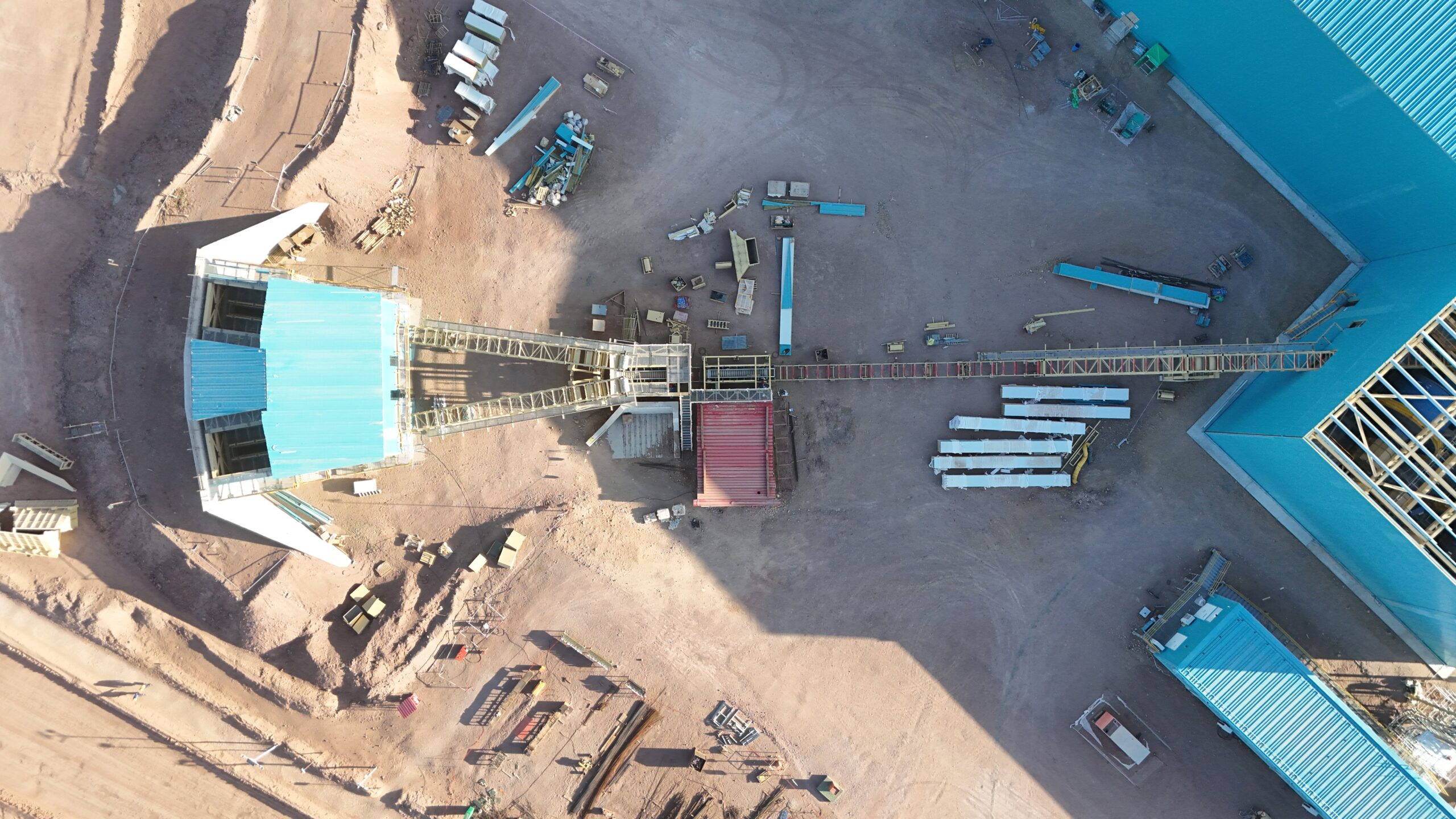
The numbers back up the shift in posture. Erdene's Q2 2026 results show Bayan Khundii, the company's 50%-owned joint venture with Mongolian Mining Corporation, has produced and sold 11,709 ounces of gold, a 37% increase over Q1, generating $53 million in gross revenue at a realised price of $4,493/oz. Feed grade rose 25% quarter-on-quarter to 2.4 g/t gold, and recoveries came in at 96%, ahead of the planned 93%.
That cash flow is now funding the next stage. Erdene has committed 12,000 metres of drilling to expand Bayan Khundii westward, testing the ground between the current pit and the newly modelled Ulaan deposit - where a maiden resource estimate was completed this quarter, and which Akerley says holds "well over half a million ounces of gold" once combined with adjacent state and Erdene Mongol-held ground.
Deeper Targets, Bigger Budgets
The strategic change isn't just about drilling more metres - it's about drilling deeper. Akerley was direct about the shift in risk appetite:
"With this cash flow, we can begin to become more aggressive. We can begin to look at those deeper targets. But I still want to be cautious, that's one of the reasons we're bringing in these experts, to make sure every drill target is fully thought through."
That caution is showing up as process, not hesitation. Erdene is also hosting an international geoscience symposium on-site in Mongolia with the Canadian government which is separately funding a Natural Resources Canada geophysics program in Mongolia as part of a broader push to professionalise the country's mining sector.
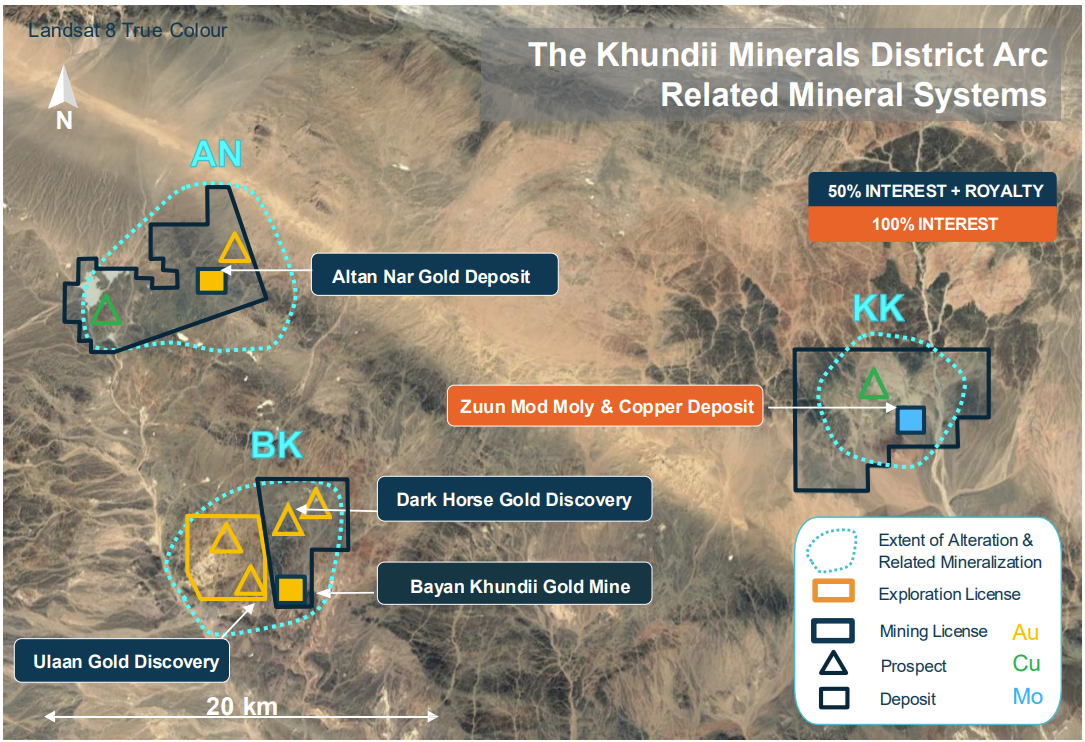
The rationale, according to Akerley, is straightforward: Erdene's three main hydrothermal systems, Bayan Khundii, Altan Nar and Zuun Mod, have never been drill-tested below roughly 700 metres, despite each showing porphyry-style alteration footprints stretching several kilometres. Akerley drew a direct comparison to Oyu Tolgoi's deep Hugo Zone, which begins at similar depth. "You don't stop at 700 metres anymore," he said, arguing the district's underlying porphyry potential remains almost entirely untested.
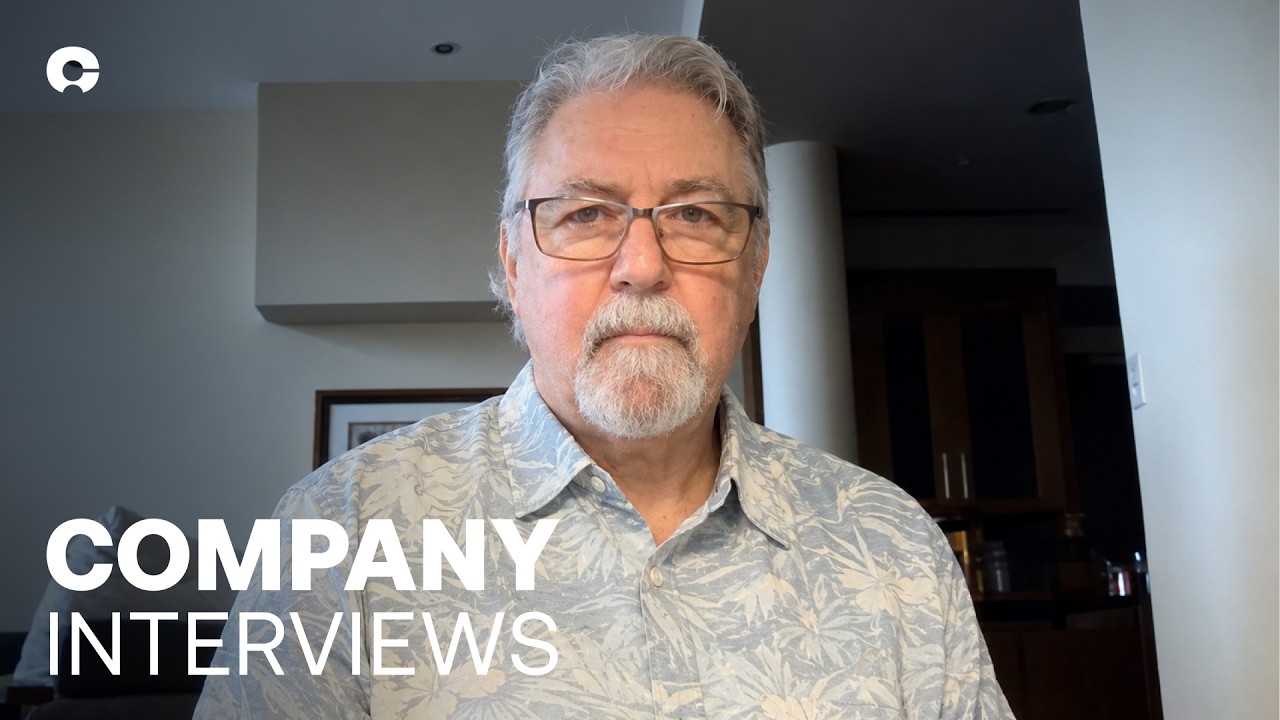
Interview with Peter Akerley, CEO, and Kelly Clure, Advisor of Erdene Resource Development
Altan Nar and the Heap Leach Question
Altan Nar with roughly 500,000 ounces of gold across a 5-kilometre trend is the company's next major capital allocation, with Akerley flagging in the region of $10 million in spending planned for 2027 and a target of 30,000+ metres of drilling to support a definitive study. The central question is processing route: Erdene is evaluating whether Altan Nar ore can feed the existing Bayan Khundii CIP (Carbon-in-Pulp) plant for potentially around 80% of the resource at 80% recoveries rather than requiring a standalone flotation-concentrate build costing an estimated $140 million. Early trade-off work favours the CIP route, even though it would leave the deposit's minor lead-zinc credits largely unmonetised - a trade-off Akerley considers acceptable given roughly 84% of Altan Nar's value sits in gold.
Sitting alongside that decision is a heap leach study for lower-grade oxide material, both at Dark Horse and Altan Nar's own 60,000-ounce oxide blanket. Combined, Akerley sees a path to roughly 100,000 ounces of incremental heap-leach production layered on top of the CIP plant within a few years without the capital intensity of a standalone build.
Zuun Mod: A Different Kind of Scale
The most structurally distinct asset in the portfolio is Zuun Mod, a molybdenum-copper porphyry system Clure says ranks in the upper 15th percentile globally by grade-tonnage despite only a fraction of its roughly 15-kilometre circumference having been drill-tested. A preliminary economic assessment is advancing, with mine planning, marketing and metallurgical work largely complete; Erdene has now contracted a deep geophysics program, including IP and MT surveys, to test the system at depth and evaluate copper potential at the Khuvyn Khar target on the same licence. The company has guided to PEA results in mid-H2 2026.
Clure was careful to distinguish Zuun Mod from Oyu Tolgoi rather than let the comparison run too far: Oyu Tolgoi is an older, Devonian-age copper-gold-moly system, while Zuun Mod is younger and more molybdenum-dominant, though locally copper-rich, with gold showing up in distal veins around its western margin. Practically, Akerley notes the deposit's shallow, near-infrastructure setting makes it comparatively simple to bring into production relative to peers in the high mountains of British Columbia or Kyrgyzstan's Pamirs.
A third, earlier-stage asset Tereg Uul, roughly 10 kilometres south of Oyu Tolgoi, rounds out the exploration pipeline. A maiden 2,710-metre, 11-hole program confirmed anomalous gold and silver (up to 1 g/t Au and 15 g/t Ag) along a 1.5-kilometre structure at the Web prospect, while a deeper hole intersected native copper and anomalous gold above what the company believes could be a buried porphyry system. Erdene extended its option on the property in July with a $400,000 payment, and Clure - who noted the ground previously passed through Ivanhoe Mines without being drill-tested - sees a case for a further 10,000 metres of deeper, framework-style drilling.
A Policy Tailwind
Underpinning all of this is a shift in Mongolia's own mining policy. A decade-long freeze on new exploration licences has, according to Akerley, been the single biggest constraint on district-scale exploration in the region - even as infrastructure improved, with grid power and coal-haul roads now within 25 kilometres of Erdene's projects. In June 2026, Mongolia's mining minister announced plans to reopen the licensing system. Akerley argues Erdene's first-mover position and proprietary geological database put it ahead of any new entrants once fresh ground becomes available later this year or into 2027.
The Investment Thesis for Erdene Resource Development
- Self-funding exploration engine. Bayan Khundii's Q2 EBITDA margin of roughly 60% is now funding aggressive district exploration without new equity dilution.
- Underexplored porphyry upside. All three major hydrothermal systems (Bayan Khundii, Altan Nar, Zuun Mod) remain untested below ~700m despite kilometre-scale alteration footprints - a genuine blue-sky call option.
- Near-term catalyst: Zuun Mod PEA, guided for mid-H2 2026, will be the first economic study on a porphyry system ranking in the top 15th percentile globally by grade-tonnage.
- Altan Nar processing decision (CIP vs. standalone flotation) is a capital-efficiency swing factor - a CIP tie-in could unlock five extra years of mine life for a fraction of standalone capex.
- Policy catalyst: Mongolia's June 2026 announcement to reopen exploration licensing could materially expand Erdene's land position given its first-mover database advantage.
- Balance sheet strength: $26 million in corporate cash earmarked for wholly-owned project work through 2027, alongside an active buyback (up to 4.9 million shares, ~10% of public float).
- Watch item: deep geophysics results at Zuun Mod and Bayan Khundii (IP/MT surveys, late Q3 2026) - the first real test of porphyry potential at depth and a likely re-rating catalyst if positive.
Macro Thematic Analysis
Erdene's story sits at the intersection of two under-covered investment themes: frontier-jurisdiction gold optionality, and the broader market's re-rating of copper exploration as electrification demand accelerates. Mongolia remains one of the least-drilled sections of the Central Asian Orogenic Belt - the same geological trend that hosts Oyu Tolgoi, one of the largest copper-gold systems on Earth - yet has seen almost none of the state-sponsored geophysics, regional geochemistry, or systematic mapping typical of comparable belts elsewhere. As Akerley put it when describing the district Erdene discovered:
"It's fertile, it's along deep-seated structures, and we already have three deposits at surface - but it really hasn't received the depth of exploration you'd see in similarly fertile districts around the world. I still feel like we're peeling back that first skin of the onion."
That underexploration is the crux of the investment case. Every major deposit Erdene has drilled to date has stopped shallow - typically under a kilometre - and every deep hole drilled so far has ended in mineralization rather than bottoming out of it. For a market increasingly hunting for copper supply growth outside geopolitically contested jurisdictions, an under-drilled porphyry belt sitting adjacent to Oyu Tolgoi, with an operating cash-flow engine already de-risking the balance sheet, is a relatively rare setup. The risk, as with any early-stage porphyry thesis, is that alteration footprints and age-dating support the model without yet confirming economic grade at depth - Clure was candid that the only way to resolve that is to drill. Mongolia's policy shift on licensing adds a second, jurisdiction-level catalyst: if new ground opens as expected, first movers with existing geological databases stand to benefit disproportionately relative to new entrants starting from zero.
TL;DR
Erdene Resource Development (TSX:ERD) is redirecting cash flow from its newly producing Bayan Khundii Gold Mine into deeper, higher-risk exploration across Mongolia's underexplored Khundii Minerals District. Q2 2026 results showed 11,709 ounces produced and $53M in revenue. Management is now testing porphyry copper potential below 700 metres at Bayan Khundii, Altan Nar and the Zuun Mod moly-copper system, backed by an international geoscience symposium and a deep geophysics program. A Zuun Mod PEA is due mid-H2 2026, Altan Nar's CIP-vs-standalone processing decision looms for 2027, and Mongolia's reopening of exploration licensing adds a jurisdiction-level catalyst. $26 million in corporate cash funds the pipeline.
FAQ (AI-generated)
Analyst's Notes





Subscribe to Our Channel



.jpg)
Stay Informed