




Titanium's 2 Supply Chains & the Real Bottleneck for Aerospace Qualification


Sovereign Metals' Kasiya could help address the West's aerospace titanium supply gap as its high-purity rutile clears Toho's feedstock requirements.
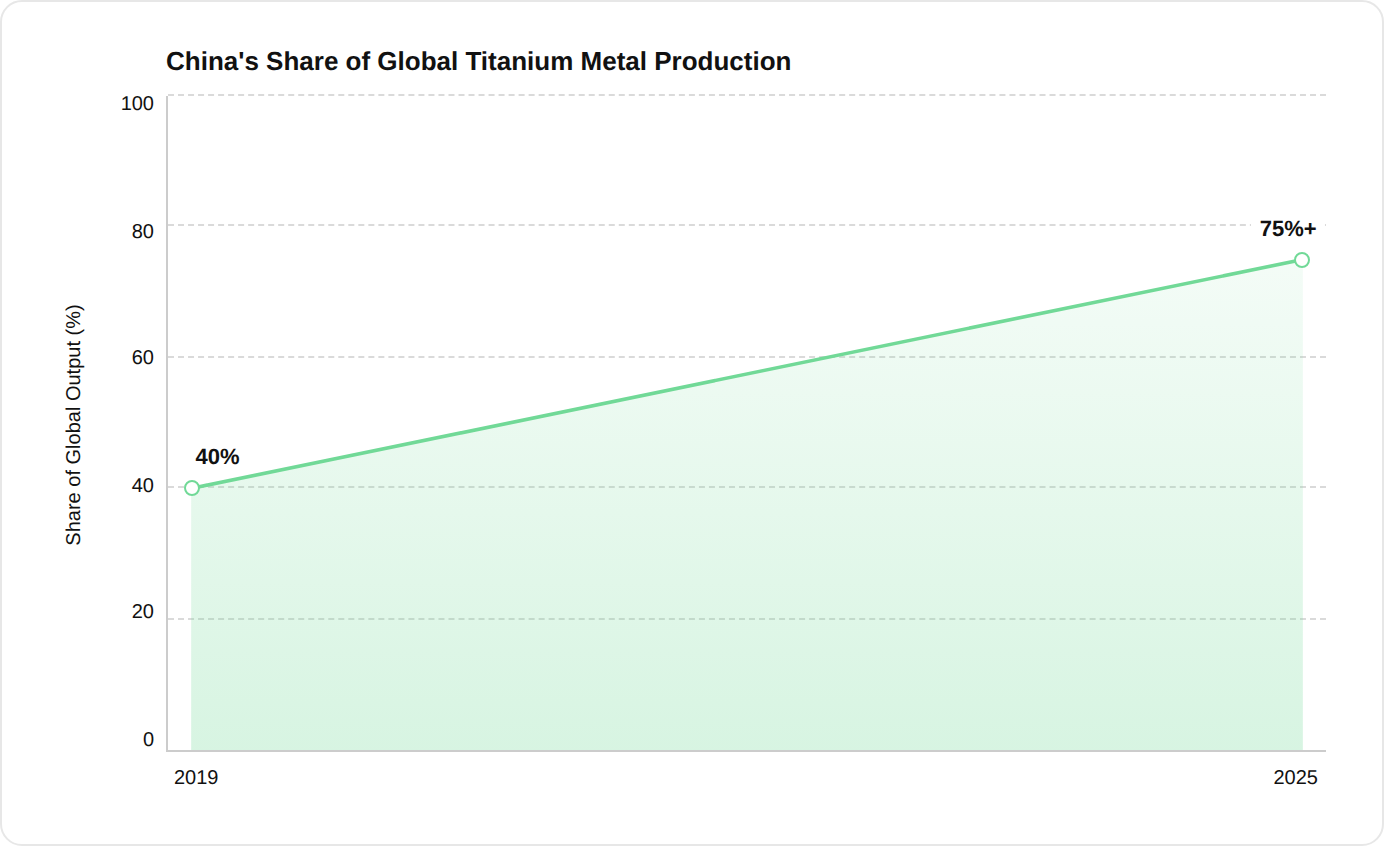
- China's share of global titanium metal production has risen from roughly 40% in 2019 to over 75% in 2025, yet more than 90% of the rutile and ilmenite mined worldwide is processed into titanium dioxide pigment rather than aerospace-grade metal, according to market intelligence firm Project Blue.
- Western aerospace manufacturers will need 1.6 million tonnes of titanium by 2044, while the US has had no large-scale domestic titanium sponge production since Timet's Henderson, Nevada plant closed in 2020, leaving the country reliant on imports; Sovereign Metals notes Japan is currently the dominant supplier of titanium metal to the US.
- Sovereign Metals' Kasiya Rutile Graphite Project in Malawi has confirmed a pre-tax net present value at an 8% discount rate (NPV8%) of US$2.2 billion, producing rutile at over 95% titanium dioxide purity that Toho Titanium has confirmed meets its feedstock specifications.
- Toho Titanium, one of Japan's 2 established producers of aerospace- and defense-grade titanium metal, tested Kasiya's rutile against its own processing requirements; that confirmation constitutes feedstock-level validation, distinct from the qualification process that new sponge and melt capacity must still complete.
- Sovereign is pursuing a US-focused critical minerals strategy for Kasiya, advancing rutile offtake discussions and deepening engagement with US government stakeholders as titanium, graphite, and heavy rare earths all carry critical mineral designations.
Global titanium mining and titanium metal production function as two largely separate industries. Most of the rutile and ilmenite pulled out of the ground worldwide is destined for titanium dioxide pigment, the whitening agent in paint, coatings, and plastics, a market with essentially no connection to aerospace. The much narrower slice that becomes aerospace-grade metal answers to a different set of rules entirely, and China's growing share of raw titanium output has done little to close the resulting Western supply gap.
That gap sits behind a headline figure that reads more alarming than it is precise. China's share of global titanium metal production climbed from around 40% in 2019 to over 75% in 2025, according to Project Blue's Metals and the Security of Nations report. On its own, that number implies Chinese dominance over the material Boeing, Airbus, and Western defense programs depend on. It does not, because volume and qualification are different problems, and the qualification problem is the one that has not moved.
This is the backdrop against which a rutile project whose product has been feedstock-tested for the metal-grade chain, rather than sold generically as titanium mineral ore, becomes relevant to investors tracking the sector.
Titanium's 2 Markets, 1 Gets Confused for the Other
Titanium mining is, in the words of Project Blue founder Nils Backeberg, effectively divorced from the titanium metal industry. Over 90% of mined rutile and ilmenite globally goes into pigment production, not metal, meaning the volume of titanium ore a country mines says little about its ability to supply aerospace manufacturers. The US mines titanium in Florida, Georgia, and Virginia, and Canada mines it in Quebec, but that output serves the paint market, not fighter jets.
Aerospace-grade titanium starts as titanium sponge, an intermediate form of pure titanium metal later processed into ingots, powders, and alloys. Qualification for that chain requires meeting specifications that few producers can consistently hit, which is why Backeberg frames the near-term supply risk as a sponge-capacity and certification problem, not a mining problem.
Against that backdrop, China's rising share of metal production matters less than where that metal can actually be sold. Russia remains the leading source of aerospace-grade titanium, a position China's volume growth has not displaced.
The West Is Racing to Rebuild Metal & Melt Capacity
The US closed its last titanium sponge facility, the Henderson plant in Nevada, in 2020, leaving the country entirely reliant on imported sponge regardless of how much titanium ore its own mines produce. What is now expanding is melt and ingot capacity, the stage that turns imported sponge into finished aerospace material.
Timet is building a new melt facility in West Virginia and expanding electron-beam melting capacity at its Pennsylvania ingot plant by 8,500 tons per year. American Titanium Metal is investing nearly US$868 million in a new North Carolina facility to melt, roll, and finish aerospace-grade titanium, with operations targeting 2027. Airbus SE has moved to diversify its sourcing, agreeing to buy approximately US$666 million in raw material, mainly titanium, from Saudi Arabia.
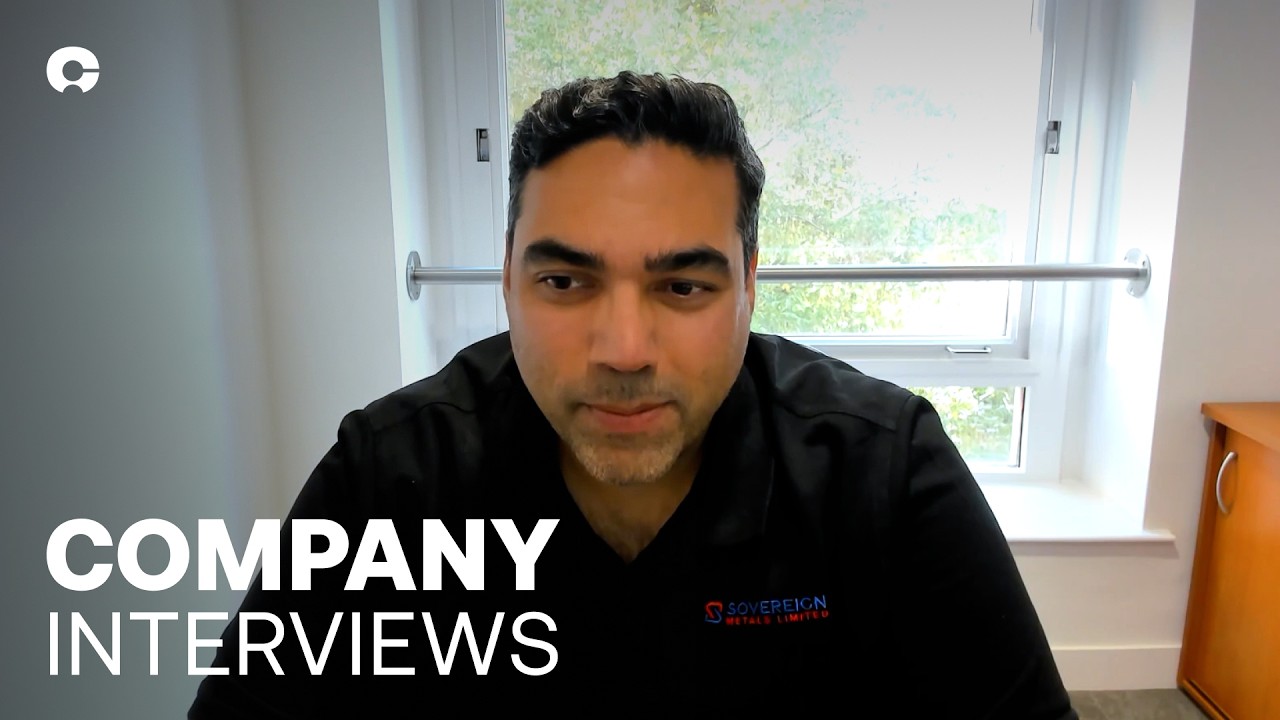
Japan remains the anchor of qualified supply for Western manufacturers. Sovereign Metals’ (ASX: SVM | AIM: SVML | OTCQX: SVMLF) Chief Commercial Officer, Sapan Ghai, mapped the concentration of qualified producers and where China's output falls short:
"The world gets all of its titanium metal from China, Russia, Japan, Kazakhstan, and Saudi Arabia, and that's pretty much it. China produces the most titanium metal in the world, 220,000 to 250,000 tons per annum, but that titanium is not qualified enough, not produced to a standard that a Boeing or an Airbus wants in their landing gear or their fuselage. We don't use the Chinese stuff as aerospace-grade or defense-grade titanium in the Western world."
Certification Remains the Constraint New Capacity Must Clear
The scale of the ramp-up underway does not yet match projected demand. Project Blue estimates Western aerospace manufacturers will need 1.6 million tonnes of titanium by 2044, a demand outlook reinforced by the recovery in Boeing and Airbus delivery rates and rising NATO defense spending, both of which are already pushing titanium demand higher.
New sponge and melt producers must pass an aerospace qualification process before their material is accepted, a step distinct from simply adding capacity, and one that Timet's and American Titanium Metal's expansions above will still need to complete. That is a different process than an established, already-qualified processor testing a new ore source against its own specifications, which is the step Kasiya has cleared with Toho.
Project Blue also flags a strategic risk in the interim: with China using rare earths and critical metals as leverage in trade disputes, a throttling of titanium exports could disrupt Boeing and Airbus production while advantaging China's own COMAC and J-36 aerospace programs. That combination, rising Western demand, capacity still working through qualification, and a Chinese export lever that has already been used elsewhere, is the condition new metal-grade feedstock sources are entering into.
Kasiya's Rutile Has Cleared a Bar Most Titanium Ore Never Meets
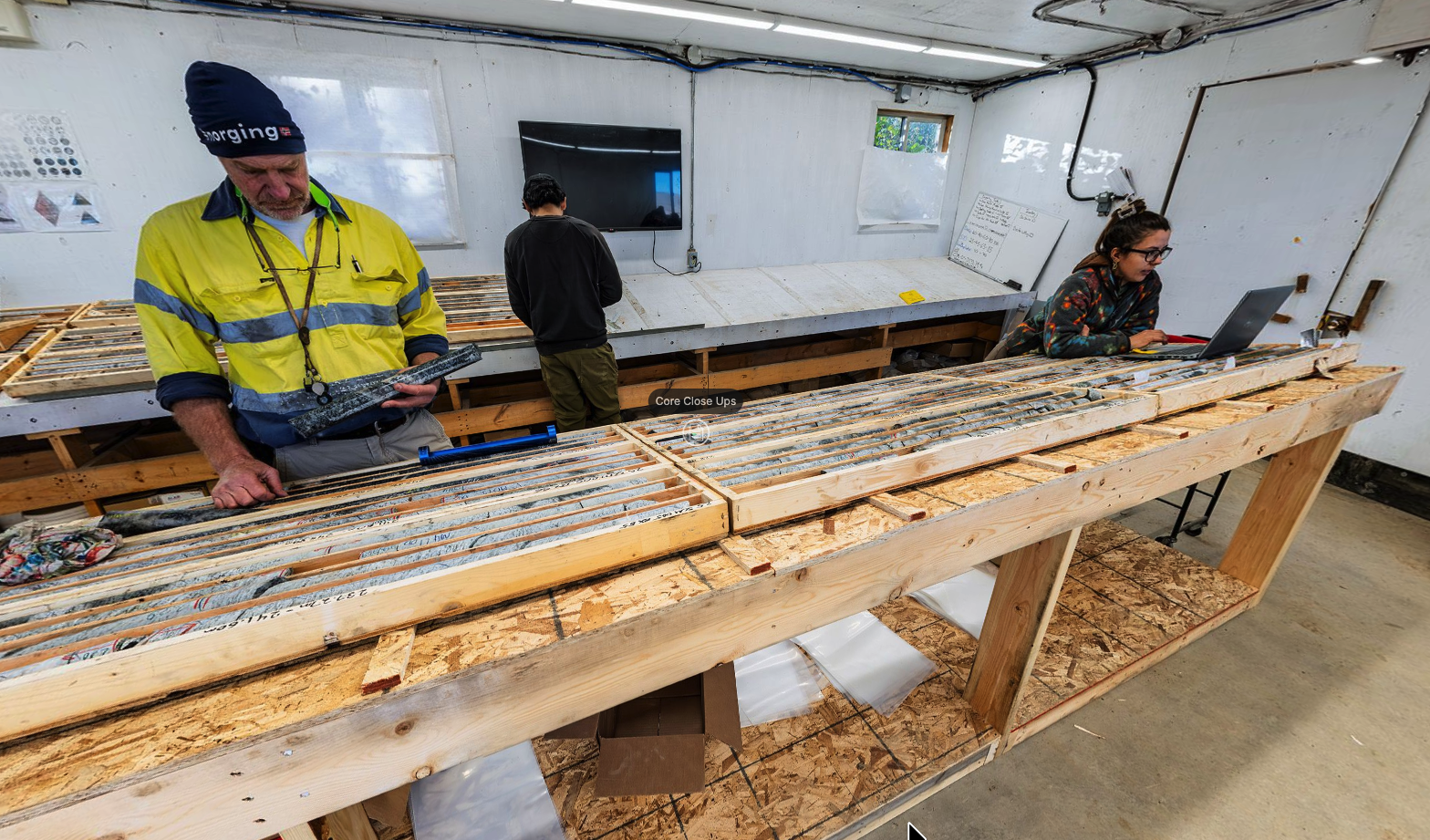
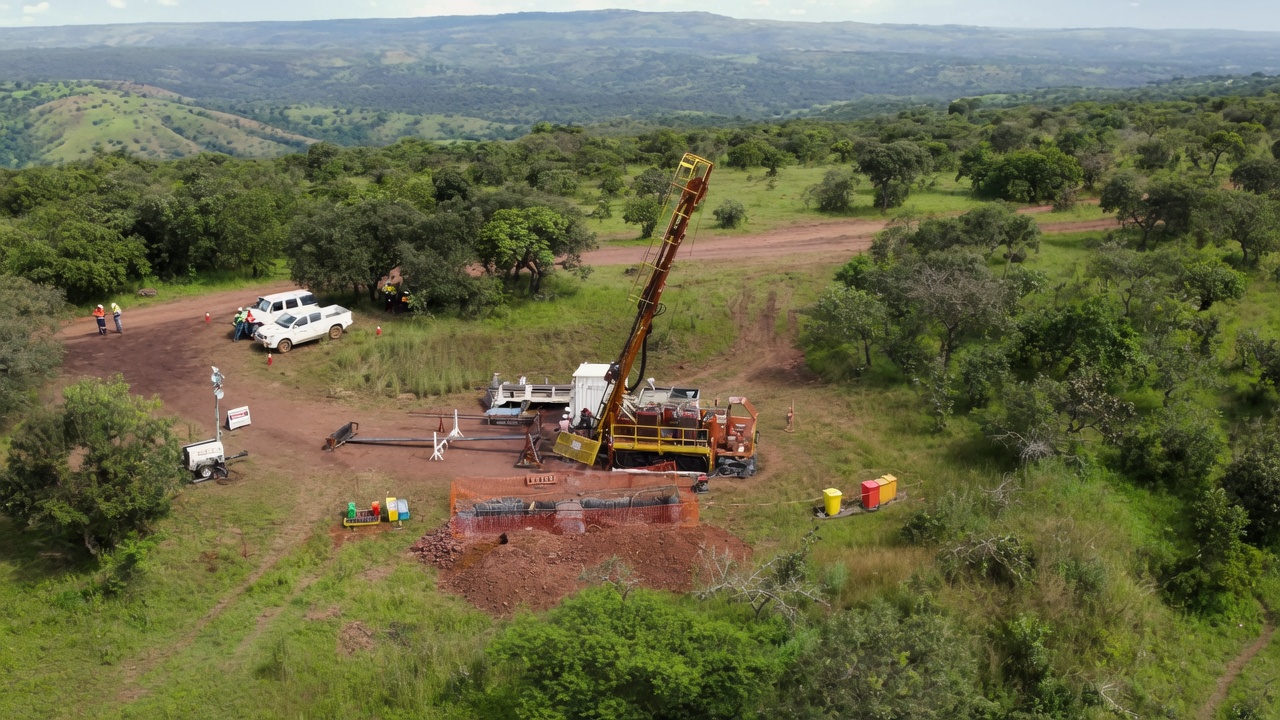
Sovereign Metals has confirmed a pre-tax net present value at an 8% discount rate (NPV8%) of US$2.2 billion for its Kasiya Rutile Graphite Project in Malawi, on capital expenditure to first production of US$727 million and a 23% pre-tax internal rate of return (IRR). Once fully ramped, Kasiya is set to produce 222,000 tonnes per year of rutile at over 95% titanium dioxide purity, a specification Toho Titanium has confirmed meets its feedstock requirements.

That confirmation is feedstock-level testing by an established, already qualified processor, not a finished sponge or mill qualification of the kind new producers must still complete. It still matters more than tonnage alone, since it establishes that Kasiya's ore meets the input bar set by a qualified processor, rather than the lower bar of generic titanium mineral supply.
Ghai described why that distinction carries weight in the industry:
"Toho is known in the industry as having the most stringent requirements. They don't take any and all products; their chemistry set only takes a certain type of mineral. But if you qualify with Toho, you qualify with the rest of the world essentially. So we went to Toho and said, ‘Here's our rutile; is it good enough for you?’ They came back and said, your rutile is absolutely on point to produce any and everything that we do."
Sovereign is now advancing rutile and graphite offtake discussions toward binding agreements and has deepened engagement with the US Government, major US companies, and industry stakeholders since completing the definitive feasibility study (DFS). Both rutile and graphite are designated critical minerals by the US and the European Union, positioning Kasiya as a potential non-Chinese source feeding US and allied supply chains; Sovereign notes Japan remains the dominant supplier of titanium metal to the US.
The Nacala Corridor Provides Kasiya's Route to Market
Kasiya's products are planned to move from a purpose-built dry port at the mine site along the Nacala Logistics Corridor to the Port of Nacala on the Indian Ocean, using an existing rail-and-port route rather than infrastructure that Sovereign has to build from scratch. The estimated product transport cost is US$117 per tonne, free on board (FOB) Nacala, contributing to the project's overall operating cost of US$450 per tonne, FOB Nacala.
Power comes from Malawi's national hydropower grid via a 132-kilovolt line to the Nkhoma substation, with a 400-kilovolt Mozambique interconnector and the 375-megawatt Mpatamanga hydropower station, both backed by the International Finance Corporation (IFC) and the World Bank, underway to expand national capacity ahead of Kasiya's own draw.
A Mining License application covering the DFS license areas was submitted during the quarter and has been acknowledged by the Malawi Mining and Minerals Regulatory Authority, remaining pending as of the report date, the gating step between the completed DFS and construction.
The Metric Worth Tracking Isn't Tonnes Mined
China's rising share of titanium metal output is the kind of statistic that invites a simple reading, and a misleading one. The tonnage that matters to Boeing, Airbus, and Western defense programs is the qualified slice, not the aggregate, and that slice has moved far less than the headline number suggests.
For investors evaluating titanium exposure, the more useful questions are whether a project's product has passed feedstock testing with an established aerospace-grade processor, whether offtake discussions are converting from non-binding to binding, and whether new Western melt and sponge capacity is completing its own qualification process fast enough to meet a demand curve that is not waiting. Mined tonnage answers none of these questions on its own.
FAQs (AI-Generated)
Analyst's Notes





Subscribe to Our Channel


.png)




Stay Informed


