Central Bank Interest in Singapore’s Vault Tests Gold Demand



New custody, tax relief, and settlement services expand gold-market access, with demand growth dependent on actual bullion purchases.
- On November 10, 2026, Singapore announced plans for an enhanced goods and services tax (GST) framework that removes GST from eligible wholesale gold services from April 2027, potentially reducing covered transaction costs.
- The Monetary Authority of Singapore (MAS) launched a vaulting service on November 10, giving foreign central banks and other official institutions access to a facility with capacity for 500 metric tons.
- The November 10 announcement confirmed that industry testing of Singapore’s gold clearing system was complete, with live trading and operations targeted for the first quarter of 2027.
- Deputy Prime Minister and MAS Chairman Gan Kim Yong said on November 10 that some central banks had expressed interest in the vaulting service, although their identities remained confidential and no deposit volumes were disclosed.
- On November 10, hotter-than-expected US inflation data pushed spot gold down 2.7% to $4,028.39/oz by 1:53 p.m. ET, while CME FedWatch fully priced a 25 basis point December Fed hike, highlighting the pressure from higher interest rates.
Tax Relief Could Lower Wholesale Gold Costs
Singapore plans to remove GST from specified wholesale gold services between eligible institutional participants. Covered activities would include vaulting, refining, recasting, assaying, and broking. Removing tax charges on these services could reduce the cost of storing, processing, testing, and trading bullion.
The framework is planned to take effect in April 2027, with further details due at Budget 2027. The proposed savings apply to covered wholesale services, so they should not be treated as a tax reduction on every gold transaction.
New Vault Capacity Expands Central Bank Options
MAS has launched its vaulting service for foreign central banks, international financial institutions, and sovereign entities. Gold will be held in Singapore’s national currency vault, which can accommodate 500 metric tons, with scope to expand. The service gives reserve managers another location beyond London and New York for holding bullion and accessing market liquidity during Asian trading hours.
The demand signal is expressed interest from potential customers. Gan said central banks had approached Singapore about the service, but their identities remained confidential.
Capacity measures how much gold the facility can hold. Depositing bullion already owned elsewhere would change its location without adding purchases to global demand.
Local Clearing Could Improve Asian Bullion Settlement
Singapore is also targeting live gold clearing operations in the first quarter of 2027. Industry testing is complete, while the operating rulebook is being finalized.
Clearing coordinates the obligations arising from transactions so buyers and sellers can complete settlement. A local system could make Singapore a more practical venue for institutional bullion trading during Asian hours, complementing its custody services. Higher settlement volumes could expand fee income for participating service providers.
Service Reforms Support Gold’s Demand Case
Higher rates can pressure gold because the metal pays no interest. Singapore’s measures address a different part of the ownership decision: where bullion can be stored, how trades are settled, and which services incur tax. Lower covered service costs could make participation more attractive without removing the interest income forgone by holding gold.
The direct beneficiaries are eligible users of wholesale gold services. For producers, any benefit would come through selling prices rather than a direct reduction in mine operating costs. Developers would still depend on construction funding, project costs, and long-term gold-price assumptions.
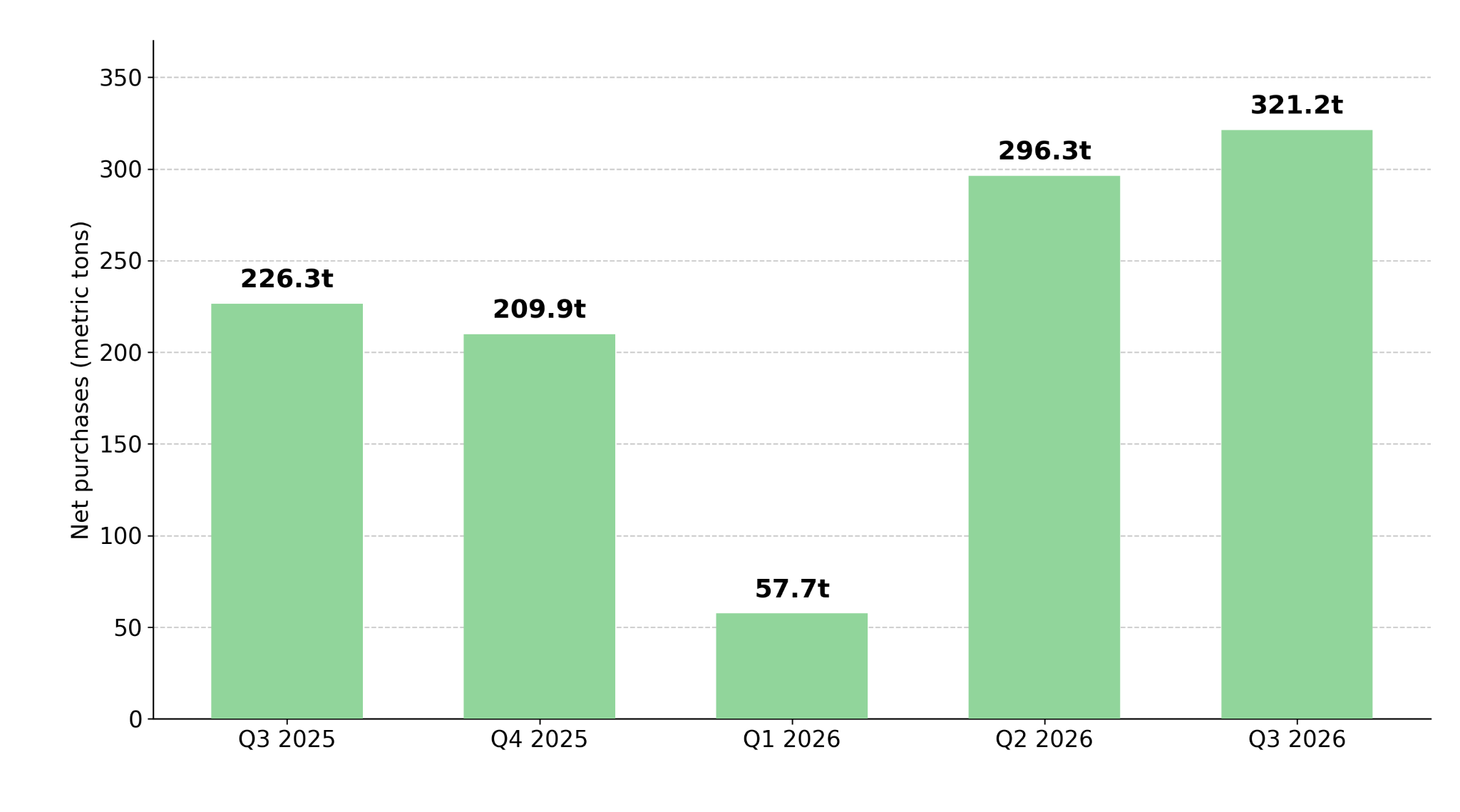
Institutions are expanding the arrangements available for holding gold during a period of rate pressure. Central banks added a net 321.2 metric tons in the third quarter of 2026, the highest quarterly total since the fourth quarter of 2024, according to the World Gold Council. Whether those arrangements strengthen demand depends on their use and on additional purchases, not on announced storage capacity alone.
Miner Valuations Still Outweigh Singapore’s Gold Vault
Singapore’s reforms could make holding and trading bullion less costly for eligible institutions while giving reserve managers another custody option, supporting the practical case for gold ownership during price weakness. The investment signal would strengthen if service adoption translates into additional purchases, while mining-share opportunities will continue to depend on valuation, operating costs, and financing.
Analyst's Notes





Subscribe to Our Channel







Stay Informed