Cobra's 111-Meter Shadow Rose Assay Backs a Second Copper Discovery at Manna Hill


Cobra Resources' 111 meters at 0.63% copper from 4 meters at Shadow Rose backs a second shallow skarn discovery at Manna Hill, with depth the next drill test.
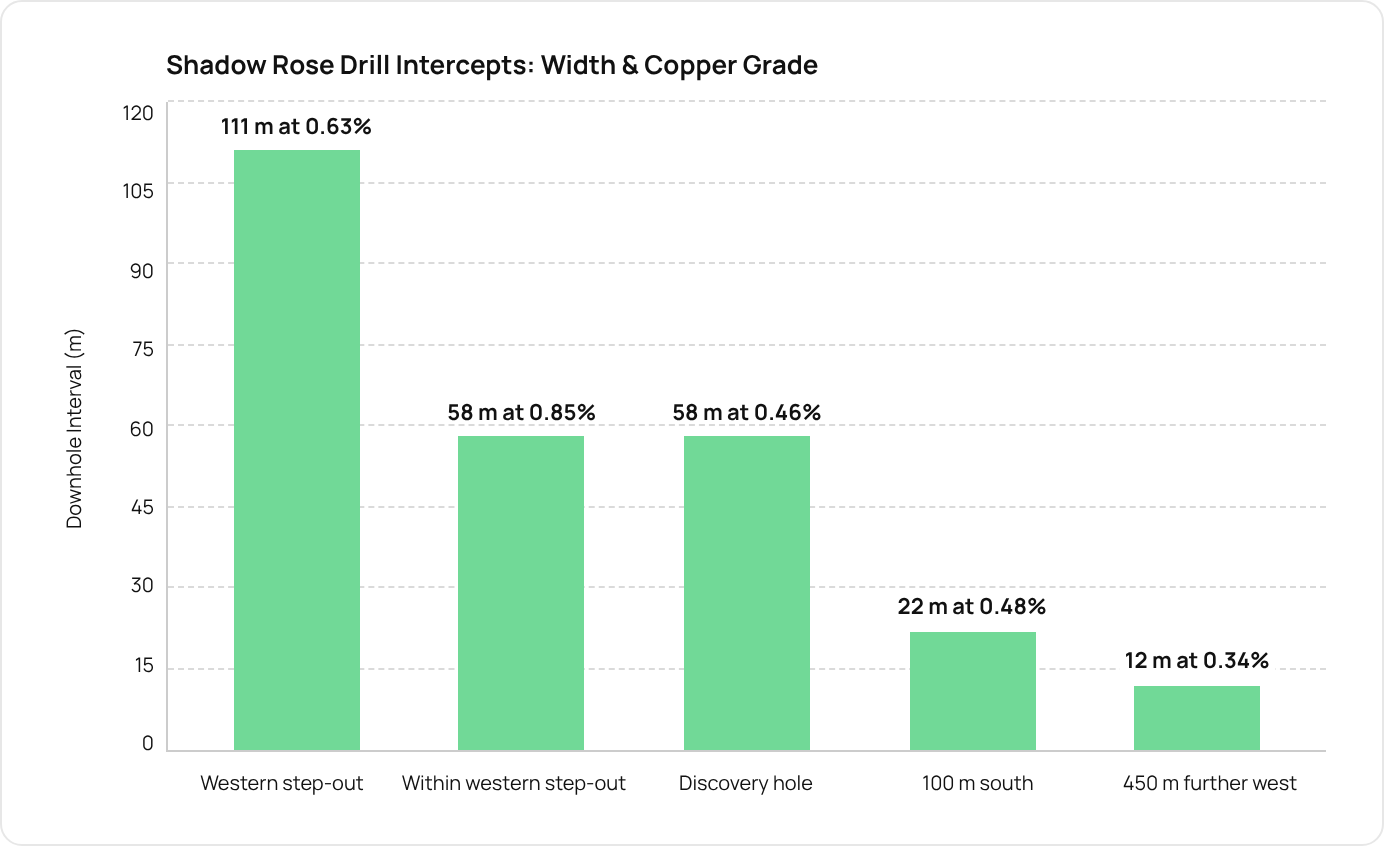
- A step-out hole at Shadow Rose returned 111 meters at 0.63% copper and 0.04 grams per tonne gold from 4 meters to the end of the hole at 115 meters.
- The interval contains 58 meters at 0.85% copper from 36 meters, including 12 meters at 1.54% copper from 80 meters.
- Cobra ranks the hole as the third-best drilled at Manna Hill on a grade-meter basis and now regards the Shadow Rose skarn as a significant copper discovery.
- The mineralized corridor Cobra measures along Blue Rose now extends to just under 3 kilometers of strike, up from 1.6 kilometers. Mineralization remains open east and west of the Shadow Rose discovery holes.
- Current Shadow Rose drilling reaches only about 120 meters. An extension of the funded program will test how far the new intercept continues at depth.
What Has Happened
Cobra Resources (LSE: COBR) reported laboratory assays on November 23, 2026, from a step-out hole at its Manna Hill Copper Project in South Australia's Nackara Arc. The hole was drilled about 220 meters west of the Shadow Rose discovery hole. It returned 111 meters at 0.63% copper and 0.04 grams per tonne gold from 4 meters to the end of the hole at 115 meters, including 12 meters at 0.81% copper from 6 meters. Lower in the hole, 58 meters at 0.85% copper from 36 meters includes 12 meters at 1.54% copper from 80 meters.
Cobra Resources Managing Director Rupert Verco had earlier pointed to visual and handheld portable X-ray fluorescence observations of more than 109 meters of copper mineralization from 6 meters in a step-out hole along strike at Shadow Rose. The new laboratory results put a grade on Shadow Rose's width: 0.63% copper across 111 meters, with a 1.54% copper core.
Verco described the result:
"Intersecting 111 metres at 0.63% copper from just 4 metres downhole is a standout result for Shadow Rose."
Why One Hole Changed Shadow Rose's Status
Shadow Rose has been tested by only a few holes. Cobra ranks the new intercept as the third-best hole drilled at the project to date on a grade-meter basis, a measure that weighs intercept width against grade. The hole is one of the first 4 testing the zone, so an early-stage target has already produced one of Manna Hill's strongest drill results. Earlier reverse circulation (RC) drilling at Blue Rose, which established the project, returned intercepts including 74 meters at 1.02% copper and 62 meters at 1.0% copper.
The 2 earlier Shadow Rose holes had shown shallow copper at lower grades. The discovery hole returned 58 meters at 0.46% copper and 0.15 grams per tonne gold from 10 meters. That includes 42 meters at 0.56% copper from 22 meters and 10 meters at 1.09% copper from 24 meters. A hole about 100 meters south of the discovery hole returned 22 meters at 0.48% copper from 10 meters, including 12 meters at 0.7% copper from 16 meters, plus 2 lower-grade intervals deeper in the hole. Compared with both, the western step-out delivered a longer interval at a higher average grade.
On that basis, Cobra now regards the Shadow Rose skarn as a significant copper discovery. A hole drilled about 450 meters further west is interpreted to have intersected the hanging wall of the Shadow Rose skarn. It returned 12 meters at 0.34% copper and 0.13 grams per tonne gold from 42 meters. Mineralization remains open along strike east and west of the Shadow Rose discovery holes.
A Possible Repeat of the Blue Rose Skarn
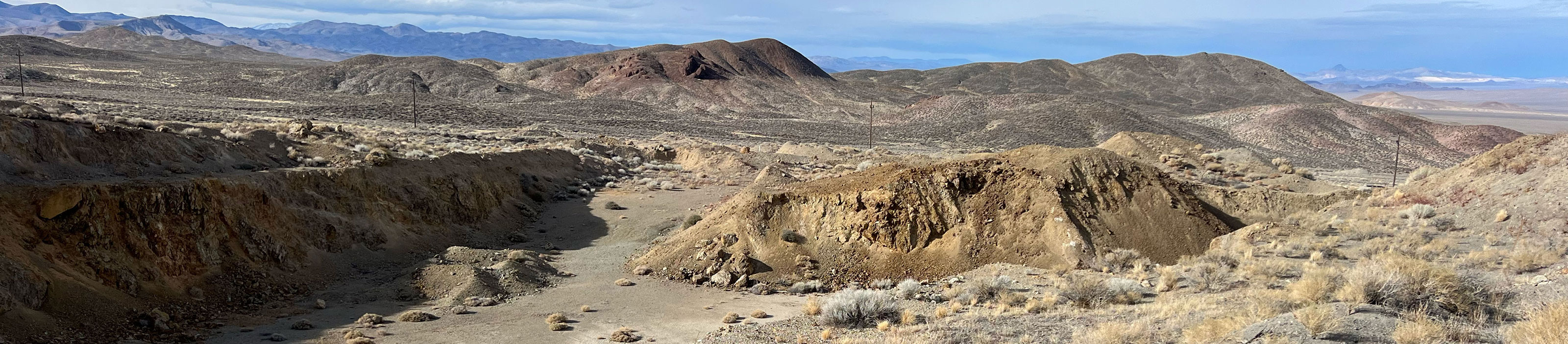
Copper at Blue Rose is linked to porphyry-type intrusives and strata-bound, subvertical limestone units. Oxide copper occurs at shallow depth, and primary mineralization is mainly chalcopyrite, magnetite and pyrite. Cobra tested shallow copper anomalism south of Blue Rose as a possible stratigraphic repeat of that skarn, and interprets Shadow Rose as a broad, stratigraphic repeat of the Blue Rose skarn.
If that interpretation holds, Shadow Rose is a second mineralized horizon parallel to Blue Rose, not a lateral extension of it. The difference shapes the exploration case: an extension lengthens an existing zone, while a separate horizon brings its own strike length and depth potential to test. Verco placed Shadow Rose about 200 meters from Blue Rose and described the copper there as broad and shallow. Separately, the corridor Cobra measures along Blue Rose has grown from 1.6 kilometers to just under 3 kilometers.
Blue Rose West shows a different style of mineralization. A hole there returned 32 meters at 0.7% copper and 0.07 grams per tonne gold from 52 meters, including 12 meters at 1.13% copper from 56 meters. The host is non-skarn rock with elevated potassium, next to a large magnetic body. Cobra reads that combination as a possible sign of a linked skarn-porphyry system, and further holes are planned to test the modeled magnetic body.
What the Slimline Program Cannot Yet Answer
All Shadow Rose results to date come from slimline drilling designed for speed and lateral coverage. Verco described what that program was built to test:
"Our first phase of drilling in this program has been slimline RC, and this is a high-tempo, fast-paced program that is testing step-out and scale extent and some geological interpretations that have led to this new discovery at Shadow Rose."
That slimline drilling reaches only about 120 meters of depth. The western step-out ended in mineralization at 115 meters, and Cobra states that no limit to the depth extent of mineralization has yet been determined. An extension of the current funded program will test depth continuity beneath the new intercept. Drilling will also test strike continuity west of that hole and east of the discovery hole. Verco said the next phase involves a larger rig stepping back to drill underneath the shallow zones.
Cobra is explicit about where the project stands: province-scale copper potential at Manna Hill remains an exploration thesis. The Shadow Rose assays strengthen the shallow part of that thesis. Thickness and grade below the slimline rig's reach are still unmeasured.
Broader Context & What to Watch Next
Cobra is advancing a Scoping Study at its second project, the Wudinna ionic rare earth project, alongside the copper program. At Manna Hill, drilling extends beyond the Blue Rose corridor. Netley Hill is a porphyry copper-molybdenum target over an induced polarization anomaly about 3 kilometers long. There, 7 slimline RC holes totaling 660 meters have logged copper oxides to about 70 meters, with copper sulfides (chalcopyrite, chalcocite and molybdenite) present in areas. Assays are pending, and visual observations are not a substitute for laboratory results.
Several results are still to come. Step-out holes beneath the western step-out will test whether mineralization continues below 115 meters. Further holes will test strike continuity west of that hole and east of the discovery hole. Laboratory assays are pending for the Netley Hill holes. At Blue Rose West, additional holes will test the modeled magnetic body. Follow-up diamond drilling at Blue Rose and a detailed drone magnetic survey over Blue Rose and surrounding prospects are also planned. Verco said copper assay batches will continue through Christmas and into early 2027.
The western step-out has settled the grade question for one Shadow Rose hole. Continuity along strike and below 120 meters are the next questions, and the drilling to test them falls within Cobra's funded program.
FAQs (AI-Generated)
Analyst's Notes





Subscribe to Our Channel






Stay Informed