




Copper Tariff Stalemate Drains Supply Outside US, Widening Producer Margins


China’s low inventories and a $26 LME prompt premium keep spot copper tight, while 17.5-year mine timelines preserve producer leverage.
- London Metal Exchange (LME) three-month copper rose 0.6% to $14,745 per metric ton on September 22, 2026, its sixth straight gain and 0.9% below the $14,875 record set on September 10.
- The White House has not ruled on a proposed 15% refined copper tariff starting January 1, 2027, giving holders an incentive to keep 69% of exchange-monitored copper in US warehouses rather than ship it to Asia.
- An unresolved tariff decision and Chinese holiday restocking keep prompt LME copper at a premium through October 7, while a no-tariff ruling would reduce the incentive to hold US copper and pressure the Commodity Exchange (COMEX) premium.
- With no ruling date set, one tariff headline moved copper more than 4% in a single session on September 10, so position size, not timing, limits downside.
- An LME cash price returning to a discount to three-month metal, as on September 14, would signal weaker prompt demand and end the spot premium.
Chinese Restocking Lifts LME Copper to $14,745
LME three-month copper rose 0.6% to $14,745 per metric ton, its sixth straight gain and longest run in four months, while COMEX futures held above $6.70 per pound. The move left LME copper 0.9% below its $14,875 record after tariff uncertainty and a Fed rate increase had triggered a pullback.
China's physical copper market tightened as Shanghai cathode stocks fell to 43,900 metric tons, the lowest since 2023, after imported cargoes moved directly to fabricators ahead of the holidays. The Yangshan premium reached $124 per metric ton, a near four-year high, showing buyers were paying more to secure imported copper.
Tariff Uncertainty Holds 69% of Exchange Copper in US Warehouses
Global mined copper output fell 1.1% in the first half of 2026 as disruptions in Indonesia and the Democratic Republic of Congo removed an estimated 600,000 metric tons from expected production. US cathode imports then reached a record 223,000 metric tons, concentrating more metal in US warehouses, while 9,600 metric tons of LME cancelled warrants cut available stocks to 133,725 metric tons.
Tariff uncertainty is keeping copper in US warehouses. The Commerce Secretary recommended a 15% refined copper tariff starting January 1, 2027, rising to 30% in 2028, but no decision has followed. Shipping US-held metal abroad would forfeit its potential tariff value, helping keep 69% of exchange-monitored copper on COMEX and tightening availability outside the US.
17.5-Year Mine Timelines Preserve Copper Scarcity Despite Higher Prices
Chilean copper output fell 9.4% year over year in July, while new projects take about 17.5 years from discovery to production, limiting how quickly higher prices can add supply. Jacob White, Director of ETF Product Management at Sprott, notes that higher prices improve project economics but cannot shorten every development stage or quickly replenish the discovery pipeline.
Refinery Maintenance Raises Spot Costs as Copper Prices Lift Revenue
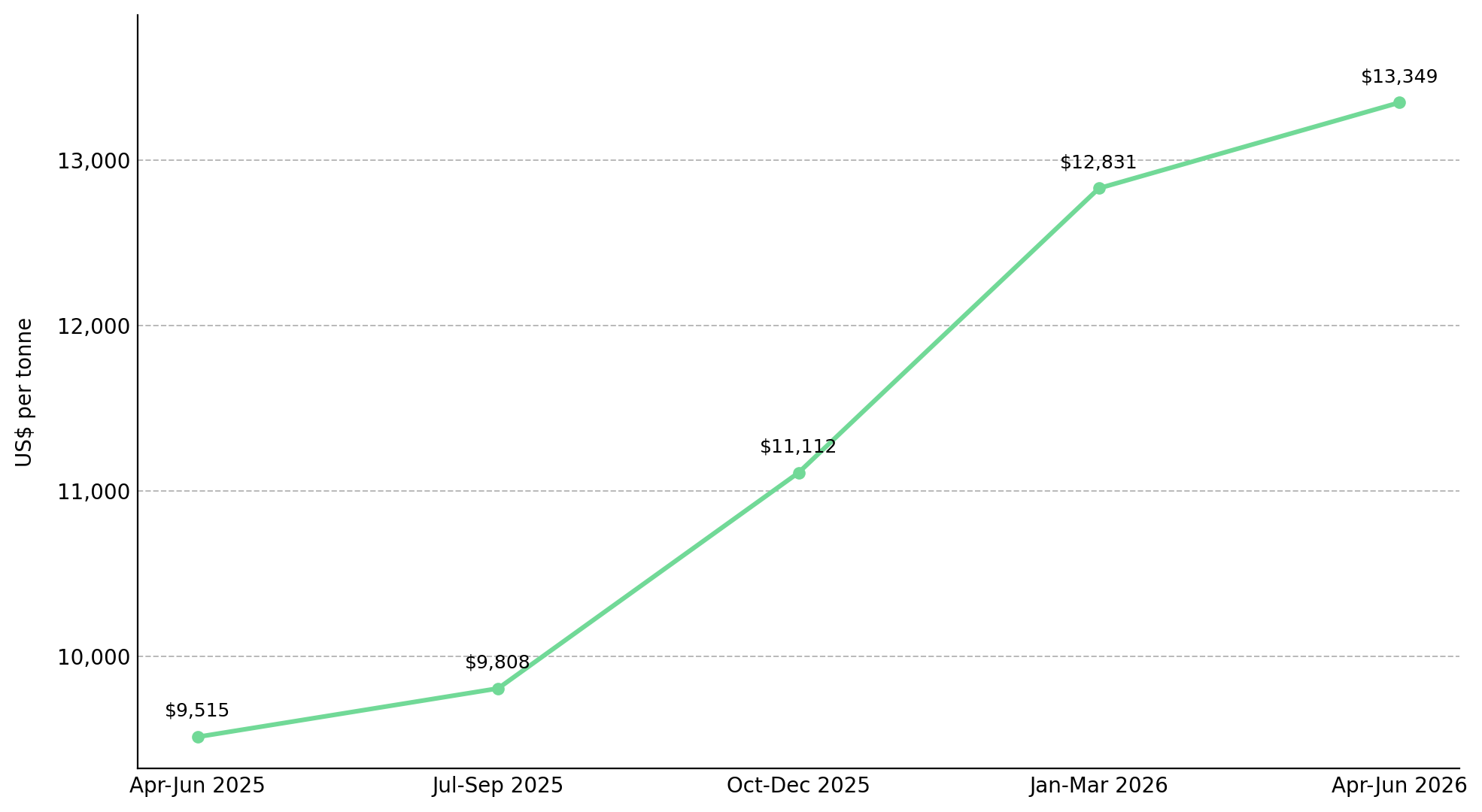
Chinese fabricators face higher spot costs while October and November refinery maintenance limits domestic refined supply. Meanwhile, the World Bank's quarterly LME copper average rose 40% year over year from $9,515 to $13,349 per metric ton, widening revenue upside for producers whose sales track spot prices.
Producer upside depends on how much realized pricing tracks copper rather than fixed contract terms. Capstone Copper's sale of Cozamin to Luca Mining for up to $385 million includes $60 million contingent on copper averaging above $7 per pound from 2027 to 2029, directly linking part of the deal value to higher copper prices.
With no tariff ruling date set, position size matters more than timing because junior miners amplify copper price moves in both directions. Copper fell more than 4% in one session on a tariff delay report, showing how quickly policy headlines can reprice copper exposure.
What Ends Copper’s $26 Prompt Premium
An LME cash premium of $26 per metric ton over three-month copper signals tight prompt supply. While that premium holds, unhedged producers can capture higher realized prices and physically backed copper funds gain from stronger spot pricing. When trade policy restricts flows, inventory location can matter more than global tonnage in setting prompt prices.
LME cash returning to a discount, as when it traded $86 below three-month copper, would signal weaker prompt demand. A no-tariff ruling could have a similar effect by reducing the incentive to keep copper in US warehouses. Either outcome would reduce spot pricing power and improve fabricator margins.
LME daily stocks and Shanghai Metals Market (SMM) inventory data provide the clearest test, with a sustained rebuild from 43,900 metric tons signaling that restocking pressure is fading. Even if a no-tariff ruling lowers copper prices, the 17.5-year average mine-development timeline remains, preserving scarcity in operating copper assets.
Analyst's Notes





Subscribe to Our Channel







.png)
Stay Informed


