




127% Data Center Copper Demand Growth by 2040 Raises Need for New Mines



Data center copper demand could rise 127% by 2040, increasing pressure on mine supply and raising the importance of projects advancing toward production.
- Data center copper demand is forecast to rise from 1.1 million metric tons in 2025 to 2.5 million metric tons by 2040, a 127% increase alongside broader electrification and economic growth.
- Artificial intelligence (AI) training facilities are projected to account for 58% of data-center copper demand by 2030, while rising electricity requirements extend copper consumption into generation, transmission, and distribution infrastructure.
- Copper supply cannot respond as quickly as digital infrastructure because a new mine takes roughly 17.5 years from discovery to production, so near-term supply growth depends more on projects already advancing through development.
- Resource definition, metallurgy, economic studies, and existing infrastructure determine whether developers and explorers can convert mineralization into technically and financially viable future supply.
- Sustained exploration capital funds the multiple drilling programs needed to establish scale, while external funding can accelerate technical work toward development.
Data Center Growth Lifts Copper Demand as AI Raises Electricity Intensity
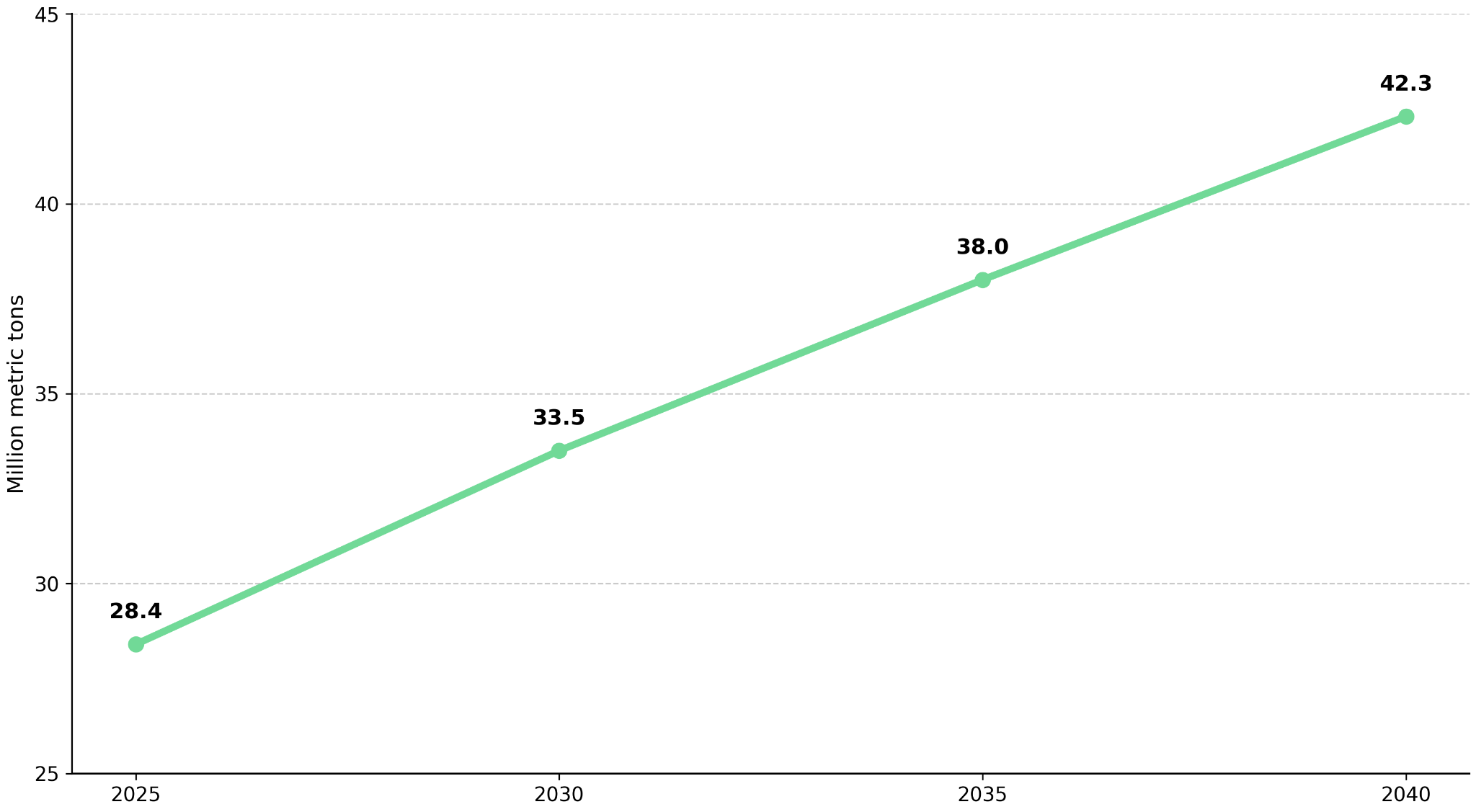
AI is adding copper demand to a market already driven by construction, transportation, electric vehicles, and power infrastructure. S&P Global forecasts total copper demand rising from approximately 28 million metric tons in 2025 to 42 million metric tons by 2040, a 50% increase. AI and data centers add demand beyond these existing end uses because copper is required in computing equipment and the electricity systems that supply it.
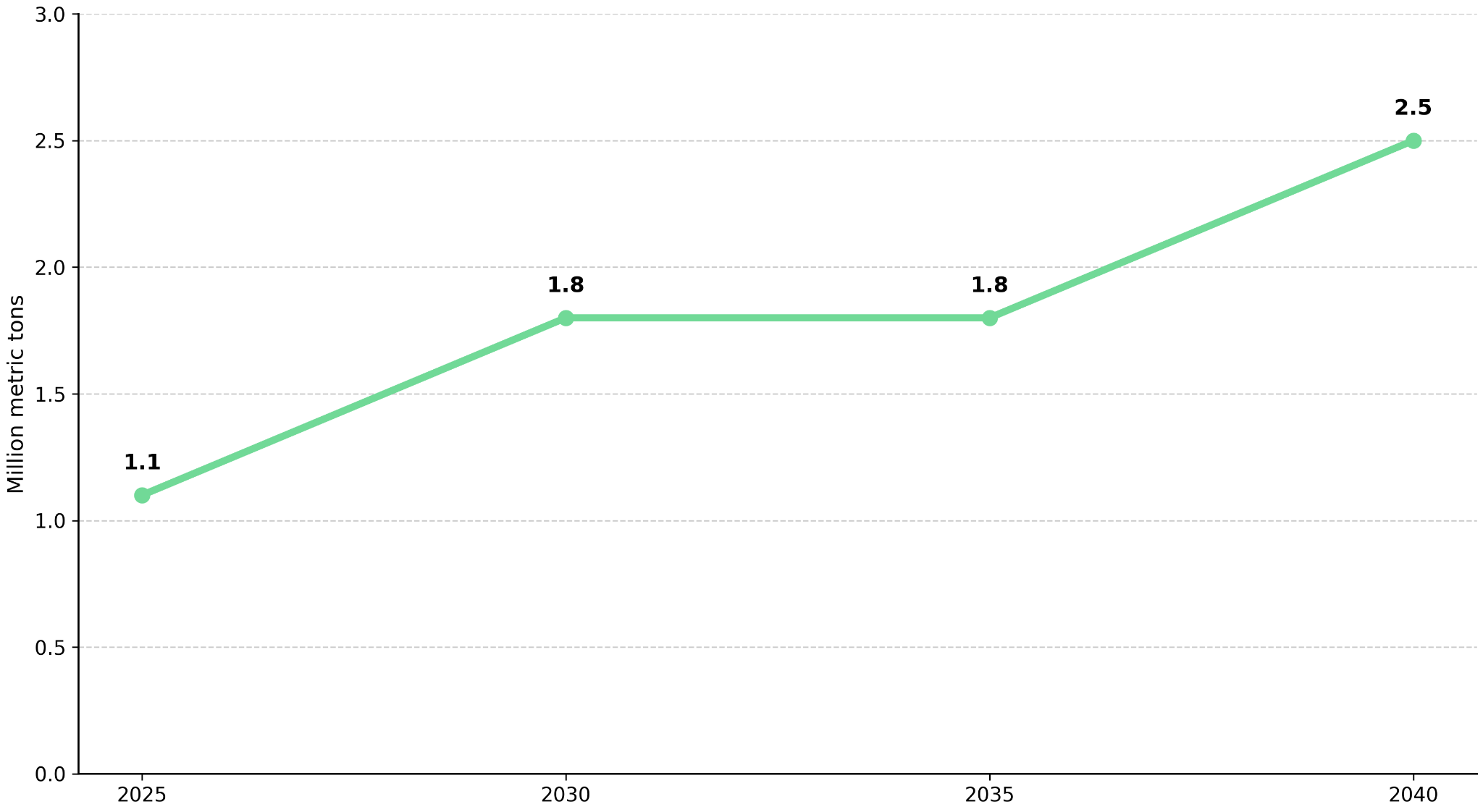
Direct Data Center Growth Adds 1.4 Mt to Copper Demand by 2040
S&P Global forecasts annual copper demand from data centers rising from 1.1 million metric tons in 2025 to 2.5 million metric tons by 2040. The 1.4 million metric ton increase represents approximately 127% growth, while AI-training data centers are projected to account for 58% of total data-center copper demand by 2030. Copper is required for internal power distribution, cooling systems, and information technology infrastructure, while higher-power AI hardware increases electricity demand within new facilities.
International Energy Agency (IEA) projects global data-center electricity consumption rising from 485 terawatt-hours (TWh) in 2025 to 950 TWh in 2030, while electricity use from AI-focused data centers triples over the period. S&P's sensitivity analysis puts 2040 data-center copper demand between 1.7 million and 2.7 million metric tons, depending on power availability, grid constraints, and AI adoption. Even the lower case is 0.6 million metric tons above 2025 data-center copper demand.
Data Center Power Demand Expands Copper Use Across Grid Infrastructure
Data-center copper demand extends beyond the facility itself because additional computing load increases demand for generation, substations, transformers, transmission lines, and distribution networks. Power infrastructure associated with data centers could require approximately 1.0 million metric tons of copper annually by 2040, split roughly equally between renewable generation and transmission and distribution infrastructure. This means data-center expansion can increase copper demand both inside facilities and across the power systems serving them.
Copper demand from data centers extends into a grid already undergoing large-scale expansion. More than US$7.5 trillion of global transmission and distribution investment is expected through 2040. Data centers add further electricity demand alongside industrial growth, renewable generation, transport electrification, and conventional economic development.
17.5-Year Mine Timelines Slow Copper Supply as Data Center Demand Rises
Data-center capacity can be financed and built faster than new copper supply, while a new mine takes roughly 17.5 years from discovery to production. As demand can grow faster than mine supply, projects already advancing through resource definition, engineering, infrastructure planning, and financing have a shorter remaining path toward production.
Long Mine Timelines Make Resource Definition Critical to Future Supply
Of 263 major copper discoveries identified since 1990, 165 have not entered production, 135 have not completed feasibility studies, and only 17 have reached construction or preproduction. With data-center copper demand rising faster than new mines can be developed, the key supply question is which discoveries can progress into defined resources. Drilling must establish geometry, grade, and continuity before a Mineral Resource Estimate (MRE) can support engineering, while metallurgy and economic studies test whether that resource can advance toward development. Permitting and financing then determine whether construction can begin. Rising demand does not remove these steps, making resource definition the first bridge between discovery and future supply.
Resource Definition Expands Copper Discoveries Into Future Mine Inventory
Marimaca Copper reported 216 meters at 0.96% copper, including 62 meters at 2.20% copper, while step-out drilling extended the mineralized sedimentary horizon 300 meters to the south and west. The wider copper footprint increases the area available for further resource definition, supporting continued evaluation of Pampa Medina as part of the future copper project pipeline.
Resource definition turns discovery into measurable future mine inventory. With new copper mines taking a long time to reach production, drilling that expands and upgrades resources is an early step toward future supply.
Abitibi Metals reported 60.2 meters at 1.08% copper, including 18.8 meters at 2.24% copper and 9.2 meters at 3.42% copper at B26. The results will feed into a future resource update, while ongoing definition and expansion drilling continues to build the copper inventory and resource confidence needed for subsequent mine planning and technical studies.
Existing Infrastructure & Technical Studies Advance Copper Supply
Resource growth establishes the foundation for the next stages of development. Copper projects then advance through mining, processing, financing, and technical studies that define how a resource can move toward construction. With development timelines often exceeding a decade, existing infrastructure and completed studies can shorten the work required between resource definition and a construction decision.
Concentrate Tightness Raises Value of Existing Restart Infrastructure
A greenfield mine may require extensive new infrastructure before production begins, while a restart can begin with some of that infrastructure already in place. Existing facilities can reduce the new construction that must be designed, permitted, and financed before production resumes.
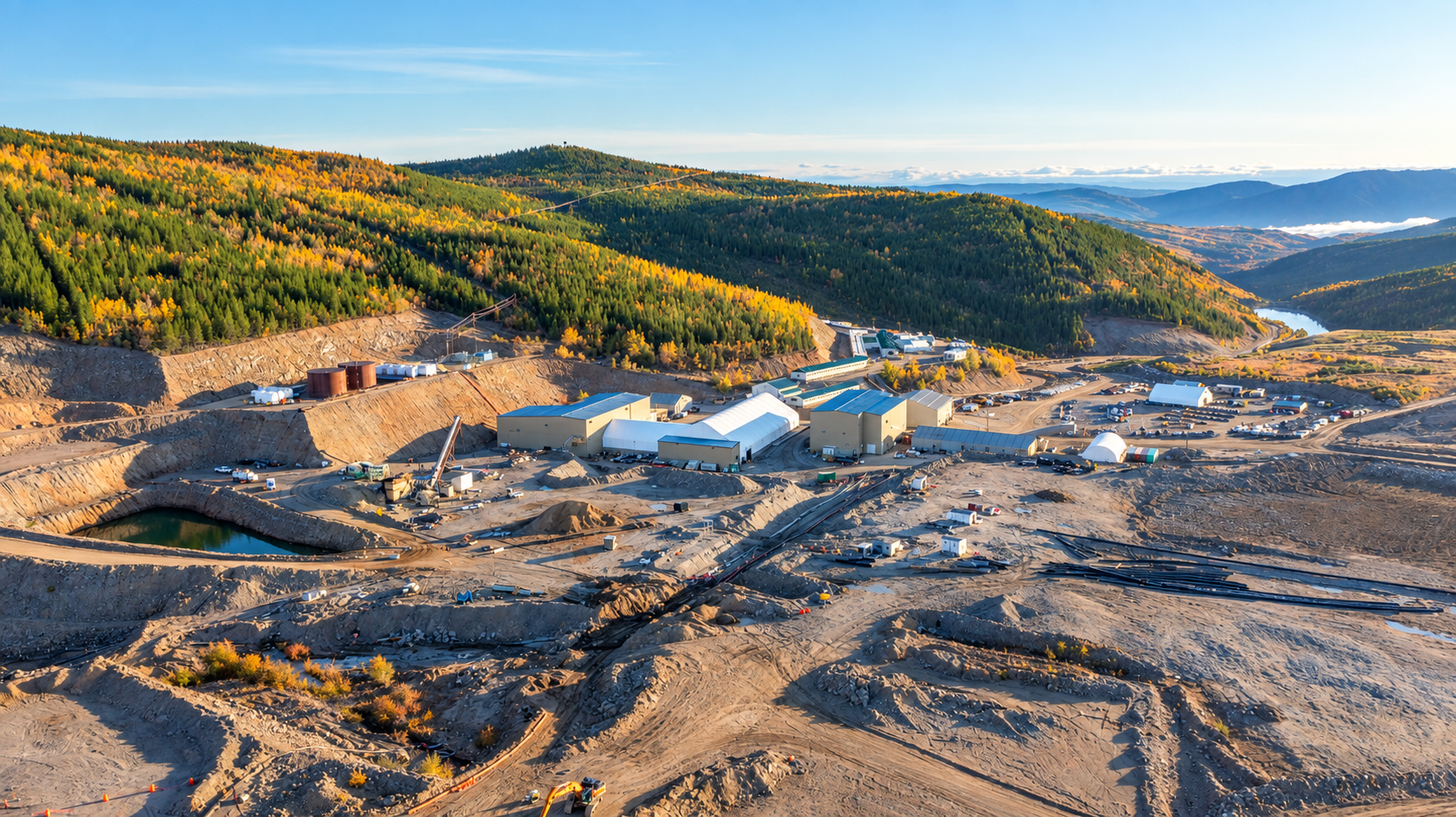
Selkirk Copper has completed more than 45,000 meters of its planned 50,000-meter Phase 2 drill program, with results expanding copper mineralization at Minto North and Area 118. The program is feeding updated mine plans and a Preliminary Economic Assessment that will incorporate the larger resource base and evaluate a restart of the former Minto mine. Existing infrastructure allows resource growth and mine planning to advance from an established operating footprint, supporting a more direct path toward renewed production.
Colin Joudrie, President & Chief Executive Officer of Selkirk Copper, links concentrate tightness to electrification:
“Smelters are actually paying the miner a premium on top of a premium to receive their concentrate because they're just not getting enough to convert it into the copper that's going into these new electronics, transmission, but also these big data centers. The industry itself is doing its best to deliver that copper. It's just not getting there.”
Supply Constraints & Data Center Demand Raise Value of Development Studies
Technical studies turn drilling results into a clearer development plan. Metallurgical testing defines processing routes and expected recoveries, while engineering sets mine design and production schedules. Each stage helps determine how much copper could be produced, what it may cost, and how long development could take.
Fitzroy Minerals reported 110 meters at 1.94% copper at Buen Retiro and is advancing the project through preliminary metallurgy, a maiden MRE and Preliminary Economic Assessment (PEA) in the fourth quarter of 2026, followed by a Pre-Feasibility Study (PFS) in the second quarter of 2027. The development plan also incorporates access to industrial water and available electrowinning capacity at nearby Planta Biocobre. The drilling, study sequence, and existing infrastructure provide a more defined route from resource growth toward development.
Merlin Marr-Johnson, Chief Executive Officer of Fitzroy Minerals, connects constrained copper supply with data center demand growth:
“Vast amounts of money are going just to maintain production, so metal prices have to rise as demand is strong. There are many other houses and groups who are forecasting a copper crunch which is going to come as demand for electrification drives, and data centers and EVs and all of that drives demand.”
Sustained Funding & Drilling Advance Copper Discoveries Toward Development
Copper projects require sustained capital because large mineral systems often need multiple drilling seasons to define their size and support development studies. When demand grows faster than new mine supply, continued funding enables discoveries to progress through the drilling and technical work required for development.
Deeper Drilling Tests Porphyry Scale & Advances Copper Resource Definition
Porphyry systems often require step-out and deeper drilling to define their scale. Early high-grade intersections establish copper mineralization, while follow-up drilling tests whether it extends far enough to support resource growth. This work moves a discovery toward the resource definition needed for later development studies.
Cobra Resources reported 74 meters at 1.02% copper at Blue Rose, with subsequent diamond drilling extending observed copper mineralization to depth and testing the interpreted porphyry system. The company also exercised its option to acquire Manna Hill and plans follow-up drilling to extend the discovery and test additional targets. These steps move Blue Rose from an initial discovery toward defining the scale of a broader copper system.
External Funding Expands Drilling as Copper Supply Pressure Builds
New discoveries often require more drilling than one season can complete, so continued funding is needed to keep exploration moving. Larger drilling programs can test more targets and provide enough data to better define the size of a discovery.
Mogotes Metals plans up to 20,000 meters of drilling at Filo Sur during 2026-2027, following copper discoveries at Albor and Cruz del Sur. Rio Tinto’s US$15 million strategic investment also funds Filo Sur work programs and adds technical support through a formal alliance. Larger drilling programs and capital give the company more capacity to define the scale of its copper discoveries and advance additional targets across the project.
Data Center Demand Raises Need to Move Copper Projects Toward Production
Data center copper demand is forecast to rise 127% by 2040, contributing to annual copper demand reaching 42 million metric tons alongside growth from construction, transportation, and electrification. The IEA projects copper demand increasing by approximately 7 million metric tons through 2040, while announced projects would meet only about 75% of 2035 primary copper requirements, leaving an approximately 25% supply gap as new mines still take about 17.5 years from discovery to production.
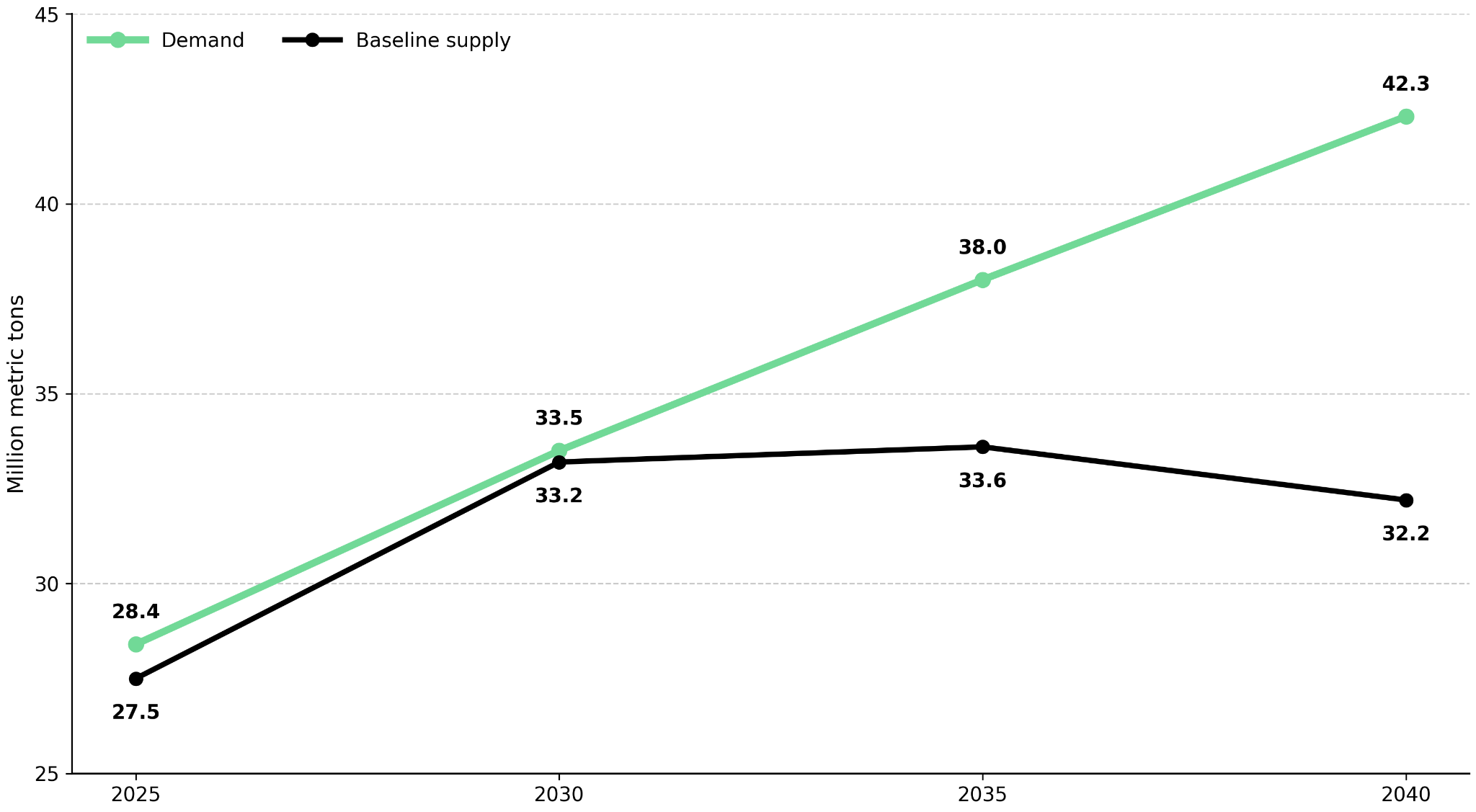
The widening gap between copper demand and mine-development timelines shifts the focus from copper exposure alone toward project execution. Drilling defines scale, resource estimates establish inventory, metallurgy tests recoveries, and economic studies assess project returns. Infrastructure, permitting, and funding then determine how efficiently a project can move from mineralization toward construction. AI does not make every copper deposit economic, but it increases the value of projects that continue removing the technical and financial steps between discovery and production.
The Investment Thesis for Copper
- Data-center construction adds measurable copper demand as direct consumption is forecast to rise from 1.1 million metric tons in 2025 to 2.5 million metric tons by 2040.
- Power-system investment extends copper demand beyond computing facilities because rising data-center loads require additional generation, transmission, and distribution infrastructure.
- Long mine-development timelines constrain the supply response because copper projects take approximately 17.5 years from discovery to production, including drilling, metallurgy, engineering, permitting, financing, and construction.
- Developers with defined resources, economic studies, and infrastructure have a clearer path toward construction because each milestone establishes more of the technical and financial requirements for development.
- Explorers with sustained funding can advance future copper supply because continued drilling is needed to define a resource well enough for development studies.
- Capital discipline supports project advancement because stronger copper demand does not remove permitting, cost, or financing risk, and sustained funding is still required to complete technical work.
Data-center expansion adds another source of copper demand to a market already supported by electrification, transport, and grid investment. The broader outlook is shaped by the gap between faster demand growth and the long process required to bring new mines into production. Future supply will therefore depend on how effectively projects move through resource definition, technical studies, permitting, infrastructure development, and financing. As copper demand broadens, developers and explorers that continue advancing projects toward production will play a larger role in balancing future supply.
TL;DR
Data-center copper demand is forecast to rise from 1.1 million metric tons in 2025 to 2.5 million metric tons by 2040 as AI expands electricity and grid requirements. At the same time, new copper mines take roughly 17.5 years from discovery to production, limiting how quickly supply can respond. S&P Global projects broader copper demand reaching about 42 million metric tons by 2040, while the IEA sees announced projects meeting only about 75% of 2035 primary copper requirements. This increases the importance of projects advancing through drilling, resource definition, technical studies, infrastructure planning, permitting, and financing.
FAQs (AI-Generated)
Analyst's Notes





Subscribe to Our Channel












.png)
Stay Informed


