




5% Stainless Growth Broadens Nickel’s Demand Base Beyond Batteries


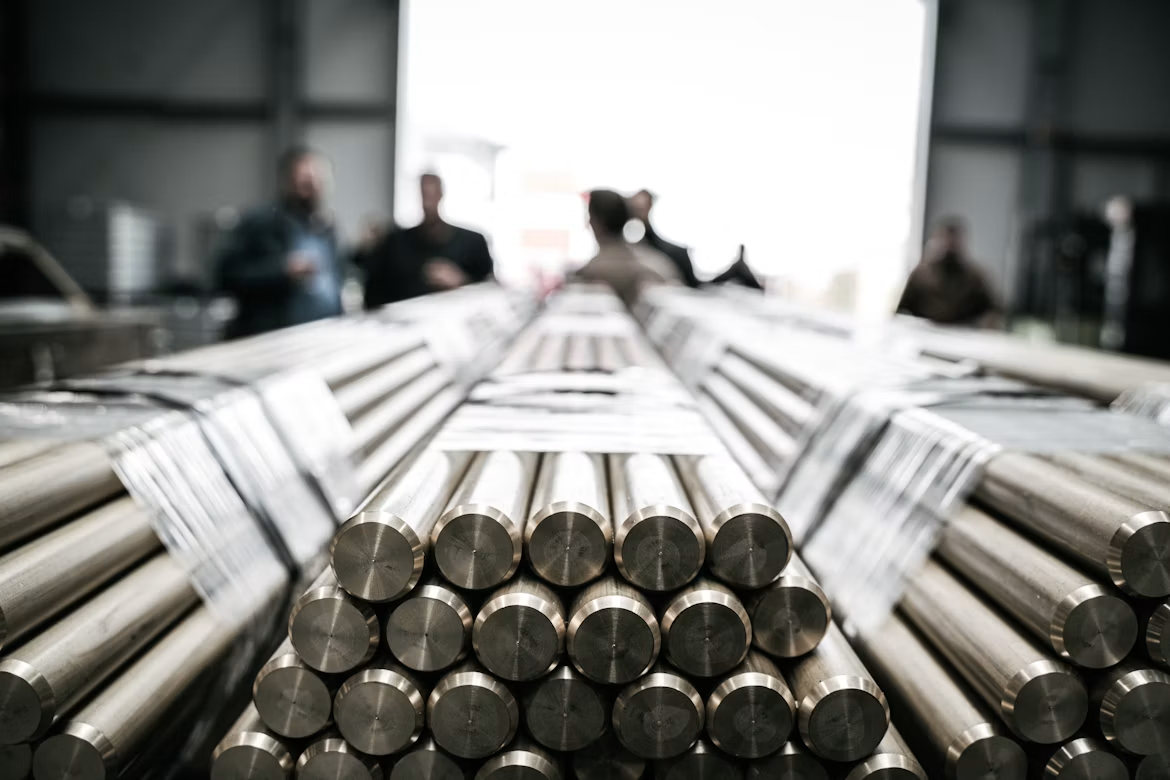
Stainless-steel output rose 5% in the first half of 2026, strengthening nickel demand beyond batteries as new supply advances.
- Global stainless-steel melt-shop production reached 32.96 million tonnes in the first half of 2026, up 5.0% year over year, increasing output within nickel’s largest established industrial end market.
- Stainless-steel production growth accelerated from 2.5% year over year in the first quarter to 7.6% in the second quarter, showing that stainless-steel output growth strengthened as the first half progressed.
- International Nickel Study Group (INSG) forecasts primary nickel usage rising from 3.596 million tonnes in 2025 to 3.747 million tonnes in 2026, an increase of approximately 151,000 tonnes, while projecting further stainless-steel growth.
- Rising stainless-steel output gives nickel an established demand source outside electric vehicle batteries, reducing reliance on any single battery chemistry to support total consumption.
- Advanced nickel projects with credible cost estimates, financing pathways, and construction plans are better positioned to reach production as stainless-steel demand rises and energy technologies add longer-term nickel demand.
Stainless Growth Expands Nickel’s End Market
Global stainless-steel melt-shop production increased from 31.40 million tonnes in the first half of 2025 to 32.96 million tonnes in the first half of 2026, adding approximately 1.56 million tonnes of output. Because stainless and heat-resisting steels remain nickel’s largest end-use category, that increase expands production within the metal’s largest established industrial market.
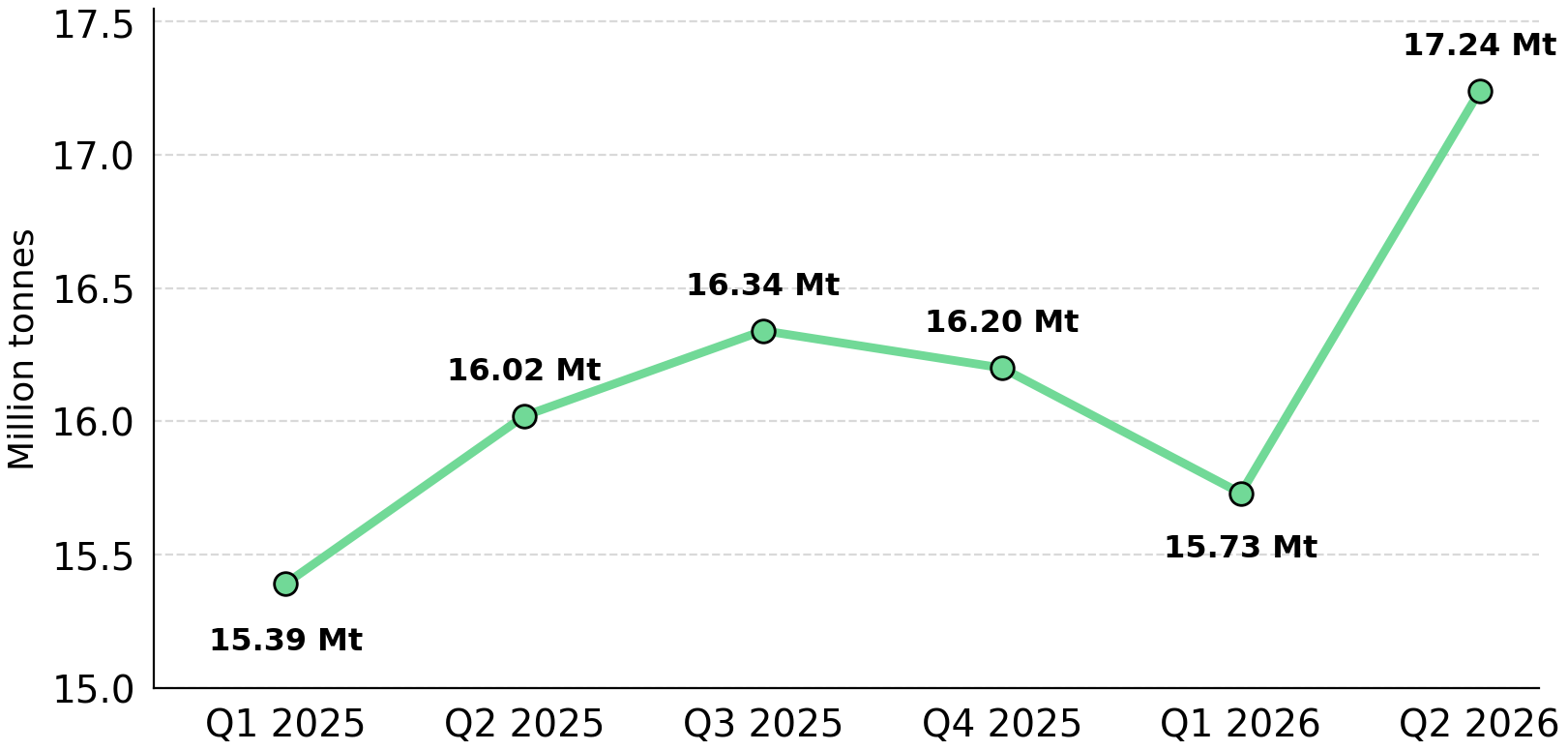
Global stainless-steel production reached 15.77 million tonnes in the first quarter, up 2.5% year over year, before increasing to 17.24 million tonnes in the second quarter, up 7.6% from the same period in 2025. The 5.1-percentage-point acceleration in year-over-year growth shows that stainless-steel production strengthened through the first half rather than relying on growth in a single quarter.
Stainless-steel production and primary nickel demand do not move one-for-one. Austenitic stainless grades typically contain more nickel, while ferritic grades can contain little or none. Changes in grade mix can therefore cause stainless-steel output and nickel consumption to grow at different rates. Scrap availability also affects primary nickel requirements because recycled stainless can reduce the amount of new nickel needed per tonne of finished steel.
Slower Battery Growth Still Leaves Nickel Demand Rising Through 2040
INSG forecasts global primary nickel usage increasing from 3.596 million tonnes in 2025 to 3.747 million tonnes in 2026, an increase of approximately 151,000 tonnes while also forecasting further expansion in the stainless-steel sector. That nickel-specific outlook complements World Stainless data showing 5.0% year-over-year growth in first-half stainless-steel production. The figures show higher output in nickel’s largest established industrial end market alongside projected growth in total nickel consumption, providing a demand source outside batteries as evolving battery chemistries create greater uncertainty around future nickel intensity.
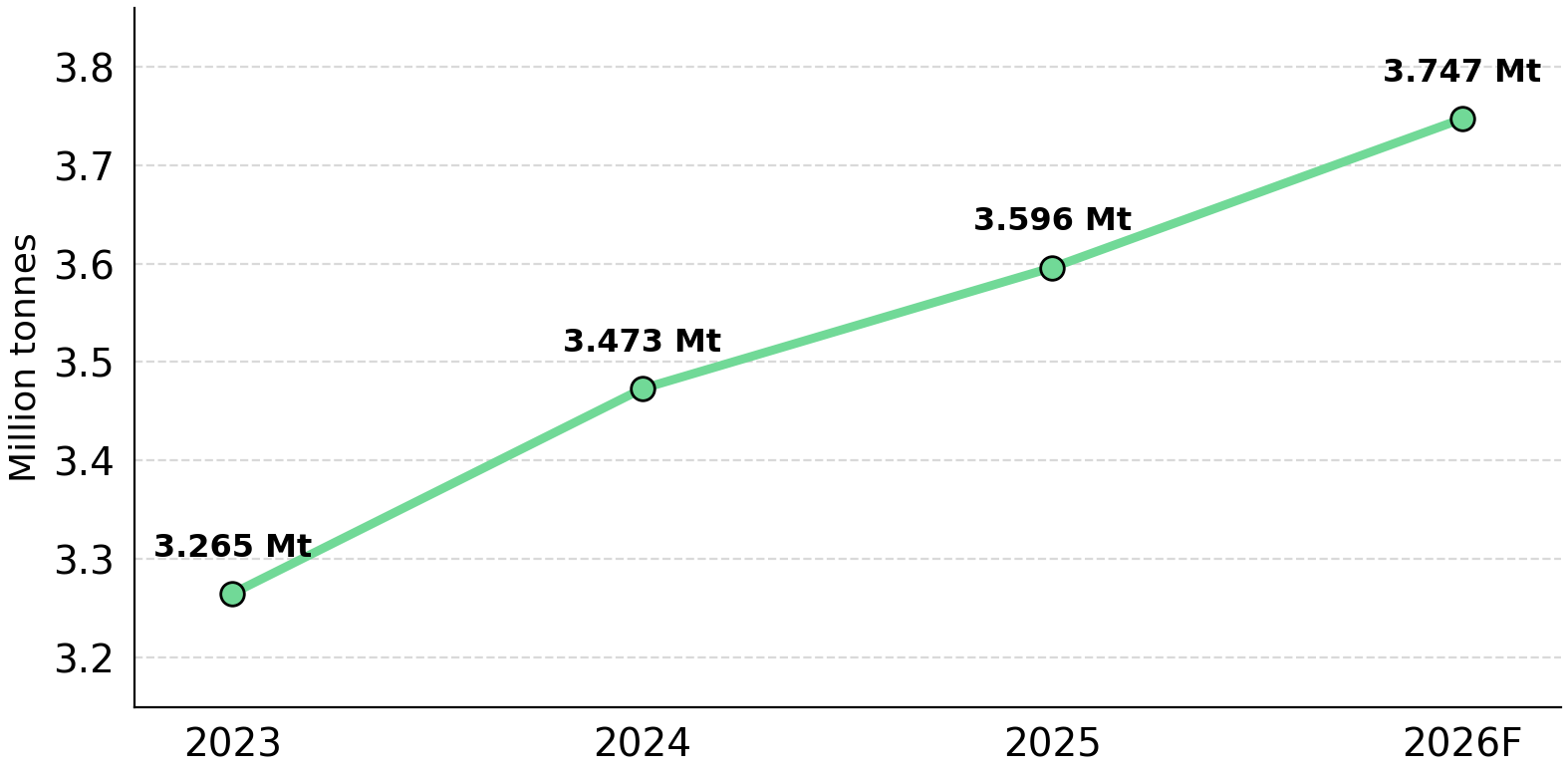
INSG forecasts slower battery-sector nickel demand growth as lithium iron phosphate (LFP) batteries gain market share and plug-in hybrid electric vehicle demand grows relative to battery electric vehicles. Total nickel usage is still forecast to increase in 2026 alongside further stainless-steel expansion.
International Energy Agency (IEA) extends the demand outlook beyond 2026 as it projects nickel demand increasing 50% to 90% by 2040 with energy technologies contributing to longer-term consumption growth. Stainless steel therefore supports nickel’s current industrial demand base, while energy technologies add another source of demand over the longer term.
China Drives Stainless Growth & Raises Its Weight in Nickel Demand
Asia drove most of the 5.0% increase in global stainless-steel production in the first half of 2026, with regional output reaching 28.31 million tonnes, up 6.1% year over year. Within that total, Chinese stainless-steel output increased 7.1% to 21.07 million tonnes, while second-quarter production rose 9.7% year over year.
China added approximately 1.40 million tonnes of stainless-steel output between the first half of 2025 and the first half of 2026, compared with a global increase of approximately 1.56 million tonnes, accounting for roughly 90% of the net global increase. As the world’s largest primary nickel consumer, China’s stainless-steel production growth remains an important variable for aggregate nickel demand.
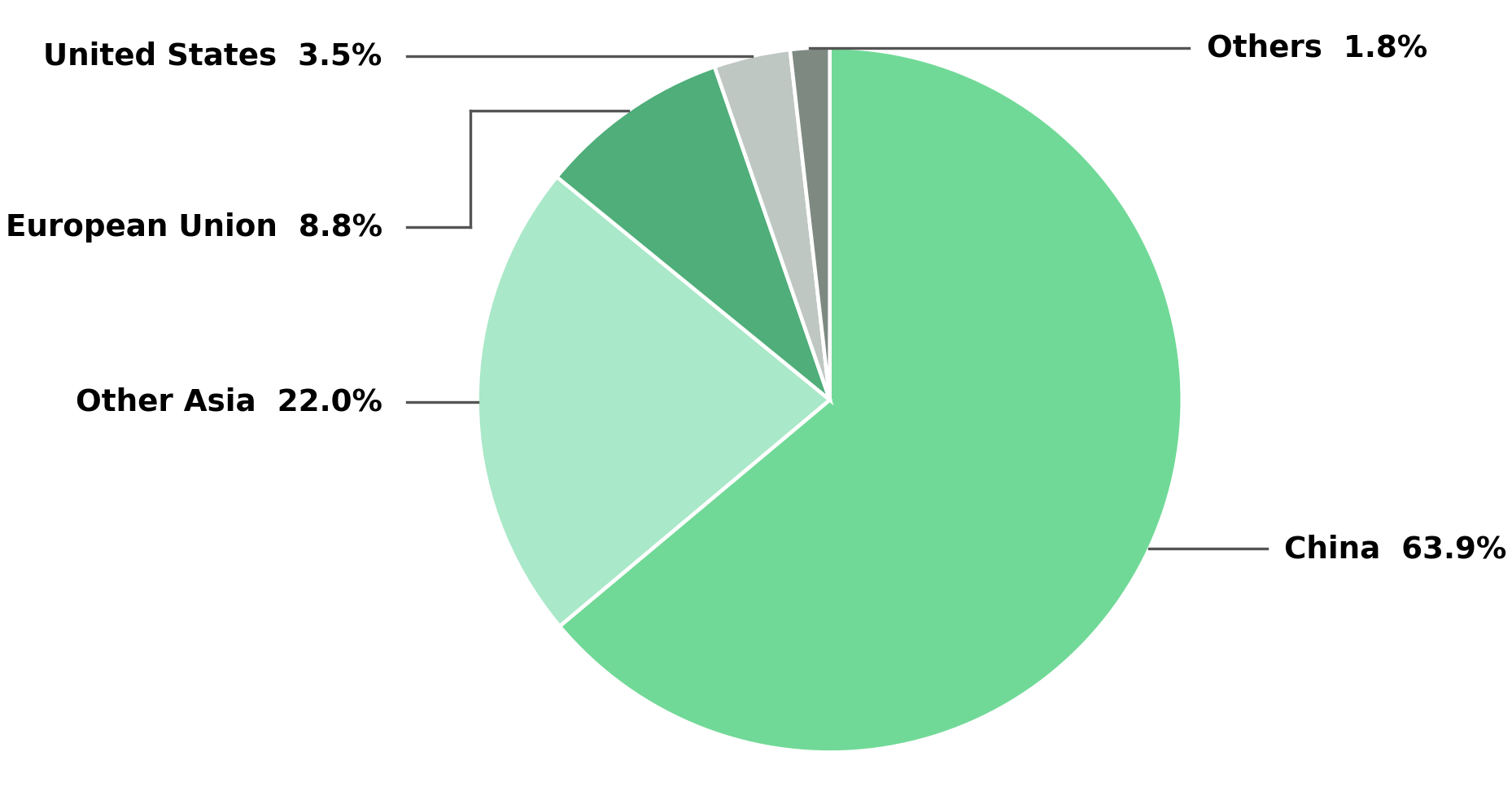
European Union stainless-steel production declined 3.7% in the first half of 2026, reinforcing that the global increase was not broad-based across regions. With most net growth concentrated in Asia, particularly China, projects with competitive cost structures and exposure to multiple end markets are better positioned to navigate regional slowdowns and commodity-price cycles while reducing dependence on a single geography or downstream technology.
Rising Stainless Demand Raises Need for New Nickel Supply
Rising stainless-steel demand expands the market opportunity for future nickel supply. Projects with competitive projected costs, financing pathways, and clear construction plans are better positioned to convert that demand growth into long-term production.
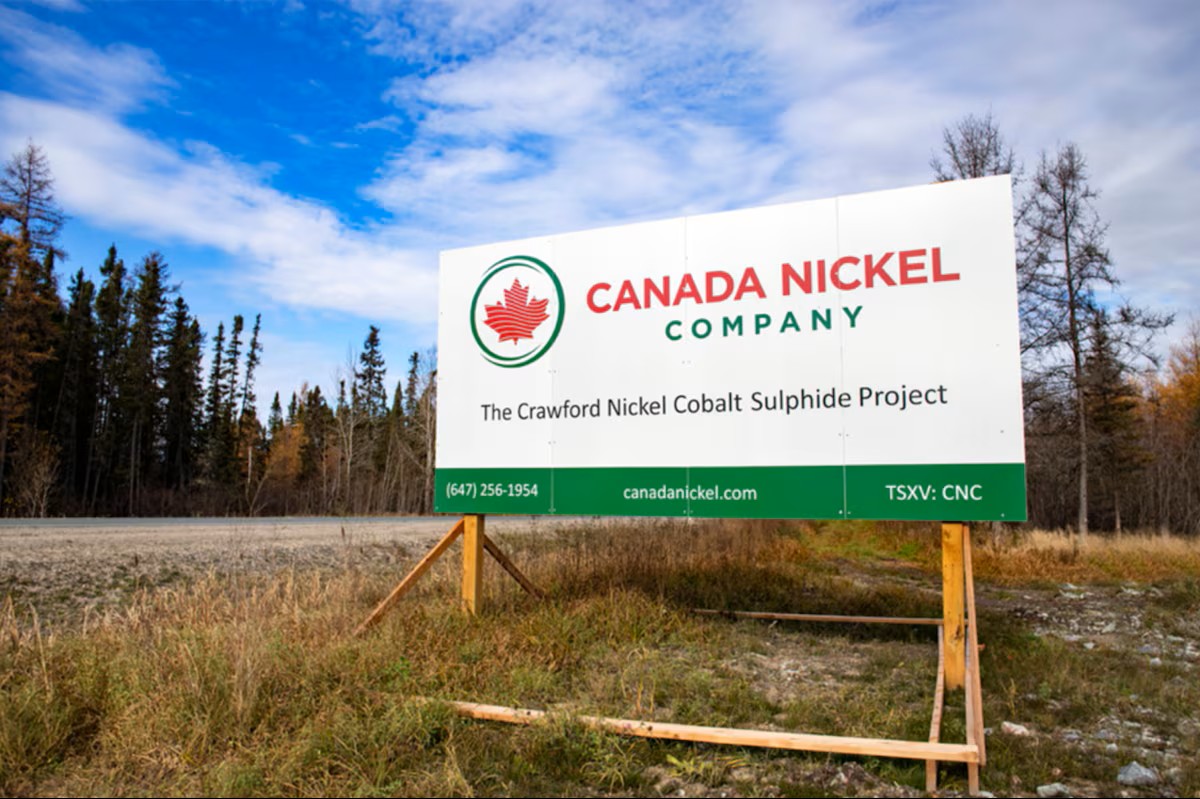
Canada Nickel is advancing Crawford toward a targeted 2027 construction decision after selecting Komatsu and SMS Equipment for a mining fleet of more than 300 machines. The selection supports start-up planning and strengthens Crawford’s path toward becoming a long-life source of nickel for stainless-steel and electric vehicle markets. Mark Selby, Chief Executive Officer of Canada Nickel, explains why stainless remains central to nickel demand:
“Nickel demand’s grown at nearly 7% a year since 2019. Stainless steel is a wonderful material. It's grown at 5 to 6% a year for many decades, and yet analysts always end up using 3% demand growth going forward.”
Financing, procurement, and execution milestones provide clearer visibility on future nickel supply progressing toward production across stainless-steel and battery markets.
Lifezone Metals advanced Kabanga toward a targeted first quarter 2027 Final Investment Decision (FID) after releasing approximately US$854 million of contracts to market, while strategic-equity discussions and lender due diligence progressed. These steps improve visibility on financing and execution as Kabanga moves closer to becoming a future source of primary nickel. Ingo Hofmaier, Chief Financial Officer of Lifezone Metals, highlights why stainless deserves more market attention:
“When you talk about demand you need to speak about stainless steel, and stainless steel is expected to grow somewhere between 4.6 to 4.8%. Stainless steel has many different applications, including chemical processes, food processing, aviation, and transportation. It’s an extremely versatile material, and the biggest price factor in it is nickel.”
Industrial Demand Broadens Nickel Growth as Battery Chemistry Shifts
Battery chemistry and vehicle preferences can change nickel intensity, with growing LFP adoption reducing reliance on nickel-intensive battery chemistries. INSG forecasts slower growth in battery-sector nickel demand than in its earlier outlook, while still forecasting higher total primary nickel consumption in 2026. Stainless steel supports that broader demand base through applications spanning industrial equipment, construction, chemical processing, food processing, transport, and other corrosion-resistant uses.
Over the longer term, IEA projects nickel demand increasing 50% to 90% by 2040, with energy technologies adding another source of consumption growth even as battery chemistry shares change. That outlook remains sensitive to stainless grade mix, scrap availability, Chinese stainless-steel production, and battery technology, all of which can affect primary nickel requirements.
Stronger stainless-steel production and longer-term energy demand expand the opportunity for future nickel supply, while project economics, capital costs, financing terms, metallurgical performance, and execution shape which assets are best positioned to respond. Projects with competitive projected costs, financing visibility, and clear paths toward production are therefore better positioned to benefit from a broader nickel demand base.
The Investment Thesis for Nickel
- Stainless-steel output is expanding, with global production rising 5.0% in the first half of 2026 and second-quarter growth accelerating to 7.6%, increasing production within nickel’s largest established industrial end market.
- Primary nickel consumption is also projected to rise, with INSG forecasting usage increasing approximately 4.2% to 3.747 million tonnes in 2026, alongside further growth in the stainless-steel sector.
- Stainless steel provides a demand source outside electric vehicle batteries, allowing nickel consumption to grow even as changing battery chemistries alter the pace of demand from the electric vehicle sector.
- Projects with competitive projected costs, credible financing pathways, and clear construction plans are better positioned to benefit from rising nickel demand by converting resources into long-term production.
- Financing, procurement, and construction milestones improve visibility on future nickel supply progressing toward production.
- Energy technologies add longer-term nickel demand, with the IEA projecting total nickel demand to increase 50% to 90% by 2040.
Nickel’s outlook is becoming less dependent on a single demand narrative as stainless steel anchors current industrial consumption and energy technologies extend longer-term growth. That broader demand base increases the importance of project quality, with scale, competitive costs, financing visibility, and execution determining which future supply sources are best positioned to respond. The next phase of the nickel market will therefore depend not only on how much demand grows, but on which projects can convert that growth into reliable production across multiple end markets and commodity cycles.
TL;DR
Global stainless-steel production rose 5.0% year over year to 32.96 million tonnes in the first half of 2026, strengthening activity in nickel’s largest established industrial market. INSG forecasts primary nickel usage rising to 3.747 million tonnes in 2026 despite slower battery-sector growth as lithium iron phosphate adoption increases. China generated roughly 90% of the net increase in global stainless output, reinforcing its influence on nickel demand. Longer term, the IEA projects nickel demand rising 50% to 90% by 2040. Rising industrial and energy demand increases the relevance of nickel projects advancing financing, procurement, and construction toward future production.
FAQs (AI-Generated)
Analyst's Notes





Subscribe to Our Channel





.png)
Stay Informed


