




Critical Minerals Risk Shifts From Export Licenses to Project Funding


Chinese suppliers refuse rare earth cargoes despite valid licenses, and 23 EU strategic projects lack cash, directing value to funded, permitted supply.
- Chinese rare earth suppliers have refused US shipments since early August despite holding valid export licenses, Reuters reported.
- The refusals followed Beijing's August sanctions, leaving suppliers unwilling to meet the audit framework Western buyers require.
- US-bound yttrium is running at roughly half 2024 levels, and Japan received no terbium in the first eight months of 2026.
- Twenty-three of 60 EU strategic mineral projects warned last month that some face immediate jeopardy.
- Value lies in supply already funded, permitted, and outside Chinese control.
Chinese Suppliers Withhold Rare Earth Cargoes Despite Valid Export Licenses
Reuters reported that a handful of Chinese rare earth suppliers have declined to ship to US customers since early August despite holding valid export licenses. The refusals began after Beijing sanctioned the Responsible Business Alliance, a US supply chain monitor. Prices for yttrium, indium phosphide and tungsten, used in defense, semiconductor and aerospace applications, remain near record highs on tight supply.
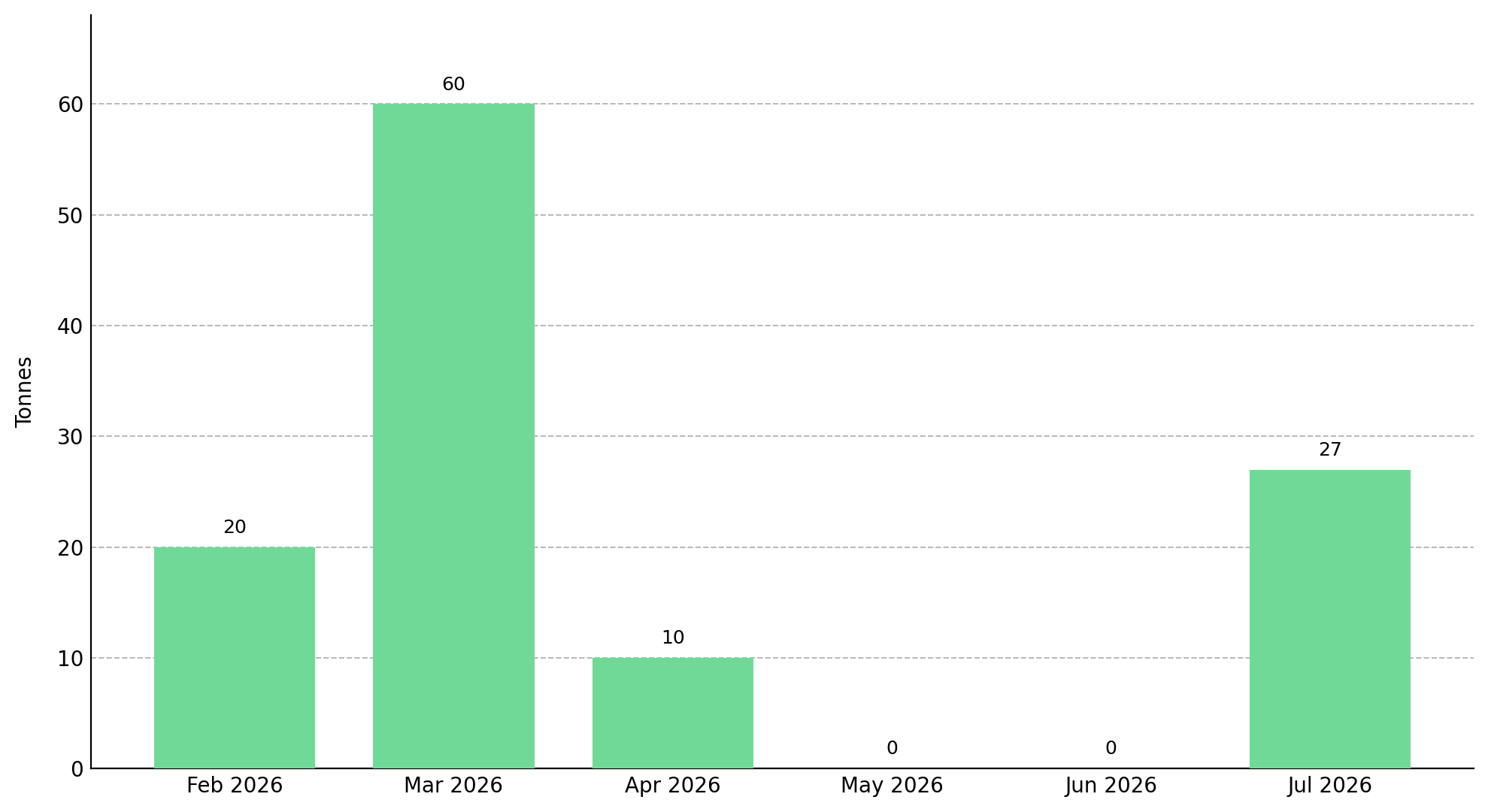
The gap between paper approval and physical delivery is what prices now reflect. US-bound yttrium shipments have risen in 2026 but sit at roughly half 2024 levels, according to Chinese customs data cited by Reuters, and two sources said some US buyers have waited over six months for licenses. Japan has fared worse: China shipped no terbium there between January and August, against 20 tons in the same months of 2025.
Sanctions on Audit Bodies Move Chokepoint Control Below the License Layer
Approval rests with Beijing, but the decision to load a container rests with the supplier. Since the August sanctions, suppliers have refused the due diligence audits of the Responsible Minerals Initiative, the program most Western manufacturers use to certify supply chains.
The stalemate holds because each side controls an instrument the other wants withdrawn. Beijing framed the August sanctions as retaliation for FCC restrictions imposed since December on Chinese testing labs, drones, routers, submarine cables and power inverters, and Chinese officials have answered US complaints on rare earths by citing those measures as a breach of the Busan truce.
European Funding Gap Leaves 23 Strategic Mineral Projects Short of Liquidity
The financing checkpoint sits in Europe. Twenty-three of the 60 projects the EU designated as strategic signed an "Urgent Call to Action" last month warning that some face immediate jeopardy, according to a document seen by Reuters. The Commission has mobilized €1.7 billion since December, compared with nearly $40 billion in US critical mineral deals. A developer before a final investment decision earns no revenue, so delayed public money forces a dilutive equity raise or a shelved project.
Viridian Lithium, which targeted 10% of EU lithium demand, collapsed in March. Former Chief Commercial Officer Luc Pez told Reuters that private backers waited for European funding that never came.
"The selection of Viridian as an EU strategic project was a curse."
The test separating designation from funding is whether the next twelve months of spend is covered by cash, offtake prepayment or a drawn facility.
The document names no companies, and one project director said several projects are already on ice. Nobody outside that group can identify the 23 from filings, leaving quarterly cash runway as the screen and permanent capital loss as the downside.
Where the Money is Going
The opportunity sits with supply already funded, permitted and outside Chinese control. Scarcity is not in the ore but in separation and conversion capacity for heavy rare earths, yttrium, terbium and dysprosium, and in tungsten, where defense and chip buyers have no substitute and now pay for delivery certainty. Developers pairing a defined resource with processing and a government-backed offtake are where the nearly $40 billion of US critical mineral deals are landing.
Analyst's Notes





Subscribe to Our Channel








Stay Informed



