




Critical Mineral Bottlenecks Favor Capacity Deals as Weak Prices Force Cuts



Rising PGM prices and rare earth bottlenecks favor existing capacity, while weak titanium and graphite prices force output cuts.
- Platinum group metal (PGM) basket prices rose 57.4% to 70% year on year across South African and US operations in the first half of 2026, rebuilding balance sheets and enabling acquisitions of existing capacity instead of slower, more expensive greenfield development.
- A competitive sale process for roughly 940,000 ounces of annual PGM output opened on August 25, 2026 and a completed sale would reduce South Africa’s four dominant producers to three without adding new supply.
- Acquiring operating rare earth metals and alloy capacity can provide immediate production and established customer qualifications, avoiding the multi-year timeline required to build and qualify a new facility.
- Lower realized prices are prompting titanium feedstock and natural graphite producers to curtail output and preserve liquidity because weaker operating cash flow cannot support acquisitions.
- Explorers with inferred resources but no permits, binding offtake agreements or funded economic studies are less likely to attract acquisition bids and may need to issue equity to advance their projects, increasing dilution risk.
70% PGM Basket Price Gains Rebuild Balance Sheets & Fund Acquisitions
Recent PGM margin growth was led by price, with basket prices rising 57.4% to 70% year on year while production changes across the cited operations ranged from -2% to +4.4%. Sibanye-Stillwater reported that its average rand four-element (4E) PGM basket price rose 67% year on year while South African production remained broadly unchanged at 831,307 ounces, and that its average US dollar two-element (2E) basket price rose 70% while US production fell 2% to 137,930 ounces. Northam Platinum’s consolidated annual results reported that its average rand 4E basket price rose 57.4% and metal sold increased 8%, helping lift sales revenue 64.1% to R54.0 billion. Because price-led earnings can reverse with metal prices, using current cash flow to acquire operating assets can convert near-term earnings strength into longer-lived production capacity.
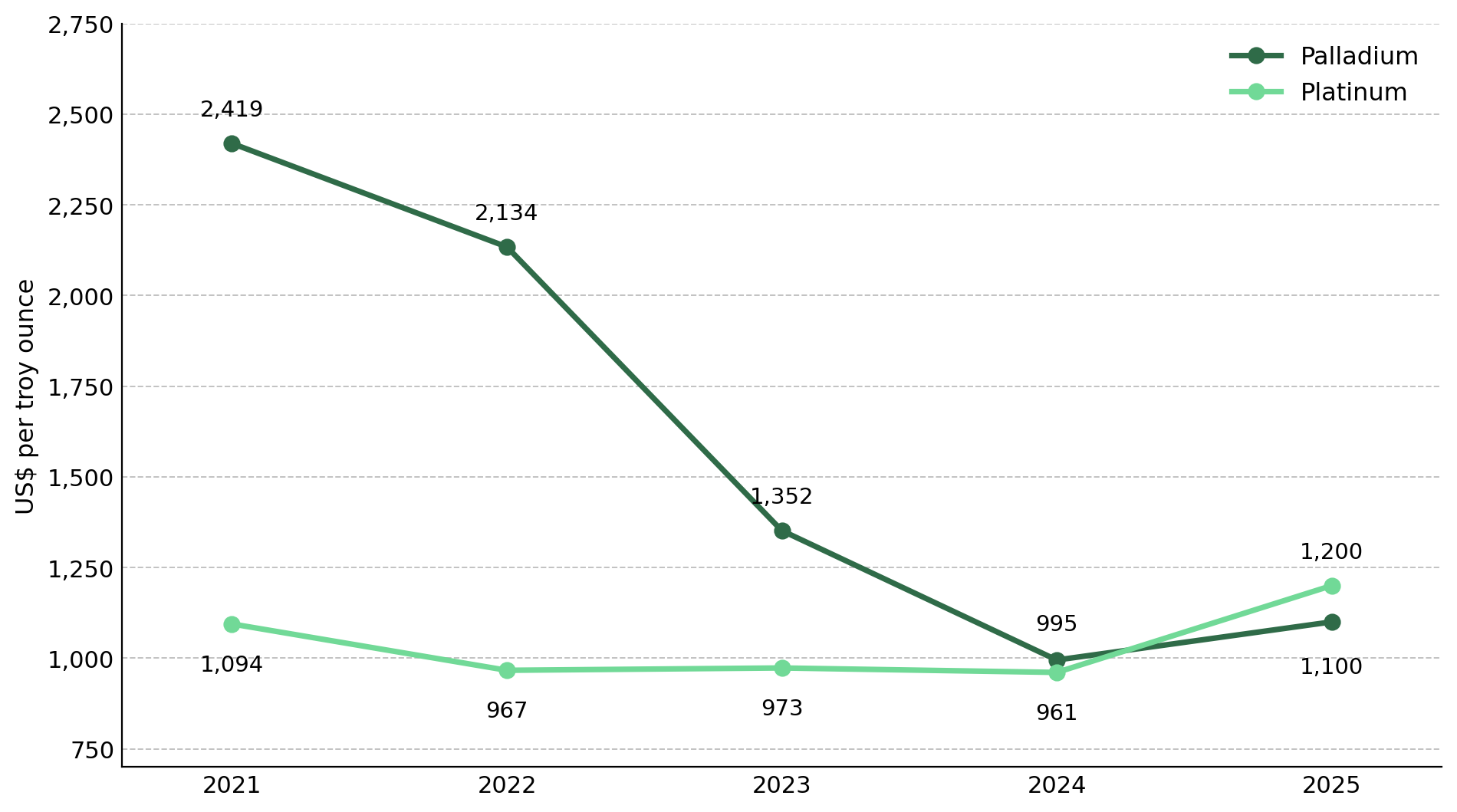
Higher PGM prices strengthened cash generation and reduced leverage, increasing the capital available for acquisitions. Sibanye-Stillwater cut gross debt 20% year on year to R32.1 billion and more than halved net debt to R9.7 billion in the first half of 2026, reducing net debt to adjusted earnings before interest, tax, depreciation and amortization (EBITDA) to 0.18 times. Northam Platinum ended its 2026 financial year with R13.7 billion of cash, a net cash position of R2.7 billion and R16.0 billion of undrawn banking facilities. These balance sheets provide greater capacity to pursue acquisitions with less reliance on new equity.
Falling PGM Supply & High Replacement Costs Favor Acquisitions & Project Advancement
Annual South African platinum output has fallen from 5.4 million ounces to 3.9 million ounces and is projected to fall below 3 million ounces by 2035 because current prices remain too low to justify new mine construction. Comparing acquisition prices with the future cost of replacing a mid-cost operating asset makes existing production more attractive when it can be bought below replacement cost. World Platinum Investment Council (WPIC) forecasts a fourth consecutive deficit of 297,000 ounces in 2026 and year-end above-ground stocks of 1.747 million ounces, leaving less than three months of demand cover and a limited buffer against further supply losses.
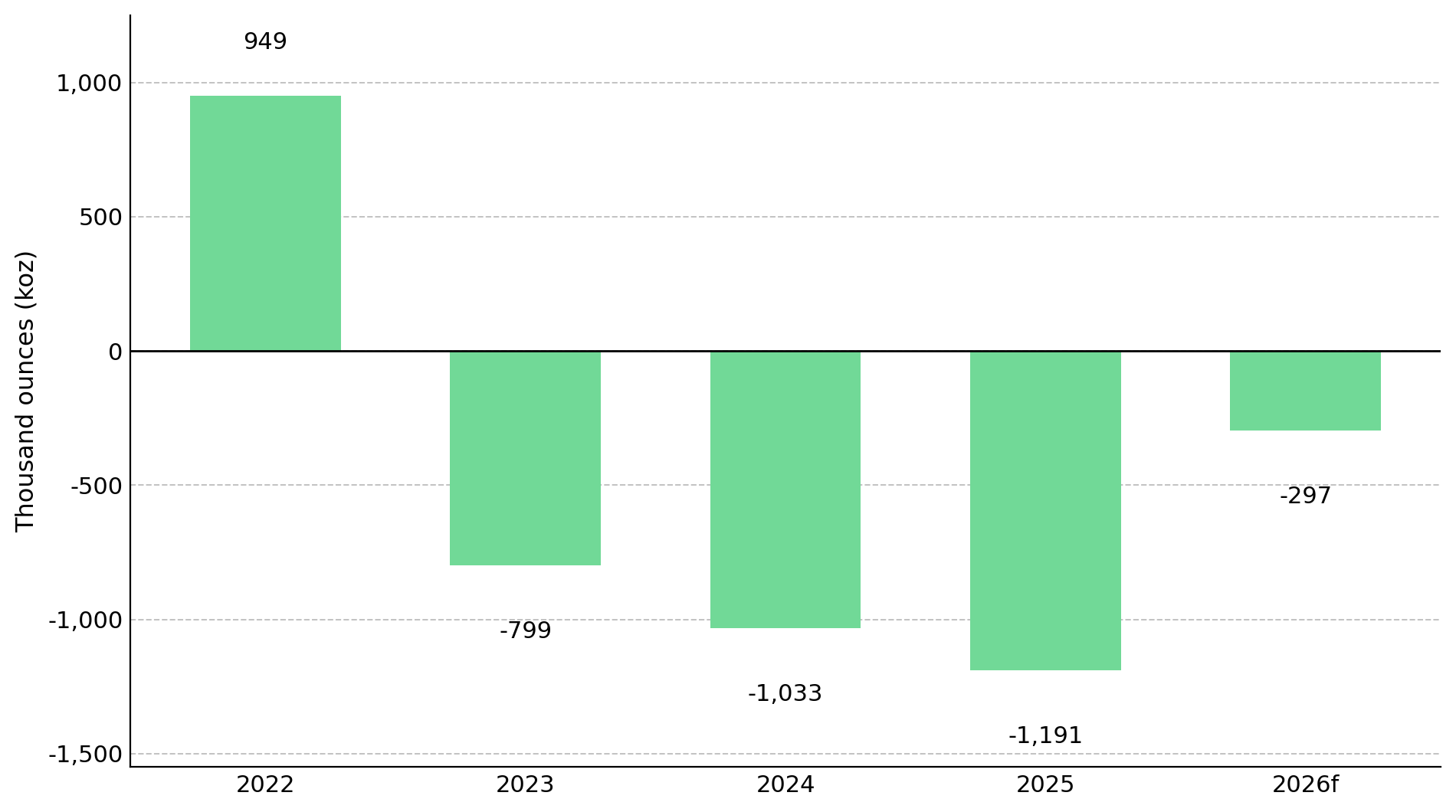
When an existing mine or permitted project can be acquired for less than the cost of building equivalent supply, buyers may pay more for assets that can enter production sooner. For earlier-stage projects, defined resources, demonstrated processing performance and economic studies provide the evidence needed to assess costs and development potential. Completing these milestones can strengthen a project’s valuation basis and support future financing, partnership or acquisition decisions.
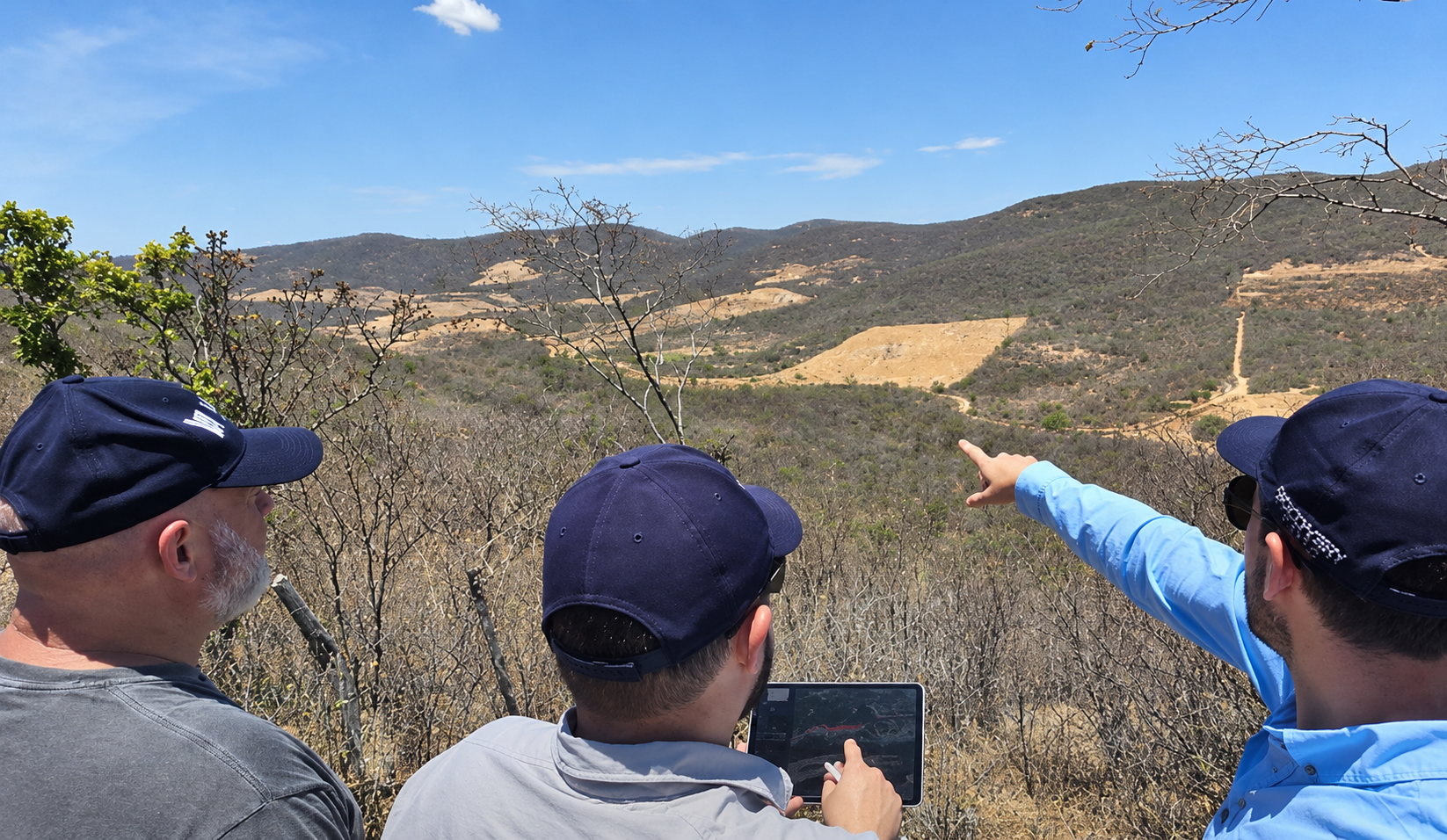
ValOre Metals is advancing its 100%-owned Pedra Branca project in Brazil, which hosts an inferred resource of 2.198 million ounces of palladium, platinum and gold at 1.08 grams per tonne across 63.3 million tonnes. Metallurgical and engineering studies are supporting a preliminary economic assessment (PEA) targeted for the fourth quarter of 2026, while planned resource updates will incorporate recently drilled targets outside the 2022 estimate. These milestones could provide Pedra Branca’s first economic framework while testing further resource growth, creating a clearer basis for assessing its development value.
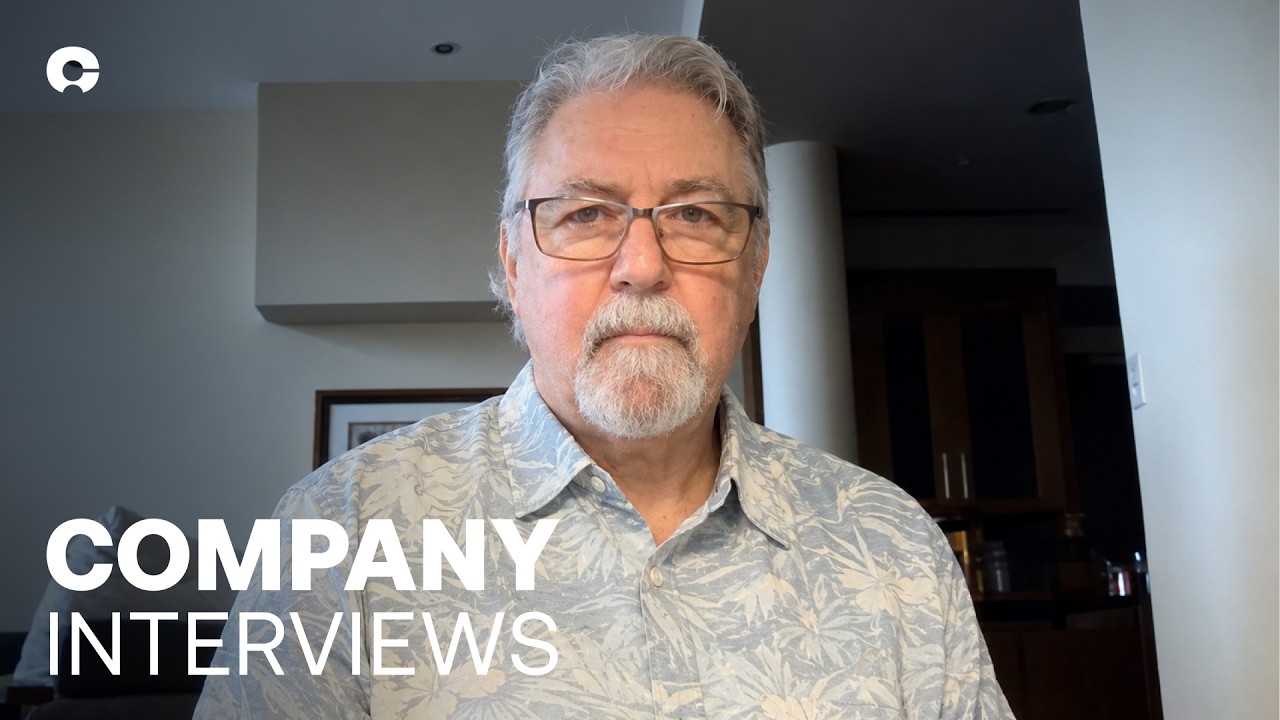
Thiago Diniz, Vice President of Exploration at ValOre Metals, explains why concentrated PGM supply creates geopolitical opportunity:
“Palladium and platinum are produced only in certain regions of the globe. We are advancing one of the very few palladium-platinum assets outside Russia and South Africa, with a metallurgical program underway to deliver a preliminary economic assessment by the end of the year. Being able to advance a project outside of that small space is actually an opportunity.”
Rare Earth Magnet Bottlenecks Raise the Value of Qualified Metal & Alloy Capacity
The International Energy Agency (IEA) reports that existing and announced rare earth refining capacity outside China is equivalent to about two-thirds of projected mined supply by 2035, while planned magnet production represents only one-third, placing the larger capacity gap in downstream production. Acquiring an operating metal and alloy plant can shorten the route to commercial output because it adds established production experience and customer qualifications that a new facility would otherwise need years to develop.
Energy Fuels completed its acquisition of Australian Strategic Materials on August 28, 2026, adding the operating Korean Metals Plant in South Korea with 1,300 tonnes per year of neodymium-iron-boron (NdFeB) alloy capacity and broader rare earth metal production capabilities. The transaction immediately extends the company from oxide production into commercial metals and alloys. A planned expansion to 3,600 tonnes per year, with commissioning possible by the end of 2026, could supply enough alloy for more than one million electric vehicles annually, providing a near-term route to scale downstream production.
Mark Chalmers, President and Chief Executive Officer of Energy Fuels, explains why integrated rare earth capacity takes years:
“We’ve put all these pieces together, and we’ve got the skill sets required from mining all the way through alloys. To really compete with China, you have to have all those steps. You can’t be missing a step in the middle of it. We’ve got this critical mass with those steps, and they don’t just happen overnight.”
On August 24, 2026, the US Department of War completed a US$1.55 billion funding package for a special-purpose vehicle that secured an operating heavy rare earth mine in Brazil. This transaction and the operating alloy-plant acquisition transferred control of existing mine and processing capacity without adding new supply. Operating mines and qualified processing facilities can attract capital because they provide usable output sooner than undeveloped resources.
Weak Titanium & Graphite Prices Drive Curtailments, Favoring Low-Cost Projects
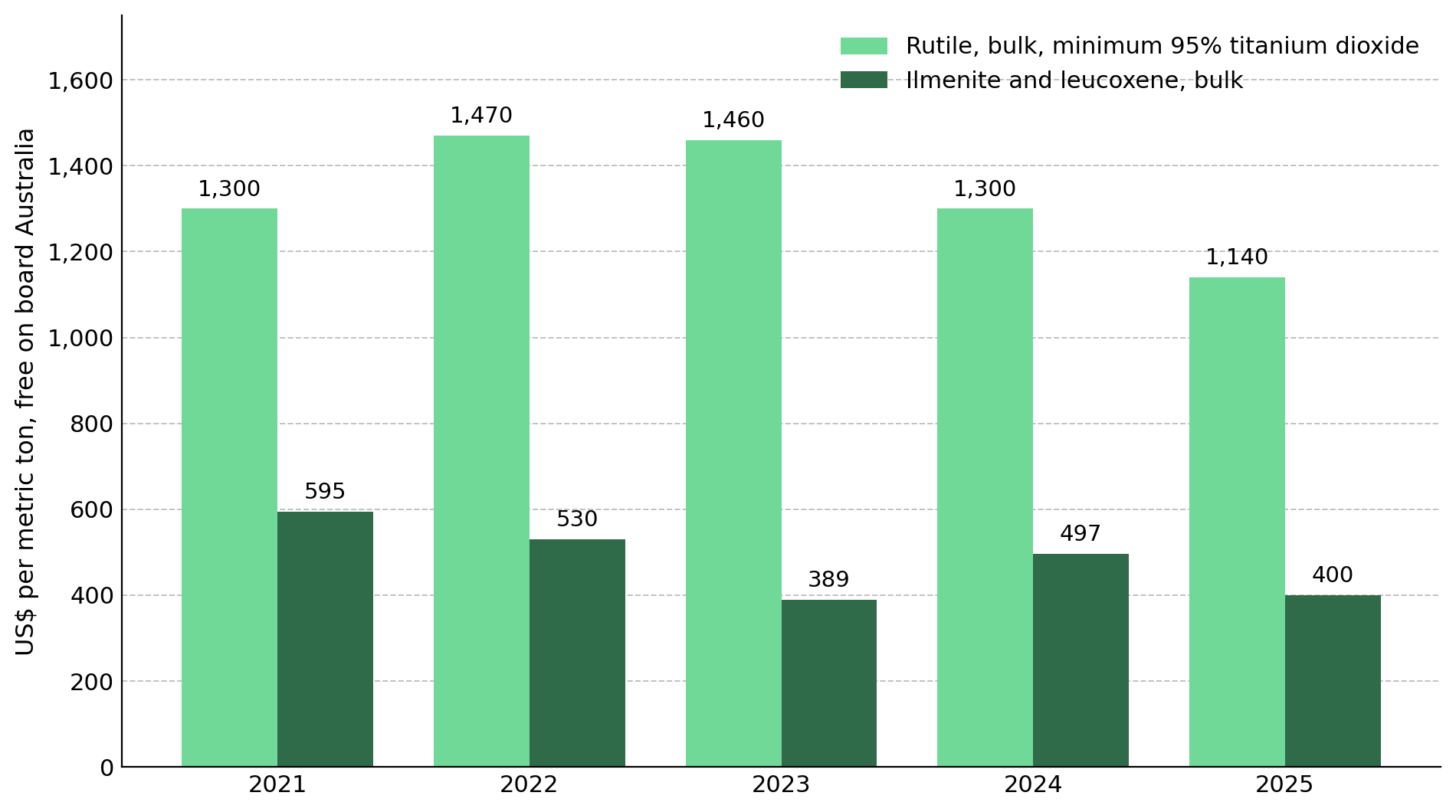
Lower prices in titanium feedstock and natural graphite reduce operating cash flow, directing capital toward liquidity preservation and output curtailments rather than acquisitions. Kenmare Resources reported in its first-half 2026 results that realized ilmenite prices fell 29% year on year to US$203 per tonne, while EBITDA was US$4 million on US$134.5 million of revenue and the net loss after tax was US$34 million. The company also lowered its 2026 ilmenite production guidance to approximately 800,000 tonnes, reducing planned output while weaker earnings limit the cash available for acquisitions.
Failed Trade Removes Price Support, Favoring Downstream & Byproduct Producers
The US International Trade Commission (ITC) issued a negative determination on active anode material from China on March 12, 2026, preventing the US Department of Commerce from issuing proposed antidumping and countervailing duty orders at rates of 93.5% and 66.68%, respectively, and removing a potential source of price support for US producers. Syrah Resources curtailed Balama production to 2,000 tonnes in the June 2026 quarter while targeting 60,000-80,000 tonnes for the full year, and raised cost guidance after local diesel prices increased 50%. Tronox, by contrast, raised average titanium dioxide selling prices 5% from the previous quarter through implemented pricing actions, favoring businesses that sell processed products over those that sell raw mineral feedstock.
Sovereign Metals designed Kasiya as a rutile-led operation that recovers graphite as a byproduct, allowing both products to share mining and processing costs while reducing reliance on graphite prices alone. Its April 2026 definitive feasibility study reports operating costs of US$450 per tonne of product and a pre-tax net present value at an 8% discount rate (NPV8%) of US$2.204 billion against US$727 million of capital to first production. A submitted mining license application and collaboration with the World Bank Group’s International Finance Corporation as a potential co-lead financing arranger provide a clearer route toward financing and construction.
Ben Stoikovich, Chairman of Sovereign Metals, explains why graphite abundance strengthens Kasiya’s byproduct economics:
“Graphite isn’t scarce. In 2023, natural graphite demand was 1.6 million tons, but global known resources are over 800 million tons, so there’s enough resources known in the world for 500 years of supply. Kasiya is actually a high-value rutile titanium project where the graphite comes out as a byproduct.”
Graphite abundance limits scarcity-based valuations because deposit size alone does not guarantee demand or profitable production. Recovering graphite as a byproduct of rutile production lowers its incremental cost and reduces reliance on standalone graphite economics. This cost position could support margins during weaker pricing periods, while higher-cost projects may require stronger demand or additional processing to compete.
Export Control Expiry & PGM Buyer Deadline Test Demand for Existing Capacity
China’s suspension of its October 2025 export controls expires on November 10, 2026, potentially restoring restrictions on rare earths, graphite anode materials, production equipment, and technology. IEA estimates that full implementation could place US$6.5 trillion of annual production outside China at risk, including more than US$300 billion from a complete disruption of battery-grade graphite trade. US defense sourcing rules taking effect January 1, 2027 will extend restrictions across magnet supply chains, increasing demand for qualified capacity outside China.
Across both markets, policy risk and slow replacement timelines increase the value of capacity that can deliver material without new construction. This advantage is greatest for operating, permitted, and customer-qualified assets, while new projects still require financing, construction, and qualification before they can increase supply.
Potential buyers have until December 1, 2026 to register for the South African PGM competitive process, with more detailed discussions planned for 2027, creating a defined timetable for valuing approximately 940,000 ounces of existing annual production. The November 10 export-control deadline will test the value of non-Chinese rare earth and graphite supply, while the December process will test whether buyers will pay to control existing PGM production rather than fund replacement mines. Neither event creates new supply, so any valuation change would reflect access to existing capacity rather than additional production.
The Investment Thesis for Critical Minerals
- Producers reporting 57%-70% year-on-year basket price gains used stronger cash flow to reduce debt and expand acquisition capacity, making permitted operations with immediate output more likely to attract higher bids than undeveloped resources requiring additional funding.
- Permits, feasibility studies, demonstrated processing results, and defined reserves reduce development uncertainty, making advanced projects easier to value and finance as each milestone is completed.
- Midstream processors and recyclers with customer-qualified metal and alloy capacity can command higher valuations than resource size alone implies because years of customer testing cannot be replicated through capital spending.
- Explorers with inferred resources often rely on equity funding until economic studies, permits, and committed financing establish a development path, making progress on these milestones important for limiting dilution as metal prices rise.
- Where realized prices remain too low to generate acquisition funding, producers curtail output rather than buy existing capacity, making consolidation more likely in markets producing stronger cash flow.
- A decline in realized basket prices sufficient to reverse first-half margin gains would reduce cash available for transactions and weaken demand for existing permitted capacity.
Critical mineral exposure should be weighted by commercial readiness and cost position rather than resource size alone. Where stronger realized prices and policy restrictions support cash flow, operating, permitted, and customer-qualified assets offer shorter routes to revenue and are better placed to attract capital. Where prices remain weak, low-cost and byproduct operations provide greater margin protection, while earlier-stage projects require economic studies, permits, and committed financing to reduce dilution risk. Position sizes should reflect these differences, with realized prices, completed transactions, and project-funding milestones providing the clearest signals of whether existing capacity continues to hold an advantage over new construction.
TL;DR
Stronger PGM prices lifted producer cash flow and reduced debt, increasing the ability to buy existing operations rather than fund slower greenfield development. Falling South African supply and high replacement costs strengthen the value of mines and projects that can reach production sooner. In rare earths, limited magnet and alloy capacity makes qualified processing plants more valuable because customer approval takes years. Titanium feedstock and graphite show the opposite outcome: weak prices reduce cash flow, prompt production cuts, and favor lower-cost or byproduct operations. Across the sector, permits, economic studies, proven processing, and committed financing reduce development risk and improve access to capital.
FAQs (AI-Generated)
Analyst's Notes





Subscribe to Our Channel











.jpg)
Stay Informed



