




Decade-Long Development Timelines Support +$5,000 Gold Prices as Production Fails to Replace Depleting Reserves


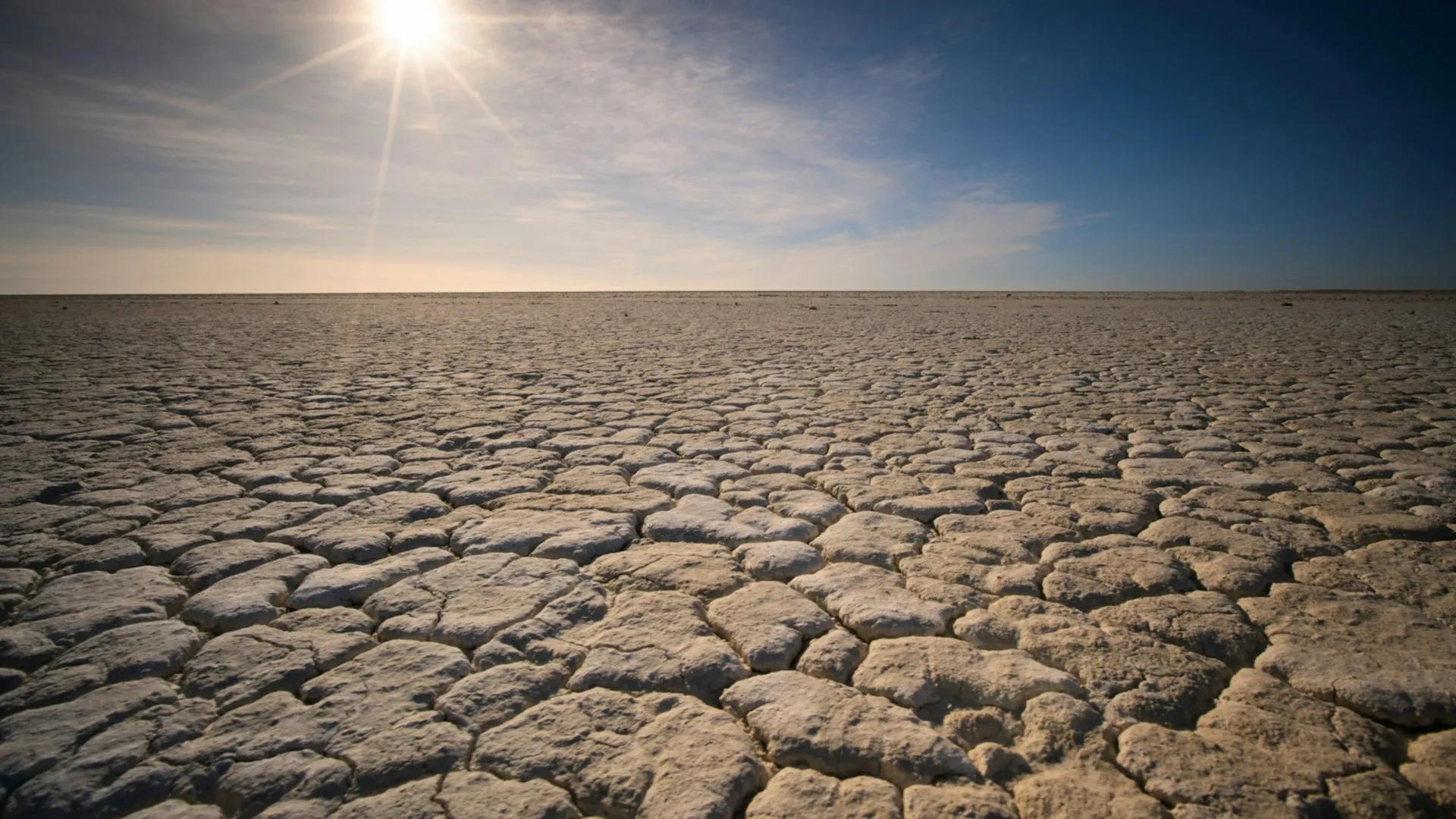
- Gold prices cexceeding $4,400 per ounce reflect structural forces including persistent inflation concerns, aggressive central bank accumulation surpassing 1,000 tonnes annually, geopolitical fragmentation, and institutional recognition of gold as a monetary asset rather than merely a commodity, fundamentally transforming mining project economics across all development stages.
- The global gold mining industry confronts unprecedented supply constraints driven by declining ore grades at existing operations, plummeting discovery rates for new deposits, and development timelines now extending beyond a decade for major projects, creating structural deficits as new production fails to replace depleting reserves.
- Strategic capital evolution has created multiple non-dilutive funding pathways for quality projects, including precious metals streaming companies offering capital at 0-4% costs, Asian strategic partnerships providing 2% export credit financing for copper concentrate security, and abundant institutional capital actively seeking advanced-stage assets in tier-one jurisdictions.
- Infrastructure advantages in established mining districts enable capital-efficient development strategies through toll milling arrangements that reduce initial capital requirements by 50-75% compared to standalone mill construction, while technical innovations in metallurgical processing and refined geological modeling unlock significant value within existing resource bases without requiring new discoveries.
- Jurisdiction quality has emerged as a critical premium driver, with tier-one mining regions commanding higher valuations due to stable regulatory frameworks, established permitting processes, available skilled workforce, and existing infrastructure that collectively reduce development risk, accelerate timelines, and mitigate geopolitical exposure compared to emerging market alternatives.
The gold market has entered a transformational phase that extends far beyond cyclical price movements. With spot prices exceeding $4,400 per ounce and structural forces supporting sustained strength, investors face a rare alignment of supply constraints, monetary uncertainty, and geopolitical fragmentation that positions gold as both a portfolio hedge and a growth opportunity. The mining sector's response to these dynamics reveals how exceptional commodity pricing creates opportunities across the development spectrum, from exploration discoveries to producing operations.
Structural Supply Deficits Meet Accelerating Demand
The global gold mining industry confronts an unprecedented supply challenge. As i-80 Gold's Chief Operating Officer Paul Chawrun observed:
"We're building one of the last scalable gold production platforms in the world's best mining jurisdiction at a time when new supply simply isn't keeping pace with demand."
This supply deficit reflects multiple converging factors: declining ore grades across existing operations, plummeting discovery rates for new deposits, and development timelines now extending beyond a decade for major projects.
The Abitibi greenstone belt in Quebec exemplifies this dynamic. Philippe Cloutier, CEO of Cartier Resources, contextualized his company's aggressive 100,000-meter drilling program against industry norms:
"The standard or typical junior will drill 5,000 to 10,000 meters per year if they're lucky. We're drilling an order of magnitude that - we're in the 100,000 meter range and it clearly is in line with our target demonstrating that this is the next mining camp along the Cadillac fault."
This exploration intensity responds to a fundamental shift in gold market economics. Deposits that were marginal or uneconomic during the $1,200-1,500 gold price regime of the 2010s now present compelling development economics. The transformation affects projects across all development stages, from grassroots exploration through producing operations.
Interview with President & CEO Philippe Cloutier
Portfolio Diversification Through Single-Asset Exposure
The convergence of copper supply constraints and monetary uncertainty has created unprecedented opportunities for dual-commodity projects. Sam Lee, CEO of Northisle Copper & Gold, articulated the strategic advantage:
"We have a very high margin gold project upfront in phase one that allows us to bridge into a big capital intensive copper project. No matter in what environment, we will always have that advantage over any other single copper-only project."
This structural advantage extends beyond project economics to capital access. Projects offering both commodities provide portfolio diversification within single assets while accessing two distinct capital pools: precious metals streaming companies trading at 2-4x NAV premiums, and Asian strategic partners seeking copper supply security. The Wheaton Precious Metals cornerstone investment in Northisle demonstrates this dynamic, with Lee emphasizing the significance:
"They [Wheaton] trade at massive premiums, two to four times their NAVs, and the reason behind that is because the market likes that association of being levered to the precious metals without having cost creeps, without having operational risk associated with it."
Interview with Sam Lee, CEO of Northisle Copper & Gold
Luca Mining operates two mines in Mexico - Campo Morado (polymetallic VMS producing zinc, copper, gold, silver, lead) and Tahuehueto (epithermal gold-silver mine). The company currently has three investment banks working on three different opportunities, a level of activity that suggests M&A execution could materialize on a relevant timeframe. CEO Dan Barnholden acknowledged that Luca operates from a position requiring strategic creativity:
"We're a micro-cap mining company. We don't have the pick of the litter. We're not Pan American Silver. We have to be a little bit more creative. We have to take risks - political risk or permitting risk or community relations risk or operational risks or exploration risks."
Luca's operational expertise and Mexico-specific experience positions the company to add value in risk scenarios using the ability to deploy cash, operating expertise, and publicly-traded equity as acquisition currency provides multiple pathways for structuring transactions. Barnholden characterised capital availability as abundant:
"In this market, capital is not the problem. It's finding good assets that we want to own."
Interview with Dan Barnholden, CEO of Luca Mining
Jurisdiction Quality Commands Premium Valuations
Political alignment and regulatory stability have emerged as critical value drivers. Northisle's Lee emphasized unprecedented conditions for resource development, referring to First Nations, provincial, and federal government support in British Columbia.
"In my 30 years of being in the mining industry, I've never seen such political alignment for natural resource development projects like ours"
Quebec's Abitibi region offers similar advantages. As Radisson Mining CEO Matthew Manson noted,
"The region provides highway access, grid power at 4 cents per kilowatt-hour, established workforce availability, and proximity to multiple operating mills with existing permitted capacity."
These infrastructure advantages fundamentally alter project economics, reducing both development risk and capital requirements while accelerating potential development timelines.
The jurisdiction premium extends beyond infrastructure to include stable regulatory frameworks, established permitting processes, and workforce availability. Alan Carter, CEO of Cabral Gold, observed regarding Brazil:
"It's important to know how to get things done in Brazil and that requires a long-term commitment and lots of patience. In my opinion, newcomers underestimate the need to understand the language and to be able to speak Portuguese."
This expertise barrier creates competitive moats for established operators in favorable jurisdictions.
Operational Leverage in Exceptional Price Environments
Current gold prices create what Golconda Gold Chairman Ravi Sood characterized costs haven't moved up. Oil price and energy prices are still quite low, making revenue lines are going through the roof. This margin expansion benefits producers disproportionately, as every dollar of price increase flows directly to cash flow.
However, Sood cautioned against assuming indefinite duration:
"The cycle can end without the commodity price coming down. Gold could be at 10,000 and the cycle of really winning might be largely over. It can be cost inflation. It can be the government saying, 'Wait a minute, gold's $10,000. I'm going to jack the royalties or I'm going to jack the windfall tax on precious metals production.'"
This perspective that government intervention, cost inflation, or windfall taxation can erode economics independent of commodity prices makes the current window particularly valuable for cash-generative producers positioned to harvest returns.
Interview with Ravi Sood, Chairman & CEO of Golconda Gold
The sensitivity to gold prices varies by development stage. For developers, the impact can be dramatic. i-80 Gold's project economics demonstrate this leverage: at a base case gold price of $2,175 per ounce, the combined after-tax NPV reaches $1.6 billion; at $3,000 per ounce, this valuation expands to $4.9 billion more than five times the company's current market capitalization.
As i-80 Gold COO Paul Chawrun notes:
"Being one of only two companies in Nevada with autoclave processing capability fundamentally changes our economics. We're no longer beholden to third-party toll milling agreements that capture 40-45% of our gold value."
The institutional capital environment has strengthened markedly. Tudor Gold CEO Joe Ovsenek reported:
"On the access to capital part, we're getting phone calls all the time from people wanting to place capital. The world's changed a lot in the last six months."
This capital availability enables aggressive advancement of engineering, permitting, and development activities for quality projects.
Infrastructure-Enabled Development Strategies
The proximity to existing processing facilities creates capital-efficient development pathways. With a 25-35% cost advantage versus typical market rates maximizes capital efficiency and extends exploration capacity, Cartier Resources' Cloutier emphasized this advantage:
"Because Cadillac sits within a 30-minute drive of the Val-d'Or mining camp, proximal to qualified workforce and infrastructure, we're able to strike an all-in diamond drill program for $110 a meter."
Toll milling strategies leverage this infrastructure to reduce initial capital requirements dramatically. Rather than requiring $100-200 million capital investments typical of stand-alone mill construction, toll milling arrangements can reduce initial capital requirements by 50-75%. This transforms project economics, reduces permitting timelines, and accelerates payback periods factors that enhance both development optionality and potential acquirer interest.
In Nevada, i-80 Gold COO Paul Chawrun emphasizes the jurisdiction's significance:
"Nevada remains the gold standard for mining investments globally. The regulatory framework, infrastructure, and geological understanding we have here simply doesn't exist at this level anywhere else in the world."
Technical Innovation Drives Value Creation
Metallurgical improvements can fundamentally transform project economics. Luca Mining CEO Dan Barnholden highlighted this potential at Campo Morado:
"At Campo Morado, if we can double the gold grades, if we can better than double the gold recoveries, now you're talking about a real gold mine."
The company currently recovers only 20-30% of gold content; engaging Ausenco to develop processes for recovering 50-70% could reposition what has been characterized as a zinc mine into an 80-100,000 ounce annual gold producer.
Similarly, i-80 Gold's planned refurbishment of the Lone Tree autoclave will increase recovery rates from 55-60% to approximately 92%, dramatically improving project economics and eliminating costly third-party toll milling.
"Being one of only two companies in Nevada with autoclave processing capability fundamentally changes our economics. We're no longer beholden to third-party toll milling agreements that capture 40-45% of our gold value."
All Known Questions Answered with i-80 Gold COO Paul Chawrun
Block model refinement can unlock value in existing resources. Tudor Gold's approach demonstrates this methodology. CEO Joe Ovsenek explained:
"What that does is it gives you a better definition of the higher-grade mineralization. Essentially you get more pixels, so instead of one pixel you get eight pixels in a spot. We're taking that and outlining the higher grade mineralization and estimating within those higher grade lenses."
This refinement from 10m to 5m blocks allows better identification of zones where grades reach 2-3 g/t gold, significantly higher than overall resource grades and more economically attractive for underground extraction.
Interview with Tudor Gold CEO Joe Ovsenek
Management Quality & Capital Allocation Discipline
Cabral Gold's Cuiú Cuiú stems from systematic analysis of the region's placer gold production history.
"The Tapajós district really is unique. Cuiú Cuiú was the largest placer camp during the Tapajós gold rush. And the Tapajós gold rush was not only the largest gold rush in Brazil ever recorded, but also the largest gold rush in the world," he explains.
CEO Alan Carter's philosophy centers on management alignment and long-term commitment.
"What I learned from my previous successes in the mining exploration industry is that a long-term commitment by management is key. It's not merely good enough to invest in a team that has a discovery track record. That team needs to be able to raise money in good times and bad, and should have a considerable amount of their own money at stake."
Interview with Cabral Gold CEO Alan Carter
Maple Gold reduced general and administrative expenses from $6 million annually to $2 million approximately $175,000 per month while maintaining all necessary public company functions. The overhead reduction extended the company's runway and demonstrated capital discipline to investors before subsequent financings at 100% premiums to earlier rounds. Maple's restructuring its joint venture with Agnico Eagle recognised this as strengthening capital environment, maintaining greater corporate control would better position Maple for value creation
Radisson Mining's Manson articulated a contrarian view on small-scale development, emphasizing that major producers properly size operations rather than artificially constraining development. For Radisson, maximum value likely derives from integration into an existing regional mill complex rather than constructing standalone processing facilities.
With Michael Gentile as central figure in both companies' recent evolution, both CEOs emphasised that Gentile's approach demonstrated execution on corporate restructuring, cost reduction, and technical advancement reflecting his preference for management teams that deliver results.
Kiran Patankar, CEO of Maple Gold Mines & Matt Manson, CEO of Radisson Mining Resources
Insider ownership alignment proves critical during challenging market conditions. Golconda Gold's Sood, with 40%+ insider ownership, explained the survival strategy through the bear market:
"What does that mean? It means like we really care about the share count. We really look at our expenses. We're not living for salaries. We're really living for that share price."
This discipline enabled the company to avoid equity issuance for years despite significant financial pressure, preserving the capital structure through the cycle.
Strategic portfolio management creates value. Cartier Resources divested three non-core projects to Exploits Discovery through a four-year earn-in agreement requiring Exploits to invest approximately $12 million in exploration expenditures. The transaction structure provided Cartier with both financial resources and strategic focus while maintaining upside exposure through equity participation.
CEO Philippe Cloutier frames this comprehensive approach pragmatically:
"People are saying, 'Phil, why are you doing all this work? The drill and metallurgy, environmental baseline study, resource.' Well, it's because it has to be done. It has to be sequenced and it has the benefit of providing a very robust and dynamic news flow for our investors."
The Investment Thesis for Gold
- Structural Supply Deficit: Declining mine grades globally, plummeting discovery rates, and development timelines exceeding a decade create supply constraints as new production fails to replace depleting reserves, supporting sustained higher prices independent of cyclical demand factors.
- Monetary System Uncertainty: Persistent inflation concerns, aggressive central bank accumulation exceeding 1,000 tonnes annually, and de-dollarization trends position gold as a monetary asset providing portfolio diversification and safe-haven characteristics beyond traditional commodity exposure.
- Exceptional Project Economics: Every $100 gold price increase adds 15-20% to typical project NPV; deposits uneconomic at $1,500 now generate robust margins at $4,400, with current windfall economics benefiting from suppressed energy costs and moderate cost inflation that may not persist indefinitely.
- Strategic Capital Access: Precious metals streaming companies offering 0-4% cost capital, Asian strategic partnerships providing 2% export credit financing, and abundant institutional capital seeking quality assets create multiple non-dilutive or minimally dilutive funding pathways for advanced projects.
- Jurisdiction Quality Premium: Nevada and Quebec's Abitibi region represent final frontiers for scalable development in tier-one jurisdictions, commanding valuation premiums as supply chain nationalism and critical mineral policies increase focus on domestic production in stable regulatory environments.
- Infrastructure Advantages: Proximity to existing mills, grid power, highway access, and established mining complexes enables toll milling strategies reducing initial capital requirements by 50-75% while accelerating development timelines and reducing permitting risk compared to standalone operations.
- Technical Innovation Leverage: Metallurgical improvements (tripling recovery rates), refined block modeling (identifying high-grade zones within bulk resources), and autoclave processing capabilities create value without new mining, fundamentally transforming project economics through technical optimization.
- Portfolio Diversification: Dual-commodity projects (gold-copper) provide exposure to multiple demand drivers—monetary uncertainty for gold, electrification/decarbonization for copper—while accessing distinct capital pools and reducing single-commodity price sensitivity.
- Management Alignment Matters: Significant insider ownership (40%+ in quality situations), proven discovery track records, regional expertise, and capital allocation discipline separate value creators from promoters; evaluate management's skin in the game and execution history.
- Harvest Window Opportunity: Current favorable conditions (high prices, political alignment, capital availability, suppressed costs) may not persist; government intervention, windfall taxation, or cost inflation can erode economics independent of commodity prices, making near-term positioning valuable.
- Actionable Approach: Focus on advanced-stage projects in tier-one jurisdictions (Nevada, Quebec) with proven management, clear development pathways, and access to strategic capital; monitor producers with operational leverage and self-funding capability; consider 2-3 year investment horizons allowing development catalysts to materialize; recognize that exploration-stage volatility requires position sizing discipline despite discovery leverage.
TL;DR
Gold's advance beyond $5,000 per ounce represents a structural shift driven by supply deficits (declining grades, plummeting discoveries, extended development timelines), monetary system uncertainty (inflation, central bank accumulation, de-dollarization), and geopolitical fragmentation positioning gold as a strategic monetary asset. The mining sector response reveals exceptional opportunities across development stages as deposits uneconomic at $1,500 gold now generate robust margins at $5,000, with every $100 price increase adding 15-20% to project valuations. Strategic capital evolution provides multiple funding pathways including streaming companies offering 0-4% cost capital and Asian partnerships at 2% export credit rates, while infrastructure advantages in tier-one jurisdictions like Nevada and Quebec enable toll milling strategies reducing initial capital requirements by 50-75%. Technical innovations in metallurgical processing and geological modeling unlock value within existing resources, while jurisdiction quality premiums reflect stable regulatory environments and established infrastructure. Current favorable conditions—high prices, political alignment, capital availability, suppressed costs—create a harvest window for cash-generative producers and advanced developers, though government intervention or cost inflation can erode economics independent of commodity prices, making management quality, insider ownership alignment, and proven execution track records critical differentiators in evaluating investment opportunities.
Frequently Asked Questions (FAQ) AI-Generated
Multiple converging structural forces support sustained higher gold prices beyond cyclical dynamics. Central banks are accumulating gold at rates exceeding 1,000 tonnes annually as part of de-dollarization strategies and monetary diversification. Persistent inflation concerns and geopolitical fragmentation have repositioned gold as a monetary asset providing portfolio hedge characteristics. Simultaneously, the mining industry faces unprecedented supply constraints: declining ore grades across existing operations, plummeting discovery rates for new deposits, and development timelines now extending beyond a decade for major projects. These supply-demand fundamentals create structural deficits as new production fails to replace depleting reserves, supporting prices independent of short-term demand fluctuations.
The transformation is dramatic and non-linear. Deposits that were marginal or uneconomic during the $1,200-1,500 gold price regime of the 2010s now present compelling development economics at $4,000+ prices. Every $100 increase in gold price adds approximately 15-20% to typical project net present value, meaning the $2,500 price increase from the 2010s represents a 375-500% improvement in project economics for many deposits. This sensitivity creates what operators describe as "windfall economics" where revenue lines surge while costs remain relatively stable due to suppressed energy prices and moderate cost inflation. Projects demonstrate this leverage dramatically: some show after-tax NPV expanding from $1.6 billion at $2,175 gold to $4.9 billion at $3,000 gold—more than tripling valuation with a 38% price increase.
Jurisdiction quality encompasses multiple value drivers beyond geological prospectivity. Nevada and Quebec offer stable regulatory frameworks with established permitting processes, reducing political risk and timeline uncertainty. Infrastructure density—including grid power (as low as 4 cents per kilowatt-hour in Quebec), highway access, existing mills with permitted capacity, and established mining services—fundamentally alters project economics by reducing both development capital requirements and operating costs. Workforce availability with multigenerational mining experience reduces operational risk. These advantages enable capital-efficient development strategies like toll milling that can reduce initial capital requirements by 50-75% compared to standalone operations. As supply chain nationalism and critical mineral policies increase focus on domestic production, tier-one jurisdictions command valuation premiums reflecting reduced geopolitical exposure versus emerging market alternatives.
The financing landscape has transformed dramatically from traditional equity dilution or high-cost project debt. Precious metals streaming companies now offer capital at 0-4% costs, dramatically below traditional project finance rates, because these companies trade at 2-4x NAV premiums and can provide low-cost capital while gaining precious metals exposure without operational risk. Asian strategic partnerships seeking copper concentrate supply security provide export credit agency financing at approximately 2% interest rates for dual-commodity projects. Institutional capital availability has strengthened markedly, with quality projects receiving "phone calls all the time from people wanting to place capital" according to operators. This capital abundance creates multiple non-dilutive or minimally dilutive funding pathways for advanced projects, enabling aggressive advancement of engineering, permitting, and development activities without the excessive shareholder dilution that characterized earlier market cycles.
While structural fundamentals support higher gold prices, several risks merit consideration. Operators caution that favorable conditions may not persist indefinitely—the cycle can end without commodity prices declining through mechanisms including cost inflation, government windfall taxation, or regulatory changes that erode economics independent of gold prices. Development-stage projects face execution risks including permitting delays, technical challenges, capital cost overruns, and financing availability that can vary with equity market conditions. Jurisdiction-specific risks vary significantly: even tier-one locations face potential regulatory changes, while emerging markets present heightened political risk, resource nationalism, and infrastructure deficiencies. Management quality, insider ownership alignment, and proven execution track records become critical differentiators, as capital allocation discipline and technical competence separate value creators from promoters. Exploration-stage investments carry inherent discovery risk and volatility requiring disciplined position sizing despite discovery leverage potential.
Analyst's Notes





Subscribe to Our Channel










Stay Informed






















