DeLamar Enters the Execution Phase: What the Ausenco Appointment & NEPA Scoping Launch Mean for the Record of Decision Timeline


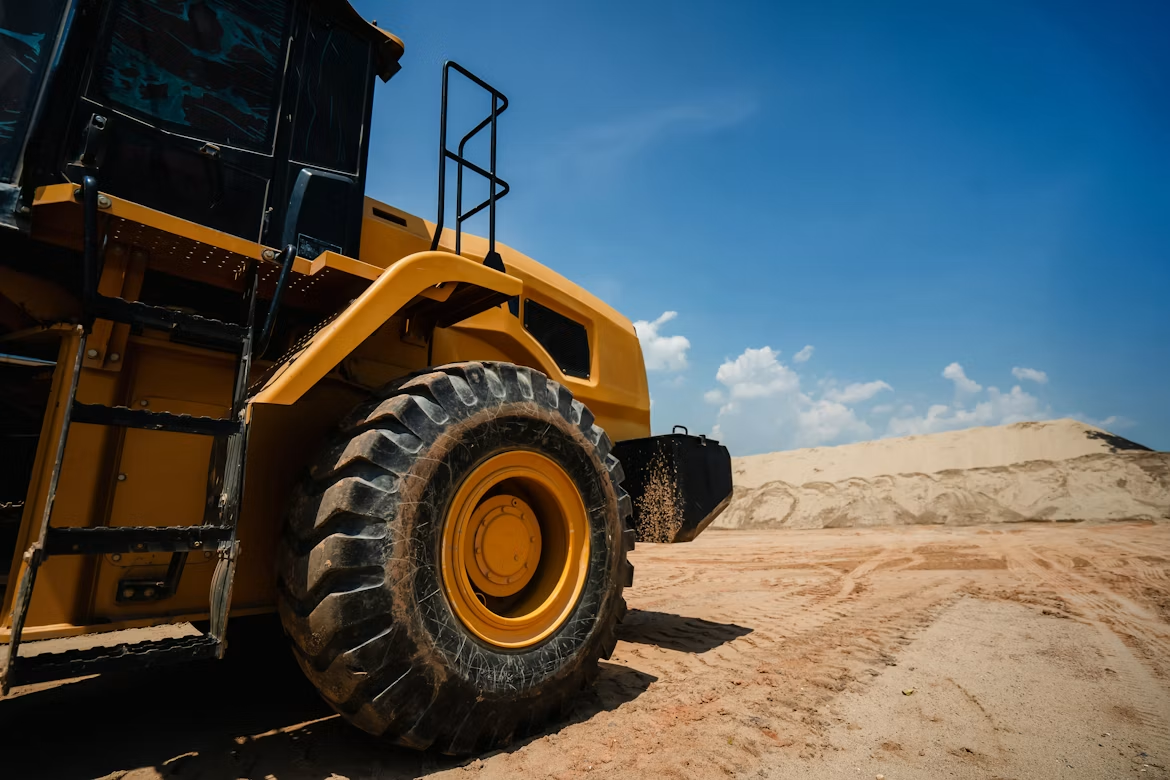
Integra advances DeLamar with Ausenco engineering and NEPA scoping underway, targeting a second-half 2027 Record of Decision and potential 2028 construction. Integra Resources appointed Ausenco Engineering USA South Inc. as the lead engineering partner for
- Integra Resources appointed Ausenco Engineering USA South Inc. as the lead engineering partner for DeLamar on June 2, 2026, beginning detailed engineering and execution-readiness activities for the Idaho gold-silver project.
- The United States Bureau of Land Management (BLM) published a Notice of Intent (NOI) on May 29, 2026, opening the 30-day public scoping period that formally initiates the National Environmental Policy Act (NEPA) environmental review.
- Under a 15-month FAST-41 permitting timeline, the Final Environmental Impact Statement (EIS) and Record of Decision (ROD) are targeted for the second half of 2027, with construction at DeLamar targeted for the third quarter of 2028.
- DeLamar's Feasibility Study, published in February 2026, established initial capital expenditure at $389 million for a 35,000-tonne-per-day oxide heap leach operation with a 10-year mine life.
- Integra holds approximately US$106 million in cash and targets the second half of 2026 to begin debt discussions, with the receipt of the Record of Decision expected to inform a construction decision.
What Has Happened
Integra Resources (TSXV: ITR | NYSE American: ITRG) announced two concurrent developments at its DeLamar gold-silver project in Owyhee County, southwestern Idaho, approximately 80 kilometres southwest of Boise. On June 2, 2026, the company appointed Ausenco Engineering USA South Inc. as the lead engineering partner for detailed engineering and execution readiness activities. This coincided with the opening of the National Environmental Policy Act (NEPA) public scoping period, following the United States Bureau of Land Management's (BLM) publication of a Notice of Intent (NOI) in the Federal Register on May 29, 2026.
Engineering Scope & Execution Readiness
Ausenco's mandate covers engineering design advancement, procurement planning, constructability reviews, and project execution planning. To support the specialised aspects of this scope, Ausenco retained SLR Consulting for heap-leach engineering, metallurgy, and mine planning. The two firms together address the full range of execution-readiness work required between feasibility completion and a construction decision for a large-scale, conventional open-pit oxide heap-leach project. Ausenco was selected for its track record on open-pit projects of comparable scale to DeLamar.
The Ausenco engagement was structured to strengthen Integra's position to advance the project through the NEPA process toward a construction decision. The concurrent timing means detailed engineering activities will advance during the same period as BLM's environmental review, spanning the current scoping phase through to the anticipated 2027 permitting outcome.
The detailed engineering work now underway, combined with the outcome of BLM's Environmental Impact Statement (EIS) review, will together inform a construction decision. The Ausenco appointment marks the formal start of execution-readiness activities at DeLamar, concurrent with the opening of the NEPA public scoping process.
The NEPA Permitting Pathway
BLM is the lead agency for DeLamar's environmental review, which is progressing under a 15-month FAST-41 permitting timeline. FAST-41 is a federal framework designed to accelerate review of major infrastructure projects through coordinated agency scheduling and mandatory transparency requirements. DeLamar was posted to the Federal Permitting Dashboard in January 2026, and the 30-day scoping period opened in May 2026. NOI is the first formal stage at which public input is solicited under that framework.
After scoping closes, the process advances through an alternatives feasibility analysis scheduled through the fourth quarter of 2026. Technical modelling of air quality, hydrogeology, and geochemistry runs from the second quarter of 2026 to the first quarter of 2027. EIS preparation, which includes addressing scoping comments and defining issues and alternatives, spans the third quarter of 2026 to the first quarter of 2027, with the EIS and draft ROD review period covering the second quarter to the third quarter of 2027.
The Final EIS and ROD are targeted for publication in the second half of 2027. The Final Mine Plan of Operations for the preferred alternative is scheduled for the fourth quarter of 2027, with construction at DeLamar targeted to begin in the third quarter of 2028.
Study Progression & Feasibility Parameters
DeLamar's current activities follow a seven-year study progression. A Preliminary Economic Assessment (PEA) in 2019 advanced to a Prefeasibility Study (PFS) in 2022, and from there to the Feasibility Study, which carries an effective date of December 8, 2025, and was published on February 2, 2026. Each successive study refined the technical and economic basis against which the current detailed engineering work is calibrated.
The Feasibility Study describes a 35,000 tonnes per day (tpd) open-pit oxide heap leach operation with a 10-year mine life. Total payable production stands at 1.1 million gold-equivalent ounces over the mine life, at a life-of-mine average of 106,000 gold-equivalent ounces per year, rising to 119,000 gold-equivalent ounces per year in the first 5 years. Life-of-mine average all-in sustaining costs (AISC) are set at $1,480 per gold-equivalent ounce, with cash costs of $1,179 per gold-equivalent ounce. Initial capital expenditure stands at $389 million.
At current gold prices, the project returns an after-tax net present value at a 5% discount rate (NPV5%) of $1.9 billion and an after-tax internal rate of return (IRR) of 97%, with a payback period of 1.0 year. At base case pricing, the after-tax NPV5% is $774 million, the IRR is 46%, and the payback period is 1.8 years.
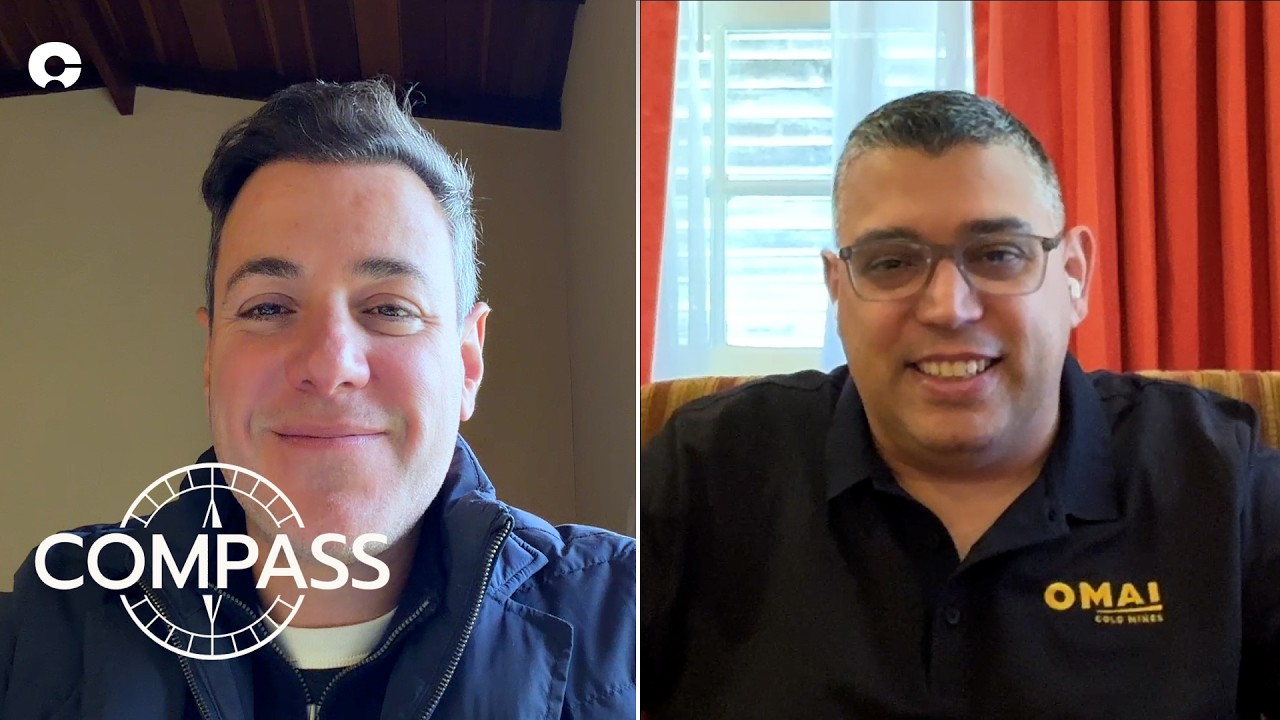
President and Chief Executive Officer of Integra Resources, George Salamis, describes the deployment of early works capital as a signal that the project will advance through both permitting and construction:
“The market is expecting us to de-risk that value in steps, to get it permitted. And by deploying that capital, this early works capital, long lead items, etc., to de-risk DeLamar, we feel that that will just add confidence that not only will DeLamar get permitted, but it'll actually get built.”
Capital Structure & Financing to Construction Decision
Integra holds approximately US$106 million in cash and is building toward the equity contribution required to advance DeLamar to a construction decision. The financing strategy uses free cash flow from Florida Canyon, a producing mine, to grow the company's treasury over the coming two years without material dilution. A completed US$61 million bought-deal, which brought 12 new institutional investors to the register, was structured to reduce pressure on Florida Canyon's cash flow in the period approximately 18 months before the anticipated ROD.
Capital from the raise is allocated to the 2026 Early Works Programme at $16.0 million, 2026 procurement at $12.0 million, land and ranch acquisition at $12.5 million, and 2027 early works at $4.5 million and 2027 procurement at $12.5 million. Debt discussions for the project build are targeted to begin in the second half of 2026, with the receipt of the final ROD and detailed engineering expected to inform a construction decision.
Salamis sets out the treasury target and the conditions that underpin the plan to fund DeLamar's equity contribution:
“If the gold prices hang in where they're at now, our expectation is we will have a robust enough treasury to get to the finish line on the equity contribution that, you know, DeLamar comes with in terms of the project build, the $380 odd million dollars. Some of that will be covered with debt in the future. We'll start to have those debt discussions in the second half of this year.”
What to Watch Next
The close of the 30-day scoping period is the first verifiable checkpoint, after which the process moves to formal alternatives analysis and response to scoping comments. Technical modelling of air quality, hydrogeology, and geochemistry runs from the second quarter of 2026 to the first quarter of 2027, in parallel with EIS preparation from the third quarter of 2026 to the first quarter of 2027. The feasibility phase for the alternatives is scheduled through the fourth quarter of 2026. Debt discussions for the project build are targeted to begin in the second half of 2026.
The EIS and draft ROD review period spans the second and third quarters of 2027. The Final EIS and ROD are targeted for the second half of 2027, with the completion of detailed engineering, which together will inform a construction decision. The Final Mine Plan of Operations for the preferred alternative is scheduled for the fourth quarter of 2027, and construction at DeLamar is targeted to begin in the third quarter of 2028.
Salamis describes 2026 as a preparatory year, with early works and long-lead procurement as activities that bridge to full-scale development in 2028.
“In terms of growth capital to be deployed on things like DeLamar, for example, this year, as well, looks like a year of early works, purchasing of long lead time items to prepare ourselves for full-on development of DeLamar in 2028.”
FAQs (AI-Generated)
Analyst's Notes





Subscribe to Our Channel







Stay Informed