




Diesel Scarcity Shifts Oil Returns From Crude Price to Refining Margin



Recovered Gulf crude flows leave refining capacity as the constraint, keeping diesel crack spreads elevated and shifting value toward refiners.
- Brent rose 0.8% to $101.39 a barrel on October 7, with West Texas Intermediate (WTI) at $90.05, after Houthi attacks on two Saudi airports.
- Crude remains about $15 below its $116.01 September 25 spot price even as attacks increased, while the Gulf Coast ultra-low sulfur diesel (ULSD) crack rose to $85.66 a barrel in August from $22.06 in January.
- US Energy Information Administration (EIA) raised its fourth quarter Brent forecast to about $105 a barrel on October 6, $14 above its prior estimate, and projects $84 in 2027 as shut-ins fall to 2.7 million barrels per day.
- Gulf flows excluding Iran passed 81% of pre-war levels in September, so crude supply recovery no longer sets refining margins.
- A Gulf Coast ULSD crack below $50 a barrel for two consecutive EIA weekly reports would remove product support for crude.
Saudi Attacks & Gulf Storm Lift Brent to $101
Brent rose 81 cents, or 0.8%, to $101.39 a barrel, while WTI gained 61 cents to $90.05. The move followed two attacks on Saudi airports at Jazan and Najran and a Gulf of Mexico storm forecast to become the first Atlantic hurricane of 2026.
Brent remains about $15 below its $116.01 September 25 spot price despite escalating attacks. US distillate inventories stood at 105.2 million barrels, 14% below the five-year average and 14.9% below a year earlier, leaving the tighter constraint downstream.
81% Gulf Flow Recovery Leaves Refining Bottleneck Intact
Tight diesel supplies are increasing crude demand as refiners configure runs to maximize distillate yield. US refinery utilization fell to 92.5% from 94.0% a week earlier, while crude inputs dropped 554,000 barrels per day to 16.257 million.
Saudi Arabia’s East-West Pipeline reached 5.8 million barrels per day, while regional exporters adopted dark transits in which tankers disable tracking before transferring cargoes at sea. These measures restored Gulf flows excluding Iran to more than 81% of pre-war levels but did not add refining capacity.
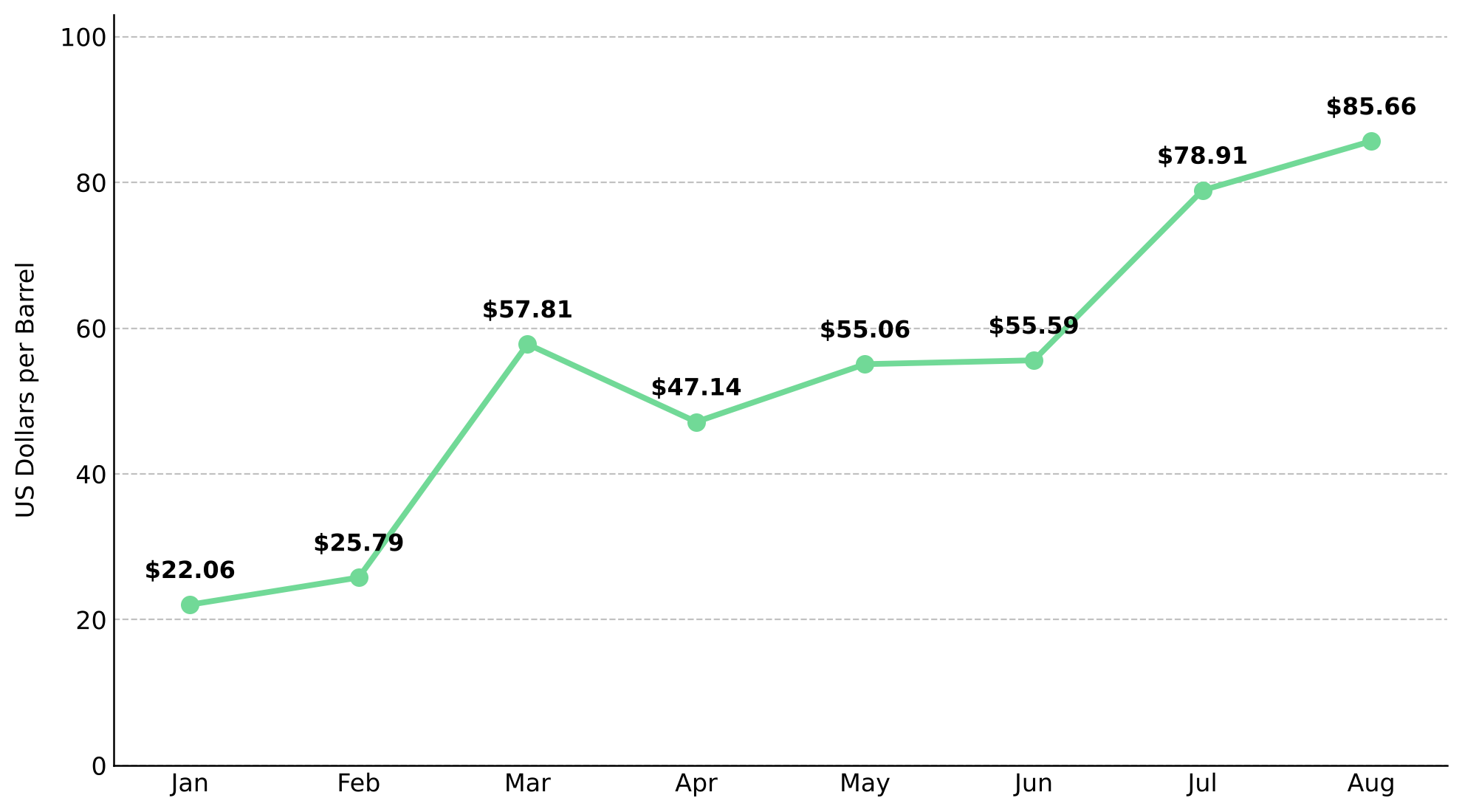
Fixed Refinery Yields Keep Crack Spreads Elevated
Crude can be rerouted within weeks, but refinery distillate yields are fixed by unit configuration and take quarters to raise. Restored Gulf barrels therefore enter the same constrained processing base.
High Crack Spreads Reduce Reliance on Flat Crude Prices
US Gulf Coast refiners with distillate-weighted yields earn margins from crack spreads rather than flat crude prices. Offshore Gulf of Mexico producers face storm risk across areas producing 15% of US crude, while six refineries lie in its path and the Gulf Coast holds about half of US refining capacity of 18.2 million barrels per day.
Yield flexibility separates the two exposures because refiners benefit when they can shift output toward distillates while crack spreads remain high. Tim Waterer, Chief Analyst at KCM Trade, said the storm could disrupt both production and refining in an already supply-constrained market.
Uncertain storm tracks and strike timing make the October oil price difficult to predict. Front-month WTI carries flat-price risk that stronger crack spreads may not offset, while oil equities can fall even as diesel margins hold because storms threaten refining and offshore output at the same time.
Limited Refining Capacity Lifts Margins
The oil complex is no longer priced by the Strait of Hormuz. Crude supply has largely recovered while prices held near $100, placing the bottleneck in refining capacity rather than barrels at sea.
For US Gulf Coast refiners with distillate-heavy configurations, crack spreads captured more of the war premium than production volume. Valuations based on mid-cycle crack assumptions therefore understate the margins delivered over the last three quarters.
Limited refining investment keeps diesel supply tight, giving patient holders a reason to own refiners rather than avoid the sector.
Analyst's Notes





Subscribe to Our Channel







Stay Informed


