




East Star Resources Partner-Funded Copper and Gold Path in Kazakhstan


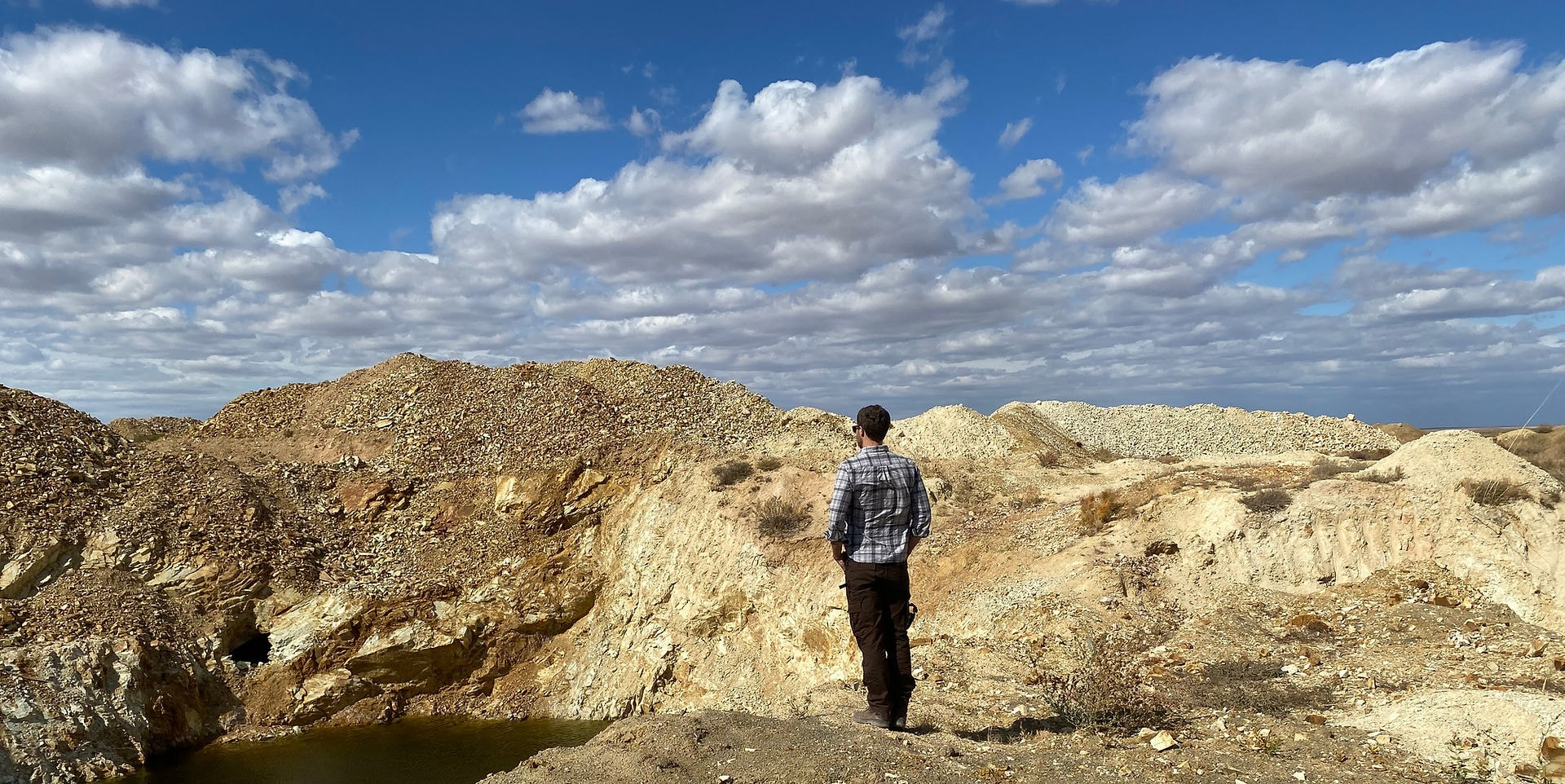
East Star Resources (LSE:EST) CEO Alex Walker on partner-funded copper in Kazakhstan, Rulikha drilling, Verkhuba licensing and the Endeavour gold JV.
- East Star Resources holds carried copper interests of 30% at Verkhuba and 25% to 35% at Rulikha, so partners bear development capital and cost overrun risk.
- Verkhuba resource drilling is approaching 5,000 metres and will support a mining licence application, which Walker hopes will be granted in 2027.
- Drilling at Rulikha began on October 2026 to verify historical data while the definitive JV agreement with Nova Ltd is yet to be finalised.
- Endeavour Mining is funding a gold search that targets 3 million ounces or more with East Star carried to PFS at 20%.
- CEO Alex Walker estimates the shares trade at less than 10% of future NAV and cites Kazakhstan’s low costs as a structural margin advantage.
Copper juniors usually face the same obstacle on the road to production. They must raise large sums of equity and debt, often at depressed share prices, before a single tonne of concentrate is sold. East Star Resources Plc (LSE:EST) has chosen a different route. The Kazakhstan-focused explorer has structured three joint ventures (JVs) in which partners fund exploration, development or both, while East Star keeps a fixed share of the outcome.
CEO Alex Walker set out how the model works and what investors can expect in 2027. Drilling began at the Rulikha copper project on 5 October 2026, and resource drilling at the Verkhuba deposit is approaching 5,000 metres.
A Partnership Model Built Around Dilution Risk
Walker describes himself as more of a manager than a geologist. His stated priority is to de-risk the company at both the exploration and development stages. Over the past 12 months, that has meant bringing in partners on each major asset.
The first was Hong Kong Xinhai Mining Services Limited at Verkhuba. Xinhai advances the project to production and carries East Star throughout. If the JV executes in full, East Star will hold 30% of a planned 1 million tonne per annum (Mtpa) operation. Walker said that interest carries no debt repayment, capital payback or waterfall.
The appeal for shareholders is visibility. A fixed, carried interest lets investors assess their see-through economics without guessing how many new shares will be issued to fund a mine. Walker likened East Star’s retained stakes to a 10% to 15% royalty, compared with the 1% royalty a typical prospect generator might hold.
Walker pointed to the build decision as the moment when cost risk sits entirely with the partner:
“If the project is going to make money, [Xinhai] will build it and it doesn’t matter to us if it costs them 100 million or 50 million because our economics are exactly the same.”
Walker believes the shares trade at less than 10% of the company’s future net asset value (NAV). That estimate assumes two copper projects reach production and excludes any gold discovery. Given that discount, he is reluctant to fund higher-risk greenfield exploration with East Star’s own capital. The company still holds two unpartnered projects in the Balkhash region, a porphyry prospect and an epithermal project.
Interview with Alex Walker, Director & CEO of East Star Resources PLC
Verkhuba: Drilling Towards a Mining Licence
Verkhuba hosts a JORC (Joint Ore Reserves Committee) inferred resource of 20.3 million tonnes (Mt) at 1.16% copper, 1.54% zinc and 0.27% lead. Current drilling is focused almost entirely on upgrading resource confidence rather than adding tonnes. Two rigs are turning, and Walker expects the programme to pass 5,000 metres before winter halts work around mid-December.
Results will feed an updated resource model and mine plan for the mining licence application, which the company has already begun preparing. Metallurgical test work is also starting. Walker’s current modelling relies on recovery data from a technical economic assessment completed around 1990, and he hopes modern test work will improve on it. Open pit and underground options both appear feasible, with the final choice resting on economics and Xinhai’s preference.
Xinhai has indicated that a 1 Mtpa sulphide plant in the region would cost about $65 million. Walker noted that Xinhai has built roughly 2,500 processing plants worldwide. The site sits close to roads, power and water, and the principal area is government land.
Control provisions also matter to shareholders. Xinhai does not take a 51% controlling stake until all equipment has arrived on site, a feasibility study is complete and the mining licence is in place. Until then, expenditure decisions require unanimous board approval.
Rulikha: Verifying Historical Data
Rulikha is a volcanogenic massive sulphide (VMS) project in East Kazakhstan with an exploration target of up to 23 Mt at 2.4% copper equivalent. East Star has signed a binding Heads of Agreement with Kazakh partner Nova Ltd. The definitive JV agreement is still being negotiated. Walker said the partner group has built two copper mines in Kazakhstan and has already helped secure drilling permits faster than East Star could alone.
Under the proposed terms, the partner builds the mine and East Star retains 25% from first production if no debt repayment applies. Alternatively, the partner can elect a structure that includes debt repayment. In that case, East Star receives 12.25% of allocated revenue until the debt is repaid, after which its interest rises to 35%.
The current programme comprises five holes for about 1,500 metres across Target Areas 1 and 2, at no cost to East Star. The company holds detailed logs for about 170 of the roughly 180 to 190 historical holes, but no core. This first programme aims to confirm the historical intersections. A second programme would then drill out a resource.
Walker was measured on scale. Only three historical holes cut the principal orebody at Target Area 1, and three new holes are planned there. That will not be enough to close off the deposit. Walker pointed to large neighbouring VMS deposits, including Nikolaevsky, while stressing he did not want to speculate that Rulikha would match them.
Endeavour Joint Venture: Belt-Scale Gold Exploration
Endeavour Mining (LSE:EDV), a FTSE 100 gold producer, is funding exploration across two Areas of Interest in northern Kazakhstan. Walker said the deal grew out of East Star’s participation in BHP Xplor in 2024, which sharpened its database and targeting framework.
Endeavour can earn 51% by funding US$5 million of exploration over a two-year Stage 1 that began on 15 May 2026. A further US$20 million phase follows. Walker confirmed that Endeavour would hold 80% and East Star 20% once a prefeasibility study (PFS) is complete. The stated ambition is a discovery of 3 million ounces or more. Endeavour is also East Star’s largest shareholder, which Walker put at 14.3%.
The JV has submitted licence applications covering more than 930 square kilometres, focused on intrusion-related gold (IRG) systems. Soil sampling and geophysics should follow licence grants, with drilling targeted for 2027. After a PFS, East Star would need to fund its 20% share of development, either from copper cash flow or equity markets.
Catalysts and Risks Through 2027
Walker hopes Verkhuba will receive its mining licence in 2027 and could be in construction by year-end. Rulikha should run about 12 months behind. The Endeavour JV should move into granted licences and first field programmes.
The risks are specific. The Rulikha JV agreement is not finalised, and its target is not yet a resource. Historical data at both copper projects needs modern confirmation, and recovery assumptions rest on 30-year-old test work. The model also depends on partners choosing to build.
Investment Thesis for East Star Resources
- East Star holds carried interests of 30% at Verkhuba and 25% to 35% at Rulikha, which removes development capital and cost overrun risk from shareholders.
- Walker estimates the shares trade at less than 10% of future NAV, a gap that could narrow as projects move through permitting and construction.
- Investors should monitor Verkhuba drilling results and the updated resource model as the next re-rating catalysts before the mining licence application.
- The five-hole Rulikha programme must confirm historical intersections before a resource drill-out can begin.
- The Rulikha JV agreement has not yet been finalised, its execution is a key watch-item.
- Endeavour’s funding provides gold discovery exposure without East Star capital, although East Star must fund its 20% after a PFS.
Macro Thematic Analysis
Copper’s long-term demand rests on electrification and grid investment, yet new supply is slow and costly to bring online. That makes low-cost jurisdictions with existing infrastructure increasingly relevant. Kazakhstan is one, though it remains unfamiliar to many Western investors.
Walker argues the country combines low costs with a long mining tradition. The district around Rulikha has produced copper and zinc for centuries. He said communities and government therefore understand what mining involves, which reduces above-ground risk. On logistics, Kazakhstan sits at the heart of the Belt and Road Initiative. Walker said goods move between China and Europe through Kazakhstan in about a third of the time taken by sea. He also cited European Bank for Reconstruction and Development investment in infrastructure and an extensive rail network.
Cost is central to the case. Walker said Kazakhstan hosts some of the world’s lowest-cost copper mines on a C1 cash cost basis, despite low grades. He attributed this to cheaper labour, power and fuel.
“ All of these points that I'm making are validated by the fact that Kazakhstan produces the cheapest uranium in the world and in terms of C1 costs the cheapest copper in the world... I’d basically say Kazakhstan’s the cheapest place in the world to dig a hole.”
The advantage extends to exploration. Walker said East Star pays $100 to $110 per metre for diamond drilling, falling to around $85 on campaigns above 20,000 metres. He estimated this at a third to a half of costs in Chile or Australia.
Major miners have noticed. Walker said groups including Barrick, First Quantum and B2Gold have entered the country in recent years. He argued that local teams and data can shorten their path through a permissive but bureaucratic system.
Conclusion
East Star offers a different kind of copper development exposure. Instead of carrying construction costs, the company has locked in percentages at two copper projects and secured partner funding for gold exploration. Walker’s argument is that this removes the largest uncertainties for junior mining shareholders, namely cost blowouts, debt and equity splits and the final share count.
The trade-off is control. Partners set the pace and make build decisions, and East Star’s value depends on their execution. The next 12 months will test the model. Verkhuba must deliver drilling results, metallurgy and a mining licence application. Rulikha must confirm its historical data and convert its Heads of Agreement into a definitive JV. The Endeavour partnership must move from desktop work into field exploration. If those steps land, East Star could have a copper project in construction by the end of 2027, a second about a year behind, and a gold search funded by a FTSE 100 partner.
TL;DR
East Star Resources (LSE:EST) has built a partner-funded model in Kazakhstan that keeps it out of the cost of building mines. It holds a carried 30% of Xinhai’s planned 1 Mtpa Verkhuba operation, where resource drilling is approaching 5,000 metres ahead of a mining licence application. At Rulikha it would keep 25% to 35% under a binding Heads of Agreement with Nova Ltd, although the definitive JV agreement is not yet signed. Drilling of five holes for about 1,500 metres began there on 5 October 2026. Endeavour Mining is funding gold exploration that targets 3 million ounces or more, with East Star carried to PFS at 20%. CEO Alex Walker estimates the shares trade at less than 10% of future NAV.
FAQ (AI-generated)
Analyst's Notes





Subscribe to Our Channel




Stay Informed


