New Found Gold Announces First Production Results from the Hammerdown Mine


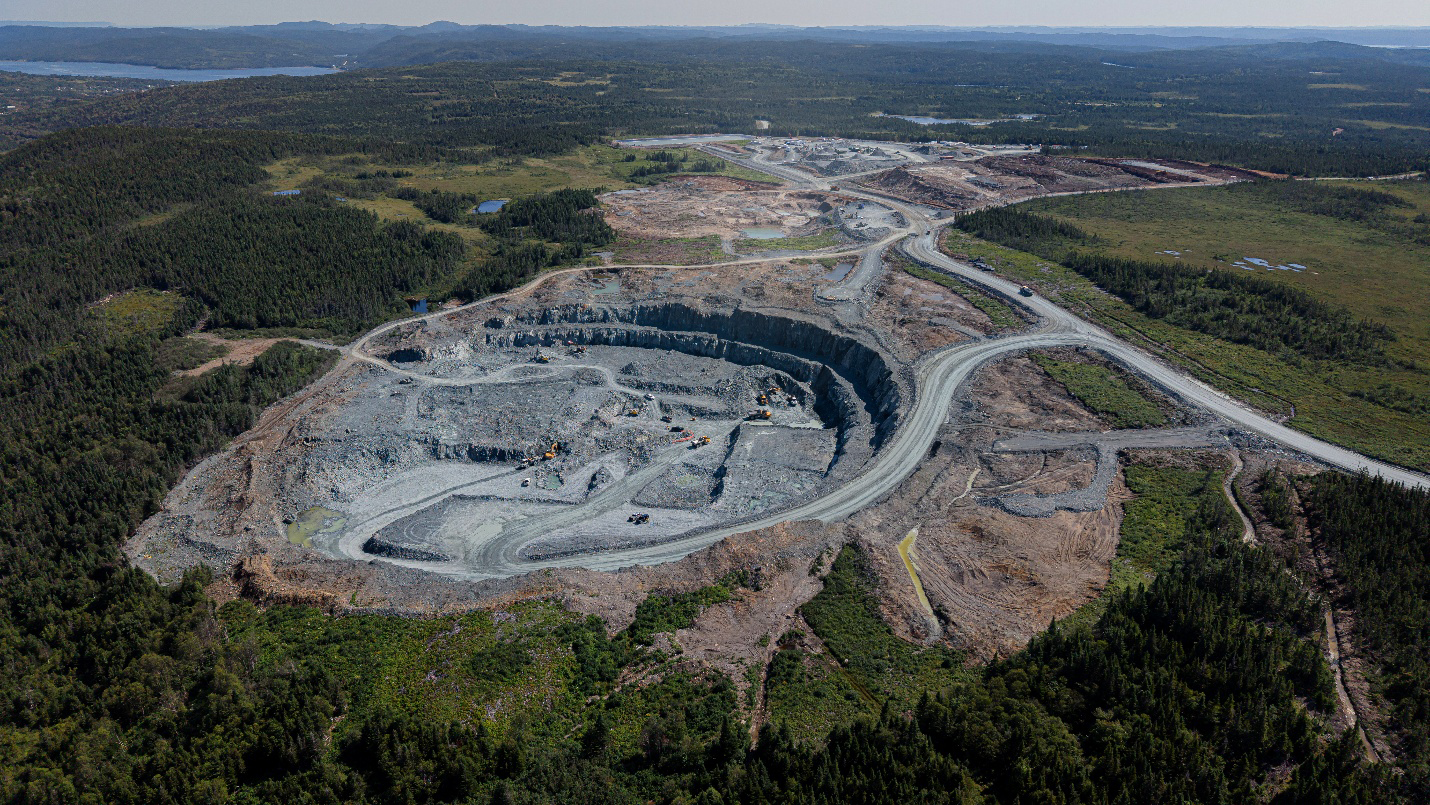
New Found Gold’s Hammerdown Mine in Newfoundland produced 4,863 oz in Q3 2026 at 2.76 g/t and 85% recovery, with Queensway first mill feed on track for Q4 2027.
- New Found Gold produced 4,863 ounces of gold at its Hammerdown Mine in the third quarter of 2026, its first quarter of reported results since declaring commercial production on August 19, 2026.
- Mill feed grade averaged 2.76 g/t with an 85% recovery rate, and mined material is reconciling to within 5% of the mineral resource estimate model.
- A permanent crusher and sorter is scheduled for substantial completion by the end of 2026, with commissioning and ramp-up in the first quarter of 2027, aimed at lowering crushing costs and sending higher-grade feed to the mill.
- The Pine Cove Mill is being converted to a Gravity-CIL circuit in parallel with ongoing operations, and its conversion and expansion remain the critical path for first Queensway mill feed in the fourth quarter of 2027.
- The company held approximately C$167 million in cash and C$70 million in debt at September 30, 2026, and management describes Queensway Phase 1 as fully funded.
Introduction to New Found Gold & Hammerdown Mine
New Found Gold Corp. (TSX: NFGC | NYSE-A: NFGC) has released preliminary third quarter 2026 operating results from its 100%-owned Hammerdown Gold Mine in central Newfoundland and Labrador. These are the first quarterly figures since Hammerdown declared commercial production on August 19, 2026. The mine produced 4,863 ounces of gold in the quarter and sold 6,035 ounces at an average realized gold price of US$4,310 per ounce (C$6,033). The company now describes itself as Canada’s newest gold producer, with Hammerdown ore feeding the Pine Cove Mill while the flagship Queensway Gold Project advances toward first mill feed in late 2027.
For investors, the significance of the quarter lies less in the absolute ounce count than in what it indicates about execution. A preliminary economic assessment released in March outlined a Hammerdown life-of-mine run rate of 20,000 to 25,000 ounces per year at an all-in sustaining cost (AISC) of approximately US$2,500 per ounce. Third quarter output sits just below the quarterly equivalent of that range, during a period that still included the final stages of ramp-up.
CEO Keith Boyle framed the quarter as confirmation of the published plan rather than an endpoint:
“What it demonstrates for the market is that we’re delivering on what we promised. We put out a PEA back in March that identified what Hammerdown could produce, and this is just the confirmation of what that is.”
Boyle added that the result shows the company is producing at the grades it said it would, which he considers the more important validation for a new operator. The company plans to issue annual guidance for Hammerdown in due course.
Interview with Chief Executive Officer, Keith Boyle
Production Results & Future Plans
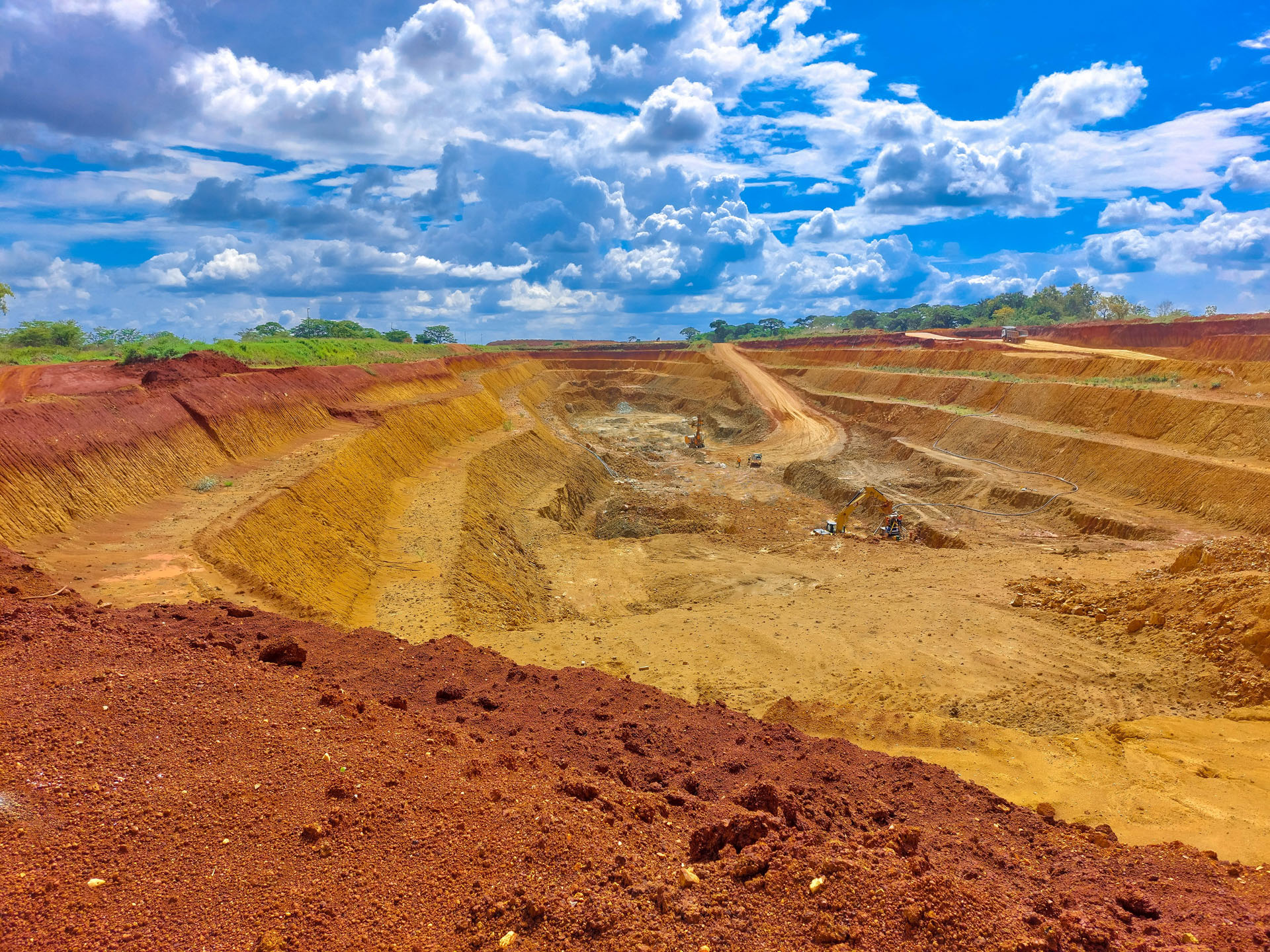
Hammerdown processed approximately 66,000 tonnes in the quarter, broadly consistent with the Pine Cove Mill’s current 700 tonne per day capacity. The 2.76 g/t feed grade compares with a year-to-date average of 2.15 g/t, and year-to-date production stands at 10,670 ounces from 189,000 tonnes processed at an 84% average recovery. Grade control drilling began in late April on a five-by-five metre pattern, and the data is now being incorporated into mining practices in the open pit.
The reconciliation figure carries particular weight for a mine in its first months of operation, and Boyle highlighted it directly:
“What’s really pleasing to see is how production is reconciling well with the mineral resource estimate model. We’re within 5% of that estimate, which is fantastic when you consider what we’ve done.”
Mill recoveries have improved from the high 50s and low 60s when ore first went through the plant to the mid-80s, which is the level identified in the economic study. Management has outlined three levers for further gains: mining tighter to the veins to reduce external dilution, continued mill optimization, and the new crusher and sorter. The sorter is expected to remove lower-grade material before it reaches the mill and to replace the contract crusher currently in use. Ore sorting has seen limited use in the gold industry, and Boyle explained why he expects it to suit Hammerdown’s ore:
“We’ve got such distinguishing features in our ore, where it’s quartz with sulfides with dark waste, and so the sorters can see that difference.”
Diamond drilling of the inferred resource below the current stage one pit is also underway in preparation for an updated Hammerdown mineral resource estimate in 2027. At the quarter’s realized price, the spread over the estimated life-of-mine AISC of approximately US$2,500 per ounce is substantial, although the AISC figure is a study-based estimate rather than a reported quarterly cost.
Queensway Project & Strategic Growth
The Pine Cove Mill is being converted from its current flotation and Merrill-Crowe circuit to a Gravity-CIL circuit, for which the permit amendment has already been received. Management expects the new circuit to lift Hammerdown recoveries by roughly a further five percent. Once the Queensway environmental assessment is released, which Boyle expects at the start of the new year, the company will apply for a permit to expand the Gravity-CIL circuit to 1,400 tonnes per day, doubling throughput. The conversion is reported to be on schedule and on budget, with completion targeted for the fourth quarter of 2027.
Boyle described a construction approach designed to keep Hammerdown production running throughout:
“The mill will continue to operate. We’re basically building a new plant in parallel. We’ll commission that new circuit in parallel while we’re still producing, and then once the new circuit’s commissioned, there’ll be a changeover, and it’ll be minimal impact.”
The mill retooling and expansion form the critical path for Queensway, and first delivery of Queensway material to Pine Cove remains scheduled for the fourth quarter of 2027. An updated Queensway technical report is expected shortly. Management’s plan is for Queensway to produce 70,000 to 100,000 ounces per year in its first years, with that cash flow funding a dedicated mill and an expansion to 175,000 to 200,000 ounces per year.
“Next up, Queensway. That’s the prize. That’s the big prize right now.”
Cash stood at approximately C$167 million at September 30, 2026, down C$27 million from C$194 million at June 30, with spending directed in part at the Gravity-CIL circuit. Debt was unchanged at C$70 million, with a further C$35 million facility available until May 15, 2027, subject to conditions precedent. Following investor meetings at Beaver Creek and Colorado Springs, Boyle said institutional discussions have shifted toward production profiles for 2028 and 2031 and whether the company can fund its plans, which management says it can.
The Investment Thesis for New Found Gold
- Hammerdown’s first quarter of reported results came in just below the quarterly equivalent of its 20,000 to 25,000 ounce annual run rate, during a period that included the end of ramp-up.
- Mined material is reconciling to within 5% of the resource model, and recoveries have reached the mid-80s level set out in the economic study.
- The crusher and sorter, due for commissioning in the first quarter of 2027, are intended to lower crushing costs and raise mill feed grade.
- The Pine Cove Gravity-CIL conversion is being built in parallel with operations and is expected to improve Hammerdown recoveries by around five percent.
- Queensway first mill feed remains scheduled for the fourth quarter of 2027, with a phased plan targeting 70,000 to 100,000 ounces per year initially and 175,000 to 200,000 ounces per year after expansion.
- The company held approximately C$167 million in cash at quarter end, and management describes Queensway Phase 1 as fully funded.
New Found Gold’s third quarter results give investors the first measurable read on how the company performs as an operator. Hammerdown produced 4,863 ounces at a feed grade of 2.76 g/t and an 85% recovery rate, with mined material reconciling to within 5% of the resource model. Output sat just below the quarterly equivalent of the 20,000 to 25,000 ounce annual run rate, during a period that still included the closing stages of ramp-up. The next milestones are defined. The crusher and sorter are scheduled for substantial completion by the end of 2026, with commissioning in the first quarter of 2027, while the Pine Cove conversion to a Gravity-CIL circuit is targeted for completion in the fourth quarter of 2027, in line with the first planned delivery of Queensway material. An updated Queensway technical report is expected shortly, and an updated Hammerdown mineral resource estimate is planned for 2027. Risks remain, including sorter performance in a gold setting where the technology has seen limited use, the timing of the environmental assessment release, and the pace of cash consumption during the build. Progress against these dates can be tracked through 2027, starting with full third quarter financial results on November 11, 2026.
Macro Thematic Analysis
Gold equities have spent the past two years trading against historically high bullion prices, and New Found Gold’s realized price of US$4,310 per ounce in the third quarter reflects that environment. Elevated prices have widened potential margins across the sector, but they have also sharpened investor focus on a recurring problem: the gap between what development companies promise in technical studies and what they deliver once operations begin. Cost overruns, delayed ramp-ups and grade shortfalls have historically weighed on the valuations of new producers, which is why the market tends to discount study-stage projections until a company has demonstrated the ability to build and operate.
Within that context, the first quarters of operation at a new mine carry outsized weight. Reconciliation between modelled and mined grade, the trajectory of mill recoveries and adherence to construction schedules are the data points institutional investors use to separate credible developers from those still asking the market to take projections on trust. Hammerdown is a modest operation by itself, but its role in New Found Gold’s strategy is to supply that evidence ahead of the larger Queensway build.
Jurisdiction adds a further dimension. Newfoundland and Labrador is an established mining province with existing permitted infrastructure, and the Pine Cove Mill gives New Found Gold a processing route that avoids building a standalone plant for Queensway Phase 1. A phased, cash-flow-supported development model of this kind reduces dependence on equity markets during construction, which has been a source of dilution for many single-asset developers.
Keith Boyle summarized how he sees the company’s position after the quarter:
“We’ve really de-risked the company, these projects, to the point of this is just about delivering.”
The test for New Found Gold through 2027 is whether Queensway can be brought into production on the same terms Hammerdown has now met.
TL;DR
New Found Gold produced 4,863 ounces of gold at its Hammerdown Mine in Newfoundland in Q3 2026, its first quarter of reported results since declaring commercial production on August 19, 2026. Feed grade averaged 2.76 g/t and recovery 85%, with mined material reconciling within 5% of the resource model. A permanent crusher and sorter is due for substantial completion by year-end, while the Pine Cove Mill conversion to a Gravity-CIL circuit targets Q4 2027, matching first planned Queensway mill feed. The company held approximately C$167 million in cash at quarter end against C$70 million in debt, and management describes Queensway Phase 1 as fully funded, with an updated technical report expected shortly
FAQ's (AI-Generated)
Analyst's Notes





Subscribe to Our Channel








Stay Informed