enCore Energy & the US Department of Energy's $2.7 Billion Enrichment Award: Contextualising Policy Change Within a US ISR Uranium Platform


DOE's $2.7B enrichment award shifts nuclear fuel cycle constraints upstream, spotlighting permitted U.S. uranium producers like enCore Energy's ISR platform.
- enCore Energy operates the largest In-Situ Recovery uranium extraction platform in the United States, with three licensed South Texas processing plants.
- The US Department of Energy's $2.7 billion enrichment award alters downstream nuclear fuel availability, not uranium mining capacity directly.
- The policy shift changes the sequencing of risk across the nuclear fuel cycle, moving constraints upstream toward permitted production.
- enCore's asset base sits at the intersection of permitted capacity, ISR economics, and US jurisdictional control.
- The investment relevance lies in how policy interacts with existing operations, cost structures, and development timelines.
enCore Energy's Role in the US Uranium Supply Chain
enCore Energy is a US-focused uranium producer with licensed and permitted assets across South Texas, Wyoming, and South Dakota. The company's operations are concentrated at the mining stage of the nuclear fuel cycle, upstream of both enrichment and fuel fabrication.
The geographic distribution provides diversification across regulatory jurisdictions while maintaining exposure to established uranium-bearing formations. South Texas hosts the company's primary production infrastructure, including three licensed processing plants capable of regional satellite feeds, while Wyoming and South Dakota offer development-stage projects with defined resource bases.
Production Methodology & Asset Type
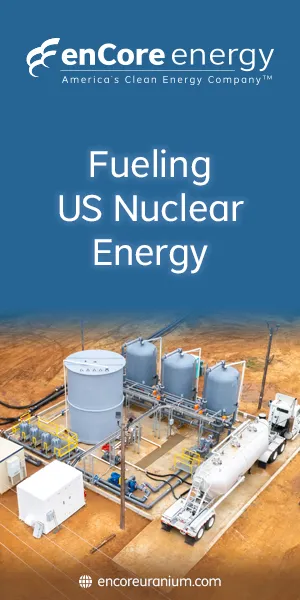
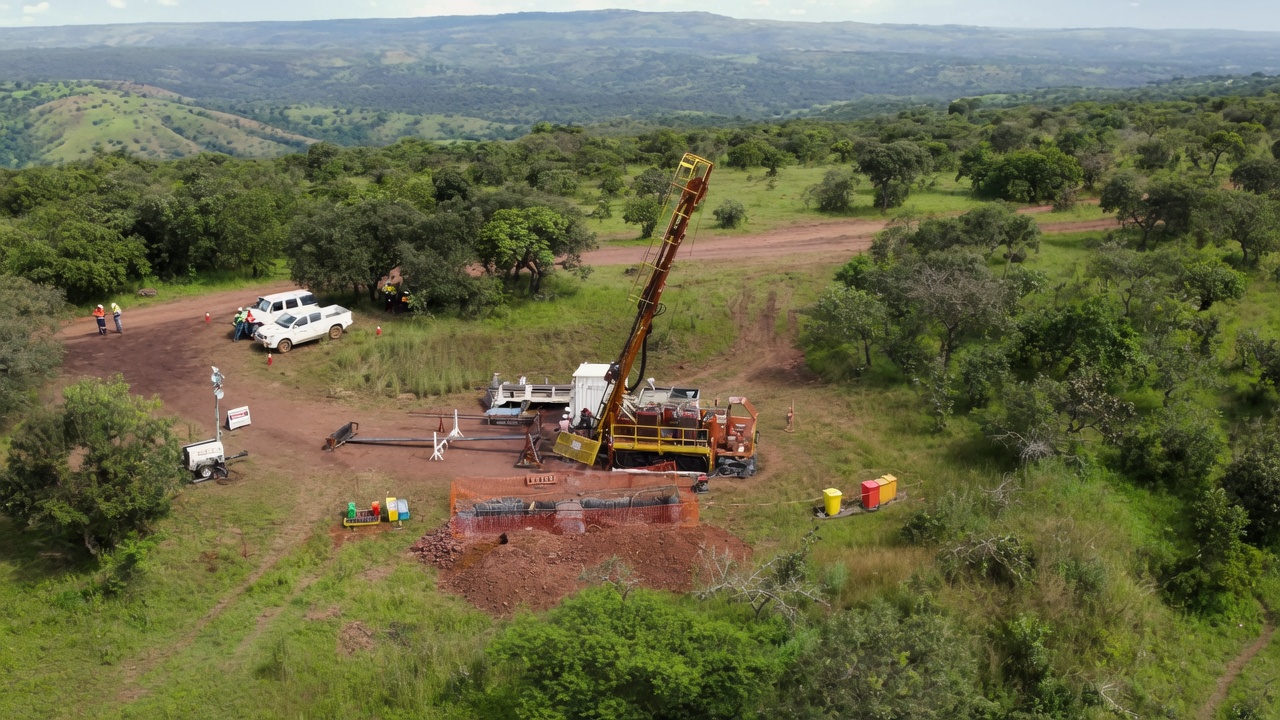
enCore operates exclusively through In-Situ Recovery extraction, a methodology that differs fundamentally from conventional hard-rock uranium mining. ISR involves injecting oxygenated water into uranium-bearing aquifers, dissolving uranium in place, and pumping the solution to surface processing facilities. This approach eliminates the need for open-pit or underground excavation, reducing both capital intensity and surface disturbance.
William Sheriff, Executive Chairman and Chief Investment Officer of enCore Energy, frames the company's operational approach:
"In order to up your production you've got to get more wells in the ground; more wells, more fluid flow, more uranium going through the plant, higher recovery, higher daily production rate."
Physical Infrastructure: enCore's Processing & Wellfield Configuration
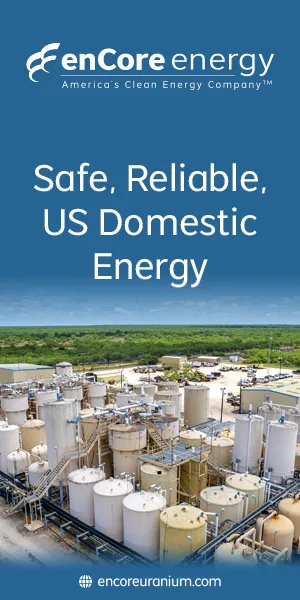
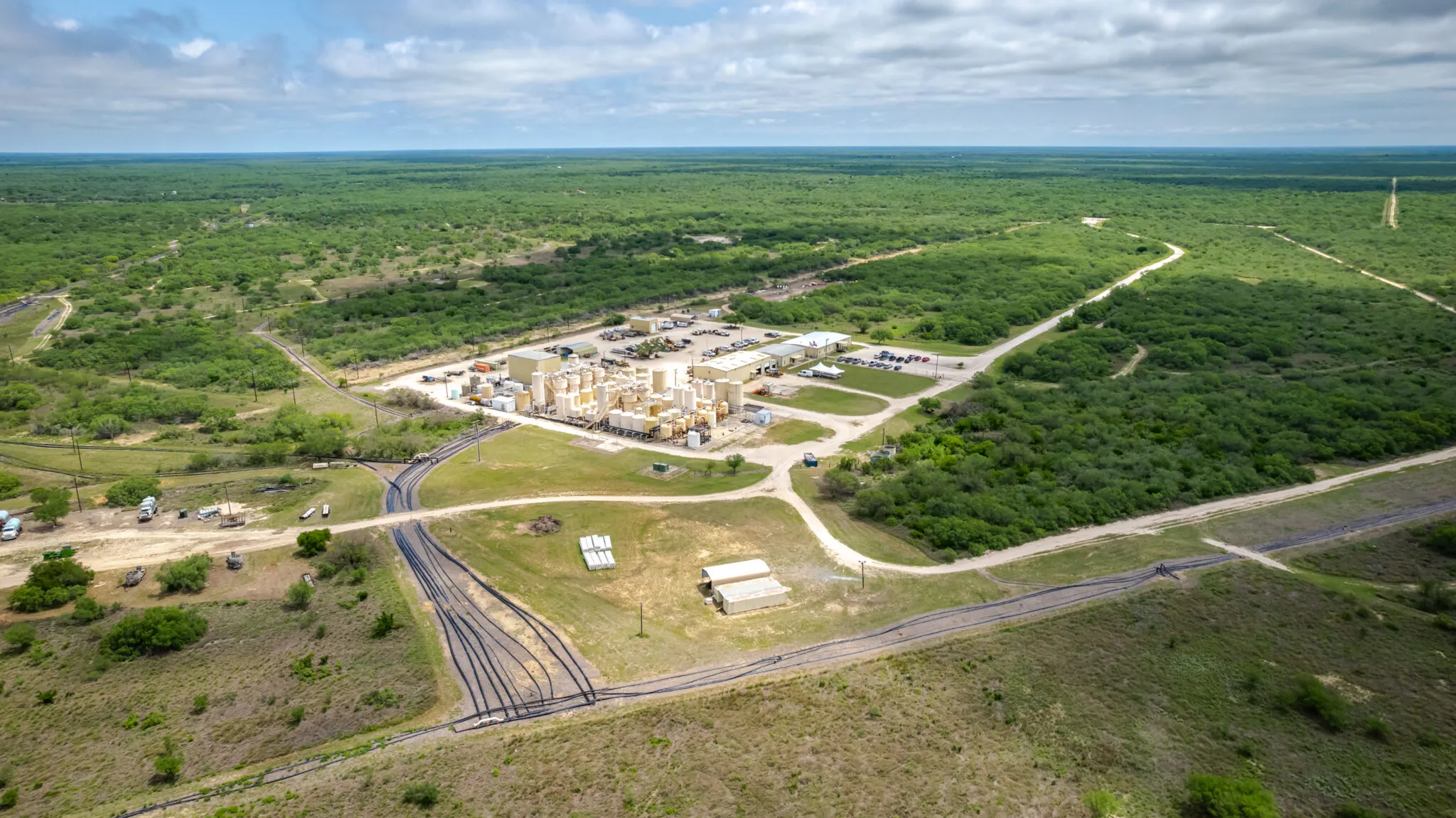
enCore operates two primary Central Processing Plants in South Texas. The Alta Mesa CPP carries a total design capacity of 2 million pounds annually, comprising 1.5 million pounds from the central plant plus 500,000 pounds from satellite facilities. The Rosita CPP maintains licensed capacity of 800,000 pounds U3O8 annually. These facilities serve as hubs for a hub-and-spoke production model, receiving uranium-bearing solutions from satellite wellfields.
Wellfield Development & Resource Conversion
The relationship between measured and indicated resources and producing wellfields is non-linear in ISR operations. Wellfield installation converts geological resources into producing capacity through drilling, casing, and connection to the processing network. ISR wellfield performance is characterised by initial ramp-up periods, peak flow rates, and subsequent decline as uranium is extracted.
William Sheriff describes the operational improvements achieved through accelerated wellfield installation:
"We went from a roughly a little over seven days average of getting a production or injector well in into just about 1.3 now and that metric is rather profound."
Operational Status: Current Production & Development Timelines
Alta Mesa commenced operations in the second quarter of 2024 and is currently in a phased ramp-up. As of mid-2025, the facility was operating at approximately 60 percent of its current 1-million-pound annual configuration, with daily production averaging 2,678 pounds in June 2025, up from 1,942 pounds in April 2025. The company targets full operational capacity by early 2026.
The company has expanded drilling capacity to support production growth. At the end of the second quarter of 2025, 24 drill rigs were in operation, with the count subsequently reaching 29 and targeting 32 rigs by late 2025.
"We've gone up from 12 or 14 drill rigs at the time to 29 now and we'll have 32 by the end of October which is really where we want to be."
Satellite Project Progression
The Upper Spring Creek wellfield represents a near-term development priority. Wellfield installation and construction of the USC Ion Exchange plant have commenced, with foundations being installed and four drill rigs currently onsite. USC-Brown production is expected between late 2025 and 2026, with USC-Brevard following in 2027.
External Policy Development: US DOE Enrichment Funding Overview
The US Department of Energy's $2.7 billion enrichment funding award represents a significant policy intervention in the domestic nuclear fuel cycle.
As of January 2026, the DOE has awarded $2.7 billion to restore domestic enrichment capacity. This includes three task orders of $900 million each to American Centrifuge Operating, General Matter, and Orano Federal Services. The funding addresses both Low-Enriched Uranium for the existing reactor fleet and High-Assay Low-Enriched Uranium required for advanced reactor designs.
What the Award Does & Does Not Address
The DOE funding directly addresses enrichment capacity, not uranium supply. No provisions within the award allocate resources to mine development, wellfield installation, or uranium production. For uranium producers, the policy development alters market context rather than operational economics.
Interface Between Enrichment Policy & Uranium Production
The relationship between downstream enrichment policy and upstream uranium production operates through market mechanisms and utility contracting behaviour.
Historically, the nuclear fuel cycle has exhibited shifting bottlenecks. During periods of enrichment scarcity, utilities prioritised enrichment contracts over uranium procurement. As enrichment capacity expands through DOE funding, constraints migrate upstream toward uranium supply.
US Domestic Supply Context
US reactor demand approximates 48 million pounds annually, while domestic production has been declining at approximately 200,000 pounds per year, leaving minimal domestic output relative to consumption. This structural deficit creates dependency on foreign uranium supply, a dynamic increasingly scrutinised within energy security policy. Jurisdictional preference is emerging in utility procurement, with some buyers expressing willingness to pay premiums for US-origin material.
Cost Structures & Operating Economics in an ISR Context
ISR uranium production exhibits cost characteristics distinct from conventional mining, with implications for margin sensitivity and commodity price exposure.
Capital expenditure intensity in ISR operations is lower than in conventional mining, reflecting the absence of large-scale excavation and the modular nature of wellfield development. Operating costs are sensitive to site-specific variables including solution chemistry, flow rates, and resin cycle efficiency.
William Sheriff characterises the company's approach to execution:
"We felt that the sense of urgency was something that needed to be reinforced and the rule of the day."
Project-Level Economic Metrics
Technical studies for enCore's development projects indicate differentiated economic profiles. The Dewey Burdock technical study, dated January 2025 with an effective date of October 2024, indicates an internal rate of return of 33 percent based on a long-term uranium price assumption of $86.34 per pound. The Gas Hills technical study, dated February 2025 with an effective date of December 2024, indicates an internal rate of return of 50.2 percent based on a $87 per pound uranium price assumption.
Contracting Strategy & Market Exposure
Current contracts represent less than 38 percent of planned extraction through 2033. The company maintains a strategy of keeping contract coverage below 50 percent at prevailing prices to preserve spot market exposure. This positioning trades near-term cash flow certainty for potential upside participation in rising uranium prices.
William Sheriff acknowledges the near-term management of contract obligations:
"Next year we realize that there's a likely shortfall because we were overcontracted."
The company has secured procurement arrangements for 100,000 pounds to address this anticipated shortfall during the production ramp-up phase.
Constraints & Execution Risks
Wellfield underperformance represents a persistent risk in ISR operations. Ramp-up variability introduces timing uncertainty, while resource-to-production conversion risk reflects the gap between geological inventory and recoverable output.
William Sheriff frames talent as both advantage and industry constraint:
"The one thing you can't fix is the shortage of talent and at enCore... Our biggest assets are people, our bench strength."
Regulatory & Timing Constraints
The Dewey Burdock project received FAST-41 designation on August 28, 2025, providing enhanced timeline visibility for federal permitting:
"It gives you a much more certain and much more acceptable timeline to get through all of your filing."
Capital Structure & Institutional Access
Recent financing activity demonstrates institutional access. The company completed a $115 million convertible note at a 5.5 percent coupon, due August 2030. As of December 2025, enCore's market capitalisation stood at approximately $496 million.
William Sheriff characterises the financing terms:
"The cost of capital is something we've never seen before in terms of a five and a half percent coupon on a non-secured note. It's almost as good as the federal government rate."
The Investment Thesis for enCore Energy
The following considerations frame the investment case for US uranium exposure as contextualised through enCore's positioning:
- Existing permitted ISR infrastructure with defined licensed capacities provides near-term production capability without extended permitting timelines.
- Alignment between policy sequencing and operational readiness positions the company at the intersection of demand visibility and domestic supply scarcity.
- Cost structure characteristics of ISR methodology offer margin resilience across uranium price scenarios.
- Contracting discipline maintaining coverage below 38 percent preserves optionality for price participation.
- Jurisdictional exposure within US borders aligns with emerging utility preferences for supply chain security.
- Development projects with defined technical studies provide staged growth opportunities beyond current production.
- Institutional capital access at favourable terms supports balance sheet flexibility for execution and opportunistic deployment.
Policy Change as a Contextual Variable
The DOE's $2.7 billion enrichment award alters the structural context in which US uranium producers operate, but it does not change the physical realities of mining, permitting, or execution. For enCore Energy, the relevance of this policy shift lies in how it interacts with existing infrastructure, cost structures, and development timelines already in place.
As enrichment capacity expands, market attention shifts upstream toward permitted production, operating reliability, and disciplined capital deployment. Uranium mining equities are likely to be differentiated less by macro exposure and more by operational readiness and execution risk, factors that now sit in the foreground of investor analysis.
TL;DR
The U.S. Department of Energy's $2.7 billion enrichment funding award—distributed across three $900 million task orders—addresses downstream nuclear fuel capacity rather than uranium mining directly. This policy shift moves supply chain constraints upstream toward permitted production, repositioning U.S. uranium producers in investor analysis. enCore Energy operates the largest domestic ISR platform with three licensed South Texas processing plants and combined design capacity exceeding 2.8 million pounds annually. Alta Mesa is ramping toward full capacity by early 2026, with satellite projects advancing on defined timelines. The company maintains contract coverage below 38% to preserve spot price exposure while recent $115 million convertible financing at 5.5% demonstrates institutional access at favourable terms.
FAQs (AI-Generated)
Department of Energy awarded $2.7 billion to restore domestic enrichment capacity through three task orders of $900 million each to American Centrifuge Operating, General Matter, and Orano Federal Services. The funding addresses both Low-Enriched Uranium for existing reactors and High-Assay Low-Enriched Uranium for advanced reactor designs.
The award addresses enrichment capacity, not uranium supply directly. As enrichment bottlenecks ease, market constraints shift upstream toward permitted uranium production. This repositions producers with existing licensed infrastructure and operational readiness at the forefront of investor attention.
ISR involves injecting oxygenated water into uranium-bearing aquifers, dissolving uranium in place, and pumping the solution to surface processing facilities. This eliminates conventional excavation, reducing capital intensity and surface disturbance compared to open-pit or underground mining.
enCore operates three licensed processing plants with combined design capacity exceeding 2.8 million pounds annually. Alta Mesa is currently at approximately 60% of its 1-million-pound configuration, with full operational capacity targeted by early 2026.
The company deliberately keeps contract coverage below 50%—currently under 38% through 2033—to preserve exposure to potential uranium price increases. This strategy trades near-term cash flow certainty for upside participation in rising spot markets.
Analyst's Notes





Subscribe to Our Channel




Stay Informed