Energy Fuels' First US Terbium Oxide Production: 7 Things You Need to Know


Energy Fuels produces first US terbium oxide in decades at 99.9% purity - a critical de-risking milestone as China's rare earth export controls reshape Western supply chains.
- Energy Fuels has produced the first kilogram of 99.9% pure terbium oxide in the US in decades from domestically sourced monazite, meeting commercial rare earth permanent magnet manufacturer specifications.
- Terbium currently trades at $1,182 per kilogram free on board China, with non-Chinese supply commanding 3 to 4 times Chinese quoted prices in Western markets - a premium underpinned by permanent export controls, not temporary policy.
- White Mesa Mill is the only US facility capable of processing monazite into separated heavy rare earth element oxides, creating a barrier to entry that no new entrant can replicate within this decade.
- The proposed acquisition of Australian Strategic Materials (ASM), targeted to close mid-2026, is the single most important near-term catalyst, transforming Energy Fuels from a midstream oxide producer into a vertically integrated mine-to-metal supplier.
- With $927 million in working capital and a $700 million convertible notes raise oversubscribed by more than 7 times, the balance sheet is adequate - but coordinated execution across four concurrent development programs in multiple jurisdictions remains the primary investor risk.
Project Overview
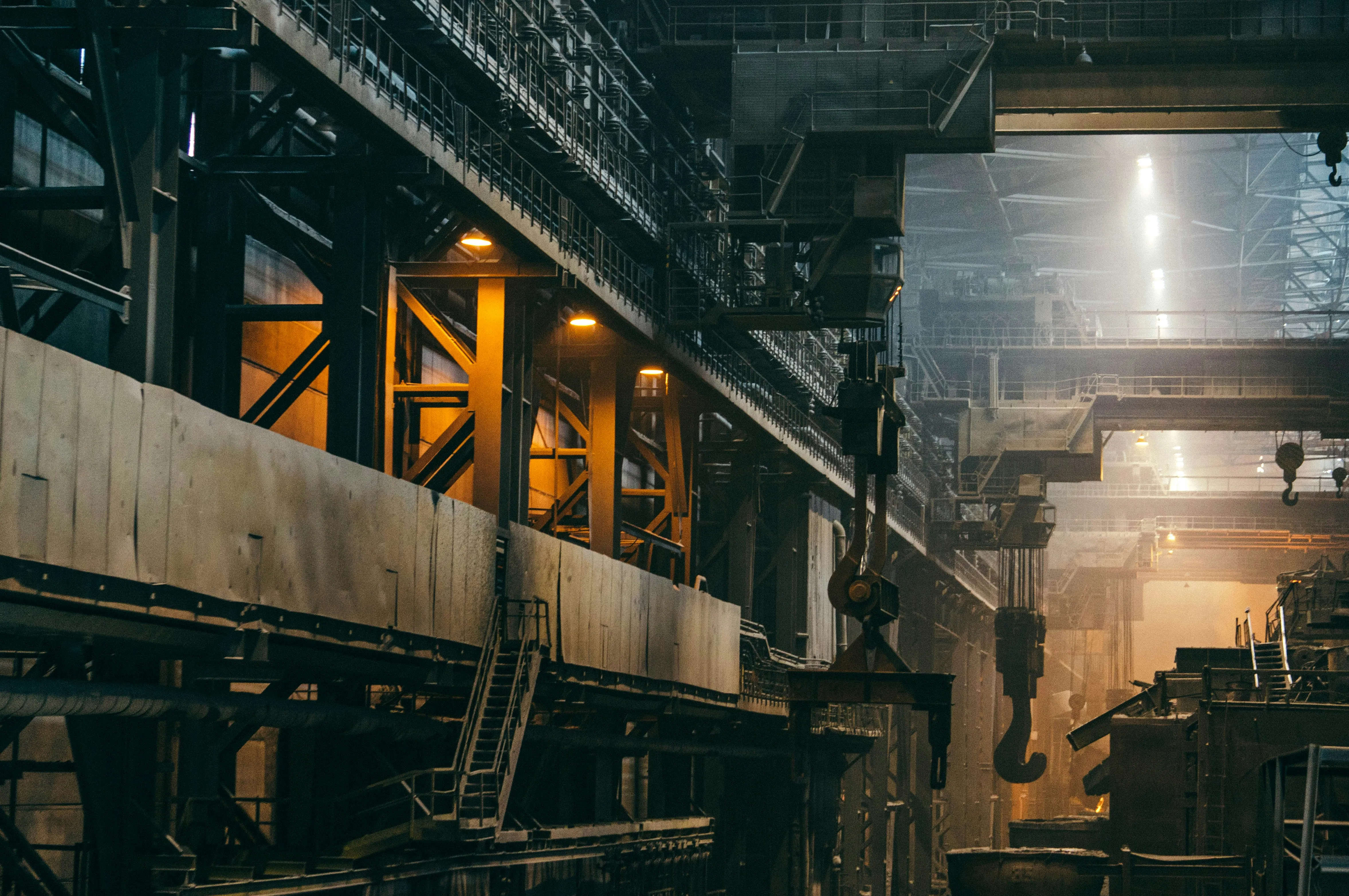
Energy Fuels (NYSE American: UUUU | TSX: EFR) is a US-based critical materials company operating across uranium, rare earth elements (REEs), vanadium, titanium, and zirconium. Its primary processing asset is the White Mesa Mill in Blanding, Utah - the only operating conventional uranium mill in the US and the only US facility capable of processing monazite for production of separated heavy rare earth element oxides. The company is transitioning from its established position as the largest US uranium producer into an emerging vertically integrated rare earth element platform, with a global asset footprint spanning the US, Australia, Madagascar, Brazil, and South Korea. The terbium oxide announcement represents a pivotal de-risking moment in that transition - moving the rare earth element thesis from development-stage promise to pilot-scale, commercially validated production.
1. The Milestone Is Real & Commercially Significant
Energy Fuels has produced 99.9% pure terbium oxide from US-sourced monazite - meeting the purity specifications required by global rare earth permanent magnet manufacturers.
Using monazite ore sourced from operations in Florida and Georgia, the White Mesa Mill achieved 99.9% terbium purity at pilot scale. Energy Fuels believes it is the first US company in many decades to produce high-purity terbium oxide from a primary mineral feedstock and publicly disclose actual production volumes and purities sufficient for downstream metal and alloy validation. This follows the company's earlier production of nearly 30 kilograms of 99.9% pure dysprosium oxide, which passed initial quality assurance and quality control processes at a major South Korean permanent magnet manufacturer.
Both the terbium oxide and dysprosium oxide have been requested by several magnet manufacturers globally to begin production validation. Being actively requested for commercial qualification testing is the step that precedes offtake agreements - and that is where contracted revenue originates. The mill is now producing terbium oxide at approximately 1 kilogram per week in its existing pilot circuit, with pilot production of samarium, europium, and gadolinium oxides planned to follow.
2. The Pricing Environment Structurally Favors Non-Chinese Producers
Terbium commands a significant Western supply premium - and the policy framework underpinning that premium is permanent, not temporary.
As of March 10, 2026, terbium oxide traded at $803 per kilogram on China's domestic market and $1,182 per kilogram free on board (FOB) China. That FOB price still understates the true premium available to verified non-Chinese producers: as of late 2025, dysprosium and terbium from non-Chinese sources were commanding 3 to 4 times Chinese quoted prices in European and Western markets, reflecting government willingness to absorb premium costs for strategic autonomy in critical mineral supply chains.
Critically, China's MOFCOM Announcement 18 of 2025 - which added terbium, dysprosium, samarium, gadolinium, lutetium, scandium, and yttrium to its export control framework - has not been suspended, and remains permanently within China's dual-use items control list even as some other restrictions were temporarily paused following diplomatic engagement. The structural supply risk for Western buyers is ongoing. Energy Fuels is building production capability directly into that unresolved constraint, which is precisely the condition that supports durable pricing premiums for non-Chinese supply.
3. White Mesa Mill Is the Only US Facility That Can Do This
The mill's unique regulatory and technical positioning creates a competitive moat that would take a decade and billions of dollars to replicate elsewhere in the US.
White Mesa Mill is the only US facility with commercial capacity to process monazite for production of high-purity light and heavy rare earth element (REE) oxides. It is also the only operating conventional uranium mill in the US, the largest uranium processing facility in the country, and the only US facility able to recycle uranium-bearing alternative feed materials. This combination of licenses, permitted capacity, and operating expertise represents an institutional barrier to entry that no new entrant can shortcut.
Any Western government or industrial buyer seeking a domestic heavy rare earth element supply chain currently has no US midstream alternative. That structural scarcity creates conditions for premium pricing and government-backed offtake arrangements - comparable to the Department of Defense's floor pricing mechanism of $110 per kilogram established with MP Materials for neodymium-praseodymium oxide. The White Mesa Mill's position in any future US government critical minerals framework is not incidental - it is central.
4. The Production Ramp Is Sequential & De-Risked
Each technical milestone - dysprosium qualification, then terbium production - systematically reduces execution risk on the path to commercial-scale heavy rare earth element separation.
The sequencing is deliberate and important for risk assessment. Dysprosium oxide was produced first, then validated by a South Korean permanent magnet manufacturer. Terbium followed, using the same separation infrastructure and confirming the chemistry generalizes across multiple heavy rare earth elements. Samarium, europium, and gadolinium piloting is next in the sequence. The planned Phase 1B expansion targets commercial dysprosium, terbium, and samarium oxide production by mid-2027, adding installed capacity for heavy rare earth element oxides alongside the existing Phase 1A capacity to process up to 10,000 tonnes per annum (tpa) of monazite and produce up to 1,000 tpa of neodymium-praseodymium oxide.
Phase 2, funded by the $700 million convertible notes offering completed in October 2025, would add a further 50,000 tpa of monazite processing capacity - bringing combined capacity to 60,000 tpa - and produce up to 6,000 tpa of neodymium-praseodymium oxide plus approximately 300 tpa of combined dysprosium and terbium oxide. At current Western pricing, that Phase 2 production profile generates a revenue potential the company estimates at nearly $1.2 billion annually. That figure is long-dated, but the technical pathway to get there is now more credible than it was 90 days ago.
5. Feedstock Delivery Is Now the Binding Constraint
The separation chemistry is proven. The critical variable for scaling heavy rare earth element revenue is now upstream feedstock - particularly the Donald Project final investment decision.
The company's monazite pipeline spans four sources with a combined planned capacity of approximately 40,900 tpa: the Donald Project joint venture (JV) with Astron Corporation in Victoria, Australia (up to 14,000 tpa); the Vara Mada Project in Madagascar (up to 24,000 tpa across two phases); the Bahia Project in Brazil (approximately 3,000 tpa); and a current offtake agreement with Chemours Company (approximately 800 tpa). Near-term production runs almost entirely on the Chemours offtake - sufficient for pilot operations, but not for Phase 1B commercial volumes.
The Donald Project is the critical near-term feedpoint. It carries exceptional levels of heavy rare earth element content - including dysprosium, terbium, and samarium - and has conditional support of A$80 million in development financing from Export Finance Australia against a total funding estimate of approximately A$520 million (approximately US$340 million). The FID was expected as early as the first quarter of 2026. Any delay to the Donald FID or construction timeline creates a direct bottleneck on the most valuable portion of the revenue mix. This is the upstream catalyst investors should monitor most closely in the near term.
6. The ASM Acquisition Is the Vertical Integration Catalyst
The proposed acquisition of Australian Strategic Materials (ASM), targeted to close mid-2026, would move Energy Fuels from midstream oxide producer to fully integrated mine-to-metal supplier - capturing the highest-margin step in the rare earth element value chain.
Separated oxides are valuable, but metals and alloys are where the deepest margin and greatest strategic value reside - and where China's dominance is most entrenched. The ASM acquisition, announced January 20, 2026, adds an operational Korean Metals Plant in Ochang, South Korea at approximately 1.3 kilotonnes per annum (ktpa) of neodymium-iron-boron (NdFeB) alloy capacity with expansion plans to 3.6 ktpa in Phase 2 and 5.6 ktpa in Phase 3, a planned American Metals Plant with initial capacity of approximately 2.0 ktpa expandable to 4.0 ktpa, and the Dubbo development project in New South Wales with a 42-year mine life producing approximately 1,000 tpa of neodymium-praseodymium, 49 tpa of dysprosium, and 11 tpa of terbium annually.
Successful closing materially upgrades the investment case from midstream oxide producer to vertically integrated mine-to-metal platform - enabling Energy Fuels to supply not just oxides but finished NdFeB alloy to magnet manufacturers, capturing margin at every step of the chain. A delay or failure would leave the company dependent on third-party metal-making capacity and limit its ability to fully monetize its separation capabilities. The ASM closing is the single most important binary event between now and year-end 2026.
7. The Balance Sheet Is Adequate: Execution Across Multiple Programs Is the Risk
Energy Fuels is well-capitalized with $927 million in working capital, but the investment case requires coordinated execution across four concurrent development programs in multiple jurisdictions.
Working capital of $927 million as of December 31, 2025 includes $797 million in marketable securities, $73.5 million in inventory, and $64.7 million in cash, against total assets of $1.41 billion. The $700 million convertible notes offering - completed at a 0.75% annual coupon rate and oversubscribed by more than 7 times - confirms strong institutional conviction in the thesis and provides the capital runway for Phase 2 expansion and the Donald Project development contribution. The uranium business, targeting 1.5 to 2.5 million pounds of uranium oxide production in 2026 at costs of approximately $23 to $30 per pound at the Pinyon Plain Mine in Arizona, generates meaningful operating cash flow to support day-to-day operations.
The risk is not solvency - it is execution complexity. Energy Fuels is simultaneously managing uranium production growth, White Mesa Phase 1B and Phase 2 rare earth element expansion, the Donald JV, the ASM acquisition integration, and early-stage programs at Vara Mada and Bahia. Each program carries independent permitting, financing, and timeline risk across Australia, Madagascar, Brazil, South Korea, and the US. Capital allocation discipline and milestone delivery - not financing capacity - will determine whether the full thesis is realized on the projected timeline.
Bottom Line
Energy Fuels has delivered a technically credible, commercially relevant milestone with the production of 99.9% pure terbium oxide at White Mesa - the second consecutive heavy rare earth element proof point following dysprosium qualification. The separation chemistry is now validated across two critical heavy rare earth elements using existing infrastructure, materially reducing the technical risk component of the investment thesis.
The macro backdrop remains structurally supportive: China's export controls on terbium and dysprosium are permanent, Western supply premiums are real and durable, and no other US facility can replicate what White Mesa is doing. The revenue potential at Phase 2 scale - approaching $1.2 billion annually at current Western pricing - is credible in direction, even if the timeline carries execution risk.
What changes from this announcement is the risk profile of the rare earth element thesis, not the valuation. Investors should now shift their focus from "can they do it technically" to "can they execute commercially" - and the answers to that question will arrive in stages: the ASM acquisition closing, the Donald Project FID, Phase 1B construction commencement, and the first commercial qualification contracts. Each of those events, if delivered on schedule, will progressively close the gap between where Energy Fuels trades today and what the fully integrated mine-to-metal platform could ultimately be worth.
Analyst's Notes





Subscribe to Our Channel






Stay Informed