Could ATHA Energy Be Sitting on Canada's Next Big Uranium Find?



ATHA Energy holds Canada's biggest uranium land position, hit uranium in every 2025 test hole at Angilak, and holds a free stake in two bigger uranium companies' land.
- ATHA Energy Corp. holds the largest uranium exploration land position in Canada, giving it more ground to search for uranium than any other single exploration company in the country.
- Every test hole drilled at a newly found uranium zone at ATHA's Angilak Project in 2025 came back positive, a clean sweep that is unusual in early-stage uranium exploration.
- The most advanced target at Angilak has an estimated uranium potential that has not yet been fully tested, with roughly three-quarters of the area still undrilled and available for future programs.
- ATHA holds a 10% stake in land being searched by two much larger uranium companies at no cost to ATHA until a mine is actually built.
- ATHA is currently valued far below those two larger companies, reflecting its earlier stage but also the potential for its value to grow if drilling confirms what the early results suggest.
What ATHA Does & Why It Is Worth Watching
Uranium is the fuel used in nuclear power plants. As more countries turn to nuclear energy as a cleaner source of electricity, demand for uranium has been growing while the number of new mines coming into production has not kept pace. That creates an opportunity for companies that are out searching for uranium in the ground today.
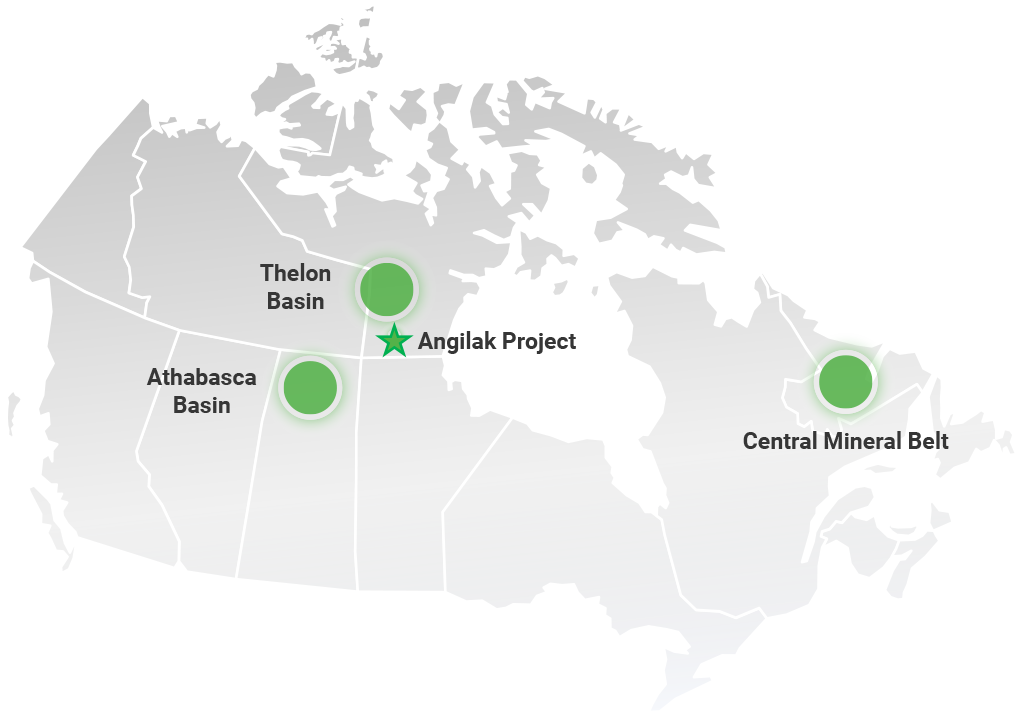
ATHA Energy (TSX-V: SASK | FRA: X5U | OTCQB: SASKF) is one of those companies. It is not a producer. It does not sell uranium or generate revenue yet. What it does is explore for uranium, meaning it acquires land, studies the ground, and drills test holes to find out whether a uranium deposit worth mining is sitting below the surface. The company has invested more than C$115 million doing exactly that across three parts of Canada: Saskatchewan, Nunavut, and Newfoundland and Labrador. That gives ATHA the largest uranium exploration land position in Canada.
Canada is one of the best places in the world to look for uranium. Its mines produce uranium ore at concentrations far above the global average, which makes them cheaper to operate and more profitable. Saskatchewan, where a large portion of ATHA's land sits, was ranked 3rd out of 68 mining regions worldwide for investment friendliness in an independent 2025 survey by the Fraser Institute, a widely used benchmark for investors assessing where in the world it is safe and practical to build a mine.
What You Own When You Buy Shares in ATHA
When you buy a share in ATHA, you are buying a piece of a company that owns a large portfolio of land it is actively searching for uranium. You are also getting indirect exposure to land being explored by two much larger and more advanced uranium companies. As at April 30, 2026, the total value of all ATHA shares on the market was approximately C$385 million. Three independent investment banks publish ongoing research on the company, providing outside analysis for investors who want a second opinion.
The land spans three regions. The biggest block sits in Saskatchewan's Athabasca Basin, which is the world's richest uranium-producing region. ATHA holds more land there than any other exploration company. The second block is in Nunavut, where the company's main project sits. The third is in Newfoundland and Labrador, where ATHA has land near some of the largest known uranium deposits in North America. ATHA owns its Nunavut land outright with no partners, meaning any discovery there belongs entirely to its shareholders.
The Main Project: Three Separate Areas, One Promising Region
ATHA's most important asset is the Angilak Project in Nunavut, which it owns entirely. Think of this project as a large stretch of land where uranium has already been found in at least three separate areas. Those three areas are spread across a connected stretch of ground, each at a different stage of investigation.
The most advanced of the three already has a known uranium accumulation that geologists consider one of the largest high-grade uranium deposits in Canada outside the Athabasca Basin. Based on test holes completed so far, the team has estimated a possible range for how much uranium could be there. That estimate is preliminary, meaning it has not been officially confirmed by independent experts, and further drilling may change it. What stands out is that only about one-quarter of this area has been tested so far, leaving most of the ground open for future programs.
The two other areas within the project, one discovered in 2025 and one identified earlier, have both returned uranium in test holes but need more drilling to understand their full size. Having three independent areas to test in 2026 means the company is not betting everything on a single result.
The 2025 Results: A Clean Sweep
The biggest news from ATHA's 2025 work was the discovery of a new uranium zone within the Angilak Project. The company drilled a series of test holes through this zone, and every single one came back positive for uranium. In early-stage uranium exploration, that kind of result is not common. It is normal for many holes to return little or nothing, so hitting uranium in every hole across a broad area is a strong signal that the uranium is widespread rather than isolated to one small patch.
The best individual result from this program returned a uranium concentration many times above the global average for uranium mines. That level of concentration matters because higher grades generally mean lower costs to extract the uranium, which makes a potential future mine more economically attractive. The discovery gave the company a clear and well-defined starting point for a larger drilling program in 2026.
Four Ready-to-Drill Areas in Saskatchewan
Beyond Nunavut, ATHA has four specific areas in Saskatchewan that have been prepared for drilling through years of survey work. These are not blank patches of land. Each one already has evidence of uranium gathered from previous studies and, in some cases, previous test holes. The four areas sit in a region rated 3rd out of 68 globally for mining investment friendliness in the Fraser Institute's 2025 survey, which means the rules, taxes, and infrastructure supporting mining are among the most straightforward in the world.
For a beginning investor, that jurisdictional quality matters because even a promising uranium discovery can be stopped or delayed by a difficult regulatory environment or political instability. Saskatchewan's top-tier ranking reduces that risk significantly for any project ATHA advances in the region.
The Free Stake: Getting Exposure Without Paying for It
One of the most straightforward parts of ATHA's investment case is a 10% ownership stake it holds in certain land being actively searched by NexGen Energy Ltd. and IsoEnergy Ltd., two much larger and more advanced uranium companies. The arrangement works simply: those companies pay all the costs of searching the land themselves, and ATHA does nothing except wait. If either company makes a significant discovery or decides to build a mine on that land, ATHA's 10% stake converts into a real share of that project's financial returns.
NexGen is one of the largest uranium development companies in Canada, and IsoEnergy is actively drilling in one of the most productive parts of the Athabasca Basin. Both are well funded and running active programs. ATHA's current market value does not appear to include any assigned value for this 10% stake, which means a discovery by either company on that land could add value to ATHA shares from a direction entirely separate from its own drilling activity.
The Investment Thesis for ATHA Energy
- ATHA is priced as an early-stage explorer despite holding Canada's largest uranium land position and already having a new uranium zone where every 2025 test hole returned positive results, meaning the market has not yet assigned full credit for what the ground may hold.
- Most of the most advanced uranium target at Angilak has not yet been drilled, so each new test hole in 2026 will either grow or shrink the estimated potential, giving investors a clear series of events to follow.
- The 10% stake in land being explored by two larger companies costs ATHA nothing until a mine is actually built, giving shareholders free exposure to the work of two well-funded operators.
- Saskatchewan and Newfoundland and Labrador, where most of ATHA's land sits, both ranked in the top 15 out of 68 global mining regions for investment friendliness in the Fraser Institute's 2025 survey, lowering the regulatory risk that often derails mining projects before they reach production.
- ATHA has not yet published an officially confirmed uranium resource estimate for Angilak, which is the next major milestone and the result most likely to close the gap between ATHA's current valuation and those of more advanced peers.
- Seven separate areas across two regions give investors multiple independent chances for positive news in 2026, spreading the risk across the portfolio rather than concentrating it in one hole or one program.
ATHA is an exploration company with no revenue and no producing mine. Its value today is entirely based on what the ground might hold, not what it is currently producing. That makes it a higher-risk investment than a company that already mines and sells uranium. The possibility of strong returns exists precisely because the value is unproven, but so does the possibility of loss if drilling does not confirm what early results suggest.
The key uncertainty is that the uranium potential identified at Angilak has not been independently confirmed to the standard required by Canadian financial regulators. It is an estimate based on limited drilling, and continued work may increase it, reduce it, or fail to confirm it entirely. The remoteness of the Nunavut location also adds cost and means the drilling season is short each year, which slows the pace at which results can be generated. There is also a convertible loan on the company's books that, if converted into shares, would slightly reduce what each existing share represents.
The most important things to watch in 2026 are whether the company releases an officially confirmed uranium resource estimate at Angilak, and whether the new zone discovered in 2025 grows larger with additional drilling. Either of those outcomes would be a meaningful step forward and would likely bring ATHA's valuation closer to the levels already assigned to more advanced peers in the same region.
TL;DR
ATHA Energy owns more uranium exploration land in Canada than any other single company and is advancing a project in Nunavut where every test hole in 2025 found uranium in a newly identified area. A bigger drilling program is planned for 2026, backed by more than C$115 million already invested in these assets. ATHA is currently priced well below comparable companies that have confirmed uranium deposits, reflecting the work still ahead.
FAQs (AI-Generated)
Analyst's Notes





Subscribe to Our Channel
Stay Informed