Digging Deeper: How Uranium Companies Are Finding More Ore in Deposits They Thought They Already Knew


IsoEnergy's Hurricane deposit, the world's highest-grade uranium resource of its kind, is growing beyond its known boundaries as new drilling finds high-grade uranium in areas the original map had dismissed, raising the prospect of a larger deposit in one of the world's most important uranium regions.
- The Athabasca Basin in northern Saskatchewan produces uranium at grades far higher than anywhere else in the world, making it one of the most important uranium regions on Earth.
- Official deposit measurements are limited by how much drilling has been done, meaning many deposits carry additional uranium just outside their currently mapped boundaries.
- When companies revisit deposits with updated thinking and drill into underexplored edges, they sometimes find high-grade uranium in areas the original map had dismissed, increasing the size and value of the project.
- IsoEnergy's Hurricane deposit, already the highest-concentration uranium resource of its kind in the world, returned strong new results from a previously underdrilled area in its 2026 winter program, pointing to potential growth in its official size.
- With global uranium demand projected to more than double by 2040 and new mines taking up to twenty years to build, projects demonstrating resource growth in a well-ranked jurisdiction like Saskatchewan carry increasing significance for long-term supply.
Canada's Athabasca Basin in northern Saskatchewan produces uranium ore at grades roughly 100 times higher than the global average, according to Cameco, the Canadian company that operates both Cigar Lake and McArthur River, the basin's two largest mines. That means far less rock needs to be processed to produce the same amount of uranium compared to mines elsewhere. It is in this region that IsoEnergy (NYSE American: ISOU; TSX: ISO) is advancing its Larocque East project, home to the Hurricane deposit, and the basin's quality advantage raises a question all investors in the area should ask: does a company's official uranium measurement actually capture everything in the ground?
Why the First Map Is Rarely the Final One
Uranium in this region formed when ancient fluids settled along cracks in the Earth's crust and concentrated into high-grade pockets, and because those cracks run in long irregular patterns, uranium does not distribute evenly. Early drilling tends to sample the richest central areas while edges receive less attention, and since Canada's mining rules require official measurements to be based only on ground actually tested, outer zones that have not been drilled do not appear in the published figure even if they hold significant uranium.
This means many Athabasca Basin deposits carry upside sitting just outside their currently mapped boundaries, and the mapped edge reflects where drilling stopped, not where the uranium stops.
Going Back to Rethink the Map
Companies unlock that upside by reviewing their existing data, updating their picture of where those ancient cracks run, and drilling targeted holes into promising edges. When those new holes find high-grade uranium where the old map said there was little, it confirms the original boundary was drawn too conservatively, and if laboratory analysis of the rock samples agrees with on-site radioactivity readings, the result can be formally included in an updated measurement.
For investors, the consequence is direct: a deposit that grows its official measurement becomes a larger, more valuable project, and a company demonstrating that growth through disciplined drilling is creating value from ground it already owns.
Two Tests That Determine Whether a Discovery Matters
Finding more uranium is only valuable if the deposit can become a mine, and two factors determine whether that is realistic. Deposits closer to the surface cost less to reach and require simpler methods. Proximity to a processing facility matters equally: uranium ore must be converted at a mill before sale, and building one in a remote northern location takes years of approvals and costs most smaller deposits cannot justify, so a project that can truck ore to an existing licensed mill avoids that entire burden.
IsoEnergy's Hurricane Deposit: A Real-World Example
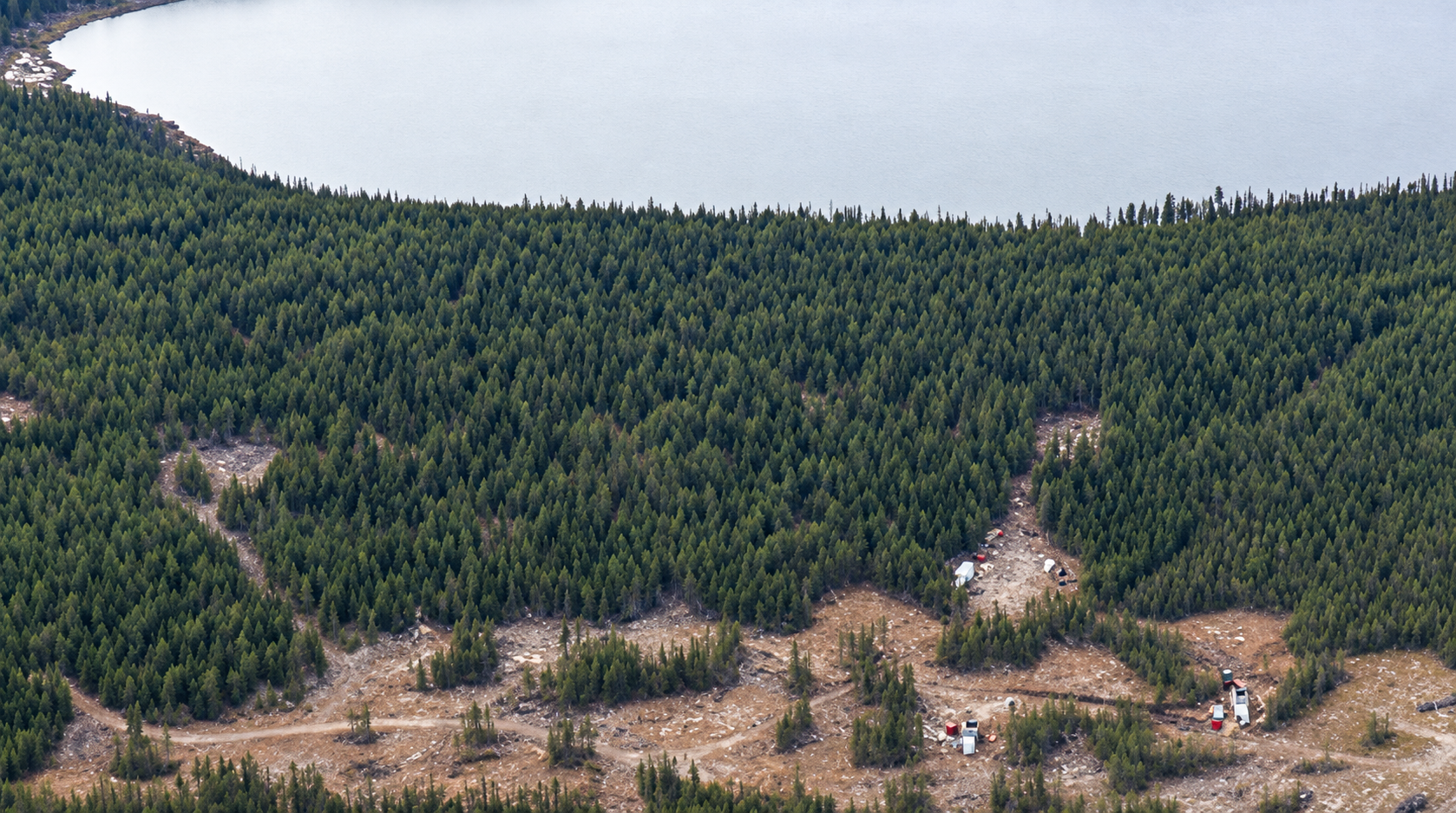
IsoEnergy and its Larocque East project illustrate this process. The company's Hurricane deposit holds the highest uranium concentration of any similarly classified deposit in the world, according to its 2022 technical report. In May 2026, winter drilling results included a significant hole testing the southern edge of the deposit, an area with less prior drilling that the existing map had classified as mostly low-grade ground.
That hole found uranium concentrations well above what the map predicted.
Dan Brisbin, IsoEnergy's Vice President of Exploration and the qualified geologist responsible for the technical data, explained why the location matters:
"The LE26-248 intersection is important as it is located along the southernmost known fault strands within the Hurricane fault zone, where drill hole density is lower than on faults to the north that host the high-grade Hurricane uranium mineralization. This intersection, along with mineralization intersected in step-out holes to the east like LE26-243 and LE26-234, highlights the potential along the Hurricane South Trend."
Two additional holes to the east confirmed the result was not isolated, establishing uranium across multiple points in the same newly identified zone. On both practical tests, the project scores well: Larocque East sits a short trucking distance from the licensed McClean Lake mill operated by Orano Canada, and Hurricane's uranium sits closer to the surface than both of the basin's producing mines, with the deposit lying along the same regional underground structure that hosts high-grade uranium on a Cameco and Orano joint venture.
What Comes Next and Why It Matters
Canada's mining rules require a company to show uranium runs continuously across a zone before a new finding can be formally added to a deposit's official size, so a single positive result is not enough on its own. IsoEnergy has announced a summer 2026 program of around twenty holes to test whether the uranium found in winter runs continuously enough to be formally counted, and a company that completes that follow-through is demonstrating the methodical progress that supports a long-term development case.
The Bigger Picture
Several Athabasca Basin projects were originally measured under older, less comprehensive drilling programs, and as companies revisit them, some are finding original boundaries were more conservative than the geology required. The World Nuclear Association's 2025 Nuclear Fuel Report projects global uranium demand could more than double by 2040, while several of the world's largest producing mines are expected to wind down in the 2030s, and building a new mine now takes between ten and twenty years. The Fraser Institute ranked Saskatchewan among the top mining regions globally for investment attractiveness in its 2026 survey, reinforcing the province's position as a preferred location for uranium development.
Industry Outlook
The uranium sector faces a structural supply gap that discovery alone cannot close. Revisiting and expanding established deposits in proven jurisdictions is becoming a practical necessity. For companies in the Athabasca Basin, growing resources from existing ground reduces the time and capital required to reach a production decision. Projects that combine high-grade resources, shallow depth, infrastructure access, and a stable regulatory environment are best placed to contribute when the gap between global demand and available supply widens in the 2030s. The work underway at deposits like Hurricane is part of a broader basin-wide effort to answer a question the uranium market increasingly needs resolved: how much more is there, and how quickly can it be brought to account.
FAQs (AI-Generated)
Analyst's Notes





Subscribe to Our Channel


Stay Informed