Energy Fuels Posts $36 Million in Q1 Revenue as New CEO Sets Execution Agenda Across Uranium, Rare Earths & Heavy Mineral Sands



Energy Fuels posts $36M Q1 revenue, $957M working capital, first US terbium oxide production, and reaffirms full-year uranium guidance under new CEO Ross Bhappu.
- Energy Fuels recorded total revenues of $35.8 million in the first quarter of 2026, selling 510,000 pounds of uranium oxide (U3O8) at a weighted average realised price of $70.04 per pound, with spot sales of 100,000 pounds generating $9.6 million at $95.88 per pound
- The net loss of $10.8 million ($0.04 per share) represented a year-on-year improvement of approximately 59% versus the $26.3 million loss recorded in the first quarter of 2025
- Working capital at 31 March 2026 stood at $956.6 million, comprising $108.4 million in cash, $802.2 million in marketable securities, and $69.0 million of inventory
- Pilot-scale production of high-purity terbium oxide at the White Mesa Mill was confirmed in March 2026, representing the first US primary production of this heavy rare earth element in decades, at approximately 99.9% purity
- The planned acquisition of Australian Strategic Materials Limited, covering the Dubbo rare earth project in New South Wales and a metallisation facility in South Korea, remains on track to close as early as July 2026
Energy Fuels Inc. (NYSE American: UUUU | TSX: EFR) has reported first quarter 2026 financial and operational results reflecting a material improvement in financial performance compared to the same period in 2025, alongside continued progress across its uranium, rare earth elements (REEs), heavy mineral sands, and medical isotope programmes.
New Leadership & Strategic Priorities
The quarterly results coincide with the transition of the chief executive role from Mark Chalmers to Ross Bhappu. Bhappu, who assumed the position of President and Chief Executive Officer, signalled that the company's near-term focus is on delivering against existing plans rather than introducing new strategic directions:
"My immediate focus is disciplined execution - continuing to align our global teams, advancing development projects with a strong emphasis on schedule certainty and capital efficiency, and strengthening the operational foundation required to support sustained, long-term growth as a vertically integrated critical materials company."
Bhappu identified several first-quarter achievements as representative of the company's multi-commodity progress:
"During the quarter, we made meaningful progress across our portfolio. We successfully produced terbium oxide at pilot scale, announced the planned acquisition of Australian Strategic Materials, and made the decision to install infrastructure at the White Mesa Mill to enable future production of heavy rare earth oxides, including samarium, europium, gadolinium, terbium and dysprosium."
Terbium and dysprosium are heavy rare earth elements used to make high-performance permanent magnets that retain their strength at elevated temperatures - a property required in electric vehicle motors and military equipment.
Uranium Operations & Inventory
Energy Fuels operates uranium mines in the western United States and processes the ore at its White Mesa Mill in Utah - the only fully licensed conventional uranium processing facility currently operating in the US. Uranium is sold to nuclear power utilities under long-term fixed contracts and, where market conditions allow, on the open spot market at prevailing prices.
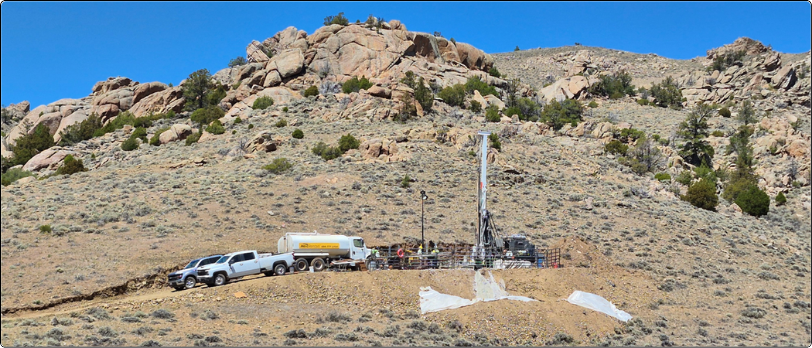
Mining continued at three sites - Pinyon Plain, La Sal, and Pandora - during the first quarter, producing ore containing approximately 425,000 pounds of uranium. Pinyon Plain accounted for approximately 375,000 pounds at an average grade of approximately 1.12%, meaning roughly 1.12 pounds of uranium was present for every 100 pounds of rock mined. The company noted that grades were lower in the quarter due to movement between higher-grade sections of the deposit, and stated that grades are expected to improve in subsequent periods.
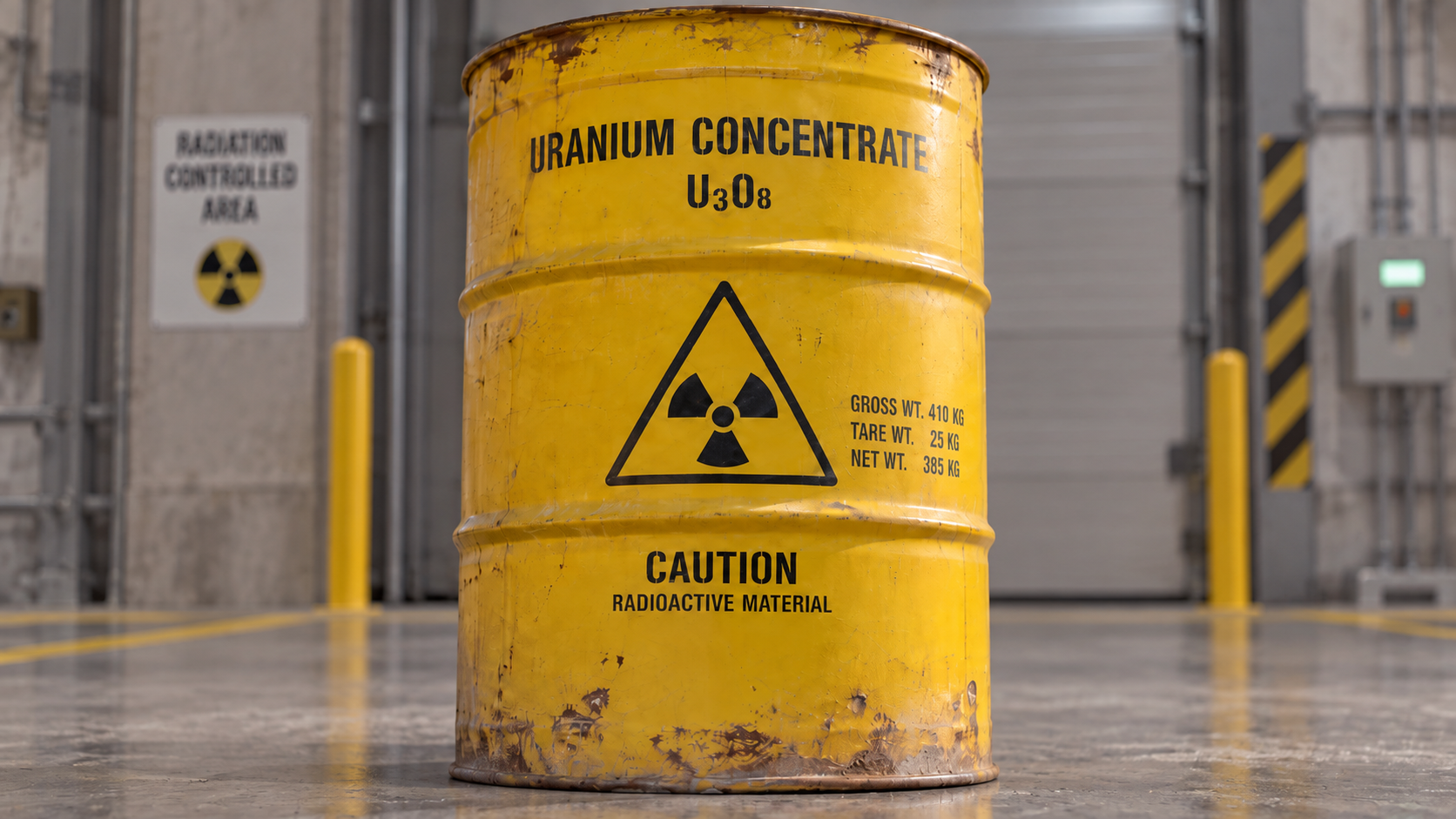
The White Mesa Mill produced 790,000 pounds of finished uranium in the first quarter, with production crossing 1 million pounds in April 2026. The average cost of uranium held in finished inventory fell by approximately $7 per pound (16%) during the quarter to approximately $36 per pound - driven by the lower-cost ore from the Pinyon Plain mine, where the all-in cost to mine, transport, and process ore runs approximately $23 to $30 per pound. Lower production costs relative to the prevailing uranium price widen the potential margin on future sales.
Total uranium held across all inventory categories - including ore at the mine, material in processing, and finished product - stood at approximately 2.24 million pounds at quarter end, providing cover for near-term contracted deliveries and potential spot sales. Full-year 2026 guidance remains unchanged at 1.5 million to 2.0 million pounds of uranium sales, 2.0 million to 2.5 million pounds mined, and 1.5 million to 2.5 million pounds processed.
Rare Earth Elements Programme
The White Mesa Mill achieved a significant processing milestone in March 2026 with the pilot-scale production of terbium oxide at approximately 99.9% purity - the level of refinement required by global manufacturers of permanent magnets. The company described this as the first US primary production of terbium in decades. Pilot scale means the process has been demonstrated in a controlled facility setting; the next step toward commercial production involves scaling up that process and securing the necessary regulatory approvals and feedstock supply.
Energy Fuels is also expanding the Mill's existing rare earth separation infrastructure to recover additional heavy rare earth elements commercially, including samarium, europium, gadolinium, terbium, and dysprosium. In parallel, the company is evaluating whether the facility can process intermediate rare earth materials sourced from third parties - a potential additional revenue stream that would not require the uranium processing equipment already in place. Discussions with magnet manufacturers and equipment makers regarding future supply agreements are ongoing.
A larger-scale expansion - for which a detailed engineering cost study was published in January 2026 - is designed to increase the Mill's neodymium-praseodymium (NdPr) production capacity from 1,000 tonnes per year to approximately 6,229 tonnes per year, while adding approximately 80 tonnes per year of terbium and 288 tonnes per year of dysprosium. NdPr is the primary material used in the most powerful commercially available permanent magnets. The expansion is estimated to cost approximately $410 million in initial capital and is projected to generate substantial annual earnings over a 40-year modelled project life. No construction decision has yet been made. Rare earth prices as of 1 May 2026, per Benchmark Mineral Intelligence, were $125 per kilogram for NdPr in both Europe and North America, $1,300 per kilogram for dysprosium, and $4,500 per kilogram for terbium.
Australian Strategic Materials Acquisition
On 20 January 2026, as amended on 12 March 2026, Energy Fuels entered a binding agreement to acquire 100% of Australian Strategic Materials Limited (ASM) through a court-supervised process under Australian law. ASM holds the Dubbo Project in New South Wales - a deposit containing a range of rare earth and other critical minerals - along with a facility in South Korea capable of converting rare earth oxides into metal alloys used in magnet manufacturing. ASM also holds plans for a potential equivalent facility in the US.
Under the terms of the transaction, ASM shareholders would receive 0.053 Energy Fuels common shares per ASM share plus up to AUD$0.13 per share in cash. Australian foreign investment approval has been obtained. Court, regulatory, and shareholder approvals remain outstanding. The transaction is targeted to close as early as July 2026.
Heavy Mineral Sands Projects
Heavy mineral sands are coastal or ancient beach deposits that contain commercially valuable minerals, including titanium and zirconium used in industrial manufacturing, and monazite - a mineral that contains rare earth elements including both light and heavy varieties. Energy Fuels' strategy involves mining these deposits and shipping the monazite concentrate to the White Mesa Mill for rare earth processing.
At the Vara Mada Project in Madagascar, which Energy Fuels owns outright, a Feasibility Study published in January 2026 confirmed a 38-year mine life and robust project economics: a post-tax net present value of approximately $1.8 billion (at a 10% discount rate), an internal rate of return of approximately 25%, average annual earnings before interest, tax, depreciation, and amortisation of over $500 million, and average annual free cash flow of approximately $264 million over the modelled mine life. No construction decision has been made. The company is in ongoing negotiations with the Government of Madagascar to finalise the legal and fiscal framework for the project. Recent political changes in Madagascar, including government leadership transitions, had not materially affected the project at the time of the release, though the company stated it continues to monitor conditions.
At the Donald Project in Australia, operated through a joint venture with Astron Corporation Limited, all major regulatory approvals required for construction and operation have been received. Energy Fuels' ownership stake in the joint venture increased to 10.5% at 31 March 2026, with AUD$44.6 million contributed. The company holds an option to increase its interest to up to 49% through further investment tied to designated milestones, including a potential construction decision. The Donald Project's monazite concentrate contains notable concentrations of heavy rare earth elements and is expected to supply the White Mesa Mill over a 39-year modelled mine life.
The Bahia Project in Brazil is at an earlier stage. Two drill rigs are currently operating at the site to gather the geological data required for independent technical reports, which are targeted for completion as early as late 2026. The project has the potential to supply 3,000 to 5,000 tonnes of monazite per year to the White Mesa Mill over the long term.
Medical Isotopes
Energy Fuels is also pursuing the potential recovery of radioactive isotopes used in cancer treatment from its existing Mill operations. Radium-226 and radium-228 are naturally occurring radioactive elements present in the ore streams processed at the Mill; the company is conducting engineering and test work to determine whether these can be extracted in commercially useful quantities. Upon successful production of research-scale quantities of radium-226, the company intends to assess commercial-scale production capability at the Mill as early as 2028, subject to completion of engineering design, offtake agreements, and regulatory approvals.
Next Steps
In uranium, the company is targeting continued mine and mill production through 2026, with production costs expected to continue declining as lower-cost Pinyon Plain ore is processed. A subsequent conventional mill run is anticipated later in 2026 or early 2027, subject to the accumulation of sufficient ore stockpiles. Permitting is being accelerated at the Roca Honda and Bullfrog uranium development projects.
In rare earth elements, the heavy REE circuit expansion at the White Mesa Mill is advancing subject to regulatory approvals, financing, and feedstock availability. No construction decision has been made on the larger Phase 2 expansion; offtake discussions with manufacturers are continuing.
The ASM acquisition is targeting a close as early as July 2026, subject to remaining court, regulatory, and shareholder approvals.
FAQs (AI-Generated)
Analyst's Notes





Subscribe to Our Channel








.jpg)
Stay Informed