




Fitzroy Minerals: The Pucobre JV Structure That Converts Spend Into a Recoverable Advance



Fitzroy Minerals' Buen Retiro JV structures US$11.3M in oxide spending as a recoverable advance, targeting non-dilutive sulphide exploration funding.
- The Pucobre joint venture's 90% payback provision structures Fitzroy's minimum US$11.3M in eligible expenditure as a conditionally recoverable advance against the Buen Retiro project.
- Pucobre's claw-back exercise, if elected, returns approximately C$15M to Fitzroy, representing 90% of Fitzroy's total eligible expenses.
- The heap leach programme accesses Pucobre's Planta Biocobre solvent extraction-electrowinning facility at 80% availability, removing the need for a dedicated processing plant.
- Fitzroy targets approximately 10 million pounds of attributable copper production per annum with a 50% to 70% attributable free cash flow split post-construction.
- Fitzroy management has framed heap-leach operating cash flows and claw-back proceeds as the intended funding source for sulphide exploration beneath the oxide zone, providing the company with an alternative to dilutive equity.
Most junior mining companies fund exploration through successive equity raises. Fitzroy Minerals (TSX-V: FTZ | OTCQX: FTZFF) is structured around a different capital logic. Under the letter of intent governing the Buen Retiro joint venture (JV), the company's minimum US$11.3M in eligible expenditure functions as a conditionally recoverable advance rather than a sunk development cost, with a projected C$15M cash return if Pucobre elects its claw-back option. Together, the two mechanisms constitute Fitzroy's self-funding alternative to dilutive equity.
Buen Retiro Project & the Pucobre Partnership
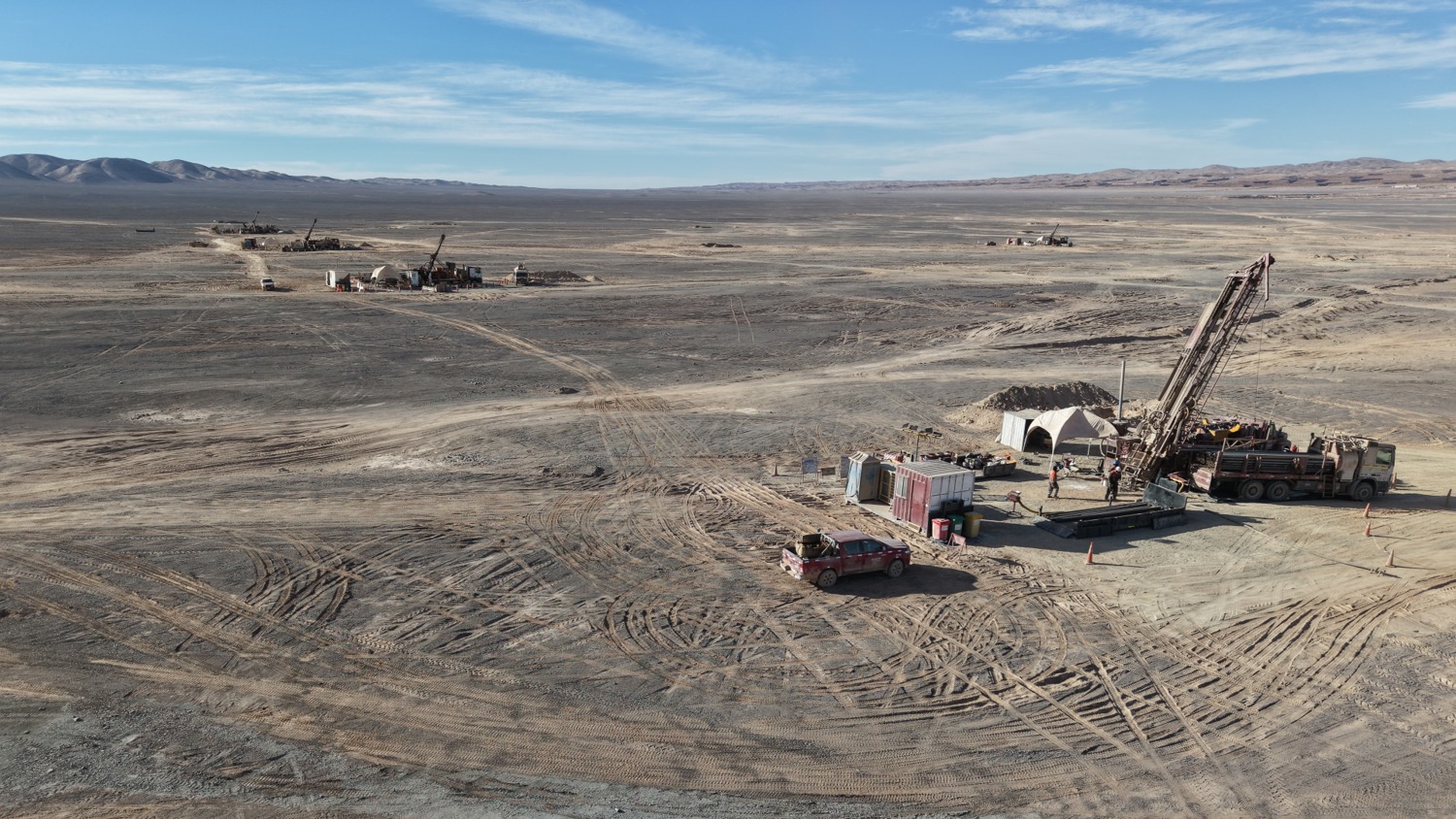
Buen Retiro's brownfield status is the foundational condition that makes the joint venture's capital-light structure viable. The Iron Oxide Copper Gold (IOCG) site features a historical open pit, 28 kilometres of drilling completed prior to Fitzroy's programme, and a low-elevation position near the Pan-American Highway, 35 kilometres from the Chilean coast. These physical attributes reduce the capital required to advance the heap leach programme from concept to production.
Pucobre, the Chilean copper producer serving as operating counterparty, contributes the second critical precondition: access to the Planta Biocobre solvent extraction-electrowinning facility. Under the letter of intent, the two parties have confirmed a joint development plan with shared processing facilities, eliminating the need for Fitzroy to fund a dedicated plant.
Joint Venture Terms & the Claw-Back Provision
The joint venture's financial structure creates a category of development expenditure that behaves more like a recoverable advance than a conventional sunk cost. To acquire a 100% interest in the project, Fitzroy must meet minimum eligible expenses of US$11.3M by August 2027, of which US$7M must be directed to exploration or technical work. An additional bullet payment of US$4M plus US$300,000 in legal fees falls due in August 2028. The claw-back provision, running alongside these option terms, reframes the capital allocation logic.
Pucobre holds the right to reclaim a 30% interest in Buen Retiro following Fitzroy's delivery of a Technical Report in August 2028. To exercise that right, Pucobre must pay Fitzroy 90% of Fitzroy's total eligible expenses. At the minimum spend of US$11.3M, the payment reaches US$10.2M. Fitzroy projects a claw-back of approximately C$15M from total cash received, reflecting eligible expenses anticipated to exceed the minimum.
The claw-back provision does not guarantee recovery. Pucobre holds the election right, exercisable upon receipt of the Technical Report in August 2028, and the decision to crystallise the projected C$15M return is Pucobre's alone.
Heap Leach Path to Production
Fitzroy has the opportunity to monetise copper oxides early and will use this meaningful revenue stream to aggressively explore and expand the oxide and sulphide discoveries without diluting shareholders. The heap leach programme advances on two parallel tracks: an active infill drill campaign to establish the oxide resource base, and confirmed access to Pucobre's processing infrastructure, eliminating the need for a dedicated facility. Fitzroy has completed 39 drill holes totalling 6,885 metres, comprising 35 infill drill holes and four geotechnical drill holes, with the infill programme targeting a maiden mineral resource for the Southwest Area. Recent oxide results include 78.0 metres at 1.70% copper, including 40.0 metres at 3.02% copper, and 75.0 metres at 0.82% copper, including 8.0 metres at 3.77% copper.
Processing access is the programme's primary capital lever. Fitzroy has been offered 80% availability of the Planta Biocobre facility, which carries a capacity of 800 tonnes per month, or 9,600 tonnes per annum. Operating cost data is shared on an open-book basis.
Chief Executive Officer of Fitzroy Minerals, Merlin Marr-Johnson, is direct about what the Pucobre partnership delivers in capital terms.
"We're looking at doing a heap leach joint venture with Pucobre, who are a proven operator. There are various infrastructure advantages. This would give us non-operated cash flow and a very, very low capital intensity. This is a low-cost operation to bring into production. We think we can do it super quickly."
Project Economics & Cash Flow Attribution
The heap leach programme targets approximately 10 million pounds of attributable copper production per annum at an estimated operating margin of US$1 to US$2 per pound. Fitzroy's attributable free cash flow share is set at 50% to 70% post-construction. Fitzroy holds C$25M in treasury, with C$4.8M in warrant premia anticipated in 2026 and C$28M in warrant premia anticipated in 2027. A sale of 20% of the Buen Retiro asset is identified as an additional construction financing option for 2027.
The project carries a 2% net smelter return (NSR), of which Fitzroy has an option to repurchase 1% for US$5M prior to construction. Chilean law additionally exempts operations producing fewer than 10,000 tonnes of fine copper per annum from government royalties. The NSR buyback option and the royalty exemption define the programme's net revenue capture framework.
Marr-Johnson clearly frames Fitzroy's positioning relative to the explorer peer group:
"We have started a preliminary assessment and are working on terms with Pucobre to do a heap leach joint venture. That operation provides us with the potential for near-term non-operated cash flow, which we believe will distinguish us from many other explorers in the market. And in addition to the operational side of Buen Retiro, there's certainly lots of exploration upside both at Buen Retiro and at Caballos, which is now the second asset."
Sulphide Programme & Financing Logic
Beneath the oxide zone at Buen Retiro, Fitzroy is drilling what management has framed as a deposit system structurally comparable to two of Chile's largest copper mines. A third diamond drill rig has been deployed for the sulphide programme, with an initial drill plan of 3,000 metres targeting a 3-kilometre by 2-kilometre induced polarisation (IP) anomaly. The target mineralisation style is Candelaria-style and Mantoverde-style IOCG, with both analogues established as flagship copper deposits in the same geological province.
Marr-Johnson is unambiguous about what the early sulphide intercepts imply for the deposit thesis:
"We've done three or four holes, and we've opened up with exactly the same style of mineralisation. It couldn't be more exciting. Candelaria drives a $22 billion value for Lundin Mining, and Mantoverde drives a $9 billion valuation for Capstone. Obviously, they're in production, and they've got other assets, but still, those are flagship assets for a company. And we think we have got very, very similar-looking rocks."
Initial sulphide holes have intercepted disseminated chalcopyrite over 149 metres beneath the oxide zone. Hole 3 has returned 21 metres at 4.0% copper and 0.1 grams per tonne gold. These results from the first stage of a 3,000-metre programme establish that sulphide mineralisation is present at depth and that its style is consistent with the IOCG target model.
Execution Dependencies
Three conditions govern whether the self-funding thesis translates from stated strategy to realised outcome. The first is environmental permitting. Chile's September 2025 Ley de Permisología targets a 30% to 70% reduction in permit processing times.
The second condition is Pucobre's claw-back election. Exercise is at Pucobre's discretion, triggered upon Fitzroy's delivery of a Technical Report in August 2028; the letter of intent confirms Pucobre's stated intent to exercise the option. If Pucobre does not elect to exercise, the projected C$15M payback does not materialise. The portion of sulphide exploration capital planned from that source would then require an alternative.
The third condition is geological confirmation. Initial sulphide intercepts are early-stage results from a 3,000-metre initial programme; confirming IOCG mineralisation at commercial scale requires substantially more drilling beyond the current programme. If sulphide exploration does not confirm a deposit at commercial scale, the capital allocation model must be revised, regardless of whether the first two conditions are met.
Catalysts & Development Timeline
A defined quarterly milestone sequence from declaration of environmental impact (DIA) submission to first production translates the Buen Retiro development thesis into a series of testable events. ANT Survey results are targeted for the second quarter of 2026, with Phase 2 drilling at Caballos planned within the 12-month programme window. The DIA submission is scheduled for the third quarter of 2026. The fourth quarter of 2026 is targeted for the maiden mineral resource estimate, initial engineering work, and continued sulphide exploration drilling.
The first half of 2027 carries the programme's principal decision milestones. An initial preliminary feasibility study is targeted for the first quarter of 2027, followed by a final investment decision (FID) in the second quarter. Environmental permit approval is targeted for mid-2027. The preliminary feasibility study and the FID together constitute the economic test of whether the projected heap-leach returns support a production commitment.
First production is targeted for late 2027 or early 2028, approximately six months after targeted permit approval. The 24-month development window is the period during which Fitzroy's capital allocation thesis is either confirmed through execution or revised in light of each quarterly catalyst.
The Investment Thesis for Fitzroy Minerals
- The Pucobre joint venture's 90% payback provision structures Fitzroy's minimum US$11.3M in eligible expenditure as a conditionally recoverable advance, with the claw-back exercise generating a projected C$15M cash return if Pucobre elects to exercise upon receipt of the Technical Report in August 2028.
- The heap leach programme targets approximately 10 million pounds of attributable copper production per annum at an estimated margin of US$1 to US$2 per pound, with Fitzroy's attributable free cash flow share set at 50% to 70% post-construction.
- Fitzroy accesses Pucobre's Planta Biocobre solvent extraction-electrowinning facility at 80% plant availability under an open-book cost arrangement, eliminating the need for a dedicated processing plant and enabling a six-month construction period from permit approval to first production.
- Fitzroy management has stated that heap leach operating cash flows and claw-back proceeds together constitute the intended funding source for sulphide exploration beneath the oxide zone, an approach that positions the oxide programme as the non-dilutive capital mechanism for the company's longer-term deposit thesis.
- A third diamond drill rig is advancing a 3,000-metre initial sulphide programme targeting a 3-kilometre by 2-kilometre induced polarisation anomaly associated with Candelaria-style and Mantoverde-style Iron Oxide Copper Gold mineralisation, with Hole 3 returning 21 metres at 4.0% copper and 0.1 grams per tonne gold.
- A quarterly milestone sequence from the Declaration of Environmental Impact submission in the third quarter of 2026 through initial preliminary feasibility study delivery in the first quarter of 2027, and targeted first production in late 2027 or early 2028, provides a structured 24-month test of the development thesis.
Fitzroy Minerals' investment case rests on an unusual capital allocation structure for a junior copper explorer at this stage of development. The claw-back mechanism converts eligible expenditure into a conditionally recoverable advance; the heap leach programme provides the near-term operating income intended to fund sulphide exploration; together, those two mechanisms position the company outside the dilutive equity cycle that most juniors at a comparable stage cannot avoid. The thesis is contingent on three unresolved conditions: Pucobre electing to exercise the claw-back, the declaration of environmental impact approval process proceeding within the mid-2027 target, and sulphide exploration confirming IOCG mineralisation at a commercial scale. If those conditions are met, the self-funding mechanism operates as structured. If any one of the three fails, the capital model must be revised.
TL;DR
Fitzroy Minerals is a junior copper developer whose Buen Retiro joint venture is structured around a 90% payback provision that converts minimum eligible expenditure of US$11.3M into a conditionally recoverable advance, with a projected C$15M cash return if Pucobre exercises its claw-back option. The heap leach programme accesses Pucobre's Planta Biocobre solvent extraction-electrowinning facility at 80% availability, targeting approximately 10 million pounds of attributable copper production per annum at a margin of US$1 to US$2 per pound, with first production targeted for late 2027 or early 2028. Fitzroy management has stated that heap leach cash flows and claw-back proceeds together constitute the intended funding source for sulphide exploration targeting Candelaria-style and Mantoverde-style IOCG mineralisation beneath the oxide zone. Whether the self-funding model holds depends on three open conditions: Pucobre electing the claw-back, DIA approval by mid-2027, and sulphide exploration confirming a deposit at commercial scale.
FAQs (AI-Generated)
Analyst's Notes





Subscribe to Our Channel






Stay Informed


