




G Mining Acquires G2 Goldfields - Oko West First Gold Remains on Track by H2 2027


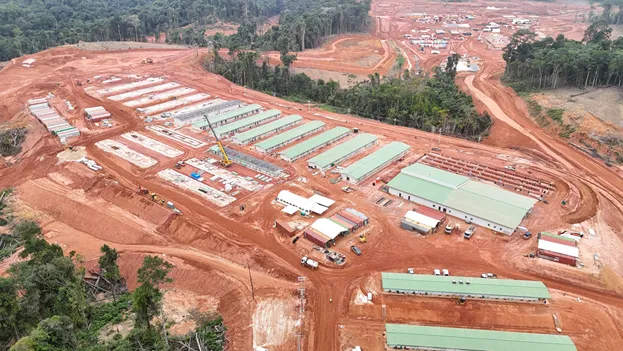
G Mining acquires G2 Goldfields to create a 500,000 oz/yr Guyana gold platform. Fully funded, permitting grandfathered, first gold H2 2027 on track.
- G Mining Ventures has announced the acquisition of G2 Goldfields consolidating two adjacent deposit systems, Oko West and the Oko-Ghani deposits, into a single contiguous mineralised ore body in Guyana with a combined resource base of approximately 7 million ounces M&I and 2.3 million ounces inferred.
- The geological proximity of the two systems underpins concrete infrastructure, permitting, and operating cost synergies, with management targeting a 25–30% throughput expansion that supports a production profile approaching 500,000 ounces per year.
- Construction at Oko West continues without interruption, with first gold still targeted for the second half of 2027, while an updated feasibility study for the combined project is planned for the first half of 2027 and expanded production is expected to commence in 2029.
- G Mining's existing 25-year mining licence and mineral agreement with the Guyanese government are expected to accommodate the G2 deposits through an addendum process, avoiding a full regulatory restart and significantly compressing the permitting timeline relative to a greenfield submission.
- The company considers itself fully funded for both the existing Oko West build and the planned expansion, supported by approximately US$255 million in pro forma cash, a US$350 million undrawn credit facility, and continuing free cash flow from the producing Tocantinzinho (TZ) Gold Mine in Brazil.
G Mining Ventures Corp. (TSX:GMIN) has taken a significant step in consolidating its position in Guyana's emerging gold district with the announced acquisition of G2 Goldfields. The transaction brings together two adjacent deposit systems: Oko West which is currently under construction, and G2's Oko-Ghani deposit as a single, contiguous mineralised ore body. President and CEO Louis-Pierre Gignac outlined the strategic rationale, the engineering pathway to expansion, the financing structure, and what the combined entity could mean for investors.
One Ore Body, One Operation
The central argument for the transaction rests on geology. The Oko West deposit and G2's Oko and Ghani deposits are, according to management, expressions of the same mineralised system. This geological continuity is what distinguishes the deal from a conventional M&A consolidation exercise and makes the synergy case more direct than in most comparable transactions.
Gignac was direct on this point:
"What's very unique with this combination is the fact that our two deposits, the deposits on each side of the fence, are really the same mineralised ore body. So the fact that we're bringing this together is very synergistic. It's not like a hub-and-spoke model where something is 60 km away and you're trying to integrate something. This is really within 3 km of what we're building."
The practical consequence is that G Mining does not need to build duplicate infrastructure with an estimate of oveer $1BN in combined synergiess from the planned acquisition of G2. The existing plant footprint at Oko West was already being provisioned with expansion capacity in mind. Adding throughput capacity now becomes a matter of bolting on incremental equipment: an additional ball mill, pebble crushing, extra leach circuit tankage, and piping and pump upgrades rather than redesigning the facility from scratch.

Engineering the Expansion
A central concern for investors following any acquisition of this type is whether the acquiring company's existing construction programme will be disrupted. Gignac was explicit that construction at Oko West will continue without interruption, and that the expansion work runs in parallel rather than in sequence.
The planned additions to reach a 25–30% throughput increase are incremental: another ball mill to join those already procured and being delivered, pebble crushing capacity, additional leach tankage, and tailings storage facility modifications through a raised design on the existing facility rather than a new impoundment. The power plant can accommodate the larger operation through the addition of another generator set. The company's existing mineral agreement with the Guyanese government already contains provisions extending its terms to any asset acquired within the Karouni basin, removing the need for a new negotiation.
On the permitting side, G Mining holds a 25-year mining licence at Oko West and expects to integrate the G2 deposits through an addendum to existing approvals rather than a full environmental submission. This is a material advantage given the time that new permitting processes typically require in comparable jurisdictions.
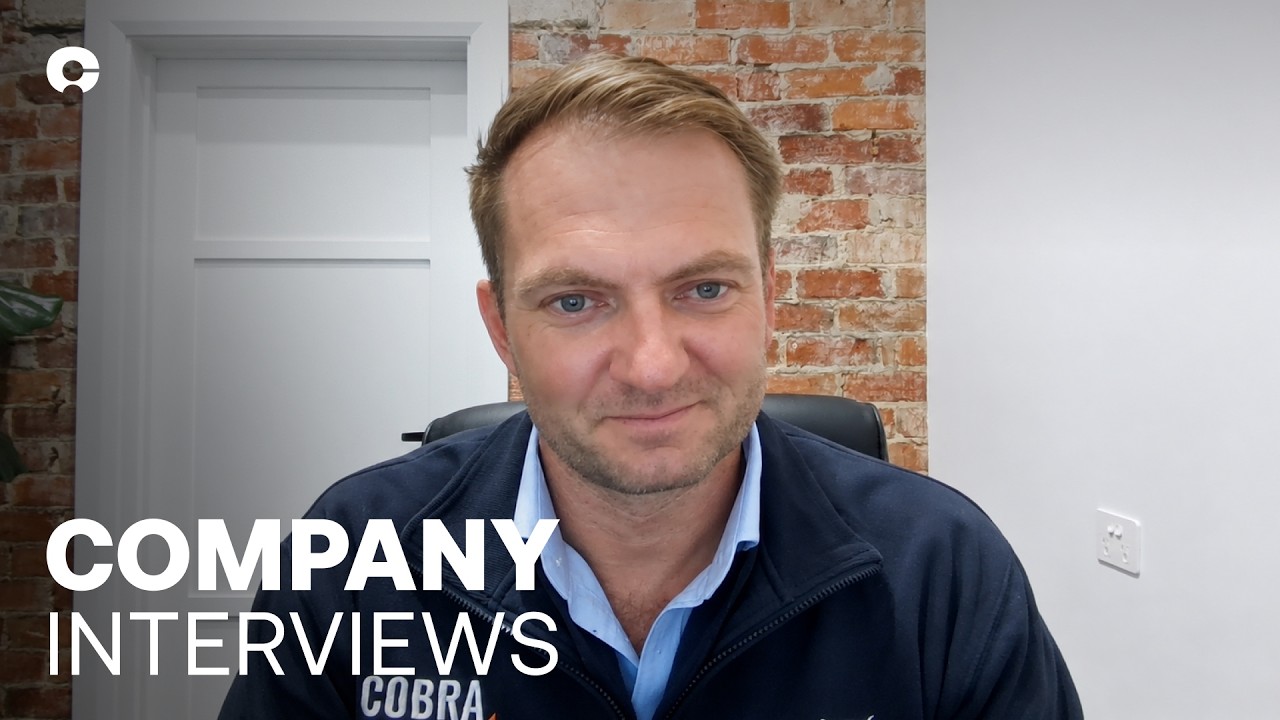
Interview with Louis-Pierre Gignac, President & CEO of G Mining Ventures Corp.
Mine Planning: Sequencing for Grade and Efficiency
The combination of the two deposit systems opens meaningful mine planning optionality. Management has identified lower strip, higher-grade phase-one pits on both the Oko and Ghani deposits that can be sequenced earlier in a combined mine plan, delivering higher-grade material to the plant sooner than the standalone Oko West schedule would have permitted. Higher-grade underground zones from the G2 side of the project can similarly be prioritised in a combined schedule.
An additional operational benefit comes from the increased availability of oxide material across the combined land package. Oxide ore processes at higher throughput rates through the mill, allowing the facility to run at elevated capacity during periods when oxides are being mined. These are the kinds of incremental optimisations that, in aggregate, support the case for a production profile approaching 500,000 ounces annually and potentially extending mine life beyond what the Oko West standalone study projected.
An updated feasibility study incorporating the combined project is targeted for the first half of 2027. Infill drilling at the G2 deposits that is already initiated by the G2 team will continue following transaction close to feed that study. Expansion capital expenditure is expected to be concentrated in 2028, with expanded production commencing in 2029.
Financial Position: Funded for the Expanded Project
The financing picture for the combined programme is straightforward by the standards of a mid-tier development company with an operating mine. G Mining will carry approximately $255 million in pro forma cash following transaction close, alongside a US$350 million undrawn credit facility. These resources sit alongside the continuing cash generation from Tocantinzinho (TZ) in Brazil, which delivered more than $250 million in free cash flow in 2025 and has been budgeted at US$4,000 per ounce gold for 2026 which provides a substantial buffer.
Gignac summarised the funding position, "We're essentially fully funded to build the expanded project already given our financial balance sheet situation."
Peak capex at Oko West falls in 2026 at approximately $540 million, with the balance of approximately $230 million remaining in 2027. Expansion capital will largely be spent in 2028, by which time TZ's cash generation will have been running for an additional two years.
Exploration Upside and the G3 Spinout
The transaction adds 362 km2 of land to G Mining's Guyana position, all within approximately 20 km of the Oko West site. The G2 exploration team will transition to a newly formed vehicle, G3, which will hold the properties to the west of the main project: Peters Mine, Tiger Creek, and an additional property. G3 will be seeded with US$45 million in cash and a contingent value-right structure under which G Mining would pay an additional US$200 million to G2 shareholders via the spinout if discoveries on the new land package bring total ounces beyond 3.5 million up to 7.5 million ounces.
G Mining's own exploration team at Oko West has been active in identifying near-mine mineralisation, including the Block 1 splay drilled from the G2 side of the property boundary. With the expanded land package and financial capacity, the company anticipates growing its in-house exploration team to pursue systematic work across the broader district.
Investor Implications: Re-rating Runway Extended
At a current market capitalisation of approximately C$12 billion, G Mining is no longer a small-cap speculative vehicle. The question for existing and prospective investors is whether the growth runway justifies holding or initiating a position at this scale. Gignac's argument is that the acquisition extends rather than exhausts that runway, by adding net asset value to the Oko West platform and compressing the price-to-NAV multiple at which the combined company trades.
First gold from Oko West remains targeted for the second half of 2027. The expanded project, including the G2 deposits, is expected to deliver first production in 2029 following the feasibility update and permitting addendum process. Each milestone along that path represents a potential re-rating catalyst.
The Investment Thesis for G Mining Ventures
- Producing asset provides cash flow visibility. TZ in Brazil generated over US$250 million in free cash flow in 2025, providing an ongoing funding base that reduces reliance on equity markets to finance Oko West construction and the planned expansion.
- Oko West de-risking is ongoing. Construction is advanced, with major equipment procured, detailed engineering well underway, and first gold targeted for H2 2027. Each completed construction milestone reduces development risk for investors.
- G2 acquisition extends the NAV runway. The combined project targeting 500,000 ounces annually, potentially higher, gives the company a credible pathway to becoming a significant mid-tier gold producer. Management notes the acquisition will reduce the price-to-NAV multiple, creating re-rating potential.
- Synergies are engineering-specific, not aspirational. Shared infrastructure, a grandfathered permitting framework, compatible metallurgy, and proximity of the two ore bodies mean that the synergy case rests on identifiable technical factors rather than financial projections alone.
- The balance sheet is strong and expansion is funded. With US$255 million pro forma cash, a US$350 million undrawn credit facility, and TZ cash flow, G Mining considers the expanded project fully funded without requiring dilutive equity issuance.
- Exploration upside is optionally priced. The 362 sq km land package and the G3 contingent value right structure provide exposure to additional discovery value that is not yet reflected in the core project NAV.
- Investors should note the execution risk inherent in any large construction project, including capital cost inflation, schedule delays, and commodity price sensitivity, and size positions accordingly.
Gold Sector Consolidation and the Case for Scale
The G Mining Ventures and G2 Goldfields combination reflects a broader dynamic reshaping the mid-tier gold sector: the increasing premium being placed on scale, jurisdiction quality, and operational integration. In a gold market that has sustained elevated prices with spot trading well above US$4,500 per ounce through early 2026, the economic case for consolidating adjacent deposits into larger, lower-cost operations has become compelling for companies with the balance sheet strength to act.
The gold sector has, over the past decade, suffered a persistent deficit of new large-scale discoveries. Exploration success rates have declined, the pipeline of projects advancing toward production has thinned, and the cost of building new mines from greenfield has risen substantially. Against this backdrop, transactions that bring together geologically related deposits under a single operational umbrella of avoiding the duplication of infrastructure, permitting, and workforce represent a structurally superior path to production growth compared with standalone development.
The macro backdrop of elevated gold prices, a thinning project pipeline, and cost pressures that favour larger operations, creates a structural environment in which mid-tier producers capable of growing toward 500,000 ounces annually occupy an increasingly valuable position in the market. Gignac captured the opportunity clearly:
"The runway for re-rate just increased for shareholders. It becomes another leg of growth and an exciting period to be an investor — and that's not even factoring in the exploration upside."
Guyana has emerged as one of the more active jurisdictions in this regard. The country's Karouni and broader gold districts have attracted sustained investment from companies willing to operate in a frontier environment in exchange for access to high-quality, large-tonnage deposits. The Guyanese government's stated support for the G Mining and G2 combination, and its focus on ensuring that Oko West's first gold schedule is preserved, reflects a constructive sovereign relationship that adds to the jurisdiction's appeal.
For investors assessing the gold sector in 2026, G Mining's story illustrates how disciplined consolidation can create durable value without compromising the operating asset that finances growth.
TL;DR
G Mining Ventures is acquiring G2 Goldfields in Guyana to combine two sides of the same geological ore body into a single operation. The deal adds scale, mine planning flexibility, and exploration ground without disrupting the existing Oko West construction schedule. First gold remains on track for H2 2027. The combined project targets 500,000 ounces per year, a feasibility study is due H1 2027, and the expanded operation is expected to be producing by 2029. The company is fully funded through its Brazilian producing mine and a strong balance sheet. For investors, the acquisition extends the re-rating runway rather than closing it.
Analyst's Notes





Subscribe to Our Channel



Stay Informed






















