




2026 Outlook: G2 Goldfields Delivers Sector Leading Economics: 281,000 Annual Gold Ounces & $2.6 B NPV



G2 Goldfields' exceptional PEA shows 3.2M oz production, 39% IRR, 2.6-year payback, positioning it as first-quartile Guyana gold developer with significant re-rating potential.
- G2 Goldfields has released an initial Preliminary Economic Assessment for its Oko Gold project in Guyana demonstrating exceptional economics with a net present value of $2.6 billion at $3,000 gold, 39% internal rate of return, and 2.6-year payback period against initial capital expenditure of $664 million.
- The company's capital intensity ratio of 3.9 positions the Oko project in the first quartile of global gold development assets, substantially exceeding comparable regional projects and reflecting the superior economics generated by high-grade resources averaging 3.2-3.3 grams per tonne.
- G2's 2026 work programme focuses on systematic risk reduction through conversion of inferred resources to indicated category, environmental permitting advancement targeting approval within 24-30 months, and metallurgical confirmation work to validate the 94.5% recovery assumption.
- The company currently trades at approximately 0.5 times net asset value compared to the historical average of 1.0 times NAV for first-quartile assets approaching development, creating potential for significant valuation re-rating as key de-risking milestones are achieved throughout 2026.
- Management's proven track record of project delivery in frontier jurisdictions, combined with improving permitting timelines in Guyana demonstrated by neighbouring projects and the country's economic diversification through offshore oil development, reduces execution risk and supports the pathway to production.
G2 Goldfields has emerged as one of the highest-quality gold development stories in the current market following the release of its initial Preliminary Economic Assessment for the Oko project in Guyana. With the company's market capitalisation expanding more than threefold during 2025 to reach $1.6 billion, investors are now evaluating whether the substantial re-rating reflects fair value or whether significant upside remains as the project advances towards production.
The PEA results outlines a 14-year mine life producing 3.2 million ounces of gold at an average annual rate of 281,000 ounces. At $3,000 gold, the project delivers an NPV of $2.6 billion with a 39% internal rate of return and 2.6-year payback period. Initial capital expenditure is estimated at $664 million, including a $100 million contingency representing 20% of the base estimate.
Operational Parameters Define Value Proposition
The resource underpinning the PEA comprises 3.5 million ounces, with 1.6 million ounces in the indicated category at 3.2 grams per tonne and 1.9 million ounces inferred at 3.3 grams per tonne. This grade profile represents the foundation of the project's exceptional economics and distinguishes it within a sector where many deposits struggle to maintain grades above two grams per tonne.
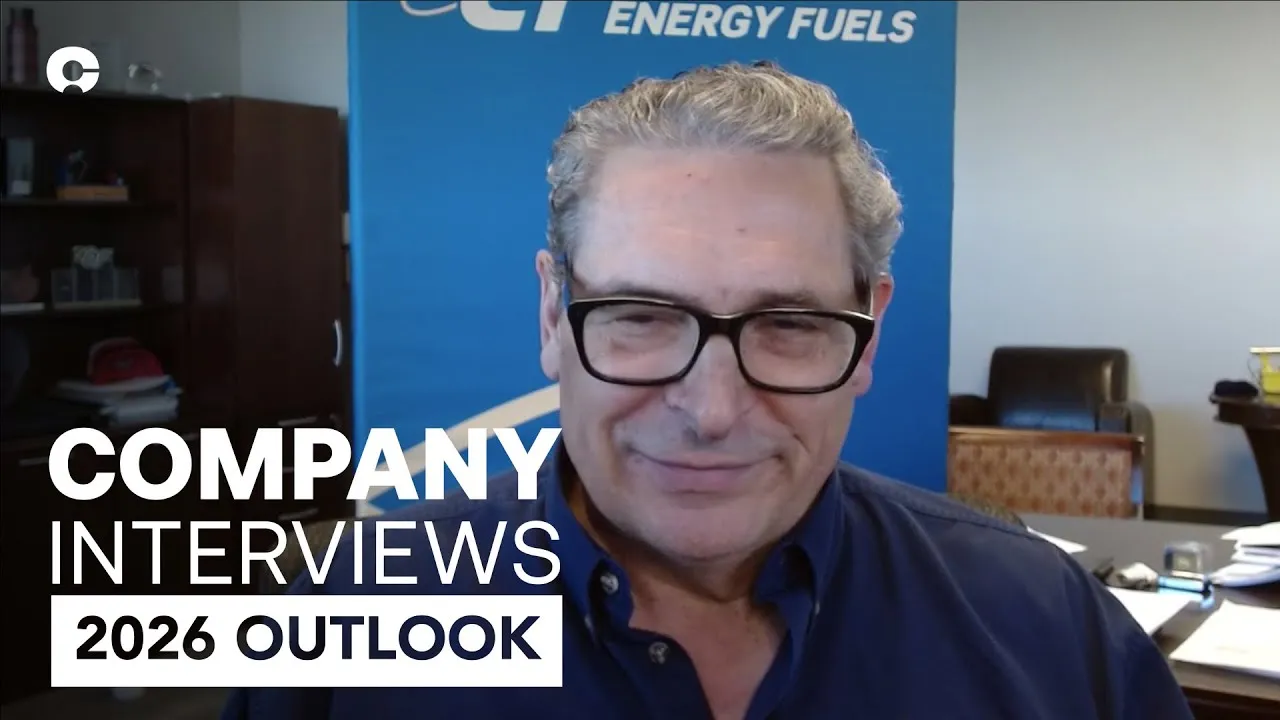
CEO Dan Noone emphasised the importance of grade to project economics during a recent interview, stating:
"The least risky asset is the highest grade asset."
This philosophy reflects industry thinking that high-grade deposits provide superior margins capable of withstanding commodity price volatility and cost inflation that typically impact lower-grade operations.
Metallurgical testing has returned encouraging results, with overall recovery of 94.5% through conventional processing methods. The low sulphide content of the mineralisation reduces concerns regarding acid mine drainage and suggests straightforward environmental management. One exception exists at the Oko Northwest zone, where a 90,000-ounce resource containing organic carbon has demonstrated approximately 50% recovery, though this represents a minor portion of the overall resource base.
Capital Cost Benchmarking Provides Confidence
The $664 million initial capex estimate benefits from proximity to G Mining's Oko West project, which recently completed its feasibility study and is advancing towards construction. This neighbouring development provided valuable benchmarking data for equipment costs, labour rates, and construction timelines in the Guyanese context.
Noone highlighted the relevance of this local cost data, noting:
"We've got a neighbour next to us who's got a feasibility study out in the market. So, it wasn't too hard to argue the cost of things. We actually use some higher costs for the underground mining because we were a bit more conservative."
The company's previous experience constructing the Aurora mine in 2014 for $258 million also informs management's confidence in the capex estimate. Whilst that project involved a smaller 5,000 tonne per day plant and was completed a decade ago, it demonstrates the team's capability to deliver projects on budget in frontier jurisdictions.
Permitting Timeline - Path to Production
G2 has commenced the environmental permitting process with submission of its Environmental Impact Statement application to the Guyanese government. The company expects to receive an early earthworks permit within 12-15 months, which would authorise commencement of pre-stripping and site preparation. Full mine permit approval is targeted within 24-30 months.
These timelines reflect recent improvements in Guyana's permitting processes, as demonstrated by G Mining's experience at Oko West. That project achieved ESIA approval in approximately 14 months from submission, with final permitting completed nine months thereafter. The Guyanese government has signalled support for accelerated mine development as the country seeks to diversify its economy beyond the rapidly expanding offshore oil sector.
G2 has conducted environmental baseline studies for over two and a half years, providing the data foundation required for the permitting application. The company has engaged EMC, Guyana's largest environmental consulting firm with extensive experience in both mining and the oil sector, to guide the permitting process. This local expertise should prove valuable in navigating regulatory requirements and maintaining constructive relationships with the Environmental Protection Agency.
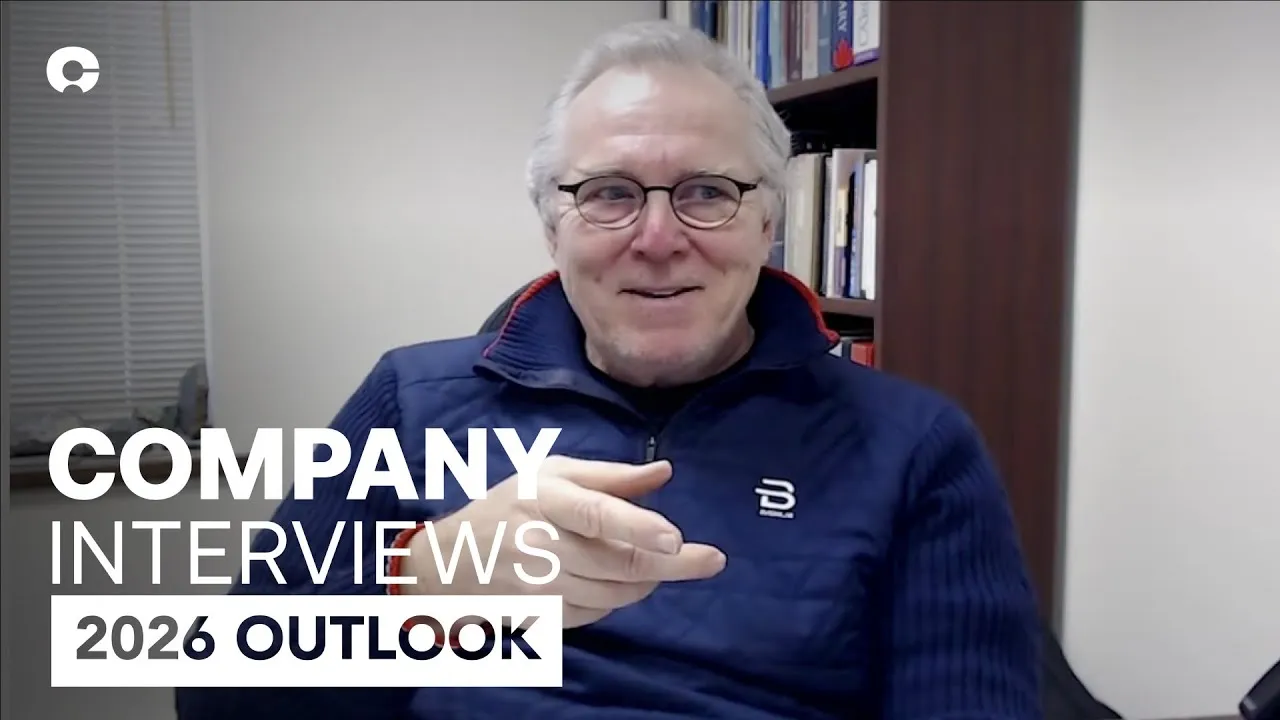
Interview with Dan Noone, CEO of G2 Goldfields
Resource Conversion Targets Risk Reduction
The company's 2026 drilling programme prioritizes conversion of inferred resources to the indicated category, particularly focusing on early mine life production ounces and the high-grade underground zones that drive project economics. This work addresses one of the key perceived risks that currently constrains G2's valuation relative to its net asset value.
The geological setting provides confidence in resource continuity. At Ghanie, mineralisation occurs along the contact between the Ghanie dyke and the host rock, whether basalt, diorite, or other lithologies. At Oko Main, the shear zones consistently form beneath the contact between carbonate sediments and the dyke. This structural control creates predictable targets for infill drilling.
Noone explained the drilling strategy:
"We will be drilling first the open pit material and then going deeper on the underground high grade and then the last thing we'll drill off will be the lower grade underground but you know how far we actually convert from inferred to indicated we'll decide along the way."
The company estimates that approximately 70% of ounces reside in roughly 40% of the rock, reflecting the high-grade nature of the deposit. The current resource model utilizes different parameters for saprolite and fresh rock, with a clear transition occurring within half a metre to one metre depth. This sharp contact simplifies mine planning and water management, as groundwater flow concentrates along this interface. Infill drilling should tighten the geological model without fundamentally altering the mineralisation framework.
Valuation Perspective: The Upside Potential
G2 is transitioning from explorer to developer by augmenting its technical team. With an experienced team approach, combining in-house expertise with specialised consultants, represents industry best practice for project development. The strategy provides management control over critical decisions whilst accessing the deep technical capabilities required for detailed engineering and permitting work. The company anticipates expanding its technical team further during 2026 as the project advances.
G2 currently trades at approximately 0.5 times net asset value, a substantial discount to the historical average of 1.0 times NAV for first-quartile assets approaching development. The company attributes this discount to perceived risks around permitting, metallurgy, resource classification, and geotechnical conditions.
Management has identified the key de-risking milestones that should support valuation re-rating towards the one times NAV benchmark. These include advancing environmental permitting, completing additional metallurgical test work to confirm the 94.5% recovery assumption, converting inferred resources to indicated category, and conducting geotechnical drilling at proposed infrastructure locations.
At $4,000 gold, the PEA economics improve substantially, with NPV increasing to $4.2 billion, IRR expanding to 54%, and payback shortening to two years. At current gold prices above $4,500/oz, the economic growth is anticipated. This sensitivity demonstrates the project's leverage to gold price appreciation, a relevant consideration given gold's strong performance and the structural drivers supporting higher long-term prices.
Path to Prefeasibility Study and Beyond
G2 is finalising its detailed work programme for 2026, which will be announced by the end of January. The roadmap will outline drilling targets, metallurgical test work, environmental studies, and engineering activities required to advance the project towards a prefeasibility study.
The company targets delivery of an updated mineral resource estimate and refined economics by year-end 2026. This timing aligns with submission of the finalized mine design to the Guyanese Environmental Protection Agency as part of the environmental permitting process. Concurrent advancement of technical studies and permitting represents an efficient approach to de-risking the asset whilst maintaining development momentum.
Beyond the prefeasibility study, the pathway to production appears increasingly clear. With permitting timelines now proven through neighbouring projects, processing technology well-established, and infrastructure improving through oil sector development, Guyana is emerging as a credible mining jurisdiction. G2's high-grade asset positions it to capitalise on this evolution.
G2 Goldfields has delivered an exceptional initial PEA that validates the quality of its Oko gold project in Guyana. The combination of high-grade resources, efficient capital deployment, strong economics, and an increasingly proven permitting pathway creates a compelling development proposition.
The Investment Thesis for G2 Goldfields
- First-Quartile Economics Create Competitive Advantage: G2's capital intensity ratio of 3.9 (NPV/capex) places the Oko project in the top tier globally, substantially exceeding the 2.1 ratio achieved by comparable regional projects and demonstrating superior return on capital deployed
- High-Grade Resources Provide Margin Protection: Average resource grades of 3.2-3.3 g/t gold with underground zones exceeding one ounce per tonne deliver exceptional margins that withstand cost inflation and commodity price volatility better than lower-grade alternatives
- Proven Permitting Pathway Reduces Execution Risk: Neighbouring G Mining's 23-month permitting timeline from ESIA submission to full approval demonstrates the viability of Guyana's regulatory framework and supports G2's 24-30 month target timeline
- Systematic De-Risking Programme Targets Valuation Re-Rating: 2026 work programme addressing resource conversion, metallurgical confirmation, geotechnical studies, and permitting advancement should support movement from current 0.5x NAV towards 1.0x NAV sector benchmark
- Strong Gold Price Fundamentals Enhance Project Economics: At $4,000 gold, NPV increases to $4.2 billion with 54% IRR and two-year payback, providing significant leverage to continued gold price appreciation driven by monetary policy uncertainty and geopolitical tensions
- Experienced Management Team With Construction Track Record: CEO Dan Noone's successful delivery of the Aurora mine in 2014 for $258 million demonstrates capability to execute projects on budget in frontier jurisdictions, reducing development execution risk
- Near-Term Catalysts Provide Multiple Entry Points: Updated resource estimate and economics by year-end 2026, environmental permitting milestones within 12-15 months, and quarterly drill results create regular newsflow to support share price appreciation
- Geological Continuity Supports Resource Expansion: Structural controls at Ghanie and Oko Main create predictable mineralisation contacts that enable confident resource growth, with exploration upside demonstrated by consistent high-grade intercepts in recent drilling
- Strategic Value to Major Producers: First-quartile assets historically command 1.7x NAV takeover premiums, creating potential acquisition interest from mid-tier and major producers seeking to replenish reserves with high-margin ounces
- Improving Jurisdiction Fundamentals: Guyana's economic diversification through offshore oil development is driving infrastructure improvements and regulatory capacity building that benefits mining sector development timelines and operating conditions
The investment case for G2 Goldfields extends beyond company-specific fundamentals to encompass broader structural themes reshaping the gold mining sector. The most significant of these is the re-emerging premium the market places on high-grade deposits in an environment characterized by persistent cost inflation and capital scarcity.
The capital intensity metric—NPV divided by initial capex—has become increasingly relevant as mining companies face constrained access to development capital. Institutional investors and potential acquirers now scrutinise this ratio carefully, seeking assets that generate maximum value per dollar invested. G2's capital intensity substantially exceeds industry averages and reflects the compounding advantages of grade: smaller mills process less material to produce equivalent gold output, reducing both initial capital and ongoing operating costs.
Guyana's emergence as a credible mining destination, supported by rapid economic growth from offshore oil development and demonstrated permitting timelines, addresses a key concern that has historically limited investment in frontier jurisdictions. The country's common law legal system, English language, and stable democratic governance provide additional reassurance to international investors.
The structural supply deficit in gold mining—with reserve replacement rates lagging depletion for over a decade—creates favourable conditions for quality development assets. Major producers face declining reserve grades and increasing difficulty identifying economic replacement projects, driving acquisition activity and supporting premium valuations for first-quartile assets approaching development. G2's timeline to production decision, potentially within 24-30 months including permitting, aligns well with acquirers' strategic planning horizons.
TL;DR
G2 Goldfields has released an exceptional initial PEA for its Oko gold project in Guyana showing 3.2 million ounces production over 14 years with industry-leading capital intensity. At $3,000 gold, the project delivers $2.6 billion NPV, 39% IRR, and 2.6-year payback against $664 million initial capex. High-grade resources averaging 3.2-3.3 g/t with underground zones exceeding one ounce per tonne provide superior margins and position Oko in the first quartile globally. The company trades at 0.5x NAV versus 1.0x sector benchmark, with systematic de-risking through 2026 including resource conversion drilling, environmental permitting (24-30 month timeline), and metallurgical confirmation targeting valuation re-rating. Management's proven construction track record, improving Guyana jurisdiction fundamentals, and leverage to gold prices above $4,500/oz create a compelling development proposition with multiple near-term catalysts.
Frequently Asked Questions (FAQs) AI-Generated
The Oko gold project achieves a capital intensity ratio of 3.9 (NPV divided by initial capex), substantially exceeding the 2.1 ratio of comparable regional projects. This exceptional efficiency stems from high-grade resources averaging 3.2-3.3 g/t with underground zones exceeding one ounce per tonne, which require smaller processing facilities and less rock movement per ounce produced. At $3,000 gold, the project generates $2.6 billion NPV with 39% IRR and 2.6-year payback against $664 million initial capex including 20% contingency. These metrics place Omai firmly in the first quartile of global gold development assets.
G2 currently trades at approximately 0.5 times net asset value, a significant discount to the historical average of 1.0 times NAV for first-quartile assets approaching development. Management has identified four key de-risking milestones that should support valuation re-rating: advancing environmental permitting (targeting approval within 24-30 months), completing additional metallurgical test work to confirm 94.5% recovery, converting inferred resources to indicated category through 2026 drilling, and conducting geotechnical studies at proposed infrastructure locations. Historical takeover premiums for first-quartile gold assets have averaged 1.7x NAV, creating potential acquisition upside as these risks are systematically addressed.
Guyana's permitting framework has been de-risked by neighbouring G Mining's Oko West project, which achieved ESIA approval in approximately 14 months with final permitting completed nine months thereafter (23 months total). G2 targets a similar 24-30 month timeline and has already conducted environmental baseline studies for over two and a half years, engaging EMC, Guyana's largest environmental consulting firm with extensive mining and oil sector experience. The Guyanese government has signalled support for accelerated mine development as the country diversifies beyond offshore oil. Management's track record includes successful delivery of the Aurora mine in 2014 for $258 million, demonstrating capability to execute projects on budget in frontier jurisdictions.
The 2026 drilling programme prioritises conversion of inferred resources to indicated category, focusing first on early mine life production ounces and high-grade underground zones that drive project economics. The geological setting provides strong confidence in resource continuity, with mineralisation at Ganymede occurring along the contact between the Ganymede dyke and host rock, whilst Oko Main shear zones consistently form beneath the contact between carbonate sediments and the dyke. This structural control creates predictable drilling targets. The company estimates approximately 70% of ounces reside in roughly 40% of the rock, reflecting the high-grade nature that makes resource definition particularly important. An updated mineral resource estimate and refined economics are targeted for year-end 2026.
The PEA demonstrates significant leverage to gold price appreciation. At $4,000 gold (compared to the $3,000 base case), NPV increases from $2.6 billion to $4.2 billion, IRR expands from 39% to 54%, and payback shortens from 2.6 years to 2 years. With current gold prices exceeding $4,500 per ounce, project economics are substantially enhanced beyond the already exceptional base case metrics. The high-grade nature of the deposit (3.2-3.3 g/t average with underground zones exceeding one ounce per tonne) generates superior margins that amplify this gold price sensitivity whilst providing protection against cost inflation that typically impacts lower-grade operations.
Analyst's Notes





Subscribe to Our Channel






Stay Informed






















