Geiger Energy Targets High-Grade Discovery in Underexplored Thelon Basin With Dual Drilling Campaign


.webp)
Geiger Energy pursues high-grade uranium discovery in Thelon Basin with $7M program. First unconformity intersection validates model. Results expected throughout 2026.
- Geiger Energy is pursuing large-scale, high-grade uranium discoveries in the Thelon and Athabasca Basins under CEO Dr. Rebecca Hunter, who brings extensive experience from previous work at Cameco and in the region
- Following a merger creating a combined entity backed by the Ore Group, Geiger is concentrating on two flagship projects: Aberdeen (Thelon Basin summer drilling) and Hook (Saskatchewan year-round operations)
- Company is deploying $7 million in capital with $2.5 million allocated to Hook project (currently drilling) and remaining funds for a 10,000+ meter program at Aberdeen from June-October
- Geiger achieved the first-ever uranium intersection at the unconformity in the northeast Thelon Basin, with grades at 100 - 200 ppm, materially upgrades the regional potential for major unconformity-style uranium deposits.
- Company operates with a streamlined team of two project-level geologists and access to Ore Group capital, aiming to deploy exploration capital efficiently in a historically expensive exploration district
Geiger Energy is positioning itself as a focused uranium explorer targeting large-scale discoveries in Canada's Thelon Basin, a frontier region that CEO Dr. Rebecca Hunter believes holds significant untapped potential. In a detailed discussion at a mining conference, Dr. Hunter outlined the company's strategic pivot toward concentrated, high-quality exploration following a recent corporate merger. With uranium markets showing renewed interest driven by energy security concerns and nuclear power's role in AI data center infrastructure, Geiger's approach represents a high-risk, high-reward bet on finding the next major Canadian uranium district.
Strategic Realignment: Fewer Projects, Bigger Targets
Dr. Hunter has implemented a deliberate shift away from the scattered exploration approach that often characterises junior mining companies. The strategy now centers on two core assets: the Aberdeen project in the Thelon Basin and the Hook project in Saskatchewan's Athabasca Basin region. This consolidation followed the merger of Forum Energy Metals and Baselode Energy, creating Geiger Energy.
The concentrated approach addresses a fundamental challenge for junior explorers: capital efficiency. Rather than spreading limited resources across multiple marginal targets, Geiger is prioritising prospects with the geological characteristics necessary to host significant deposits.
Geological Methodology: Pattern Recognition in Blind Deposits
Dr. Hunter's exploration philosophy relies heavily on recognising subtle geological signatures that indicate uranium mineralisation potential. Having examined multiple major deposits during her Cameco tenure - including McArthur, Cigar, Dawn Lake, and Fox Lake - she has developed what she describes as an "inner model" for identifying prospective environments.
The Thelon Basin presents particular challenges as a relatively underexplored frontier district. Uranium deposits in the region are typically blind targets without surface expression, requiring geophysical techniques combined with careful interpretation of drill core for alteration signatures such as bleaching, clay alteration, and structural features.
At the Loki target, which Geiger drilled in 2010-2011, initial results appeared unpromising but contained subtle bleaching and alteration that warranted follow-up. Similarly, at Tatiggaq, the company's first drill hole stopped just 100 meters from what later became a discovery.
"Most people probably would have walked away, but it had a bit of bleaching. It had some interesting kind of fault structures going through it and I was like, got to go back."
This geological persistence and pattern recognition capability forms the core of Geiger's competitive positioning in a sector where many companies lack uranium-specific expertise.
Current Operations and 2026 Drilling Plans
Geiger is currently executing a dual-track drilling program across its portfolio. At the Hook project in Saskatchewan, two drill rigs are operating with a $2.5 million budget through the next month and a half. One rig is testing the ACKIO area for additional mineralisation zones, while the other is following up geophysical anomalies along trend that showed early-stage alteration in previous drilling by Baselode Energy's team.
The Hook project benefits from existing mineralisation on the property, providing a foundation for resource expansion. The adjacent GMZ zone demonstrates the prospectivity of the geological trend that extends onto Geiger's ground.
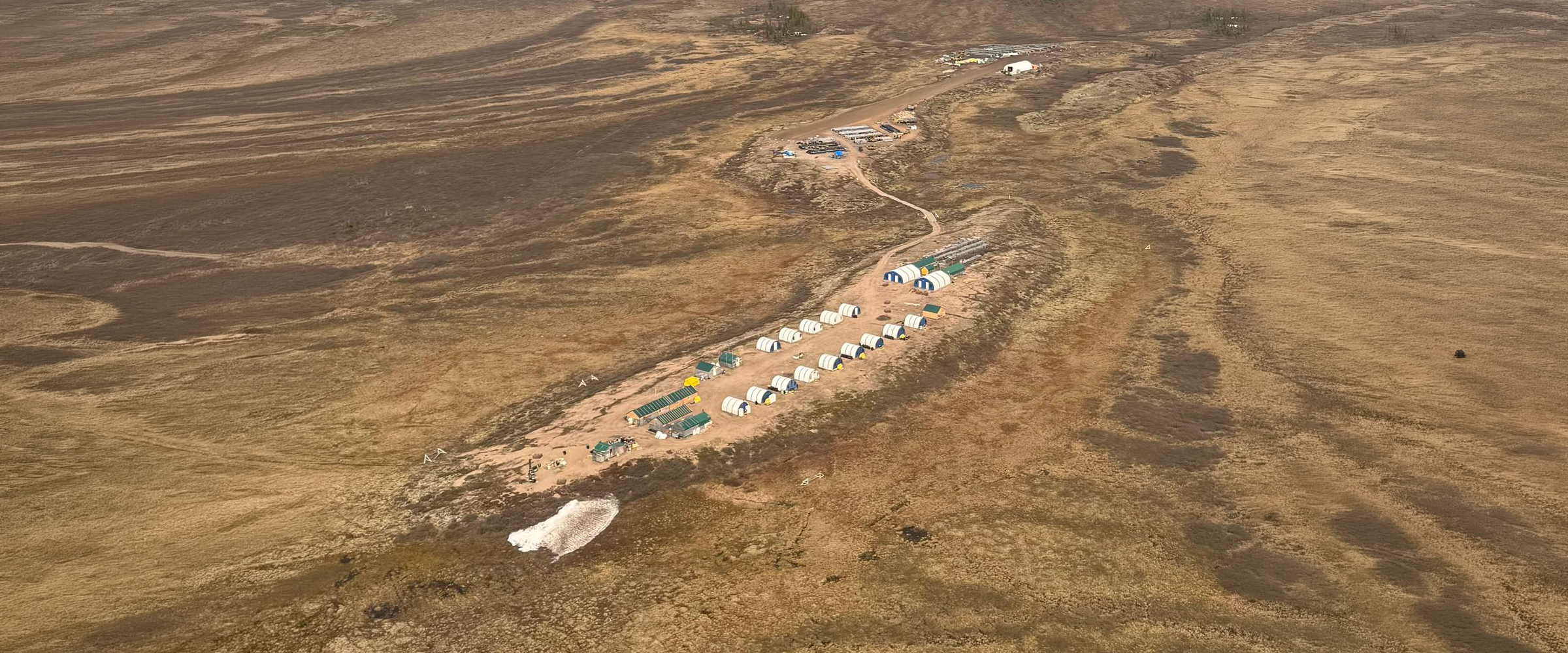
For the Aberdeen project in the Thelon Basin, Geiger plans to deploy the remainder of its current treasury plus additional capital it intends to raise for a minimum 10,000-meter drilling program from June through October. The summer drilling window is dictated by Arctic logistics and weather conditions. The program will focus heavily on the Loki target, where recent drilling intersected intense alteration across the entire sandstone column.
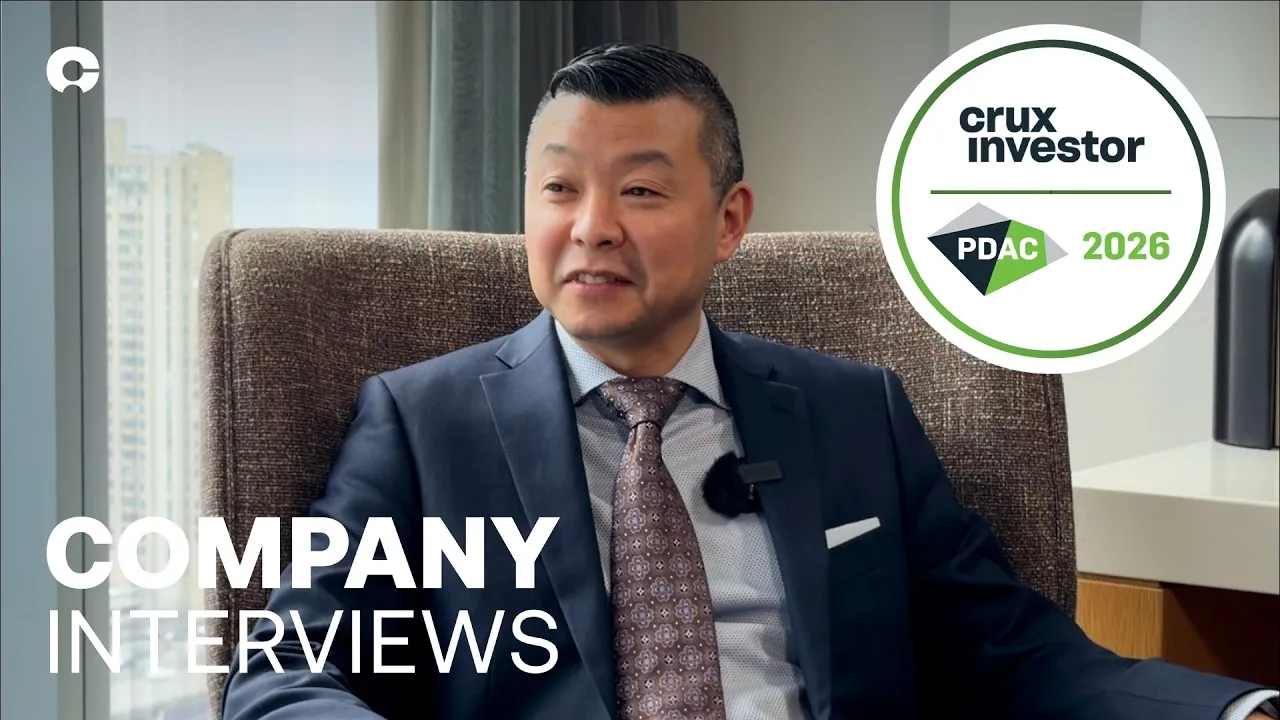
Interview with Dr. Rebecca Hunter, CEO, Geiger Energy
Technical Milestone: First Unconformity Uranium in Northeast Thelon
A significant validation of Geiger's geological model came with the intersection of uranium mineralisation at the unconformity in the northeast Thelon Basin - the first time this has been documented in the district. With grades of 100-200 ppm (where background uranium sandstone is typically less than 1 ppm), the discovery confirms that uranium-bearing fluids have circulated through the target environment.
This technical achievement matters for several reasons. First, it validates the geological setting and confirms the presence of uranium mineralisation processes. Second, it provides proof-of-concept that unconformity-style mineralisation can occur in the Thelon, similar to the world-class deposits of the Athabasca Basin. Third, it establishes clear targeting criteria for follow-up exploration.
The next critical step is discovering high-grade mineralisation over significant widths - the difference between a geological curiosity and an economic deposit. Success in this objective would fundamentally alter perceptions of the Thelon Basin's potential.
Capital Structure and Financial Strategy
With approximately $7 million in treasury, Geiger operates with modest financial resources relative to the scale of exploration required in frontier districts. The Thelon Basin carries a "big price tag," as Dr. Hunter acknowledged, reflecting the logistical challenges and extended timelines associated with remote Arctic exploration.
The backing of the Ore Group provides access to capital markets and potential future funding, though the company will likely require additional financing to sustain multi-year exploration programs. Dr. Hunter's role has expanded to include business development and capital markets activities - a departure from pure technical work but necessary for junior exploration companies.
Geiger also maintains a portfolio of properties in the Athabasca Basin that could potentially be advanced through joint ventures or spin-out transactions, providing alternative value creation pathways beyond direct exploration success. While not operating as a pure project generator, the company has flexibility to monetise non-core assets to fund flagship programs.
Market Catalysts and Information Flow
Throughout 2026, Geiger expects to provide regular updates as drilling progresses. The Hook program is currently active, with results expected over the coming months. The Aberdeen program will run from June through October, providing a sustained news flow period.
Dr. Hunter emphasises that the market increasingly rewards clear demonstration of project advancement and geological understanding rather than simply drill results volume. The company's existing mineralisation inventory provides a foundation that many peers lack, and the trading valuation appears disconnected from the asset base.
For investors, the key catalysts will be: (1) additional pounds discovered at Hook to expand the known mineralisation footprint; (2) structural controls and potentially economic-grade intersections at Loki; and (3) validation of the broader Thelon Basin geological model through continued success at Aberdeen.
The Investment Thesis for Geiger Energy
- Experienced Technical Leadership: Dr. Rebecca Hunter brings direct experience from Cameco's exploration team during the last uranium boom, with specific expertise in unconformity-style uranium deposits and extensive knowledge of the Thelon Basin geology
- First-Mover Positioning in Underexplored District: Geiger holds a significant land position in the Thelon Basin, a frontier uranium district that has seen limited modern exploration compared to the Athabasca Basin, offering district-scale discovery potential
- Technical Validation Achieved: The company has intersected uranium at the unconformity for the first time in the northeast Thelon Basin, confirming the geological model and presence of uranium-bearing hydrothermal systems
- Dual-Track Asset Portfolio: Hook project provides near-term newsflow and potential resource expansion in Saskatchewan, while Aberdeen represents the higher-risk, higher-reward flagship exploration opportunity
- Capital-Efficient Operations: Lean team structure and focused exploration strategy aims to maximise value from limited capital in a historically expensive exploration environment, with backing from Ore Group providing access to funding
- Existing Mineralisation Inventory: Unlike pure greenfield explorers, Geiger has documented mineralisation at multiple targets, providing a baseline asset value and demonstrating the prospectivity of the land holdings
- Significant Upside Leverage: Discovery of a significant high-grade uranium deposit in the Thelon Basin would represent a district-scale event with major revaluation potential, given the limited competition and minimal market expectations
- Multi-Year Exploration Runway: Summer drilling programs at Aberdeen and year-round potential at Hook provide sustained catalyst opportunities and newsflow through 2026 and beyond
Macro Thematic Analysis
The global uranium market is experiencing renewed interest driven by energy security imperatives, climate policy supporting nuclear baseload generation, and emerging demand from AI data centers requiring reliable power. Canada's established uranium mining jurisdiction and world-class geological endowment position the country as a critical supply source. However, the Athabasca Basin - home to the world's highest-grade deposits - has been extensively explored, with majors focusing on near-mine expansion rather than greenfield discovery.
This creates opportunity for frontier districts like the Thelon Basin, where limited modern exploration has occurred despite geological similarities to productive regions. As Dr. Hunter noted, "The big deposits will be found there new ones big ones shallow ones." For investors, Geiger represents exposure to potential district-scale discovery in an underexplored Canadian uranium region during a favorable macro environment.
TL;DR: Executive Summary
Geiger Energy is pursuing large-scale uranium discoveries in Canada's Thelon Basin under experienced leadership, having recently achieved the first-ever unconformity uranium intersection in the district. The company is executing a $7 million exploration program split between near-term resource expansion at the Hook project in Saskatchewan and high-impact drilling at the flagship Aberdeen/Loki target in the Arctic, with sustained newsflow expected throughout 2026. Success in discovering economic-grade mineralisation would represent a district-defining event in an underexplored Canadian uranium region during a favorable macro environment.
FAQs (AI Generated)
The Athabasca has been extensively explored, while the Thelon offers similar geology with less competition. First-mover advantage in an underexplored district provides significant discovery upside if the geological model proves correct.
The company has Ore Group backing for capital access, potential to JV Athabasca portfolio assets, and expects market financing to become more accessible with positive drill results and uranium price support.
Intersecting high-grade uranium mineralisation (percentage grades) over significant widths at the unconformity, similar to Athabasca deposits. This would validate the entire Thelon Basin geological model and attract major company interest.
Hook provides near-term newsflow and resource expansion potential in established Saskatchewan mining jurisdiction, while Aberdeen represents higher-risk flagship opportunity. The dual approach balances short and long-term catalysts.
Specific uranium deposit expertise, existing mineralisation inventory, long-term district commitment rather than opportunistic staking, and technical leadership with major company experience. Most competitors lack specialised unconformity deposit knowledge.
Analyst's Notes





Subscribe to Our Channel









.png)

Stay Informed