Gold Falls 1.1% as Fed Hike Bets Put Funded Projects in Focus



- Gold fell 1.1% to US$4,022.19/oz on October 29, 2026, about 26% below its January 29 record, as December Fed hike odds reached roughly 80%.
- The US 10-year Treasury yield rose 53 basis points to 5.3% in September 2026, making interest-paying assets more competitive with gold.
- The World Gold Council and Boston Consulting Group’s October 19, 2026 digital-gold report estimates US$95 billion of additional demand by 2031 under a base case assuming unchanged gold prices, stronger protections, wider access and competitive costs.
- Ahead of the October 29 inflation report and December 9 Fed decision, developers with construction funding face less pressure to issue shares at depressed prices.
- A decline from October 29’s roughly 80% December hike odds, accompanied by falling Treasury yields, could support gold and strengthen the case for funded developers.
Fed Hike Bets Weigh on Gold Near US$4,000
Spot gold fell 1.1% to US$4,022.19/oz, while December futures declined 0.4% to US$4,035. Despite the Fed holding rates steady, markets priced roughly an 80% chance of a December hike, leaving developers seeking financing exposed to higher borrowing costs.
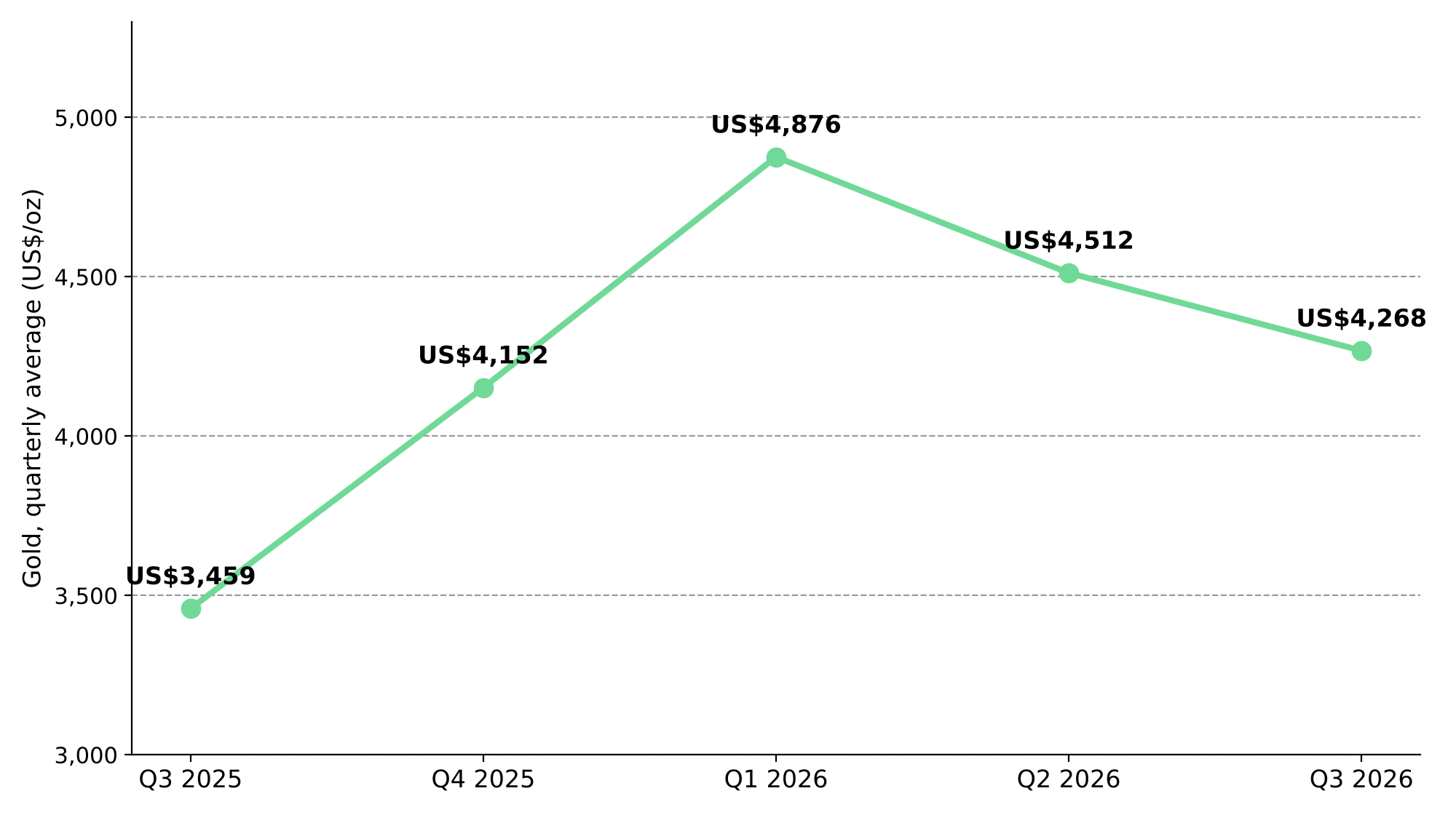
Gold stood about 26% below its US$5,405 January record. Its quarterly average fell 12.5% from US$4,876/oz in Q1 to US$4,268/oz in Q3. Lower gold prices can reduce projected revenue and borrowing capacity, making developers with construction funding secured worth examining for undervalued projects.
Higher Treasury Yields Raise Bullion’s Holding Cost
Higher Treasury yields make interest-paying assets more competitive with gold, which pays no income. In September, the US 10-year yield rose 53 basis points to 5.3% and the dollar strengthened 2%, contributing to gold’s 8.5% decline. Money managers also reduced their net COMEX futures positions by US$12 billion, equivalent to 84 tonnes, likely adding selling pressure.
The Fed raised its benchmark rate by 25 basis points to 3.75%-4% in September. Its September Summary of Economic Projections put median inflation excluding food and energy at 3.4% in 2026 and 2% in 2029, conditional on policymakers’ assumed rate paths. Developers with fixed-rate debt and construction equity secured have less exposure to further rate increases and discounted share sales, making them candidates for closer valuation review.
Digital Channels Could Add US$95 Billion to Gold Demand by 2031
The World Gold Council and Boston Consulting Group’s digital-gold base case estimates US$95 billion of additional demand by 2031, assuming unchanged gold prices, stronger protections, wider access and competitive costs. Converting that potential into purchases requires services that make digital ownership accessible and credible. David Tait, Chief Executive Officer at the World Gold Council, said demand cannot scale without supporting infrastructure and described shared sourcing, custody and compliance services designed to help providers launch products.
Han Tan, Chief Market Analyst at Bybit, warned that stronger-than-anticipated PCE inflation could push gold below US$4,000 by reinforcing December hike bets. If lenders lower their gold-price assumptions, developers seeking financing could receive less debt and need more equity, increasing potential dilution.
The inflation report and December 9 Fed decision could change borrowing costs and gold’s appeal. Lower hike odds accompanied by falling yields could support gold and financing terms, strengthening the opportunity in projects that remain viable at lower gold prices.
Rising Borrowing Costs Make Secured Funding a Key Valuation Test
Developers approaching a construction decision with financing incomplete face higher funding costs if borrowing rates rise or lenders lower their gold-price assumptions. Selling shares at lower prices requires more shares to raise the same amount, reducing existing holders’ ownership.
Troilus Mining’s September 28 announcement disclosed US$850 million in credit-approved commitments toward a proposed US$1.1 billion debt package, subject to further approvals and definitive agreements. Justin Reid, Chief Executive Officer at Troilus Mining, called this a major financing milestone, with the broader package still needed before a construction decision and financial close.
The contrarian opportunity is a discounted project with sufficient committed funding to withstand weaker gold prices. Comparing available debt and committed equity with remaining construction costs and contingencies helps identify developers less reliant on additional share sales.
Rate Policy Sets Gold's Near-Term Price as Digital Channels Widen Ownership
Fed policy can move gold through Treasury yields and the dollar, while projected digital-gold demand develops over five years. That longer-term estimate does not establish how much buying will support prices before year-end.
Developers with construction funding secured are less dependent on new borrowing or share sales.
The World Gold Council found that 52% of surveyed digital-gold holders owned no gold before their first digital purchase, showing that digital channels can expand ownership. This provides a potential source of additional demand, strengthening the case for examining funded projects without relying on a gold-price recovery.
Analyst's Notes





Subscribe to Our Channel







Stay Informed