




Atlas Salt’s Internally Built Meridian Model Sees Up to 7 Mt Demand on North American Salt Market


Atlas Salt debuts its Meridian model as Fairport Harbor tests salt supply. C$920M NPV 8%, C$589M build, more certainty on financing targeted by end of 2026.
- Atlas Salt CEO Nolan Peterson argues that producers’ claimed reserve capacity is not real, because many mines that bid last year are not bidding on the same contracts this year.
- The flooding of Morton Salt’s Fairport Harbor mine removed supply from a site that was not among the 4 mines Atlas Salt had been watching for shutdown risk.
- Atlas Salt’s Meridian model shows up to 7 million tonnes placed at a profit in an uncapped run, against the 4 million tonnes per year the project is designed to produce.
- The 2025 Updated Feasibility Study shows an after-tax NPV8% of C$920 million, compared with an enterprise value of C$144.1 million on October 23, 2026.
- Atlas Salt is targeting more certainty on financing by the end of 2026 and pointed to offtake developments, against C$589 million of pre-production capital.
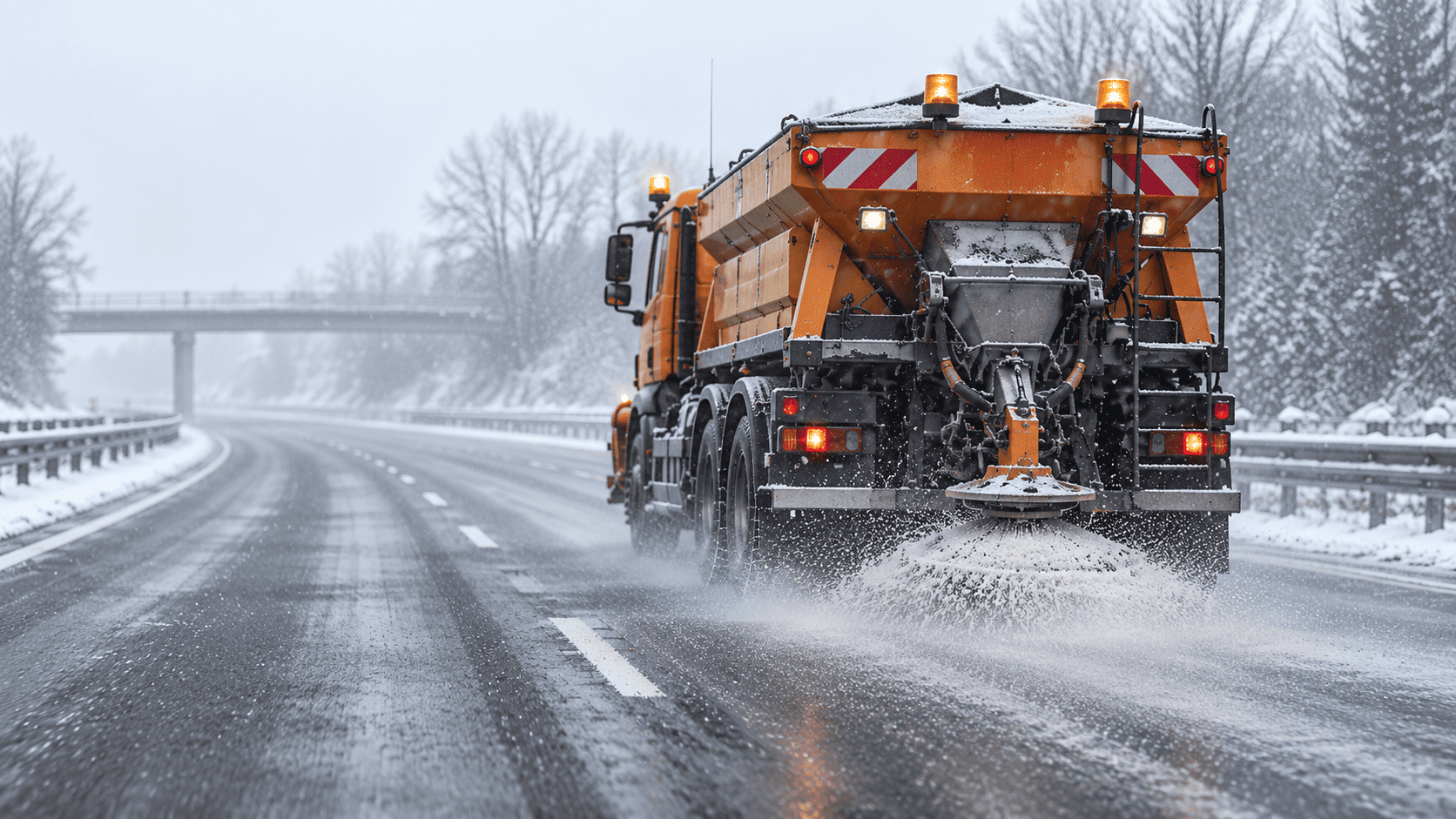
North American road salt buyers are heading into winter with little inventory behind them, and the flooding of Morton Salt’s Fairport Harbor mine in Ohio has taken out supply the industry did not plan to lose. Atlas Salt (TSXV:SALT), developer of the Great Atlantic Salt Project in Newfoundland, argues that the outage follows 2 years of inventory drawdown, cost pressure and underinvestment at aging mines.
The company’s answer to how a new entrant prices into this market is Meridian, an internally built model with a first public run-through. Its uncapped run places up to 7 million tonnes at a profit, against the 4 million tonnes (Mt) per year the project is designed to produce.
Salt Supply Stress: Thin Inventories & an Unexpected Outage
While producers tell governments and other customers that they hold reserve capacity, Atlas Salt disputes that the capacity exists. Chief Executive Officer of Atlas Salt, Nolan Peterson, uses this year’s municipal bidding as his evidence:
“Last year you can see some cities were getting bids from multiple mines, two or three in many cases. This year a lot of these mines are not bidding on those same contracts. So if the capacity is there as they say, why are they not bidding?”
Peterson said the inventory producers built during a run of mild winters has been exhausted. Rising diesel costs are adding pressure at domestic mines and for importers. He said Morton Salt describes the Fairport Harbor shutdown as temporary for now, and that customers hit by force majeure are scrambling for replacement supply.
Recent tenders cited in the company’s third quarter 2026 presentation point the same way. The South Hills Area Council of Governments received a low bid of US$160 per ton, against US$88 per ton a year earlier. In Ohio, 18 counties received no offers in a first round, then a US$155 per ton bid in the second.
Testing the 4 Mt Plan Against the Whole Continent
The feasibility study, engineers, logistics staff and salespeople estimated what Atlas Salt could reasonably take in each jurisdiction, such as about 400,000 tonnes in New York and about 300,000 tonnes in Massachusetts. They then worked back through transport and port costs to a price at site. The port was the bottleneck that set the 4 Mt rate.
Andrew Smith, Director of Project Strategy & Execution, built Meridian to test that number. The model combines demand at every selling node, satellite data, the continent’s road, rail and barge networks, estimated production costs at every mine, and seaborne imports. Peterson described it as a war game, in which a producer may give up some territory to capture territory worth more. Each node goes to whoever can deliver salt there most cheaply, and Monte Carlo statistics put error bars around the result.
The run displaces primarily foreign imports, with some competition from other mines, and projects which mines may face closure with or without Atlas Salt. The last ton in the uncapped run is less profitable than the first, but Peterson said every ton earns a profit. Meridian uses last year’s pricing and excludes this year’s fuel price increases.
Cost Position: Freight as the Edge Over Imports
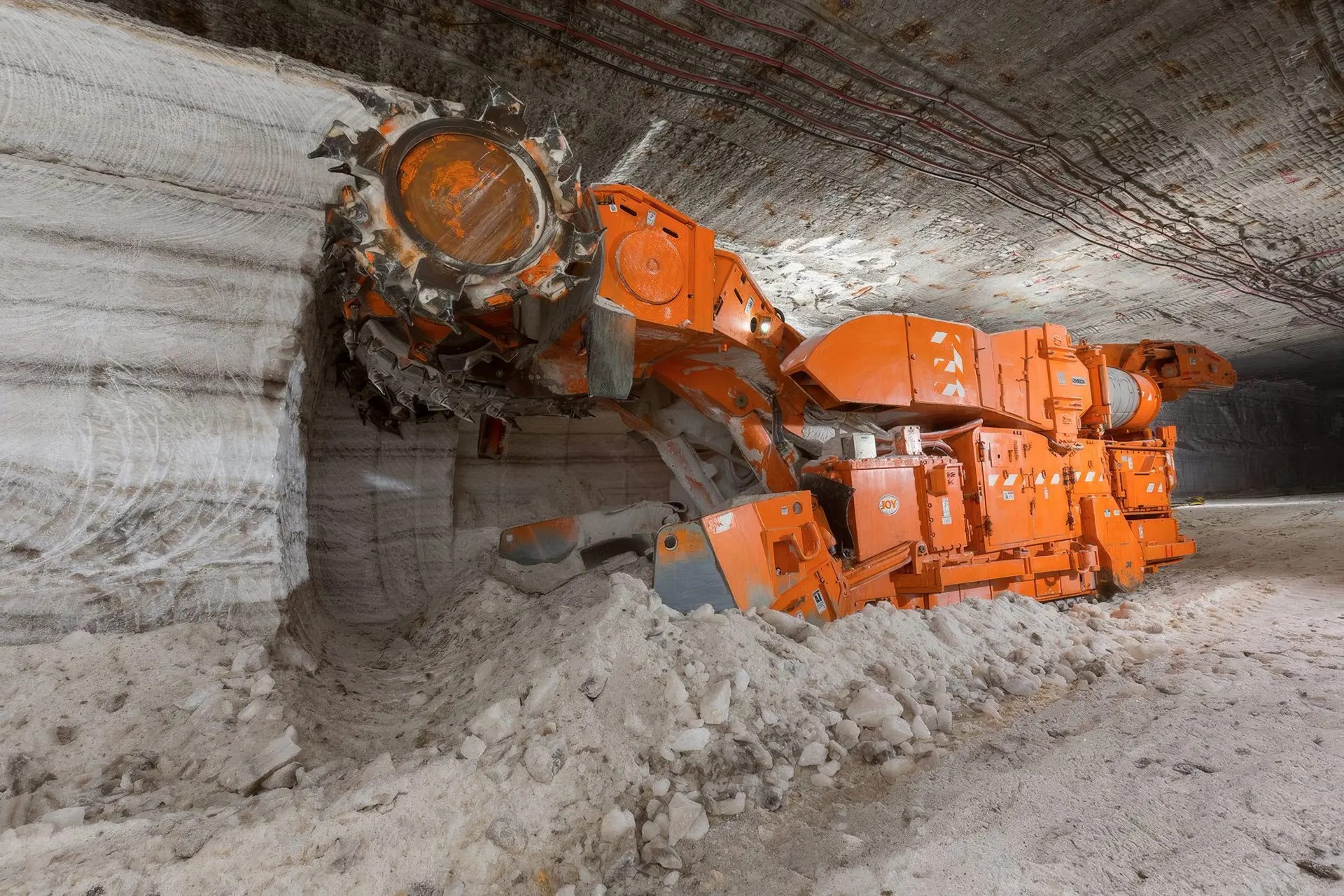
Peterson said Great Atlantic would be the lowest-cost producer in North America and highly competitive with imports from Chile, Egypt and North Africa, with its advantage over those sources coming from transportation. The 2025 Updated Feasibility Study puts operating cost at C$28.2 per tonne shipped, with salt at about 180 meters reached by declines instead of the shafts used at legacy mines.
The same study shows an after-tax NPV8% of C$920 million, an after-tax internal rate of return of 21.3%, a 4.2-year payback and average annual after-tax cash flow of about C$188 million over a 24.3-year mine life. The company’s enterprise value was C$144.1 million on October 23, 2026.
Atlas Salt’s case does not depend on current tender prices holding. Peterson compared the use of last year’s pricing to making a gold project work at $2,500 per ounce, with anything higher adding to profit. If the market normalized tomorrow, Atlas Salt would remain the lowest-cost producer and meet its feasibility study targets.
Interview with Nolan Peterson, CEO, Atlas Salt
Route to Market: Distribution, Offtake & Ring-Fencing
Major producers coordinate sales with their own distribution arms. Atlas Salt is aiming for the same coordination, either through its own network or with a distributor looking to displace higher-cost salt or enter new markets. Peterson does not see physical access as the constraint, citing large bulk ports such as Wilmington, Searsport, Halifax, Quebec City and Montreal. Atlas Salt also holds a memorandum of understanding with CN on rail logistics.
Meridian also supports more aggressive tactics. It can identify a competitor’s highest-margin markets so Atlas Salt can undercut it there and still earn a margin, a tactic Peterson calls ring-fencing. It can also test margin-sharing with other mining companies, where 2 mines working together could push further into a region and earn more overall.
Inelastic Buying & No Substitute at Scale
Road salt sells mostly under contract in spring and summer, when cities stock up, so the business is less seasonal than winter headlines suggest. Peterson said cities buy about the same volume each year by filling their yards, because salt is a small budget line and running short costs far more than overbuying.
Substitutes have not changed that pattern. Brining uses salt itself, and no substitute has reached mass scale in 60 years, according to Peterson. Calcium chloride and magnesium chloride work better at low temperatures but cost 5 to 10 times as much as road salt. Sand and gravel add traction without melting ice.
Financing & Execution
Peterson rejects the idea that the market has struggled to fund new salt mines, saying nobody has proposed one. He pointed to billions of dollars in producing-mine transactions over 5 years, and to a Morgan Stanley refinancing of $700 million of American Rock Salt’s debt in private credit markets, which he said drew exceptional interest.
Lenders still want evidence on price and sales. Project Blue, a market research firm working on the lenders’ behalf and paid by Atlas Salt, produced a price model that exceeds the feasibility study price and pulls further away over time. Long-term offtake is uncommon in salt, where most contracts are annual. Atlas Salt holds a memorandum of understanding with Scotwood Industries targeting 1.25 to 1.5 Mt per year and is in discussions with other partners. Peterson said an offtake development could come soon, and the company is targeting more certainty on financing by the end of 2026.
The presentation sets C$589 million of pre-production capital against more than C$30 0 million of financing letters of interest, including up to C$225 million for senior debt and C$79 million from Sandvik for equipment. It lists the financing package and remaining permits as milestones still to be completed and estimates production by 2030. Peterson named funding, financing and execution as the remaining risks, and said Indigenous and stakeholder support, jurisdiction and commodity price are not the obstacles. In his framing, execution risk means delays and cost increases, not the grade or recovery shortfalls seen at other mines.
The Investment Thesis for Atlas Salt
- Atlas Salt is developing the Great Atlantic Salt Project in Newfoundland, designed for 4 million tonnes per year over a 24.3-year mine life.
- The 2025 Updated Feasibility Study shows an after-tax net present value of C$920 million at an 8% discount rate, against an enterprise value of C$144.1 million on October 23, 2026.
- Management is targeting the lowest-cost position in North America, with freight providing the edge over imports from Chile, Egypt and North Africa.
- The Meridian model gives the company a market-by-market view of where it can sell, and its uncapped run points to profitable demand beyond the 4 million tonnes per year in the feasibility study.
- Monitor the conversion of letters of interest into committed financing for the C$589 million build, along with any offtake structure, as the next re-rating catalysts.
Macro Thematic Analysis
North American salt has gone 25 years without a new mine. American Rock Salt opened in New York in 2001, and the company’s presentation lists no comparable mine or expansion project planned in the region. Peterson describes an industry that behaves like a utility, with thin margins, old mines and operators planning in 5-year or 10-year terms. Many of those mines sit under bodies of water, and Fairport Harbor shows the inflow risk of that design. He traces the lack of new supply back to how exploration capital gets allocated:
“If you can raise $10 million, you’re going to look for gold, right? That’s your best bang for buck return. If you tell somebody to give you $10 million to look for salt, they’re going to look at you and be like, ‘What are you talking about? Why would you look for salt?’ Nobody’s been looking for salt in North America.”
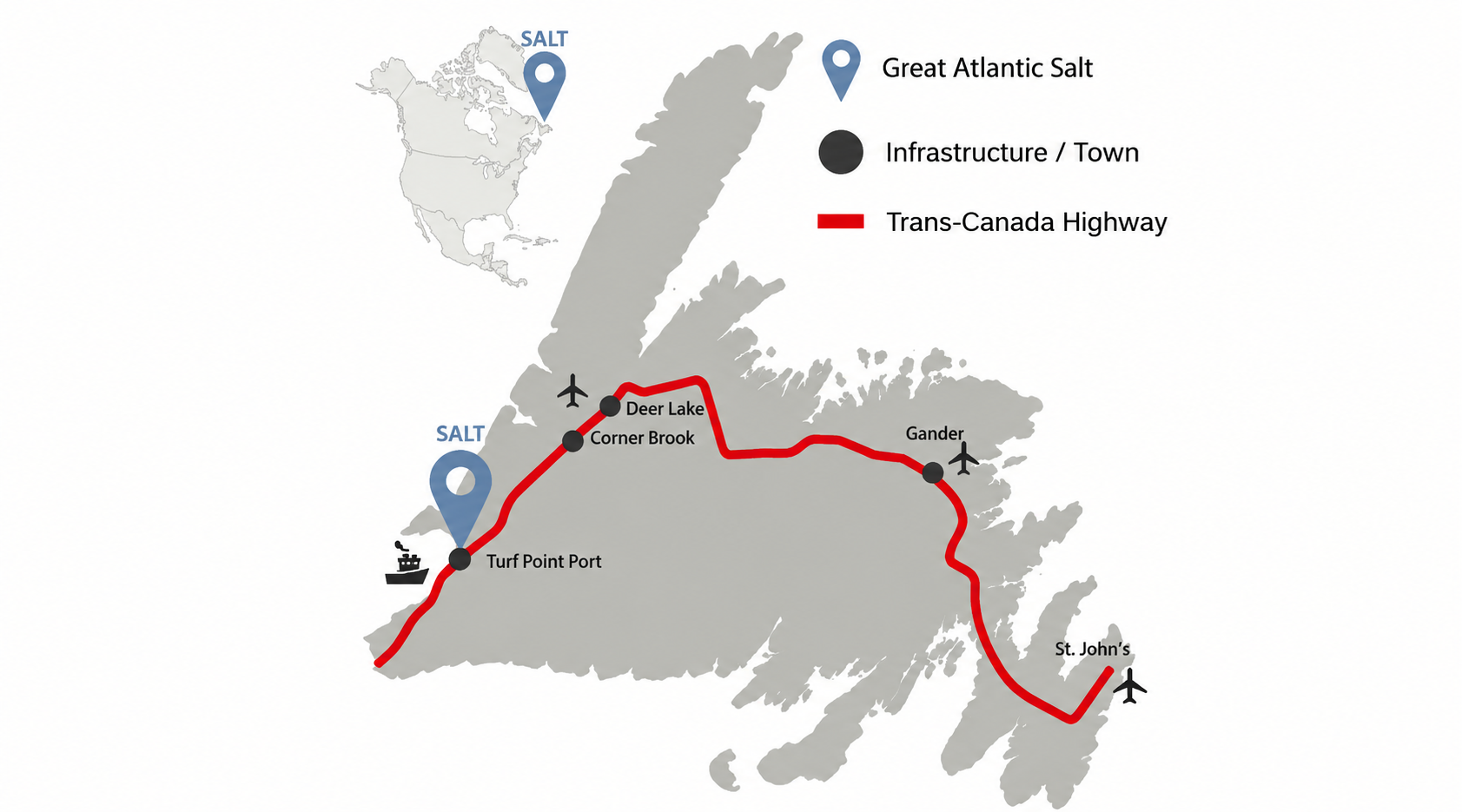
Location narrows the field further, because a viable deposit has to be close to its customers. Great Atlantic is close to the Turf Point deep water port, and the presentation counts 8 to 10 Mt per year of North American de-icing salt imports as the market it would address. Dry bulk shipping rates at a 2-year high add to the cost of those imports, and the US has removed its tariffs on road salt.
Peterson said bad winters drain stocks and the supply chain needs the following winters to rebuild them, and he sees producers unable to do that now. Whether current tender prices become a new floor is unresolved, and he argues Atlas Salt’s economics do not require them to.
TL;DR
Atlas Salt used a recent interview to give Meridian, its internally built North American salt market model, its first public run-through. CEO Nolan Peterson argues that reserve capacity claimed by producers is not showing up, with fewer mines bidding on municipal tenders and the Fairport Harbor outage forcing customers to find replacement supply. Meridian’s uncapped run places up to 7 million tonnes at a profit, against a 4 million tonne per year design, using last year’s pricing. The Great Atlantic Salt Project carries a C$920 million after-tax NPV8% and C$589 million of pre-production capital. Financing and offtake remain the open items, with more certainty on financing targeted by the end of 2026.
FAQs (AI-Generated)
Analyst's Notes



Subscribe to Our Channel



Stay Informed


