




Gold Falls 1.4%, But 1,200-Ton Retail Demand Keeps the Buying Case Alive



Gold falls 1.4% as sticky inflation lifts Fed hike odds, but 1,200 metric tons of retail demand supports a contrarian buying opportunity.
- Spot gold fell 1.4% to $4,599.57/oz on Aug. 26, 2026, its sharpest drop in a week, before rebounding 0.2% on Aug. 27.
- July PCE inflation reached 3.7% year over year, above the 3.6% forecast, keeping December hike odds at 72% on Aug. 27, 2026.
- The dollar index reached 99.158 on Aug. 27, 2026, but Treasury bond buybacks renewed currency-debasement concerns that support gold.
- Retail bar and coin demand reached a 12-year high of 1,200 metric tons in 2025, equal to 25% of global demand, according to Aug. 19, 2026 data.
- On Aug. 27, 2026, Hamad Hussain of Capital Economics said vague Fed guidance could revive debasement concerns and support gold prices.
Inflation Pulls Gold Down 1.4%, Creating a Demand-Backed Entry
Gold fell 1.4%, its sharpest one-day decline in a week, after July US inflation exceeded forecasts. It recovered 0.2% to $4,599.57/oz as markets awaited Fed Chair Kevin Warsh’s Jackson Hole remarks.
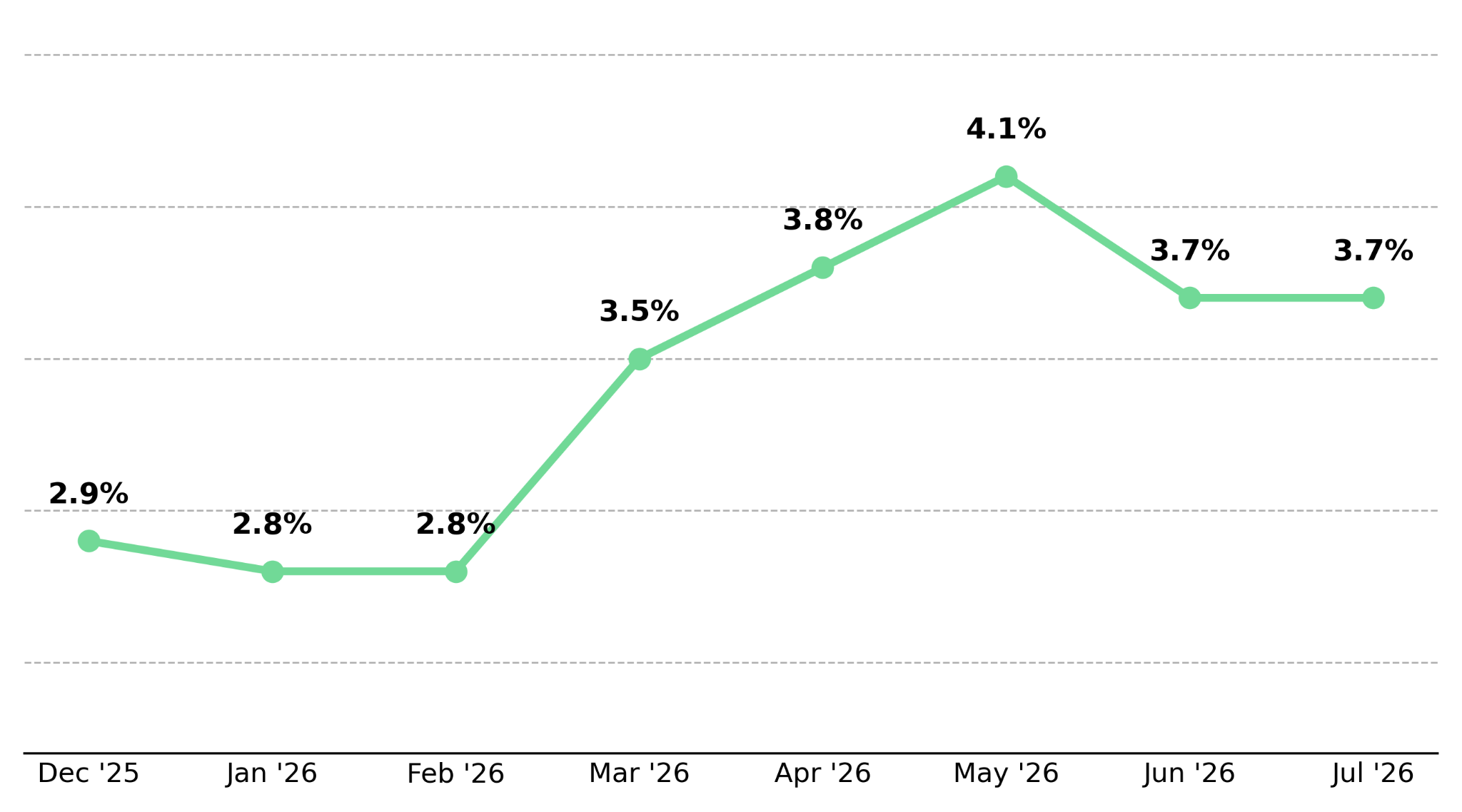
The pullback remains modest against the 2025 bar and coin demand of 1,200 metric tons, a 12-year high equal to 25% of global demand, supporting the case for buying price weakness.
Treasury Bond Buybacks Revive Debasement Concerns and Reinforce Gold’s Price Floor
The Treasury expanded buybacks of older long-dated bonds to limit borrowing costs, renewing currency-debasement concerns that support gold. Bitcoin’s 25% monthly rise to $78,853.88 reinforced this concern as gold reached a three-month high.
However, a 72% probability of a December rate hike versus 36% for September leaves gold sensitive to Fed Chair Kevin Warsh’s Jackson Hole remarks. Elias Haddad of Brown Brothers Harriman projected that the Fed would hold rates through year-end, contrary to current market pricing.
Fed Guidance Sets Gold’s Next Move as Rate Odds Define Near-Term Risk
One speech may move gold, but subsequent inflation data will determine whether the shift lasts. Hamad Hussain of Capital Economics said another vague Warsh address could renew currency-debasement concerns and support gold.
Base case: Vague or dovish remarks could return gold to its recent three-month high.
Bear case: December hike odds above 72% could push gold toward $4,599.57/oz.
The CME FedWatch Tool tracks changes in rate expectations, providing an immediate signal for either outcome.
Dealer Verification Expands Physical Gold Access as Timing Risk Stays High
High short-term rates raise gold’s opportunity cost because cash and short-duration bonds pay interest while bullion does not. However, the BSI Gold Dealer Assurance Programme will audit dealers across eight areas, including fairness, regulatory compliance, and responsible sourcing, before awarding a trust mark in Q4 2026.
This verification could reduce a major barrier to physical gold ownership. Since the CME FedWatch Tool measures probabilities rather than outcomes, staged purchases through verified dealers can reduce timing risk while capturing demand supported by 1,200 metric tons of annual bar and coin buying.
September Hike Odds Above 50% Would Close Gold’s Contrarian Window
Record physical demand and currency-debasement concerns support gold despite a 72% probability of a December rate hike. A hawkish Warsh address that lifts September hike odds from 36% to above 50% could extend the dollar’s 0.3% weekly gain and push gold below $4,599.57/oz.
If that probability stays below 50%, the case for buying on price weakness remains intact, and staged purchases through verified dealers are a reasonable way to spread out entry timing while retail demand stays at 1,200 metric tons a year. If September odds move above 50% after Warsh's remarks, that would support the bear case, and investors should stop adding to positions and reassess. The CME FedWatch Tool should be checked regularly through the Jackson Hole period. A single data point, such as Warsh's tone or the next PCE report, should not change the outlook unless it's confirmed by an actual move in hike odds. Until then, the better approach is to wait rather than commit to a large position in either direction.
Analyst's Notes





Subscribe to Our Channel





Stay Informed






















