




Fed Hikes Raise US Debt Costs, Supporting Gold’s Fiscal Hedge Case


Gold producers that fund spending from cash flow offer exposure to a price recovery with less reliance on costly borrowing.
- Spot gold rose 1.4% to $4,189.99 an ounce by 0842 GMT on October 9, 2026, as lower oil prices reduced inflation concerns and a softer dollar made bullion cheaper overseas.
- Following September’s 0.25-percentage-point Fed hike, markets priced an 84% probability of another increase by December on October 9, favoring interest-bearing assets over gold.
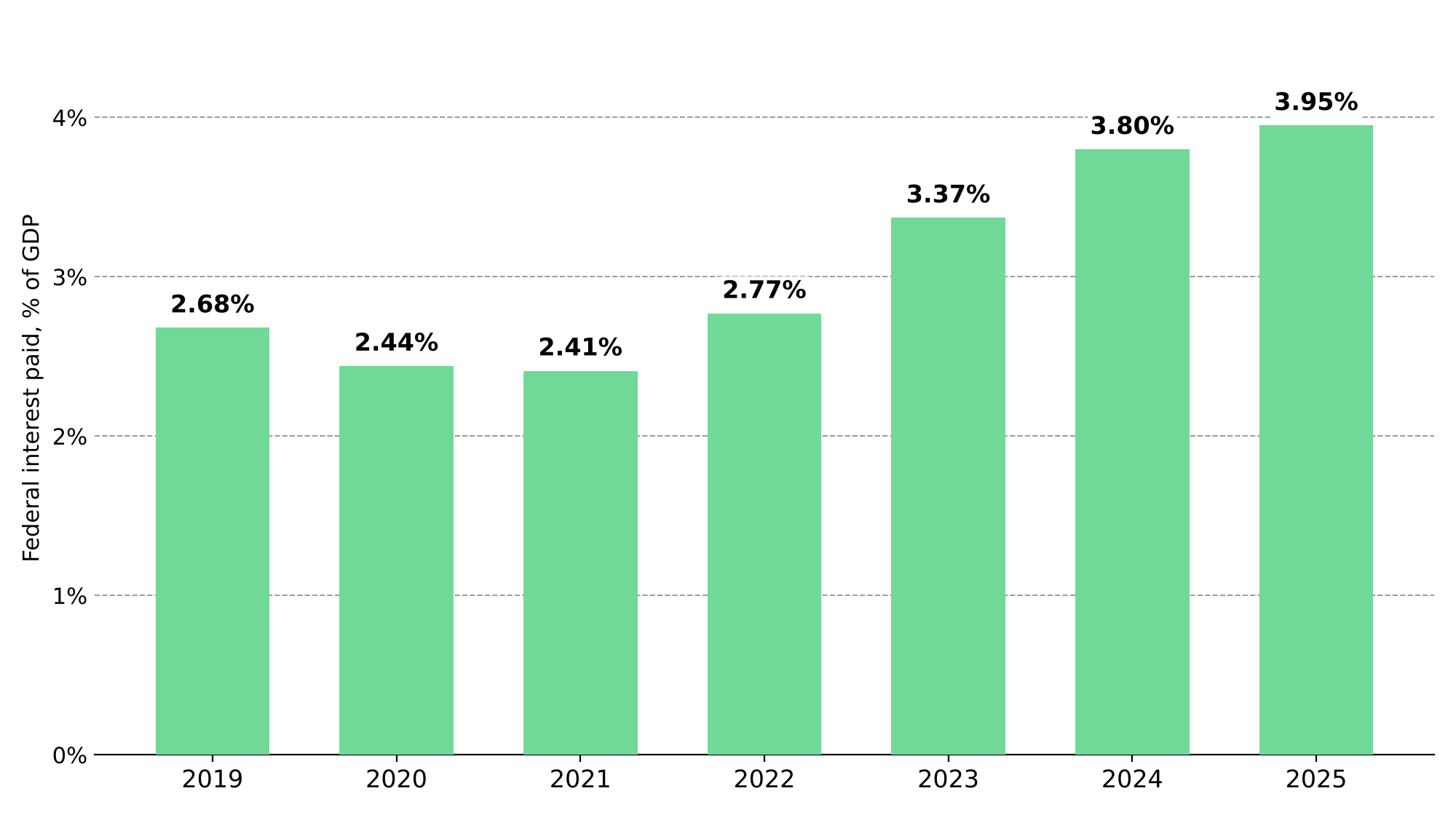
- Debajit Saha, Research Lead, Metals at LSEG, argues in his October 2026 assessment that rising US interest payments, estimated at 4.03% of GDP, support gold as a hedge against fiscal risk.
- At October 9 prices, gold producers whose cash and operating cash flow cover spending offer exposure to a recovery with less dependence on costly borrowing.
- A daily close below the July 14 low of $3,983.29 would weaken the recovery case and reduce unhedged producers’ revenue per ounce.
Lower Oil Prices Help Lift Gold 1.4%
Spot gold rose 1.4% to $4,189.99 an ounce, while December futures gained 1.4% to $4,215.30. Oil fell after President Donald Trump ruled out US attacks on Iran before November’s midterm elections, reducing inflation concerns, while a weaker dollar made bullion cheaper overseas.
The Fed’s September 0.25-percentage-point hike and an 84% probability of another hike by December favor interest-bearing assets over gold. Spot gold remains about 22% below January’s $5,405 LBMA Gold Price peak, offering a lower entry price while further hikes remain a risk.
Rising US Interest Costs Support Gold’s Fiscal Hedge Case
Higher inflation-adjusted bond yields favor interest-paying assets over gold. Refinancing US debt at higher rates also raises federal interest costs, potentially supporting demand for gold as a hedge against fiscal risk. Debajit Saha, Research Lead, Metals at LSEG, estimates federal debt at nearly $40 trillion, about 120% of GDP, and interest payments at 4.03% of GDP, projected to reach 4.28% by 2027.
The fiscal 2026 deficit reached an estimated $2.0 trillion, $218 billion above fiscal 2025, adding to federal borrowing needs. Saha attributes budget pressure to Social Security, healthcare and interest costs that tariff revenue has not fully offset.
Lower Fed Hike Expectations Could Lift Bullion Prices
Alberto Musalem, President of the St. Louis Fed, said further rate hikes are needed to bring inflation to 2%, without endorsing an October increase. Nikos Tzabouras, Senior Market Analyst at Jefferies-owned Tradu.com, said elevated bond yields and further hike expectations favor interest-paying assets over gold.
Markets assign an 81% probability to an October 28 hold and 19% to a hike, but an anticipated hold alone may not lift gold. A less aggressive rate outlook could weaken the dollar and support a recovery, increasing unhedged producers’ margins if costs remain stable. Further tightening that raises inflation-adjusted yields could pressure gold and operating cash flow.
September’s Consumer Price Index report will help shape the October and December rate decisions, with markets pricing an 84% probability of another hike by December. A daily close below the July 14 low of $3,983.29 would weaken the recovery case and put producers’ revenue forecasts at risk.
Higher Borrowing Costs Favor Gold Producers Funded by Operating Cash Flow
Higher rates can increase gold developers’ construction borrowing costs, while lower gold prices can reduce the funding lenders will provide. Producers whose operating cash flow covers spending depend less on new borrowing while retaining exposure to a gold recovery.
Newmont’s second-quarter results, released July 23, reported $3.4 billion of net cash at June 30. Its 2026 guidance assumes $4,500 gold and targets all-in sustaining costs of $1,680 an ounce after credits from other metal sales. Each $100 gold-price change has an estimated $505 million pretax revenue impact. With spot about $310 below that assumption, funding capacity requires a cash-flow assessment at current prices.
Favoring producers that can fund operations and planned spending at current gold prices reduces financing risk while preserving recovery potential. It does not eliminate gold-price risk or exposure to further Fed tightening.
Fiscal Strain Turns Fed Tightening into Medium-Term Support for Gold
Higher bond yields can pressure gold by making interest-paying assets more attractive, while refinancing US debt at higher rates increases federal interest costs. Debajit Saha, Research Lead, Metals at LSEG, argues that fiscal pressures support central bank reserve diversification and demand for gold as a hedge.
The contrarian opportunity favors producers whose cash and operating cash flow cover planned spending, preserving recovery potential with less dependence on new borrowing. Physically backed gold exchange-traded funds (ETFs) offer recovery exposure without mine-financing risk. Both remain exposed to lower gold prices, making funding capacity and position size central to maintaining exposure through further Fed tightening.
Analyst's Notes





Subscribe to Our Channel







Stay Informed






















