




Golden Cross Resources High-Grade Intercepts Support Structural Model at Reedy Creek Project


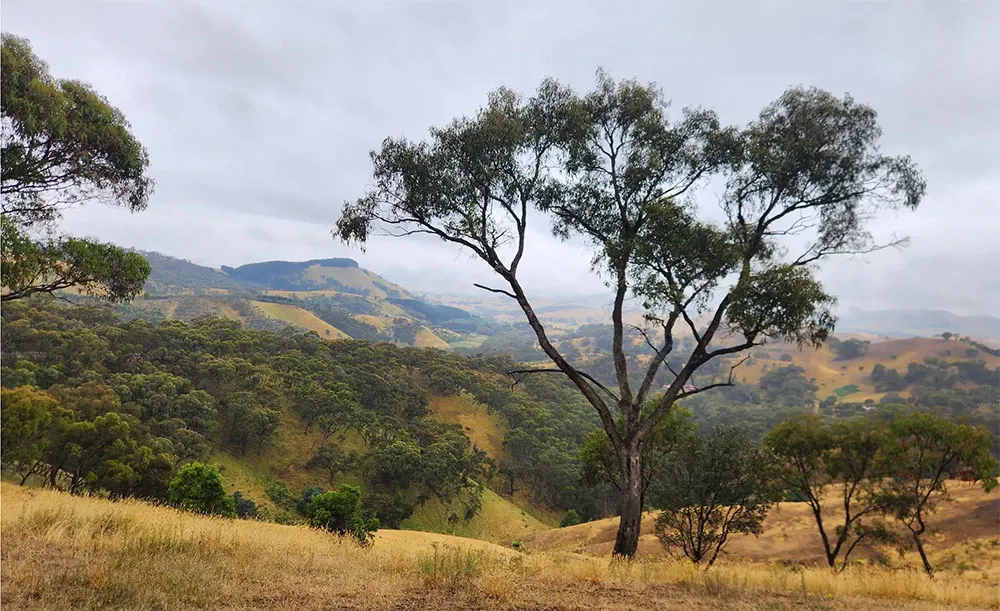
Golden Cross validates Aurora geological model with 27 g/t gold hits; systematic data collection underway before next drilling campaign targeting Fosterville-style deposits
- Golden Cross Resources completed four drill holes at Aurora in Eastern Victoria, intersecting high-grade gold mineralisation up to 27 g/t, validating the company's structural geological model
- The exploration strategy focuses on narrow high-grade orogenic gold deposits similar to Fosterville, leveraging historical workings as "free 3D drill holes" to reduce targeting uncertainty
- The company is integrating multiple data sets including geophysics, geochemistry, and lidar scanning to build a comprehensive structural model before the next drilling campaign
- Primary focus remains on the Reedy Creek Goldfield extending through Aurora, Charlotte's, and Prince of Wales, with systematic understanding of mineralised fault planes and shoot geometries
- Next 12 months will prioritise cost-effective data collection and geological modeling to optimise future drilling efficiency and reduce exploration risk
Golden Cross Resources (TSXV:AUX) has emerged from its inaugural drilling program at Aurora with results that validate the company's geological approach to exploring orogenic gold deposits in Eastern Victoria. The company's Technical Advisor, Ian E Nielson, recently discussed the significance of intersecting grades up to 27 grams per ton gold and outlined the systematic methodology being employed to unlock what the team believes could be a significant gold system. For investors in junior exploration companies, understanding the technical rigor and strategic patience required at this early stage is essential to evaluating the project's potential.
Leveraging Historical Workings
A critical advantage at Aurora is the abundance of historical artisanal workings throughout the area. Golden Cross has safely accessed some of these underground workings, which Nielson describes as "free 3D drill holes." This access provides invaluable three-dimensional geological information that would otherwise require expensive drilling to obtain. By mapping these historical excavations and integrating that data with surface mapping, the company is building a structural model that extends beyond where the old-timers worked.
The first four drill holes completed at Aurora were designed to qualify and test this evolving structural model. "We intersected the zones that we anticipated to actually intersect, which was really encouraging," Nielson noted, indicating that the geological hypothesis is proving accurate in its predictions.
The Fosterville Comparison
Investors frequently encounter comparisons to Fosterville, one of the world's highest-grade gold mines. Nielson addresses this comparison with appropriate caution, emphasising the need to compare "apples with apples." Fosterville is indeed a narrow high-grade system, but Nielson points out that when Fosterville began drilling its sulfide deeps programs in 2001, initial results were modest - holes of 200-300 meters depth returning 1 meter at 1.5 g/t at 200 meters depth.

"It wasn't until.. hole 19, where they actually got the 10 to 11 meters at the high grade where they actually jagged it," Nielson explained. This historical perspective is important for investors to understand: early-stage exploration in these geological settings requires systematic vectoring toward the highest-grade zones rather than expecting immediate discovery of ore-grade intercepts.
Historical grades at Reedy Creek Goldfield within the project area provide evidence for the potential, with intervals of approximately 11 meters at 10-12 g/t previously intersected. The ambition is identifying a large-scale system, with Fosterville serving as a familiar reference point for the style of deposit being targeted.
Multi-Disciplinary Data Integration
Golden Cross is employing a comprehensive approach to data collection, integrating geochemistry, geophysics, lidar scanning, and detailed geological mapping. This multi-disciplinary strategy aims to reduce uncertainty before committing significant capital to drilling. As Nielson emphasises, "We're not relying on a single data set."
The company is currently undertaking new geophysics programs and collecting detailed lidar scans around Aurora. Victoria's government has released substantial new data sets that Golden Cross can leverage without cost, providing additional layers of information to inform the geological model. This approach reflects a disciplined focus on understanding the "architectural understanding and the shoot geometries and controls" before designing the next drilling campaign.
Nielson stresses the importance of understanding near-misses - what mineralisation looks like at the edges of ore bodies. By building a comprehensive profile of geological indicators, including sulfides and arsenopyrite associations, the team can more effectively vector toward higher-grade zones. This systematic approach to learning from each drill hole, rather than simply chasing intersections, represents a more sustainable exploration strategy.
Interview with Ian E Nielson, Technical Advisor of Golden Cross Resources
Economic and Technical Considerations
The exploration focuses on two key aspects of these deposit styles: planes and shoots. Planar features like fault planes can extend for kilometers, while linear shoots often occur at intersections of different rock types or structural features. Understanding this geometry is critical for designing effective drill programs and ultimately for evaluating economic potential.
Nielson addresses the distinction between bulk tonnage systems and narrow high-grade underground deposits by referencing the Fimiston Superpit and Charlotte deposits in Western Australia. At Fimiston, drilling 60 degrees toward the east yielded 55 million ounces, while the same orientation a mile away at Charlotte yielded nothing - but rotating the rig 90 degrees discovered 5 million ounces. This illustrates how understanding structural orientation is fundamental to exploration success in orogenic gold systems.
The company is also investigating the nature of gold mineralisation through different assay techniques, including fire assay, screen fire assay, and bottle rolls. Understanding whether the gold is fine or coarse-grained, and what it's locked within mineralogically, will inform both exploration targeting and eventual metallurgical processing considerations.
Welcome Reef and District Potential
While Aurora remains the primary focus, Golden Cross is building understanding with follow-up drilling at the Welcome Reef prospect. This district-scale approach allows the company to identify commonalities in structural styles and mineralisation across the belt, creating a framework for systematically evaluating multiple targets.
Nielson describes this as building "common geological profiles" across Aurora, Shepherd's Reef, and Prince of Wales, which can then be leveraged into areas with less information. This knowledge-building approach is gradual but aims to inform exploration volumes as effectively as possible before committing to drilling.

The Path Forward
For the next 12 months, Golden Cross will focus on collecting additional geophysical data, geochemistry, and detailed lidar scans to further refine the structural model around Aurora. The company recently completed processing the assay backlog from the initial drilling and will continue developing architectural understanding and shoot geometry controls to assist the next drilling campaign planned for later this year.
Nielson frames this work as essential de-risking: "By informing that volume we go a great long way to getting us closer to prioritising these high priority areas and targets." While this methodical approach may seem unglamorous compared to aggressive drilling, it represents a more cost-effective path to discovery by reducing the uncertainty in each drill hole's target.
The Investment Thesis for Golden Cross Resources
- Validated Geological Model: Initial drilling at Aurora intersected anticipated mineralised zones up to 27 g/t gold, confirming the structural interpretation and reducing geological risk
- Fosterville-Style Potential: Targeting narrow high-grade orogenic gold deposits in a proven geological belt with historical high-grade intercepts (11m @ 10-12 g/t at Reedy Creek)
- Cost-Effective De-Risking: Leveraging historical underground workings as "free drill holes" and government-provided geophysical data significantly reduces exploration costs
- Systematic Methodology: Multi-disciplinary data integration (geophysics, geochemistry, lidar, structural mapping) reduces drill targeting uncertainty before major capital deployment
- Deep Structures: Large-scale fault architecture indicates potential for significant depth extension, critical for economic orogenic gold systems
- Strategic Drilling Timing: Next drilling campaign planned for later this year after completing cost-effective data collection and model refinement
- Victorian Government Support: Access to high-quality government-released geological and geophysical datasets enhances targeting without additional cost
- Multiple Value Drivers: Early-stage exploration with potential for discovery at Aurora while systematically evaluating district-scale targets across the belt
Macro Thematic Analysis
Eastern Victoria's orogenic gold belts represent an underexplored frontier within Australia's established gold provinces. These fault-controlled systems, formed during mountain-building events, have produced some of the world's highest-grade gold mines, including the nearby Fosterville deposit which transformed from a modest operation to a world-class asset. The geological setting - fold and thrust belts with deep-penetrating structures - provides the necessary "plumbing" for mineralising fluids to deposit gold at economically viable grades.
Golden Cross's systematic approach to understanding structural controls positions the company to potentially unlock significant value in a district with demonstrated high-grade potential but limited modern exploration. As Nielson emphasises, "We really need to make sure that we have the right plumbing - deep metal-tapping structures that can bring up this mineralised fluid." With governments releasing enhanced geological datasets and exploration technology improving targeting precision, the risk-reward profile for disciplined explorers in this geological setting has become increasingly attractive for patient investors seeking leveraged gold exposure.
TL;DR
Golden Cross Resources has validated its structural geological model at Aurora with drilling intersecting up to 27 g/t gold in narrow high-grade zones comparable to Fosterville-style deposits. The company is systematically building a multi-disciplinary understanding of the Reedy Creek Goldfiedl through cost-effective mapping, geophysics, and data integration before the next drilling campaign later this year. With experienced leadership, historical high-grade intercepts demonstrating district potential, and a methodical approach to reducing exploration uncertainty, the project offers investors early-stage exposure to potential orogenic gold discovery in Eastern Victoria.
FAQ's (AI Generated)
Drilling represents the highest exploration cost, so comprehensive geological modeling, geophysics, and mapping beforehand significantly reduces targeting uncertainty and improves success rates, making each drill hole more effective and capital-efficient.
The corridor shows common structural controls across multiple prospects, historical high-grade intercepts up to 11m at 10-12 g/t, abundant historical workings indicating past production, and large-scale fault architecture providing the necessary plumbing for mineralisation.
Historical workings provide three-dimensional geological information equivalent to expensive drilling, allowing detailed structural mapping and sampling to inform the geological model and drilling targets without additional capital expenditure on those locations.
Understanding structural controls allows targeting mineralisation beyond historical workings where old-timers couldn't access, potentially discovering larger zones at depth or along strike that weren't economically or technically viable for artisanal miners.
The next drilling campaign is planned for later this year after completing current geophysics, geochemistry, and lidar programs. Results depend on program size and assay turnaround times, but systematic targeting should deliver more meaningful intercepts than random drilling.
Analyst's Notes





Subscribe to Our Channel





Stay Informed






















