




How Canada Nickel Is Turning Tax Credits Into Construction Capital at Crawford


Canada Nickel targets a US$600M tax credit-backed facility for Crawford, reducing dilution risk and reshaping how critical-minerals projects fund construction.
- Canada Nickel has mandated SB1 Markets AS to arrange a debt facility of up to US$600 million, backed by investment tax credits from Crawford's construction, with the arrangement targeting completion by year-end 2026, ahead of a final investment decision (FID) in 2027.
- The structure converts future government investment tax credit receipts into upfront construction capital, allowing Canada Nickel to fund more than half of its equity requirement without issuing new shares.
- SB1 Markets' appointment signals that the facility is being pursued as an institutional-grade instrument rather than a relationship-driven arrangement, with the bank's export credit agency network directly relevant to Crawford's broader capital stack.
- The investment tax credit bridge sits alongside Export Development Canada (EDC) debt and targeted government contributions in a layered structure designed to limit conventional equity raises to occasional tranches of approximately $10- $15 million.
- Federal permit issuance, targeting early summer 2026, is the critical near-term trigger: confirmed construction authorisation is a prerequisite for entitlement to investment tax credits, against which the facility would be sized.
What Has Happened
Canada Nickel Company Inc. (TSXV: CNC | OTCQX: CNIKF) has awarded SB1 Markets AS an exclusive mandate to arrange a debt financing facility of up to US$600 million, structured around the investment tax credits expected to be generated by the construction of the Crawford Nickel Project under Canada's critical minerals incentive framework. The announcement, released June 24, 2026, arrives as the company waits on a federal permitting decision that management characterises as imminent, and positions the investment tax credits bridge as the mechanism through which Canada Nickel intends to fund the bulk of its equity contribution to Crawford without a conventional dilutive raise. The facility is targeting an arrangement by year-end 2026, ahead of a final investment decision (FID) on Crawford that the company is targeting for 2027.
The Mechanics: Monetising Tax Credits Before Construction Begins
Rather than raising equity through a share issuance or waiting for investment tax credit receipts to flow post-construction, Canada Nickel is pursuing a loan facility that converts the anticipated value of those credits into upfront financing. The investment tax credits are tied to Canada's critical minerals incentive framework, which offers refundable tax credits on eligible construction expenditures. By securing debt against the expected credit stream, the company deploys that capital during construction rather than after, transferring the timing gap between expenditure and government receipt to a lender with the balance sheet to absorb it.
Canada Nickel's Chief Executive Officer and Director, Mark Selby, explained the strategic rationale:
"This bridge financing is central to Crawford's overall capital structure; it allows us to deploy Canada's generous investment tax credits available for critical mineral projects in Canada to fund more than half of the equity capital we need to build Crawford."
If the facility closes at the targeted scale, Canada Nickel would source more than half of its equity contribution through a non-dilutive mechanism, leaving the conventional equity component as a residual rather than the primary funding vehicle.
SB1 Markets: A Signal of Financing Maturity
The appointment of SB1 Markets AS carries as much signal value as the facility itself. A Nordic investment bank with approximately US$70 billion in transactions arranged over the prior 12 months and a track record in natural resource project finance, SB1 Markets operates in the same institutional network as the export credit agencies and project finance lenders that Canada Nickel is assembling around Crawford's capital stack. Engaging a firm of that standing on an exclusive mandate indicates that the investment tax credits bridge is being structured as a market-grade institutional instrument rather than a bespoke arrangement sourced solely through relationships.
Selby noted the momentum the appointment reflects:
"With a final permitting decision expected shortly, we can now move more aggressively on key components of our project financing as we advance towards a final investment decision."
Crawford is among what management estimates to be approximately 3 nickel projects globally positioned to reach production before 2030, a distinction that narrows the field for offtake partners and export credit agencies and concentrates financing interest on a handful of advanced assets.
Where This Fits in the Broader Capital Stack
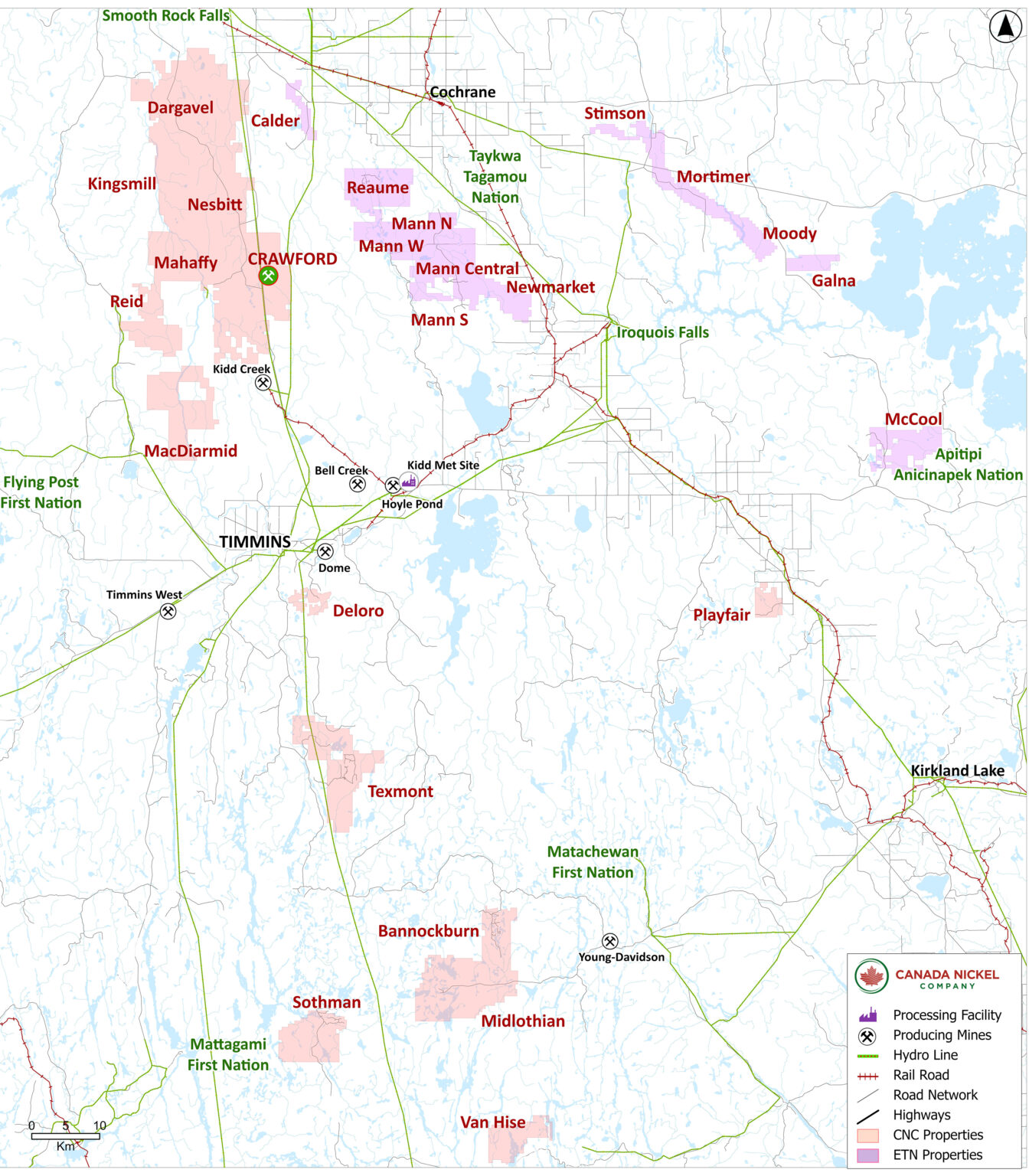
The investment tax credits bridge is one layer of a structure that also includes Export Development Canada (EDC) debt and targeted government contributions. In a separate investor interview, Selby indicated that the company had re-engaged with EDC following a successful independent engineer review, and that 2 separate export finance groups had expressed interest in participating alongside whatever EDC structures emerge. Together, those components are designed to reduce the residual equity requirement to a level that is manageable through modest issuances of around $10 to $15 million to bridge the gap between incoming tranches.
The investment tax credits bridge mechanism only functions if the underlying tax credit entitlement is sufficiently certain, which is itself a function of the permitting outcome: confirmed construction authorisation is a prerequisite for the credit accrual against which the facility would be sized.
Permitting as the Prerequisite
The announcement cannot be read in isolation from the permitting timeline. Canada Nickel received its impact assessment report from the Impact Assessment Agency of Canada, including draft permit conditions, and is in a 30-day consultation period before the agency finalises those conditions. The company is targeting permit issuance in early summer 2026, making Crawford the first mining project to receive a permit under Canada's 2019 impact assessment legislation.
The SB1 Markets mandate was awarded in anticipation of that outcome, not after it, reflecting management's confidence that the published draft conditions represent the substantive result of the process. Arranging the mandate now compresses the timeline between permit receipt and financing close, and connects the permitting milestone directly to the FID sequence targeting 2027.
What to Watch Next
The federal permit for Crawford is the most immediate catalyst: issuance, targeting early summer 2026, removes the final permitting uncertainty and allows the investment tax credits bridge to be structured against confirmed development authorisation. The first tranche of government capital contributions, which management indicated was expected before the end of the Second Quarter 2026, would provide parallel confirmation that the non-dilutive financing architecture is being assembled as planned. SB1 Markets' arrangement of the facility targets completion by year-end 2026, with progress updates on lender identification and facility terms as the key indicators ahead of the FID targeting 2027.
If the investment tax credits bridge is successfully arranged, it would represent one of the more structurally novel financing executions in Canadian critical minerals project development: converting a government policy instrument into construction-stage capital at a scale that materially changes the dilution equation for existing shareholders.
FAQs (AI-Generated)
Analyst's Notes





Subscribe to Our Channel









Stay Informed


